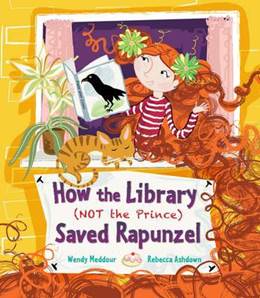
Showing posts with label adaptations. Show all posts

Monday, 13 March 2023

REIMAGINING STORIES - FIVE WAYS TO GET STARTED by CHITRA SOUNDAR

 As someone who has taught writing picture books and mentored many writers, I meet with aspiring writers – some are teachers, librarians and mums, others are interested in the words and pictures. One of the common queries I’m asked in assemblies by teachers or through DMs by aspiring writers is – Where do I start getting ideas for my picture book story?

Ideas come from everywhere isn’t always helpful. When you’re underpaid and overworked and hardly have time to write, when you actually sit down to write, you don’t want to twiddle thumbs and stare into space and look forlornly at the blank sheet of paper. 

The following ideas are what I share with those who ask me this question in private. this also works for beginning writers, who need to hone their craft. 

1. Pick a nursery rhyme you like and brainstorm ideas of how to change it. You could change the characters or the story, still keeping the rhyme sequence and the tune in-tact. 
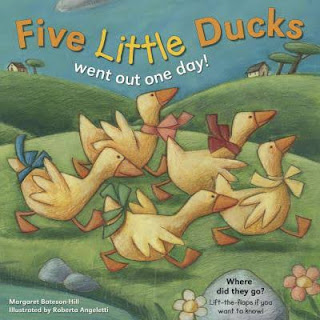


This idea works great for teachers and storytellers whose repertoire of nursery rhymes is boundless. But there are places you can find lyrics for nursery rhymes on the internet and of course you can listen to the tune of nursery rhymes on YouTube endlessly. 

If you play every nursery rhyme video on YouTube consecutively I think the music will keep playing even after our universe will implode.  

 
2. Pick an Aesop fable or a story from your own heritage. It’s important to pick a popular folktale or fable, one that is easily recognisable by readers and twist it and turn it. 

Again, you can change the characters, where it is set, and who is telling the story. Make it your own. 

3. Adapt a fairy tale to share a message. Most fairy tales are gruesome and/or cautionary. 
a. Can we then adapt them to tell cautionary tales about today’s world – social and political. 
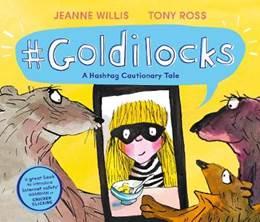


b. Can we flip these stories to be kind and lovely – will that work? What happens if the wolf in Red Riding Hood is actually a forest ranger? And Grandma is the poacher?

c.  Can you change the POV of the narrator?


4. Write new stories for characters from fairy tales, fables and history. As long as the characters are recognisable and you don’t have to explain who they are – it will be exciting to create new stories for them. 


5. Change the genre of the folklore you’re adapting. What happens if Red Riding Hood is a mystery story (and not horror as it is now) or what if it is romantic? What if the story of Cinderella is set in space?


But why are these wonderful starting points to practicing the craft of writing picture books?


1) The structure is already in-built into these timeless tales. So all you need to do is change the dressing of the set, spruce up the characters, add your personal magic, play with words. 

2) These are well-known and hence children would know the original and it’s a great way to engage them with a variation. 

3) It helps the beginning writer to focus on the words, the craft of the sentence,  how to handle description – without worrying about beginning, middle and end (not as much). 

Other than the above, I think it is a great exercise to develop your creativity. It is hard to retell an existing fable and make it your own because the original story is deeply embedded into your psyche. So, looking at it from a different angle will make different neurons fuse together to spark creativity. 

While the techniques I’ve listed above will solve – what should I write about? Or I don’t have an idea, it is no easy task. It will still be challenging to adapt a timeless tale and make it your own. Don’t believe me? Try it out. 

Monday, 24 September 2018

🎶 ALL TOGETHER NOW! 🎶 Picture books adapted from songs • Jonathan Emmett


Although some people will only know We’re Going on a Bear Hunt as a picture book by Michael Rosen and Helen Oxenbury, the text is adapted from an American folk song and many children of my generation will have known it as a scout and guide campfire song long before the picture book was published.


We’re Going on a Bear Hunt is one of the most celebrated examples of a picture book adapted from a song. Song lyrics often need some authorial tinkering to make them work well as a picture book text and the onomatopoeic sounds in the book (Swishy swashy! Splash splosh! etc.) and the verses about the forest and the snowstorm are both Rosen's invention.

My picture book She’ll Be Coming ‘Round the Mountain, illustrated by Deborah Allwright, was also adapted from an American folk song.


When an editor asked me to adapt the song a few years ago, I decided that the first thing I needed to do was reduce the repetition. While a degree of repetition is often encouraged in picture book writing, I felt that having the same phrase repeated five times on every spread would become a little tedious, so I replaced two of the repeated phrases in each verse with a rhyming couplet.

So this first verse of the original folk song:
She'll be coming ‘round the mountain when she comes,
TOOT-TOOT!
She'll be coming ‘round the mountain when she comes,
TOOT-TOOT!
She'll be coming ‘round the mountain,
She'll be coming ‘round the mountain when she comes,
TOOT-TOOT!
Became this in my picture book version:
She'll be coming round the mountain when she comes,
TOOT-TOOT!
She'll be coming round the mountain when she comes,
TOOT-TOOT!
Yes, she'll whistle like a train,
As she speeds across the plain,

She'll be coming round the mountain when she comes,
TOOT-TOOT!
I also replaced most of the folk song's later verses – including the ones about sleeping with grandma and killing the old red rooster – with new verses. The new verse where the cowgirl paints the whole town purple was a cowboy-hat-tip to the Clint Eastwood western High Plains Drifter, in which an enigmatic cowboy literally paints a whole town red.

One of Deborah Allright's spreads from She’ll Be Coming ‘Round the Mountain (now out of print).

Song often make it onto the page without any authorial tinkering. There are plenty of picture book adaptations of Over in the Meadow and Old MacDonald had a Farm that feature the original lyrics …


… but there are also quite a few adaptations that have been re-written to include a more exotic, mechanical or flatulent cast of characters.


While all of the above examples are adapted from folk songs, picture book adaptations of contemporary songs have become increasingly common in recent years. One of the first examples I remember seeing is this 2007 adaptation of the Peter Paul and Mary song Puff the Magic Dragon illustrated by Eric Puybaret.


Since then, contemporary songs by Bob Marley, Dolly Parton, John Lennon, Kenny Loggins and many others have been adapted into picture books.


Illustrator Tim Hopgood has produced a series of picture book adaptations of classic 20th Century songs.


As picture books adapted from songs have become increasingly popular, the interval between the song coming out and the picture book being published seems to be reducing. Last year’s picture book adaptation of When I Grow Up, illustrated by Steve Anthony, was published just seven years after the song first appeared, in Tim Minchin’s Matilda the Musical.


And the picture book version of Pharrell Williams’ Happy! (illustrated with photographs) came out only one year after the song was released!


So if you’re a picture book author or illustrator looking for ideas, you might try flicking through an old songbook or switching on the radio. If you’re lucky, you might discover the inspiration for the next We’re Going on a Bear Hunt!

In the meantime, if you know of any good picture book adaptations of songs, do tell us about them in the comments section below.


Jonathan Emmett's latest book is Alphabet Street, a spectacular lift-the-flap alphabet book illustrated by Ingela P Arrhenius and published by Nosy Crow. Although it's NOT adapted from the Prince song of the same name, it is written in rhyme and has all the makings of a toe-tapping global smash hit if anyone is interested in buying the song rights.

Find out more about Jonathan and his books at his Scribble Street web site or his blog. You can also follow Jonathan on Facebook and Twitter @scribblestreet.

See all of Jonathan's posts for Picture Book Den.