Showing posts with label cover reveal. Show all posts

Monday, 9 August 2021

AN EXCITING TIME FOR NON-FICTION PICTURE BOOKS - plus COVER REVEAL!


One of the reasons I love picture books, is because there is such a fantastic range – from funny to heartfelt to educational and everything in between, there really is something to suit every kind of writer. This Picture Book Den post is going to focus on an exciting subgenre of picture books that feels particularly popular at the moment, with just as much variety – narrative non-fiction picture books. (Plus, there's an exciting cover reveal at the end!)


What is a Narrative Non-fiction picture book?

Just like any strictly fictional text, a narrative non-fiction picture book is a story first and foremost. There might be facts before the story (front matter), facts at the end of the story (back matter), facts throughout… but the primary focus is on engaging characters and a satisfying plot.

This is different from illustrated non-fiction in a picture book format, where text might be arranged by headings, subheading or chapters and can be read out of order.

Here are some of my current favourite examples of narrative non-fiction texts. As you can see, there’s a massive range in style, presentation and topic:


The Spacesuit (Alison Donald, Ariel Landy)

The Spacesuit is a narrative non-fiction picture book inspired by the seamstresses who made the spacesuit for US astronauts in the Apollo missions headed for the moon, based on the life of Ellie Foraker. It includes timelines, fact boxes and facts intertwined in the narrative. Alison is also the author of A Super Sticky Mistake – the story of how Harry Coover invented super glue – another great narrative non-fiction picture book (illustrated by Rhea Zhai).


Amara and the Bats (Emma Reynolds)

In this narrative non-fiction text, environmental activism gets a nocturnal twist! Amara and the Bats is Emma Reynold’s debut picture book as an author-illustrator. It’s the story of a little girl who loves bats and is sad when she moves to a new town and finds that bats no longer live there due to loss of habitat. She is inspired by real life youth climate activists to take action and rallies her friends to save the bats! There are bat facts weaved in throughout the story, and lots of fantastic practical steps to take action and help bats in the back, too.


They All Saw A Cat (Brendan Wenzel)

They All Saw a Cat explores what a cat might look like from the perspectives of various animals' points of view. It’s simple in delivery but powerful in concept. I’ve never seen anything like it! There is no front matter or back matter, but the illustrated way the animals perceive the cat is true to life and really makes you think.


The Amazing Scientist Series (Julia Finley Mosca, D. Reiley, Brendan Wenzel) I’m crossing my fingers that this series of books keeps expanding. The texts explore some of the world’s most amazing female scientists. In addition to the facts there’s a complete biography, colourful timeline and a personal note from the featured artist. These ones are in rhyme, too.


Poo! Is That You? / Wee? It Wasn’t Me! (Clare Helen Welsh, Nicola O’Byrne)

Here are two of my most recent narrative non-fiction texts. Lenny the Lemur is on holiday, first in the Amazon and next in Alaska, when he comes across an unfortunate problem that needs solving. He learns lots of interesting animal facts as he does. The third in this mini-series is slime-based and will be publishing in 2022.


Where did Narrative Non-fiction come from?

The recent rise in narrative non-fiction appears to have come from the US, where invention stories and biography picture books for 3-7yr olds are booming, but blending fact and fiction together in picture book format is not new.

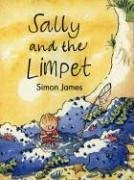
Simon James’ books were a firm favourite in my classroom when I taught as an early years teacher, especially Sally and the Limpet. It’s the story of a little girl who gets a limpet stuck to her finger, and has a gentle message of caring for sea creatures intertwined into a funny and fantastical tale.  Dear Greenpeace, also by Simon James, sees the main character (and reader) learn about humpback whales all through letter format. Again, there’s a lovely mix of fact and humour.


I’m pretty certain narrative non-fiction wasn’t a ‘thing’ when these books were made, but the advantage of adding subtle educational layers to picture books has always been clear. It’s a real selling point for gatekeepers when a text has the potential to impact on young readers long after the last page has turned and when it can be used a springboard for future learning.


Tips for writing Narrative Non-fiction:

Research – Once you have identified your narrative non-fiction concept and suitable ‘way in’, next must come more detailed research. Whilst narrative non-fiction is a story first and foremost, the facts still need to be accurate. Use reliable, first-hand sources where possible, and try to back up each fact with at least three pieces of credible research. It might be possible to link with museums, organisations or contact family members.


Presentation of Facts –Decide whether your facts are going to be presented as fact boxes throughout, as front matter, back matter, an author’s note, whether they will be interwoven into the narrative or a mixture of these.

In my funny Lenny stories, Poo! Is that you? and Wee? It Wasn’t Me! the facts are incorporated into the character’s dialogue and reinforced with fun facts at the end.


In my lyrical non-fiction with Nosy Crow, the facts are interwoven into the narrator voice and consolidated with facts in the back matter. It publishes next month and is illustrated by none other than the winner of the Waterstones Children's Book Prize 2019, Jenny Lovlie. The story follows a young Arctic tern as she embarks on her annual migration to the Southern hemisphere in search of an endless summer. Children can learn about lots of other animals that also leave their homes for an warmer one. You can take a look inside here: Take a look inside Time to Move South for the Winter - Nosy Crow


In my re-imagining of Cinderella, inspired by the life and work of Lotte Reinger, the factual content is presented in an author note at the end of the book. (Cover reveal at the end of this post!)

In The Spacesuit by Alison Donald and Ariel Landy, the facts are intertwined with the plot but also presented as fact boxes throughout.


Narrative non-fiction picture texts to look out for:

There are some really exciting narrative non-fiction books on the horizon, some due for publication soon. Here’s a look at a couple!

Every Bunny is a Yoga Bunny is a funny, reassuring picture book story about yoga, mindfulness and finding calm, from debut author Emily Ann Davison and award-winning illustrator Deborah Allwright. Yo-Yo is a fidgety, bouncy, can’t-sit-still-EVER type of bunny. Even Grandpa’s yoga class won’t stop her wiggling and giggling! But when Yo-Yo finds herself lost in the deep, dark, shadowy forest, maybe Grandpa’s yoga will help her find the way home . . . With simple yoga step-by-step instruction in the narrative and some poses at the end to practise, children can stretch, breathe and feel calm with Yo-Yo.


And I hope it's ok to announce my real-life inspired story publishing this November with Andersen Press. Described as Cinderella meets paper-cutting, with a strong feminist twist,’  the story is based on the life and work of German film director Lotte Reiniger.

‘Lotte doesn’t believe in happy endings. She lives with her horrible, bossy sisters and her only friends are the exquisite cut-out paper puppets she makes by the light of the moon. But when an invitation to the Palace Spring Ball arrives on their doorstep, Lotte sees her chance to change her life for ever...

This is a Cinderella re-imagining with a difference where forceful individuality and talent create happy endings not fairy tale magic. Whilst the story is fictional, it was inspired by a real life individual and features an author note at the end. Laura Barrett, whose style is also inspired by Reiniger, is the very wonderful illustrator who has done the most fantastic job bringing the text to life - the artwork is so detailed and there are some wonderful surprises inside. Finally, here is her fantastic cover! 


Publishing 4th November 2021 - You can read and see more of Laura's beautiful artwork here Laura Barrett Illustration


If you didn’t love narrative non-fiction picture books before, I hope you do now! Just like in fiction, there’s a huge range; poetic, scientific, silly, serious – something for everyone! Narrative non-fiction texts can cover subjects such as biographies, inventions, events in history, animal adaptations, scientific phenomenon… anything you feel passionate about and that you think would entertain a child. Nothing is off limits if you can find the right age-appropriate angle.


Happy writing!


BIO: Clare is a children's writer from Devon. She writes fiction and non-fiction picture book texts - sometimes funny and sometimes lyrical. Her first book was published in 2015, and she currently has books in development with Little Tiger Press, Quarto, Andersen, Nosy Crow and MacMillan. Her next narrative non-fiction picture book, 'Time to Move South For Winter,' comes out in just a few weeks and has been illustrated by Jenny Lovlie. She also has her first book with Andersen, Scissorella, publishing in November, which is another life-inspired tale. It has been beautifully illustrated by Laura Barrett. You can find out more about Clare at her website www.clarehelenwelsh.com or on Twitter @ClareHelenWelsh.

Monday, 18 January 2021

The 10 things I really wanted to know about writing Rhyming Picture Books – by Catherine Emmett

Happy New Year, Picture Book lovers!

We’re starting the New Year as we mean to go on, launching ourselves into the nitty gritty of what makes a rhyming picture book really sing.

Many authors begin their picture book journey writing in rhyme, me included, maybe because some of our most favourite books are written in verse. A dynamic and flawless rhyme is an absolute joy to read.

However, along the way, lots of us get put off writing in rhyme when we realise that it’s harder than it looks, and that the industry standard is really very high.

We invited super star rhyming picture book author, Catherine Emmett, to discuss what she wished she had always known about rhyme. Catherine is the author of King of The Swamp, illustrated by Ben Mantle, which stormed into 2020 despite being released during the pandemic. Catherine’s next picture book illustrated by David Tazzyman, ‘The Pet; Cautionary Tales for Parents and Children,’ is also in rhyme and is set to be another huge success. 


Without any further ado, let’s hear from Catherine!


The 10 things I always wanted to know about writing Rhyming Picture Books

It’s easy to forget as a writer, when you have a lovely network of writerly friends and helpful writer groups, just how hard it is to FIND STUFF OUT when you first start writing.  Back in the beginning I had SO many questions, and NO ONE to ask.

Like, ‘Why, when so many rhyming picture books are in bookshops, does everyone say that no one wants rhyming picture books texts?’.

And, ‘Do I REALLY need to worry about stressed syllables?’.

So, here it is - my gift to my former, friendless self!  These are the 10 things that I really wanted to know when I started off writing rhyming picture books - but had no idea how to find out…


1 – Why does everyone say that agents and publishers don’t like rhyming texts, when there are so many rhyming picture books getting published?

I wondered this so much when I started out. The answer seems to be that no one wants BAD RHYME.  And sometimes agents or publishers would rather see no rhyme at all, rather than wade through piles of bad rhyme.   

One of the main reasons for agents turning down rhyming picture books texts is because the rhyme - and especially the metre - aren’t strong enough.  The answer is to get GOOD at rhyming.  Learn about metre, practice and get really fluent with it.


2 – What is a co-edition?

Compared to most books, picture books are expensive to print because of all the full colour illustrations.  To make things work financially, publishers like to have other foreign publishers buy the book to sell in their own territories (and in their own languages).  These ‘co-editions’ can help making printing picture books more cost-effective.


3 - Will a rhyming Picture Book sell any co-editions?

There is always discussion about whether rhyming picture books will sell co-editions.  The concern is that it is difficult to translate rhyming stories into other languages.  I have certainly had a PB turned down for being so reliant on rhyme that it would ‘only have UK appeal’.  However, if you have a strong enough STORY, then co-editions do happen. 


4 – Should I worry about regional accents?

Yes! The problem with the UK is that so many different regions pronounce words in different ways.  


What rhymes for someone in Newcastle, does not necessarily rhyme for someone in London.  Ignore this at your peril!  You don’t want to write a book that only works for half of the country.  I know of at least one editor who sometimes reads through submissions in a Scottish accent to check this! Find yourself a friend from the opposite end of the country and if the words don’t rhyme for them, then AVOID.


5 – Do I really need to worry about metre / stressed syllable patterns?

First up, what is metre?  Metre is your pattern of stressed syllables. When writing picture books, you need to make sure that the stressed syllables in the words that you use fit your metre pattern.  If you aren’t sure what a stressed syllable is, then check out my blog here: https://catherineemmett.co.uk/catherineemmett/rhyming-picture-books/

Now, do you need to care about it?  In my view, yes, ABSOLUTELY.  It’s incredibly difficult to write a smoothly rhyming book and it’s even harder if you don’t understand the building blocks that you are using.


6 – What sort of metre should I use?

Not only did I used to wonder about this, I’ve also been asked this a lot by other writers, so I decided to do a bit of research into what the most common metre patterns are in published books.

Finding this sort of information for the whole market seems to be impossible, so I used my kids’ bookshelves as a proxy for the market. There were 207 books of which 79 were rhymers and 128 prose, suggesting that the rhymers make up about 38% of the market (or my sample set at least).


For the purposes of the below:

S = stressed syllable

U = unstressed syllable


Of the rhymers, about a third had 11 syllables per line and used a metre pattern where there were two unstressed syllables in between each stressed syllable.   This was the most common metre pattern. (u/s/u/u/s/u/u/s/u/u/s). As an example:


“The swamp was quite dark and the swamp was quite dank,

And due to the mud the swamp rea-lly quite stank

-          ‘King of the Swamp’ by Catherine Emmett and Ben Mantle


Approximately 20% had 14 syllables per line (or split across 2 lines) with an alternating stressed syllable pattern – i.e. where each stressed syllable alternated with one unstressed syllable (u/s/u/s/u/s/u/s/u/s/u/s/u/s).  As an example:


“I told the vet a-bout my pet, he said that I was right,

She has to change her col-our, to stay safe and out of sight.”

-          ‘My Colourful Chameleon’ by Leonie Roberts and Mike Byrne


Just over 10% of the books used an 8-beat line with the same alternating stressed syllable pattern – i.e. where each stressed syllable alternated with one unstressed syllable (u/s/u/s/u/s/u/s).  As an example:


“When Da-ddy made it home that night

He’d ne-ver wit-nessed such a sight”

-          ‘The Pet – Cautionary Tales for grown Ups and Children’ by Catherine Emmett and David Tazzyman


Just under 10% varied their syllable count per row, for example, 3 rows of 8 beats and the one of 11 beats.

Just over a quarter of the sample had a metre pattern that varied throughout the story.  It’s worth noting that this was skewed because a large number of these were Julia Donaldson’s books, which often use a varying metre pattern (see ‘The Highway Rat’ for a good example of this).


7 - Do some words always get stressed?

Stressed words can vary depending on the context.  Usually the ‘bigger, more important’ words are always stressed, but the smaller ‘in-between words’ might or might not be stressed, depending on the context.

I find writing the sentence out in prose can really help with this, as can asking someone else to read it out.  Actually - my best tip is to find a ‘new reader’.   My confident reading 6yr old will easily pick-up good metre and really shows up where metre isn’t right.


8 – Should I vary the rhythm or syllable count to keep things interesting?

I personally think this depends how your mind works.  I think if you are of a more musical persuasion you might naturally think more in ‘verses’ and different patterns of rhyming.  For me (someone who is not musical at all!) I stick to a constant pattern.  Ultimately, I think it comes down to your story and what your story needs – let the story lead the rhyme.


9 – Should I include a comma or pause in my syllable count?

Controversial.  This in entirely up to you… …but I don’t.  Having looked through my sample set, I would say that the books which I read most smoothly tended not to do this, whereas the ones that I have tripped over in the past sometimes do include this.  I suspect that this might be different for other people though - I’d love to hear your views. 


10 – Should I include a repeated refrain?

Of the sample I looked at, very few had a strict repeated refrain, though about a quarter had some form of repeated structure.  A lot of those with a repeated structure were by Julia Donaldson and again possibly reflect her songwriter background. 

In deciding whether it works for you, again, I’d focus on the story. If your story lends itself to a repeated verse then great, but there’s no need to include one otherwise.  Your story should lead your rhyme, not the other way around. 


So that’s it! The 10 things that I really wanted to know when I started writing rhyming picture books, but didn’t know how to find out.   


I hope this has been useful, if you have any more questions then come find me on Twitter at @emmett_cath or drop me a line via my website www.catherineemmett.co.uk

Happy rhyming!


Wow! What a wonderfully thorough look at metre, rhyme and why it matters. Thank you so much, Catherine, for sharing your research and experience with us at Picture Book Den. And to those of you among us writing in rhyme or thinking about it, we very much hope this guest post leaves you informed and inspired!

Bio: Catherine grew up in Newcastle Upon Tyne and spent all of her childhood reading books. When she grew up, she spent fourteen years making spreadsheets and not reading any books at all. After advising a group of young girls to find a career that they loved, she decided to take her own advice. She packed up her husband and her three young boys, moved to rural Essex and started to write picture books.  
She now spends her days surrounded by words, animals and noisy boys. When she needs a bit of peace and quiet, she can be found running (very slowly) across muddy fields.

 Bio: Clare Helen Welsh is the author of over 4- fiction and non-fiction texts, either published or in press, including picture books and early readers. She runs a 7 week picture book course for Write Mentor and is a Writer-in-Residence for 2021. Find out more here: www.clarehelenwelsh.com