
GIVEAWAY WINNERS ANNOUNCED - (SEE COMMENTS FOR DETAILS)
Children love stories, no matter where in the world they live, but often when I sit at home in Scotland writing a story I have no idea where it might travel to.
Publishers often want to sell co-editions of picture books, that is when they sell the rights to publish them to a publisher in another country.
 I was visiting a school in Cairo this year and one of the teachers came to tell me that What Colour is Love? had been a family favourite that he had read over and over again.
A nursery school in New Zealand was using it with their children.
I love it when one of my books gets translated and used abroad. It is interesting to note that if a book is to be translated into another language it is usually the publishers who organise the translation, which is why there is no point, if you are a translator, in approaching an author for work translating their book.

I once discovered some pictures on the internet of a school hall in Brazil. Long sheets of cloth in different colours were suspended from the ceiling, and the teacher was reading my book to a class.
I smiled a lot that day!
I am fascinated to see how the words have been changed in the translation, to make it keep the rhythm or rhyme.
The Brazilian publication -translated into Portuguese- is in its 10th edition with the publishers Brinque-Book.
Since I get copies when it comes out in a new edition I have rather a lot of the Portuguese version Qual e a cor do amor? so I thought I might give some away.
See below for the giveaway details..
Some of my books written for educational publishers have also been translated into other languages, too.


A Ball Called Sam, part of the Rigby Star series (Rigby Literacy in the USA)
has been published by Carroll Education in Ireland

Three other Rigby Star titles have been translated into French for Galaxie. Interestingly they changed a little in translation.

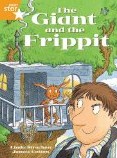
The Giant and the Frippit became Le Geant et Le Korrigan
The Frippit was a made up creature, a mixture of an elf and a squirrel. He became Le Korrigan which the 'Lexique' at the back tells us is ' an elf (Breton)'
Korka the Mighty Elf changed his name and became Luca Le Puissant Lutin


Fizzkid Liz also had a bit of a makeover. In the US version the title is Fizzkid the Inventor.In the Galaxie version her name changed to Beatrice,which I thought suited her French personality really well.


GIVEAWAY
I have two copies of Qual e a cor do amor? and one copy of What Colour is Love? to give away.
If you would like a copy of either please leave a comment and say whether you want the Portuguese or the English version.
The winners will be picked out at random on 28th October 2012
-----------------------------------------------------------------------------

Website www.lindastrachan.com
Blog BOOKWORDS
Linda Strachan is the award winning author of over 60 books for all ages, from picture books to teen novels, and writing handbook Writing For Children
Children love stories, no matter where in the world they live, but often when I sit at home in Scotland writing a story I have no idea where it might travel to.
Publishers often want to sell co-editions of picture books, that is when they sell the rights to publish them to a publisher in another country.
 I was visiting a school in Cairo this year and one of the teachers came to tell me that What Colour is Love? had been a family favourite that he had read over and over again.
A nursery school in New Zealand was using it with their children.
I love it when one of my books gets translated and used abroad. It is interesting to note that if a book is to be translated into another language it is usually the publishers who organise the translation, which is why there is no point, if you are a translator, in approaching an author for work translating their book.

I once discovered some pictures on the internet of a school hall in Brazil. Long sheets of cloth in different colours were suspended from the ceiling, and the teacher was reading my book to a class.
I smiled a lot that day!
I am fascinated to see how the words have been changed in the translation, to make it keep the rhythm or rhyme.
The Brazilian publication -translated into Portuguese- is in its 10th edition with the publishers Brinque-Book.
Since I get copies when it comes out in a new edition I have rather a lot of the Portuguese version Qual e a cor do amor? so I thought I might give some away.
See below for the giveaway details..
Some of my books written for educational publishers have also been translated into other languages, too.


A Ball Called Sam, part of the Rigby Star series (Rigby Literacy in the USA)
has been published by Carroll Education in Ireland
Three other Rigby Star titles have been translated into French for Galaxie. Interestingly they changed a little in translation.

The Giant and the Frippit became Le Geant et Le Korrigan
The Frippit was a made up creature, a mixture of an elf and a squirrel. He became Le Korrigan which the 'Lexique' at the back tells us is ' an elf (Breton)'
Korka the Mighty Elf changed his name and became Luca Le Puissant Lutin


Fizzkid Liz also had a bit of a makeover. In the US version the title is Fizzkid the Inventor.In the Galaxie version her name changed to Beatrice,which I thought suited her French personality really well.


GIVEAWAY
I have two copies of Qual e a cor do amor? and one copy of What Colour is Love? to give away.
If you would like a copy of either please leave a comment and say whether you want the Portuguese or the English version.
The winners will be picked out at random on 28th October 2012
-----------------------------------------------------------------------------

Website www.lindastrachan.com
Blog BOOKWORDS
Linda Strachan is the award winning author of over 60 books for all ages, from picture books to teen novels, and writing handbook Writing For Children


