Showing posts with label nick sharratt. Show all posts

Monday, 16 December 2024

A Christmas story for you, by Pippa Goodhart

After thirteen years of being a regular contributor to this lovely Picture Book Den, I've decided that this will be my last regular post here. What should my last post be? It's landing at Christmas, so I give you a gift of a story about giving. It's a story intended for a picture book, but which has yet to find a publisher who wants it. I hope you enjoy it -


What Can I Give?


One morning my phone goes - Bleep-bleepety-bleep!

It’s Mole.

‘Hello, Moley, how are you?’ 

Mole just sighs and says nothing.

‘Shall I come and see you?’ I ask. 

‘Yes please, Rabbit,’ says Mole. 

‘I’ll bring you a present to cheer you up,’ I tell her. 

But I haven’t got a present. What can I give her?  


I think of Mole in her gloomy dark hole. 

I want to give Mole colours! 


So I stitch-stitch a quilt to wrap-hug Mole up in sky blue, leaf green, berry red.

‘I think she’ll like this!’


But, as I set off to Mole’s hole home, I see Badger, and Badger is shivery-quivery cold.

What shall I do? 

What would you do?


I give the quilt to poor cold Badger.

‘Thank you, kind Rabbit,’ says Badger.

I’m glad that Badger’s warm, but now what can I give sad Mole? 

Perhaps I can give her some fun.


So, I make a toy for Mole. 

I make a fine little boat to float in Mole’s bath; a boat for her to play with. 

I know that she’s waiting for me, so I must hurry to take it to her.


But, as I scurry along the path, I see Mouse. Poor little Mouse is gulp-sniff-sobbing.

‘Oh dear, Mouse, what’s the matter?’

‘I got left behind,’ sniffs Mouse. ‘And now I can’t catch up with my friends, and it’s getting late, and I don’t know what to do-oo-oo! Boo hoo!

‘Oh.’ I look at the little boat I’d made for Mole. 

What shall I do? What would you do?


‘Would a boat that could float you down the river help?’ I ask.

‘Oh, yes please, kind Rabbit!’ says Mouse.

So, Mouse floats away in the boat to catch up with his friends. 

But now what can I give Mole?

I haven’t got time to go home and make anything new. All I can do is to collect pretty things as I go along the path. So, I make a bouquet of twigs and leaves and berries to bring beauty into Moley’s home. 


But just as I am about to knock on Mole’s door, I see Hare, bounding along the path. 

She sees my bouquet, and she says, ‘Oh, my goodness gracious me, is that big bouquet all for me? How did you know it was my birthday today? Hooray! Thank you so much, kind Rabbit!’

So, of course, I give Hare the bouquet.


And now I have nothing to give to my friend Mole, nothing at all. But I’d promised to give her a present! Shall I just creep away, and come back again another day? 

What would you do? 

Uh-oh, oh no, Mole has seen me!


‘Come in!’ calls Mole. 

So that’s what I do. 

I tell Mole about trying to bring her colours, making a quilt, and meeting a shivery Badger. I tell about trying to bring her fun, with the boat that was needed by lost little Mouse. I tell about the bouquet that made Hare birthday-happy. 

‘So, I’m sorry, dear Mole, but I have nothing to give you after all. Nothing. Nothing, at all.’

‘That’s not true!’ laughs Mole. ‘You have brought me a story full of lovely things. I love stories.’

That gives me an idea. ‘Shall we make the story into a book?’


So, together, Moley and I make the story into a book. 

‘The perfect present!’ smiles Mole. ‘Thank you, kind Rabbit.’  

And her smile is the perfect present for me. 


My hope was that this, as a book, could look as if its hand-written, and could perhaps include what look like scrapbook additions of scraps of quilt fabric and winter flowers etc, thus appearing to be the book they make at the end of the story.


Pippa Goodhart


Wishing you all a very happy Christmas!

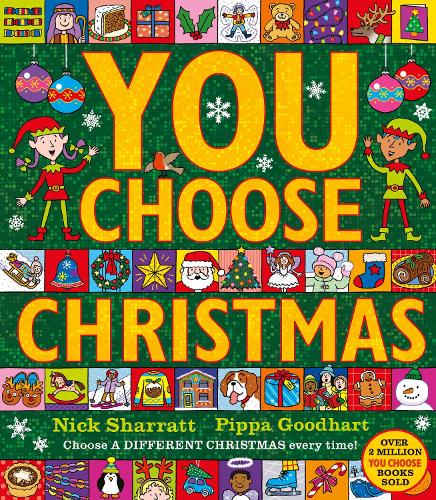
PS My You Choose Christmas, beautifully illustrated by Nick Sharratt, is newly out in paperback:


A


Monday, 4 December 2023

Recycling A Christmas Folktale, by Pippa Goodhart


            There is a folktale Christmas story that’s well known in the Ukraine and Russia, Germany, Poland, Norway, Denmark and Finland, but was new to me when I met it as a bookseller in the 1980s.


            This The Cobweb Christmas version of the story has old German Tante trying to make her home clean for Christmas, sweeping out the spiders. She brings a tree in, and decorates it with cookies for the local children to have on Christmas Eve before Christkindel comes in the night to fill the toes of their shoes. She’s asleep when Christkindel passes by and sees spiderswanting to go in and see the special tree. He opens the door to let them scuttle in.


The spiders cover Tante’s tree in webs, but Christkindel touches the webs and turns them all to gold and silver; a reward for Tante’s kindness to the children. 


            That book is no longer in print, but there are other versions of this story that take the story in quite different directions. The Spider Who Saved Christmas by Raymond Arroyo has a golden back spider weaving a great veil of web over the entrance to a cave where Mary, Joseph and baby Jesus hide as they flee from King Herod. As baby boys are slaughtered outside the cave by Roman soldiers ‘with blood streaked swords’, Jesus is saved because the sunlit sparkling web hides the Holy family from the soldiers. Other versions combine those ideas by having Christ himself visiting a poor home and blessing cobwebs on trees, giving wealth. That idea of spider silk turned into gold and silver is, apparently, is the origin of tinsel on Christmas trees.

            Stories in which spiders bring good luck go further back to pre-Christian times. And of course Christmas trees originated in more pagan ideas, only becoming part of our familiar Christmas traditions from C19th. This is a story adapted and adopted countless times over time and space. And now I’ve written my version of it. 


            Old Bear in my Christmas Cobwebs story is really me at heart, remembering how magical Christmas was as a child. We never saw the decorated tree with lights switched on until Christmas morning, and even then only after breakfast had been eaten, the kitchen floor swept, and we all stood in height order to open the door … and, da daa! There it was. 


Like me, Old Bear is the one preparing a tree and decorating it for others now. She wants it all to be magical for the friends she invites. But she doesn’t want the spiders making her house untidy. 


Not wanting to miss out, as Old Bear sleeps, the spiders come to look at the decorated tree. ‘In the moonlight, they span and swung and spiddled, scuttling and exploring and weaving and winding wondrous webs.’ So, when Old Bear wakes up and looks at her tree, its ‘drippily draped in droopy grey cobwebs.’ Her friends are on their way, and she’s not happy …

… But you can easily guess what’s going to happen when the sun comes out! Old Bear gets some surprise Christmas magic after all, and thanks her spiddly spider friends. 


Ema Malyauka from the Netherlands has brought Christmas Cobwebs to wonderful visual life, and I love the feeling of stories linking countries and peoples at Christmas. The spiders and spider web Christmas tree decorations that have been traditional in Ukraine for so long, are beginning to appear in other Christmas trees, too, including the one in Nick Sharratt and my new You Choose Christmas book.


How many other folktales can you spot being referenced in the decorations on this tree?


Wishing you all some Christmas magic, maybe from where you least expect it! 


Monday, 27 February 2023

World Book Day's Profound Purpose, by Pippa Goodhart

This is the week of World Book Day when a large portion of the world enables and celebrates reading for pleasure for everyone. YAY! for something really, really good happening across the world.


I wonder if you recognise the fairy tale castle below? 


It isn’t from fiction. It’s from real life. It’s The Peace Palace. What better thing to build a palace for?! It’s in The Hague in The Netherlands, and it was purpose built to house The International Court of Justice. (Not the International Criminal Court, also in The Hague, but the International Court of Justice.) 


Few people know about the ICJ because its job is to prevent the sort of events that make the biggest frontline news. It works in a similar way to other courts. Those who disagree present their cases, and a panel of judges decides the correct legal outcome. But these are international disputes, from boundary quarrels to determining how formula milk should be promoted, and even deciding the law governing Space. Those judgements can prevent potential wars from boiling into reality.  I’m proud to say that my lovely Daddy, Robbie Jennings, was an international lawyer working on cases at The Peace Palace for many years. In time he became the British judge on a team of fifteen judges, and then President of the Court.


What is the relevance of all that to World Book Day? Well, I’ve just learned that World Book Day was begun by, and is organised by, the United Nations, as is the International Court of Justice. Both, in their very different ways, share the same vital aims. Secretary-General of the UN, Antonio Guterres, says –


‘In the end, it comes down to values. We want the world our children inherit to be defined by the values enshrined in the UN Charter: peace, justice, respect, human rights, tolerance and solidarity.


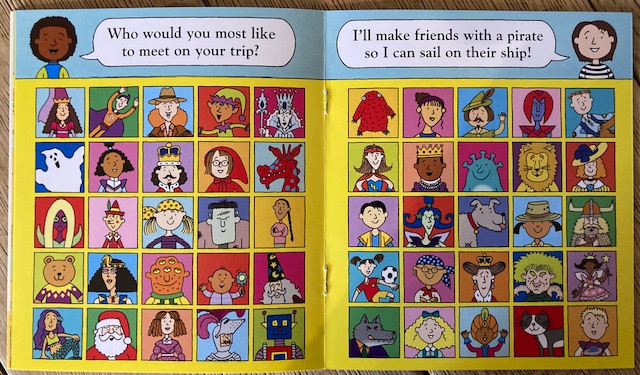
I’m very chuffed to be the author of one of this year’s £1 World Book Day books; You Choose Your Adventure. As with the other, bigger, You Choose picture books, it is Nick Sharratt’s wonderful pictures which most obviously achieve here those aims of us all sharing our world fairly and kindly and imaginatively, at the same time as having fun. The world needs more fun, and it needs young people with fertile imaginations. 


So, here is some happy mixing of different kinds of children and different kinds of adventure. Enjoy!


Last year fifty million £1 World Book Day book tokens were given to children in the UK, with over two million books gifted in exchange for them. One in seven the children getting those books didn’t previously own a book. 


For full information about all the World Book Day books on offer, and the events and activities also there be enjoyed, see World Book Day 2023


And watch out for further You Choose news to come a bit later this year!  


Monday, 1 March 2021

How To Grow A Picture Book Series, by Pippa Goodhart

One part of my work is critiquing picture book texts on behalf of the Jericho Writers agency, and very often people send a series of picture book texts, or a single picture book text together with proposals to develop a whole series.


What I’ve tended to tell those writers has been based on my own experience, that picture book series depend on creating an exceptionally strong stand alone picture book which sells so well that the publisher asks for, or agrees to, further books. My You Choose books, illustrated by Nick Sharratt, began with a single book, with the second one agreed to only once that book had sold well over a number of years.


I now have a bit of a series developing from a different book. Fair Shares, illustrated by Anna Doherty and published by Tiny Owl came out in 2019. It quickly proved popular with teachers and librarians, and so Tiny Owl asked for another book from us, and now Best Test will be published in April. I have an idea for a third book, but wait to see if that is going to be wanted!


So I wondered if my experience of series growing from single book success was shared by my co-denners. Here are their interesting answers -  


Natascha Biebow, (an experienced picture book editor as well as writer):


All the series that I've ever edited or seen do well on the market started with a single title - e.g. DAISY, Kes Gray's OI series, YOU CHOOSE as you say, THE DINOSAUR THAT POOPED..., HARRY AND THE BUCKETFUL OF DINOSAURS. The only exception I can think of is PRINCESS POPPY- in this case the author had already self-published and built a brand and so RH bought in the character rights and kicked off with a planned series.


Chitra Soundar


a) When my first Falgu book came out (illustrated by Kanika Nair), I wasn’t well-known in India or known at all in the UK. But after they edited the first book, they offered me a second book right away.


b) After rights sold in Frankfurt for Book 1, Book 3 and 4 was commissioned together. (‘Frankfurt’ refers to the annual International Book Fair at which co-editions are sold)


With respect to the massively popular You’re Safe With Me series (illustrated by Poonam Mistry), the first book was on unsolicited submission which was then rejected and then solicited back. Even before it came out, when US Junior Library Guild agreed to stock them, the publisher commissioned a second. And then commissioned a third soon after. 


None of those were automatic series - but one thing I’d say is as a writer I always put character first and when I’m writing, I’m always thinking of other scenarios for the characters. Even when not commissioned as a series, I create potential for it from the first book and then depending on my relationship with my publisher, ask if I can show them another story in the series. I do this for chapter books as well and it has worked well. 


Every time I have an idea, I evaluate if that idea will work for any of my existing characters and if so, I’d see if I should write it and show it to my publisher or ask them first and write it. 


Jane Clarke


Interesting topic because unless you are an author illustrator, picture book series depend on keeping both the writer and the illustrator on board.


I've experienced it both ways - eg I wrote Gilbert the Great as a one-off, and it slowly (over the next 5 years) became a 3 book 'series' because the first book was popular. They only commissioned the third book when the second also sold well. The illustrations by Charles Fuge were a huge attraction and at that time, Charlie was so busy it was hard to fit the third book into his schedule.


Same experience with Knight Time but it only got as far as book 2 (Knight School) - I wrote more texts but the decision was made to stop at 2. I cheekily pitched my most recent text (A Small Person's Guide to Grandmas, to be published 2022) as a potential series, I'm contracted for the first title only - but I guess it doesn't hurt for them to know that there's the potential for more :-)


On the other hand, I was contracted from the outset by Nosy Crow to do 4 picture books with Britta Teckentrup ( the unifying characteristic being the use of neon colours rather than a character, and I'm sure the 4 book contract was because they wanted the incredibly popular and busy Britta to schedule time for these books). Titles are Neon Leon, Firefly Home, Leap Frog and the upcoming Tiptoe Tiger.


I was also contracted from the outset to do 3 x picture books featuring the character Sky Private Eye - but that series was the concept of the publisher Five Quills.


Garry Parsons


My experience of working on a series has been that they have developed after the first book has  reached a certain level of popularity and then increased one book at a time. Having a tie-in title publishing a year later helps ignite new interest in the first and so on until you gradually acquire new readers who hopefully will enjoy all the books. My most popular sequence of books being The Dinosaur That Pooped series. Initially a one book contract for the first title, The Dinosaur that Pooped Christmas has now grown into 6. 


The Dinosaur That Pooped series written by Tom Fletcher & Dougie Pointer


The other series of picture books I worked on was with author Peter Bently - The Tooth Fairy is a funny series of 3 rhyming story books which also started with a Christmas title, The Tooth Fairy's Christmas followed by The Tooth Fairy’s Royal Visit to coincide with a royal birth and finally, Happy Easter Tooth Fairy! for the spring. Similarly, this series, published by Hachette, developed one contract at a time. So it seems to me that a series grows on the strength of one book at a time but the potential for a series can be very worth while as well as fun to have the opportunity to take a character through different stories.


Monday, 15 February 2021

Meet the Monsters (with Mini Grey)

This week I wanted to look at those creatures that perennially inhabit children’s picture books. It’s time to meet the monsters. So off we go…

The One Under Your Bed

One of the first monsters you encounter is the one that lives down the end of your bed. And the one under your bed, and the one in your cupboard. They come out in the dark. You can sometimes feel their breath on the back of your neck as you go up the stairs. They stalk your nightmares. 

So you need stories to help you go to bed alone in the dark, stories that shine a light on those night-monsters, and show how unscary they are really.

Emily Brown is one of my utterly favourite picture book heroines.

In Emily Brown and the Thing, a noisy needy Thing is keeping Emily awake.
Emily, in her no nonsense way, settles the Thing's fears, and show it that is is OK to be a Thing, and that you can even be a Nice Thing.
Chris Wormell is a master of monsters. Here's Molly and the Night Monster.

Molly hears a noise on the landing and her imagination starts to wonder what may be creeping up towards her bedroom....
...the creatures get more terrifying - this is the moment that the doorknob turns. Molly catches the monster with her bedsheet. But what she catches is no monster, but a mummy. (The nice sort.)
Anything might be living in the dark crannies under the stairs.
And it might need feeding - which is what William does, in Helen Cooper's The Bear Under the Stairs.

The Thrill of Being Frightened

From roller coasters to horror films – being frightened is so exciting. We are drawn to the magnetic thrill of monsters. My childhood favourites were the stop-motion monsters of Ray Harryhausen: the metal giant Talos, the hideous Cyclops, the sword-fighting Skeletons. We enjoy being frightened – monsters are terrifying entertainment – which is part of what picture book monsters are there for too.

As a child, the highlight of my year was when Jason and the Argonauts was on TV and I could watch the giant Talos come creaking to life.

It was hide-behind-the-sofa time when these things dug their way out of the soil.


Sara Fanelli's mythological picture book monsters aren't so scary.

A Hydra brought to you by the power of Fanelli's magical collage.

Awesome Monsters

Travellers Tales from medieval times were full of the fantastic beasts that roamed the Earth. The world was an unexplored place, vast and dangerous, with plenty of room for mermaids, sea serpents and krakens. These monsters were probably based on a glimpse of something real - a giant squid, a manatee, an oarfish. Monsters were responsible for the unexplained - earthquakes, tsunamis, inexplicable fossils.

The discovery of dinosaurs in the 19th Century raised the fascinating possibility that once monsters really did stalk the earth. 

The dinosaur imaginings of Crystal Palace

 And when we can see further into the distant past of life on Earth we find creatures that are way crazier than humans could ever imagine -  like the extraordinary animals of the Cambrian Explosion. (Here's a Cambrian Top Predator.) 

The more we discover about the creatures that really DO stalk the earth, the less odd the hippogriff and the kraken seems to be. 

Here's a deep sea beauty.

Sometimes picture book monsters are Force of Nature monsters  - enormous and awesome and maybe not actually trying to kill us.


Chris Wormell's Sea Monster lurks in the deep sea gloom and mostly watches, but subtly helps save our boy from drowning.

Outwitting the Monster

This is the story of the small person who outwits and triumphs over the Monster – from David and Goliath to the Billy Goats Gruff.

The monster is usually a bit stupid and fixated with getting something to eat.

In Joel Stewart's book, a Big Blue Beastie is determined to gobble up Dexter.


But Dexter's imagination is brimming with way better ideas for things to do than eating small boys.

The Monster Next Door

This is the one who’s a misfit, the one who’s not like anyone else, the one that everyone avoids. This monster may be in the wrong place, even in the wrong universe.

Shaun Tan's Lost Thing is searching for a place where it can belong.  
In The Song From Somewhere Else (AF Harrold and Levi Pinfold), Frank reluctantly befriends the oversized boy that everyone at school thinks is weird. What seems to be a monster in his cellar is something entirely different.
Kathryn Cave and Chris Riddell's Something Else lives alone at the top of a steep hill.


He doesn't fit in with everybody else, who avoid him, and label him as Something Else. We've all felt like Something Else. Especially at school.

Monster As A Way of Life

But you can revel in being a monster. Being a monster can be your job, a proud way of life. 

Sarah McIntyre and Giles Andreae's Morris the Mankiest Monster wouldn't want to be anything else.
You can see how much Sarah McIntyre has enjoyed making Morris's tongue-spots and mould and mushroom clumps.

In When a Monster is Born (Nick Sharratt, Sean Taylor) it's nice and simple. There are just two possibilities. Either it'll be an Under-You-Bed Monster, or it'll be a Faraway-In-The-Forests Monster.

Parallel Monster Universes

Monsters can shine a light on our world, by inhabiting a parallel opposite world – the Upside Down, where beauty and ugliness and cleanness and filthiness and day and night are reversed.

In Jitterbug Jam (Barbara Jean Hicks, Alexis Deacon) a young monster is terrified by the idea of a boy being under his bed.

In Monster World, daytime is scary, and a time for sleeping, and the worst thing is to see "that awful colour the sky is when you wake up in the middle of the day and can't see, it's so bright out." 

Fungus the Bogeyman (Raymond Briggs) is a respectable proud bogey, doing a hard night's work scaring people. BogeyPeople just aren't comfortable unless everything is damp and slimy, and are horrified by the dry bright conditions that the 'DryCleaners' (AKA surface dwelling humans) live in.  


Here's a favourite page from the Fungus Plop-Up Book where we can just enjoy the sheer disgustingness of Bogey home squalor. And there's working toilet paper and a PLOP UP TOILET - oh joy!

You Unleash a Monster that Gets Out of Control

When you are small and there’s little you have power over – you can dream of being able to whallop your enemies, unleashing your inner monster. We all know Where The Wild Things Are and the power of rumpus, the joy of destruction.


Having an enormous powerful pet/friend, when you’re small and powerless, is a useful thing. When you feel small you can have a monster as your powerful avatar. Maybe the monster fulfils a need, maybe it arrived because it was needed. But maybe the monster has more power than you can handle.

The Iron Man (pictures by Chris Mould)

From A Monster Calls (Patrick Ness, Jim Kay) - a Yew Tree is summoned, and grieving Conor gets to unleash destruction.

That's the trouble but also the thrill with monsters: you make a monster, or summon a monster - and it will probably get out of control.

You Are The Monster

You discover you are the monster. You look in the mirror and find out that how you look on the outside doesn't reflect how you feel on the inside. Or you bravely go outside and everyone screams and runs away.

Here's the monster from Chris Wormell's The Big Ugly Monster and the Little Stone Rabbit. Because this is a picture of the monster, not the real thing, even though this looks pretty hideous, we're not actually "getting the ugliness at full strength."

 
This poor monster is so ugly that nature abhores him. Sunshine turns to chill when the monster comes near and all living things shun him. The monster sculpts the animals who invariably run away from him; one stone rabbit is strong enough to bear the monster's gaze without breaking. The monster passes the rest of his days in the company of the little rabbit. And is happy. After the monster is dead nature starts to grow back around his cave.


I love this book but it is so troubling. It's like a what-if thought experiment. Chris Wormell has created a universe where ugliness is a terrible thing. The monster is a monster on the outside but not the inside  Can anyone see beyond his monstrous coating to the delicious filling within? Not in this book. As monsters go, the monster could be considered a quite handsome monster - his misfortune is to be living in a book where he is the only monster.

And what about when you’re beautiful on the outside and monstrously poisonous within? 


One book I was constantly reading as a monster-obsessed child was this Dictionary of Monsters and Mysterious Beasts (bit of a scary cover):


Under 'S' is the Squonk.

The Squonk lives in the hemlock forests of Pennsylvania. It is consumed with grief caused by the ugliness of its own skin, which 'is said to be ill-fitting and covered with warts and moles,' so it can be tracked down by the weeping noises. 

"One man thought he had captured the Squonk after he lured it into a sack" but on his way home the sack became gradually lighter. "When he opened the sack all he could find were tears and bubbles."

Is the monster all about our ideas of beauty and ugliness and how, especially in fairy stories, beautiful is good and ugly is bad? There has been historic story-injustice to those perceived as monsters. Poor Medusa was hard done by. Happening to be born ugly is very bad luck if you live in a fairy tale. 

But the fairytale monster is often an enchanted disguise: a prince who has been transformed into a beast. I have to confess I've always preferred the princes when they're in the Beast state, not when they've got their coronets and pale blue tights on.

An enchanted prince from The Singing Ringing Tree, slightly disturbing film from the 1960s. (He's the one on the right.)

Your Inner Monster

We all know that monster from Not Now Bernard.


The monster is disconcerted to discover that Bernard's parents haven't noticd he's not Bernard. Personally I think Bernard got eaten right at the beginning and it's all about how little attention grown ups pay to what's going on around them, but you may have other ideas. Is the monster Bernard? Is it Bernard's Inner Monster? 

We come to another side of the monster coin: the monster feelings that can take charge; feelings that surge and rage through you, or overwhelm you, like being buffeted about in a storm. You can let the monsters be in charge, you can be engulfed by them. Or you can try and find a way to live with your inner monsters.


In Debi Gliori's Night Shift, depression is personified as a dragon who has arrived, unwanted. "Perhaps it drifted in at night, like fog." It grows and grows, with hollowness and dread. 

The Night Shift is learning the Night Skills to persevere until one day something has shifted, learning the beauty in stripiness, and that your dragon can be a harsh teacher.


Eva Eland's When Sadness Comes to Call was this year's winner of the Klaus Flugge Prize.


When Sadness comes to call you can feel overwhelmed. 


But when Sadness comes to call there are things you can do. You can "listen to it. Ask where it comes from and what it needs." You can do things together, you can make sadness welcome. 

With these picture book monsters we meet our inner monsters – so that they don’t have to be in control. We can get to know them, have them beside us rather than being inside them. 

Making Friends with Your Inner Monsters

In the film Spirited Away, No-Face is a spirit with a colossal hunger, who feeds on emotions but also just about everything else it can devour - like it is trying to fill an infinite inner emptiness.

But it turns out what No-Face really needs, is to be put to work. Sometimes what your monster was needing was something useful to do. No-Face finds a home where he learns to knit and sew, and the spirit is calm.


We can make friends with the inner monsters - beause they're not necessarily the baddies. In fact those raging emotions are there to force us to act. That furious anger helps you stand up to bullies, or whatever happens to be wrong, and fight for justice. The hurt and upsetness help you to feel empathy and aid those in pain. The sadness helps you feel the preciousness of what is lost and what is. The anxiety - is part of being prepared to face uncertainty and danger. Our monsters are an evolutionary part of being human. Like pain, they evolved to take care of us in a precarious world.

So, whether you wake up with the Monkey of Dread sitting on your chest...


...or your particular flavour of Dread is a multi-eyed tentacle beast...


...it may be time to stop trying to keep it out or chop all its tentacles off...

...but invite it in.
Lastly, if you'd like a collection of metaphorical monsters, here's a selection for you:


I’ve only managed to examine a tip of the monster iceberg! Do you have a pet monster picture book? Do let me know in the comments here, or on Twitter at: @Bonzetta1 or at @PictureBookDen.


 Mini's latest book-involvement is The Book of Not Entirely Useful Advice, with AF Harrold.