Showing posts with label Crayon Man. Show all posts

Monday, 3 May 2021

How I am Writing My New Books Every Minute Even When I'm Not • by Natascha Biebow


Writing is something I do. But most of the time, I am not writing.


While I am supposed to be writing, but really I am not writing, I am:


- Juggling: if you have work, family, volunteer commitments, and life in general like me, chances are you are also juggling. This is useful for writing because it means you are living. And living is what is at the heart of writing. So, I make lists, do the school run, hoover the house, check in on my mum, keep wishing dinner will cook itself, help run SCBWI-BI to pay it forward to other writers and illustrators, edit books, and breathe . . .  because one day these experiences will be in my books.


- Reading Other People’s Writing (Books): each day, I indulge in a bit of R-E-A-D-I-N-G. Very often, this is not a children’s book, but if you pay attention while you are reading, you can glean quite a few useful things while you are not writing: inspiration how to write good (or bad) dialogue, techniques for storytelling, ideas for formats, insights into the competition, an awareness of the marketplace. If it’s a book that hooks, or a funny book, or an artfully written one, you can bask in good language like a shark basking in the sun and dream of one day writing a book like that too.

Some books I've been reading


And picture books and nonfiction research

- Walking the Dog: this is an excellent way to pound out plot problems and other writing niggles. Plus observing people in the park means you might get the odd ideas for characters. Importantly, it makes you go out so you are not entirely a hermit in front of a computer staring at a blank screen or typing wondering where this book is going . . . You might even find out what is actually going on in the world and meet a person. And it's exercise so it helps you stay fit. (NB: If you don’t have a dog, you can walk yourself.)


My dog Luna lives for watching
then unsuccessfully chasing squirrels.

- Reading Aloud to a Child (Or a Pet): reading A-L-O-U-D is an excellent way to get an ear for the sounds and structure of writing. When reading aloud, I get completely and totally immersed in the story and it is oh, so rhythmical in a way that reading silently just isn’t. (Sometimes I read my stories A-L-O-U-D to the walls – thankfully, they don’t voice their opinion).

- Cooking, cleaning, washing and Taking Care of Other Chores that always seem to need doing on repeat: see juggling (above).


- Listening to Craft Webinars or Reading Craft Books: mostly listening to other authors speak is a comforting language of threads of a shared experience in the life of writing; it is also great procrastination “Hey, I’m learning HOW to do it, yes, really” instead of bum on seat. Bonus is you can do it at the same time as Walking the Dog . . . and get in the zone.

- Watching Children be Children: if you are lucky to meet a child on your walk or pass a playground or even have family with children or children of your own, you can do something very important while practising not writing: watching and listening.


- Sleeping. A surprising amount of writing can be done in that subconscious state before you fall asleep. This is a great time to noodle around with ideas and story problems. Plus it's necessary.


-Eating Chocolate (Shhh!) definitely helps you keep going.


In other words, I Am BUSY Living, So A Piece of Me Can Find Its Way Into My Books:

All this living is collecting material for writing. One day you’ll see it in my books. I am working on a new nonfiction project; while I’ve done some research and there is much more to do . . . as I’m ‘writing through living’, I’m figuring out HOW TO TELL THIS STORY to make it compelling for a child to read. Every book I write is written because of some living I did. A piece of me is in there, and it is this that I am hoping will connect with readers big and small to make the story resonate with them also. 


Nonfiction picture books are 100% TRUE STORIES. 


To figure out and collect the ‘true’ bit, I need to do a lot of outreach and research. I've decided my topic has ‘legs’ – e.g. it hasn’t already been done by someone else and it has a strong enough hook – so I am busy uncovering more of the required facts. Eventually, it will be time to weed out what should go in the book, and what should be parked up (what is not relevant to the story can possibly go in the backmatter).


Fueled by curiosity and a love of my new topic, my quest is to discover the inner truth, the passion that makes THIS story tick, the child-centred angle, something that will elicit an emotional response from my young readers so they, too, can connect with the spark that led me to write this book.


When I sell my idea to a publisher, you'll be the first to know how the living has made it become a real book. As I told a group of school children on a virtual author visit recently, it can take years to make a book, sometimes as long as they have been alive.  It's about trusting the process.


 For this, I need much time LIVING.

 _______________________________________________________________________


Natascha Biebow, MBE, Author, Editor and Mentor

Natascha is the author of the award-winning The Crayon Man: The True Story of the Invention of Crayola Crayons, illustrated by Steven Salerno, winner of the Irma Black Award for Excellence in Children's Books, and selected as a best STEM Book 2020. Editor of numerous prize-winning books, she runs Blue Elephant Storyshaping, an editing, coaching and mentoring service aimed at empowering writers and illustrators to fine-tune their work pre-submission, and is the Editorial Director for Five Quills. She is Co-Regional Advisor (Co-Chair) of SCBWI British Isles. Find her at www.nataschabiebow.com


Monday, 5 October 2020

Express YourSHELF for National Libraries Week


National Libraries Week kicks off today to celebrate the role of libraries in the UK’s book culture and promote libraries as “spaces for reading, engagement, learning and creativity.”


When did you last visit the library? Do you remember a school or class library from your childhood? If you have children, did you go to the bounce and rhyme times? Or maybe the library is a place where you go to work and think, meet people, or even learn a new skill. People come into the library for all kinds of reasons, including searching for elusive bits of information and archive materials.  


“Libraries offer a safe space, providing access to digital & online learning, helping to combat loneliness and having a positive impact on people’s lives.” – Arts Council for England


Research shows that there is a correlation between getting families reading and children enjoying stories with them doing better at school and doing better in life. So, how can libraries engage children?


In More than a House of Books", a Podcast commissioned by the Arts Council for England, Sarah Mears (Library Services Manager, Essex County Council. Former chair of the Association of Senior Children's and Education Librarians) stressed that the most important thing is the welcome they receive at the door.


The library needs to be “ . . . an exciting and vibrant space that attracts children. It's light, it's airy, it's colourful. There are lots of things that engage them. Activities for them to do, interesting technology that they may have not experienced in their own homes. But I think most importantly, it's still the books. Children love reading for pleasure and they love being inspired to read new titles, new authors.”


Today, libraries aren’t places of where librarians go ‘shhh!’; instead they are vibrant community hubs where authors, illustrators and storytellers visit, arts & crafts clubs meet, music and theatre activities inspire the imagination, and poetry groups perform.


Regrettably, many libraries are closing, but some – such as the new Manchester Library, which has soundproofed music area, and the Birmingham Library, with its roof gardens ­­- are being imaginatively re-purposed and re-thought to inspire the next generation to use the space to engage people both with reading and digital skills.”

Libraries are filled with wonderful new contemporary books to explore, and dedicated, knowledgeable librarians who are thrilled to help you. You can check out a whole pile of books to explore new ideas, discover and re-read favourite authors & illustrators, and even learn new skills. If something doesn’t resonate, I love that the books come with no strings attached – you can simply return them and check out some more – for free!


As part of the campaign for National Libraries Week, six SCBWI authors were invited to participate in CILIP’s Express YourSHELF campaign and make a video about the books that influenced us.


For me, books are like friends, so choosing favourites was tricky!  


You can see the videos here at midday each day this week.


And YOU can join in too! Express yourSHELF by sharing some books that shaped YOUR world by snapping a pic of your book shelves, too, and posting on social media with hashtag #ExpressYourshelf


The thing about libraries is they are there for all stages of your life and for the whole family:


In lower school, I went to the library at break time to hang out with the books and magazines, and choose new ones; I even made library cards for the small shelf of books I owned at home (mostly birthday presents sent by my grandmother who lived in England).


The EARJ lower school library had a lovely central area
where we could read beneath the colourful papier maché elephant


In high school, I spent most of my lunch times in the library eating my sandwich on the sly while hanging out with my friends (we weren’t allowed to eat in the library). In those days, you went to the library after school and in class to look stuff up in the Encyclopedias; reference books couldn’t leave the reading room because they had to be on hand for all students to use for research. Strange, now we can ask Google everything!


Now, I go to my local library almost every week to get a pile of bedtime reading, to see what’s new in picture books and check out nonfiction kids’ books for research. 


A pile of TRUE story picture books to pore over

There is something comforting about being amongst all those book friends, the promise of a story or a new idea or a-ha moment. You never know – until you get home and crack open the covers – whether it’s the right book for you, but it’s ever so exciting!


I asked some fellow Picture Book Den authors to share some stories of how libraries have influenced their lives, too:


Lucy Rowland


    “I remember my primary school library the best – a calm quiet space where we would be taken in small groups to borrow beautiful books. It was also used as a spill-over learning area so we had some of our most exciting lessons in there - music lessons, a craft workshop, a puppet show performance. For that reason, the library always felt like a rather special place!” 


Jane Clarke


    “As I child, I loved Kettering's town library. I'd rush up the steps, dash into the children's section, scoop up armfuls of books, then retire to a quiet corner to sit on the floor and decide which to take home. When I discovered new series, there were nerve-racking moments - would the title I had set my heart on be on the shelf - or had it already been borrowed? Oh, the joy if it was there!”


Jane Clarke entertains her library audience with a science activity

Clare Helen Welsh


Clare Helen Welsh enthralls her young audience


    “I don't actually remember visiting the library as a child, which is a huge shame. I'm sure we did and that it's just my foggy memory, but I vividly remember taking my classes to the library as part of my job as primary school teacher. The informal visits provided the opportunity to pore over worlds and characters, words and pictures. The times we went to meet visiting authors, illustrators and storytellers were just as memorable. I'm certain they inspired the children and they definitely inspired me. I now have the outrageous privilege of writing stories that live on those shelves, and delivering story sessions just like the ones I watched


Craft activities with author Clare Helen Welsh

I wonder if I would have had the courage to make the step from teacher to writer, had it not been for the possibilities the library gave me. Of course, in these increasingly challenging times the battle is keeping libraries open and keeping them alive. But we must - a library is so much more than library.”


Pippa Goodhart

     “When my children were little, a visit to the library was the treat at the end of the weekly shop. I think a lot of people find the huge number of books on shelves in libraries daunting, and don’t know where to begin with choosing. Children just find the right shelves and get stuck in! But we do need expert librarians onhand to help pair the right child with the right book at the right time, especially with those books that might comfort or inspire or enlighten at particular moments in a child’s life. Or an adult’s life, come to that!


Pippa’s daughter as a child blissfully combining reading a book (from a library -

see the spine!) with a kitten, and her now as a grown-up, reading to baby her son.


I love using libraries now, at least in non-Covid times. I borrow armloads of books, but I also like them as places to work. Being surrounded by books and other people, heads down as they work, somehow helps me to focus better than I sometimes can at home.”


Gareth P. Jones


    “The Summer Reading Challenge is one of the best things that libraries do. Each year, libraries around the country encourage children to keep reading through the summer. As an author I’ve had my books selected for several lists (my Dragon Detective series formed part of this year’s Silly Squad), and I’ve appeared at libraries up and down the country to hand out certificates, celebrate reading and shake the hands of local mayors (shaking hands - remember that?).


2020 Summer Reading Challenge

But my most positive experience was when my son did the challenge. He had to sit down and talk to a librarian about each book he had read, telling her what he had enjoyed about it and what he had taken away from the book.


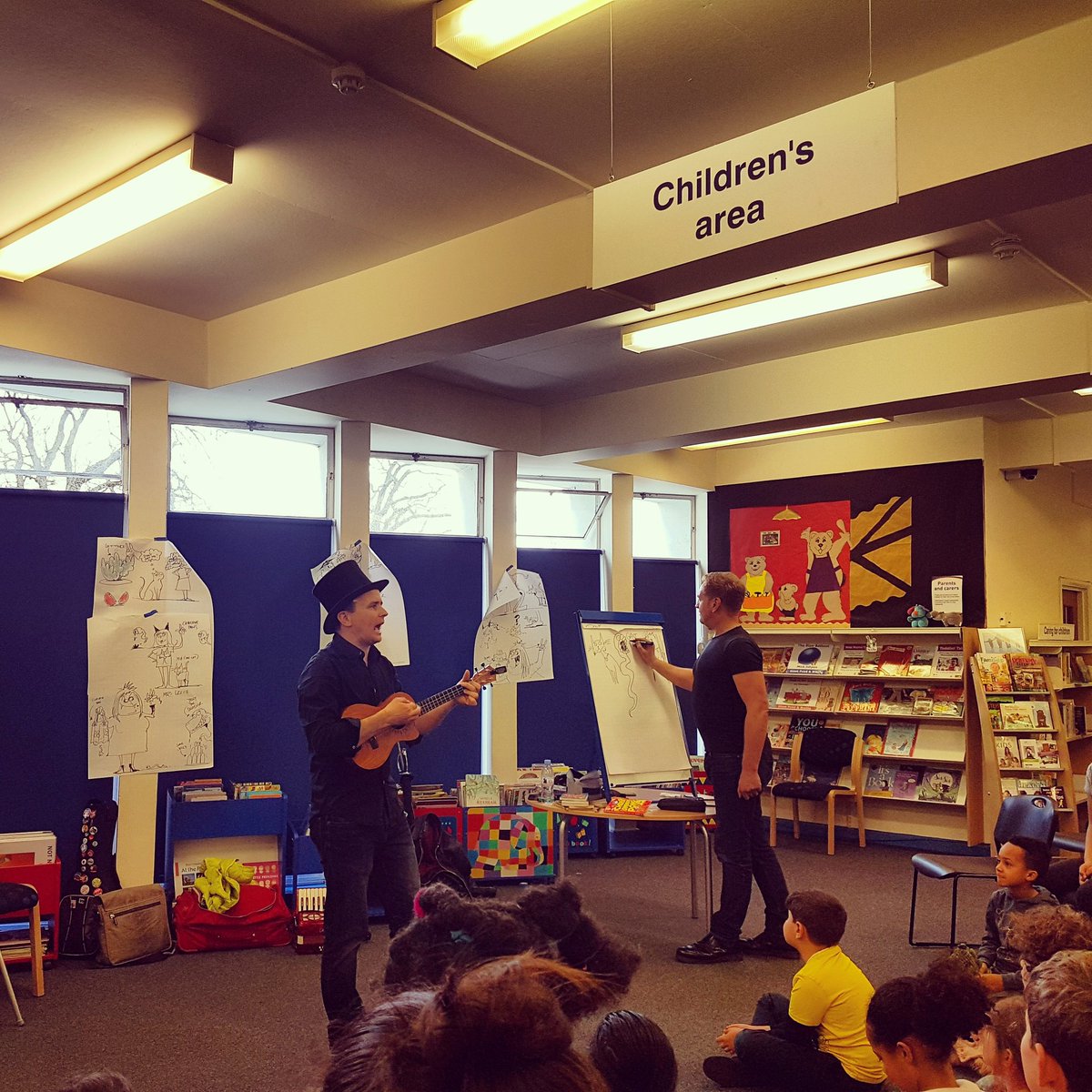
Gareth P Jones plays the uke and Steve May pens the pictures

Many politicians think that libraries are old fashioned and irrelevant, but when you have seen first-hand how they bring communities together and the positive effects they have on children’s (and the nation’s) reading habits then it makes you want to scream #SaveLibraries from the top of the tallest library.”


And here's a pile of picture books on one of my shelves. There are others around the house . . . As I've said, they are my friends.  


But I'm always looking for more -
AT THE LIBRARY!


 Do you have a library story? Share it with us!

_______________________________________________________________________


Natascha Biebow, MBE, Author, Editor and Mentor

Natascha is the author of the award-winning The Crayon Man: The True Story of the Invention of Crayola Crayons, illustrated by Steven Salerno, winner of the Irma Black Award for Excellence in Children's Books, and selected as a best STEM Book 2020. Editor of numerous prize-winning books, she runs Blue Elephant Storyshaping, an editing, coaching and mentoring service aimed at empowering writers and illustrators to fine-tune their work pre-submission, and is the Editorial Director for Five Quills. She is Co-Regional Advisor (Co-Chair) of SCBWI British Isles. Find her at www.nataschabiebow.com