Showing posts with label Libraries. Show all posts

Monday, 22 April 2024

BIBLIOTHERAPY: BOOKS ABOUT BIG FEELINGS HEAL! • by Natascha Biebow

If you know me, it’s no secret if that I don’t go anywhere without a book to read. At the end of the day, I turn to a book to offer a quiet space of calm, a welcome escape that sets me up for a good night’s sleep. Reading makes me feel centred and whole. I like to sit and look at my bookshelf and find the book for that moment, for that frame of mind, for that state of heart. THERE IS A BOOK FOR THAT!


There's a book for that, no matter what!

Much has been written about the importance of books in instilling empathy in young readers, and how reading is the key for children’s success in later life. But can reading also heal? Are books actually good for our mental health?


According to neuroscientist and science journalist Richard Sima, “Researchers are investigating the impact of reading experiences and reporting evidence of promising mental and social health benefits . . . Now practitioners are exploring new models using the literary arts to support mental health in clinics, classrooms, and communities worldwide.”


Young children may have not yet experienced the whole wide world,
but they still have big feelings and need ways to process and deal with them.


We are wired for story. In the early years, the lines between pretend and reality are frequently blurred. Young children are often deeply connected to fictional characters and toys, interacting with them as if they were real. They are naturally drawn to telling and inventing stories in their imaginative play.

For young children fictional characters can seem rea

Reading stories allows children to step into others’ shoes, building neural pathays in their brains that prompt new ways of responding to situations (Tamir, D. I. et al., 2016). The more these new neural routes are used and practised, with each re-reading of the story, the more routine they become. Reading with a trusted adult can help children navigate their own big feelings and experiences, because stories validate children’s experiences and emotions and model new ways of thinking. 


Reading together can be healing.


In this study, researchers proposed that Bibliotherapy could offer a low-cost and accessible way to improve the mental health. How does it work? There are three stages:

Identification: the reader identifies with a story character and bonds with them.


Catharsis: through the story, the reader experiences the conflict alongside the character and how s/he resolves it.


Insight: the reader reflects on their own circumstances in relation to the story – the characters’ emotions, behaviours and conflict resolution model - and considers how they might apply these tools to their own lives.


Bibliotherapy


• validates young readers’ emotions and experiences

• models how to self-regulate, deal with conflict and big emotions

• opens a dialogue using the story as a vehicle for starting the discussion


I recently attended an excellent SCBWI talk by Melissa Manlove, formerly Executive Editor at Chronicle Books, “The Big Feelings Picture Book Workshop: Transforming Your Past Into Reader's Futures”. In the seminar, Manlove argued that “children's emotional lives are as big and as rich as adults’—and that they need stories that honor that and help them to navigate these essentially human experiences.”


All children deserve a wide variety of books to reflect their feelings and experiences. Libraries in schools and communities are essential resources for creating access to bibliotherapy!


Something Melissa said in her talk resonated with me – happy children are not children who don’t know pain, trauma or difficult situations; they are not children who don’t have big feelings.  


All children are dealing with something, small problems – like finding friends or fear of the dark – and difficult, bigger issues – like having lost a loved one, grappling with injustice, or the displacement of war –


But the difference is that happy, well-adjusted children know there is a path to the top of the mountain:


THEY HAVE A BOOK FOR THAT!


#ReadForEmpthy Collection 2024

Stories children them that there is a path, a way forward to get to the other side of the hard, bigger issues. Children need to know that there are ways to slay their dragons, to deal with their problems. 


Stories offer a path - empathy, hope and sometimes solutions.
 

Books offer a safe space for exploring big feelings and big or small problems. 


Melissa encouraged authors to not shy away from tackling big feelings and big issues in picture books, just because they’re for younger readers, but instead to show children the path for how they might solve and navigate these through story. It is up to us to create the book for THAT!

By tapping into our own big feelings and ways to navigate life, our childhood memories and experiences, and then innovate in a child-centred way, we can create books that will empower and resonate with the young readers of the future.


*Find recommendations of books that inspire empathy in the #ReadForEmpthy Collection 2024
*And Books that Help when the Words are Hard to Find on Books That Help

___________

Natascha Biebow, MBE, Author, Editor and Mentor

Natascha is the author of the award-winning The Crayon Man: The True Story of the Invention of Crayola Crayons, illustrated by Steven Salerno, winner of the Irma Black Award for Excellence in Children's Books, and selected as a best STEM Book 2020. Editor of numerous prize-winning books, she runs Blue Elephant Storyshaping, an editing, coaching and mentoring service aimed at empowering writers and illustrators to fine-tune their work pre-submission, and is the Editorial Director for Five Quills. Find out about her new picture book webinar courses! She is Co-Regional Advisor (Co-Chair) of SCBWI British Isles. Find her at www.nataschabiebow.com


Monday, 5 October 2020

Express YourSHELF for National Libraries Week


National Libraries Week kicks off today to celebrate the role of libraries in the UK’s book culture and promote libraries as “spaces for reading, engagement, learning and creativity.”


When did you last visit the library? Do you remember a school or class library from your childhood? If you have children, did you go to the bounce and rhyme times? Or maybe the library is a place where you go to work and think, meet people, or even learn a new skill. People come into the library for all kinds of reasons, including searching for elusive bits of information and archive materials.  


“Libraries offer a safe space, providing access to digital & online learning, helping to combat loneliness and having a positive impact on people’s lives.” – Arts Council for England


Research shows that there is a correlation between getting families reading and children enjoying stories with them doing better at school and doing better in life. So, how can libraries engage children?


In More than a House of Books", a Podcast commissioned by the Arts Council for England, Sarah Mears (Library Services Manager, Essex County Council. Former chair of the Association of Senior Children's and Education Librarians) stressed that the most important thing is the welcome they receive at the door.


The library needs to be “ . . . an exciting and vibrant space that attracts children. It's light, it's airy, it's colourful. There are lots of things that engage them. Activities for them to do, interesting technology that they may have not experienced in their own homes. But I think most importantly, it's still the books. Children love reading for pleasure and they love being inspired to read new titles, new authors.”


Today, libraries aren’t places of where librarians go ‘shhh!’; instead they are vibrant community hubs where authors, illustrators and storytellers visit, arts & crafts clubs meet, music and theatre activities inspire the imagination, and poetry groups perform.


Regrettably, many libraries are closing, but some – such as the new Manchester Library, which has soundproofed music area, and the Birmingham Library, with its roof gardens ­­- are being imaginatively re-purposed and re-thought to inspire the next generation to use the space to engage people both with reading and digital skills.”

Libraries are filled with wonderful new contemporary books to explore, and dedicated, knowledgeable librarians who are thrilled to help you. You can check out a whole pile of books to explore new ideas, discover and re-read favourite authors & illustrators, and even learn new skills. If something doesn’t resonate, I love that the books come with no strings attached – you can simply return them and check out some more – for free!


As part of the campaign for National Libraries Week, six SCBWI authors were invited to participate in CILIP’s Express YourSHELF campaign and make a video about the books that influenced us.


For me, books are like friends, so choosing favourites was tricky!  


You can see the videos here at midday each day this week.


And YOU can join in too! Express yourSHELF by sharing some books that shaped YOUR world by snapping a pic of your book shelves, too, and posting on social media with hashtag #ExpressYourshelf


The thing about libraries is they are there for all stages of your life and for the whole family:


In lower school, I went to the library at break time to hang out with the books and magazines, and choose new ones; I even made library cards for the small shelf of books I owned at home (mostly birthday presents sent by my grandmother who lived in England).


The EARJ lower school library had a lovely central area
where we could read beneath the colourful papier maché elephant


In high school, I spent most of my lunch times in the library eating my sandwich on the sly while hanging out with my friends (we weren’t allowed to eat in the library). In those days, you went to the library after school and in class to look stuff up in the Encyclopedias; reference books couldn’t leave the reading room because they had to be on hand for all students to use for research. Strange, now we can ask Google everything!


Now, I go to my local library almost every week to get a pile of bedtime reading, to see what’s new in picture books and check out nonfiction kids’ books for research. 


A pile of TRUE story picture books to pore over

There is something comforting about being amongst all those book friends, the promise of a story or a new idea or a-ha moment. You never know – until you get home and crack open the covers – whether it’s the right book for you, but it’s ever so exciting!


I asked some fellow Picture Book Den authors to share some stories of how libraries have influenced their lives, too:


Lucy Rowland


    “I remember my primary school library the best – a calm quiet space where we would be taken in small groups to borrow beautiful books. It was also used as a spill-over learning area so we had some of our most exciting lessons in there - music lessons, a craft workshop, a puppet show performance. For that reason, the library always felt like a rather special place!” 


Jane Clarke


    “As I child, I loved Kettering's town library. I'd rush up the steps, dash into the children's section, scoop up armfuls of books, then retire to a quiet corner to sit on the floor and decide which to take home. When I discovered new series, there were nerve-racking moments - would the title I had set my heart on be on the shelf - or had it already been borrowed? Oh, the joy if it was there!”


Jane Clarke entertains her library audience with a science activity

Clare Helen Welsh


Clare Helen Welsh enthralls her young audience


    “I don't actually remember visiting the library as a child, which is a huge shame. I'm sure we did and that it's just my foggy memory, but I vividly remember taking my classes to the library as part of my job as primary school teacher. The informal visits provided the opportunity to pore over worlds and characters, words and pictures. The times we went to meet visiting authors, illustrators and storytellers were just as memorable. I'm certain they inspired the children and they definitely inspired me. I now have the outrageous privilege of writing stories that live on those shelves, and delivering story sessions just like the ones I watched


Craft activities with author Clare Helen Welsh

I wonder if I would have had the courage to make the step from teacher to writer, had it not been for the possibilities the library gave me. Of course, in these increasingly challenging times the battle is keeping libraries open and keeping them alive. But we must - a library is so much more than library.”


Pippa Goodhart

     “When my children were little, a visit to the library was the treat at the end of the weekly shop. I think a lot of people find the huge number of books on shelves in libraries daunting, and don’t know where to begin with choosing. Children just find the right shelves and get stuck in! But we do need expert librarians onhand to help pair the right child with the right book at the right time, especially with those books that might comfort or inspire or enlighten at particular moments in a child’s life. Or an adult’s life, come to that!


Pippa’s daughter as a child blissfully combining reading a book (from a library -

see the spine!) with a kitten, and her now as a grown-up, reading to baby her son.


I love using libraries now, at least in non-Covid times. I borrow armloads of books, but I also like them as places to work. Being surrounded by books and other people, heads down as they work, somehow helps me to focus better than I sometimes can at home.”


Gareth P. Jones


    “The Summer Reading Challenge is one of the best things that libraries do. Each year, libraries around the country encourage children to keep reading through the summer. As an author I’ve had my books selected for several lists (my Dragon Detective series formed part of this year’s Silly Squad), and I’ve appeared at libraries up and down the country to hand out certificates, celebrate reading and shake the hands of local mayors (shaking hands - remember that?).


2020 Summer Reading Challenge

But my most positive experience was when my son did the challenge. He had to sit down and talk to a librarian about each book he had read, telling her what he had enjoyed about it and what he had taken away from the book.


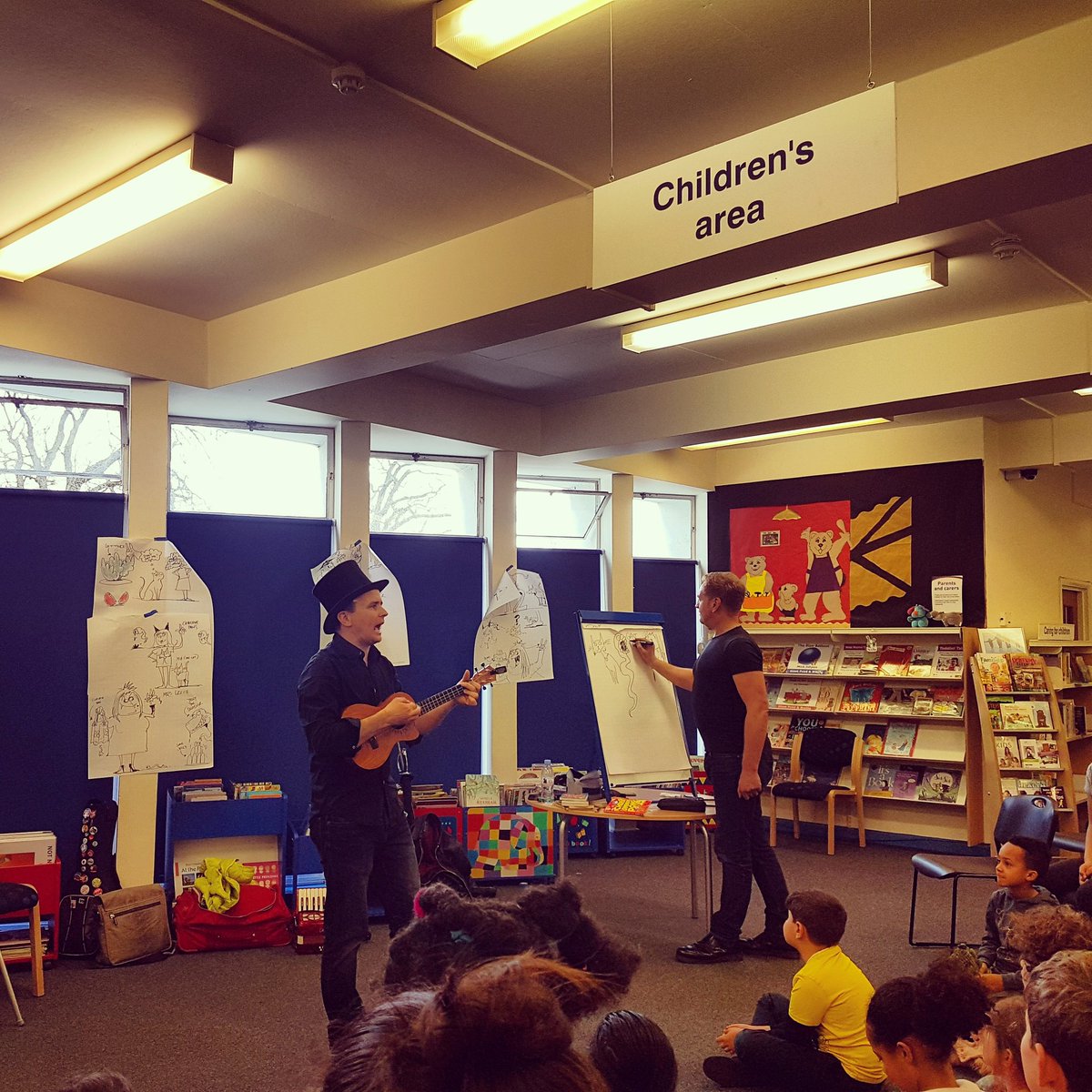
Gareth P Jones plays the uke and Steve May pens the pictures

Many politicians think that libraries are old fashioned and irrelevant, but when you have seen first-hand how they bring communities together and the positive effects they have on children’s (and the nation’s) reading habits then it makes you want to scream #SaveLibraries from the top of the tallest library.”


And here's a pile of picture books on one of my shelves. There are others around the house . . . As I've said, they are my friends.  


But I'm always looking for more -
AT THE LIBRARY!


 Do you have a library story? Share it with us!

_______________________________________________________________________


Natascha Biebow, MBE, Author, Editor and Mentor

Natascha is the author of the award-winning The Crayon Man: The True Story of the Invention of Crayola Crayons, illustrated by Steven Salerno, winner of the Irma Black Award for Excellence in Children's Books, and selected as a best STEM Book 2020. Editor of numerous prize-winning books, she runs Blue Elephant Storyshaping, an editing, coaching and mentoring service aimed at empowering writers and illustrators to fine-tune their work pre-submission, and is the Editorial Director for Five Quills. She is Co-Regional Advisor (Co-Chair) of SCBWI British Isles. Find her at www.nataschabiebow.com

Monday, 3 December 2018

The Habit of Libraries Matters • Natascha Biebow


I have been thinking about libraries.


Libraries are of course buildings that house stacks of books, periodicals, newspapers, computers – they are places that house INFORMATION in all its modern guises. If you’re lucky, they also have kind and knowledgeable librarians, who will give you advice and order books for you. They might also be really, good listeners!

 
From A Library Book For Bear by Bonnie Becker - such a friendly librarian!

My relationship with libraries was habit-forming from the outset. I can still remember the books I chose and read from our lower school library. In its reading corner, it had a huge, spectacular colourful papier-mâché elephant that gazed down kindly over our small selves. You could sit underneath it and chat or read. It was a friendly welcoming presence and a really good listener. 

The Elephant in the EARJ library
This was the place you could go and browse the open stacks to find the next treasure to read, do research for your school work, and where you could meet your friends at break or lunchtime. It felt like home because it had books and I loved books like friends.


In those pre-computer, pre-barcode days, remember how your library books each had a card that got stamped in and out with an inkpad? It seems incredibly old-fashioned now compared to the cool automated systems available now!


In high school, I often hung out at the library during lunch break and the librarian frequently had to tell me off for sneaking bites of my sandwich (“No eating in the library!") or laughing too loudly with my friends.


At university and in my early days working as a children’s book editor, the library was essential for inspiration, research and fact-checking. I was lucky enough to visit the British Library in its old reading room in the British Museum and pore over the stacks at the London Library. 
The magnificent old British Library Reading Room in Bloomsbury
Now, you can do a lot of this research from your desktop, but still, archives have to be housed somewhere, in a building, in a library. Recently for my book THE CRAYON MAN, I found it priceless to be able to research remotely using sources such as the online Library of Congress.


When I became a parent, our local library became the weekly destination for the sing and rhyme session. I re-learned all those nursery rhymes I’d forgotten, key for developing early literacy, and a looked forward to the respite of seeing other parents and toddlers.

 
 Rhyme time at the library

Now my son is older, going to the library has become a habit we can share – a regular trip to explore its shelves yields a pile of books to explore. We have a golden ticket!

We have nothing to lose. It’s free (well, paid for by our council tax), and if the book is not the right fit, we can exchange it for another. In my life, libraries are first and foremost a place that has a truly priceless treasure books I didn’t know I even needed to read!


Libraries are one of the oldest institutions of our society, but in many places in Britain, they are in trouble. 
Placards protesting against library closure
As funding is cut, many councils are either closing libraries or local volunteers are being drafted in to run them. In the case of the council where I live, the library is now run by a charitable social enterprise. The library is actually quite good still and we're incredibly lucky to have it within walking distance.


I went on a hunt to see if I could find some statistics about library usage among children. According to the data compiled by the DCMS Taking Part 2014/15 Annual Child Report in 2015, and reported by The Reading Agency:


• 68% of 5-10 year olds and 74% 11-15 year olds visited the library in the last year.

• 14% of 5-10 year olds and 29% of 11-15 year olds visited the library in the last week

• 35% of adults visited a public library in the last 12 months


It was also found that “libraries play a key role in providing books for children”.

 
From Luna Loves Library Day by Joseph Coelho

Interestingly, research by the Arts Council also showed evidence of “library users having higher life satisfaction, happiness and sense of purpose in life”. Library usage therefore goes beyond books and reading, but also impacts on mental health, social inclusion, community and increased well-being.


Reading books holds the key to our future, to creating imaginative solution-driven children, developing all-important empathy, and creating a happier, more equitable, diverse and peaceful world. And libraries, after all contain books – and books are friends!

 
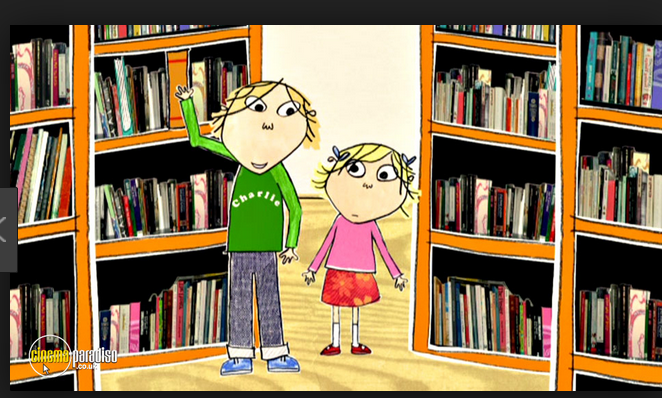
Charlie and Lola in the library by Lauren Child

Want to know more?

The Reading Agency Library Facts Impact report here

You can read a very good argument for libraries and why reading matters by Chris Riddell and Neil Gaiman here and in pictures


How have libraries shaped you?
 ________________________________________________________________

Natascha Biebow,
MBE, Author, Editor and Mentor
 
Natascha is the author of The Crayon Man: The True Story of the Invention of Crayola Crayons, illustrated by Steven Salerno, Elephants Never Forget and Is This My Nose?, editor of numerous award-winning children’s books, and Co-Regional Advisor (Co-Chair) of SCBWI British Isles. She received an MBE for her services to children's book writers and illustrators. She runs Blue Elephant Storyshaping, an editing, coaching and mentoring service aimed at empowering writers and illustrators to fine-tune their work pre-submission. Find her at www.nataschabiebow.com