Showing posts with label libraries matter. Show all posts

Monday, 9 December 2019

The Bookshelf of Life: How our Reading Journey Shapes Our Writing • by Natascha Biebow


Stories are fluid, malleable creatures that shift with the teller, the listener and the place.

So what tales influence us? How does our journey and relationship with story influence the kind of reader we are, what kind of person, even, we become, and the kind of story we write, illustrate, edit and design?

I'd like to share with you a little about my bookshelf of life, in the hopes that it might encourage you to do the same. When I looked at it, I came away with a startling realization – books speak volumes about us . . . and our world views.

Today, there is a lot of talk about diversity, and the need to be inclusive, self-aware and open-minded in this challenging world in which we live. But equally, it can be frustrating the assumptions some people make when countenancing diversity. Diversity isn’t just the colour of the skin, gender or ethnicity. 

A selection of diverse picture books

Diversity runs much deeper than that. It is often unseen, complex, shaped by our experiences as children and adults, the places we’ve been (or not), our families, our interests and links to the outside world. All of us, we want to be seen, to be heard, to be respected for who we are, to be given opportunities and to be valued. We are all diverse in our own ways. And, if we can appreciate this, together we can be more. 

So here are some of the books that tell you a little bit about me, that perhaps you might not have known before. They are stories I heard and the stories I read by myself that opened windows and doors and eyes and ears. And now the stories I write:
 
The Little Match Girl by Hans Christian Andersen from
Favourite Fairy Tales from Andersen
illustrated by Paul Durand (Hamlyn)
We didn’t have many picture books at home - possibly because we lived in Brazil, a non-English speaking country, and possibly because they were expensive and people just didn’t own such things? I had this beautiful anthology of Andersen Fairy tales and I made my mother read to me ‘The Little Match Girl’ even though it always made me cry. I’m not sure what my fascination with such a sad story was, but I see now that it is a story of light and hope for the little match girl warms her hands and her soul with images from her imagination.

My first grade teacher read CHARLOTTE’S WEB to us aloud. Every afternoon, the story would unfold. There is something gripping about being read to. Magical.
 
Charlotte's Web by EB White, illustrated by Garth Williams
My favourite place in the school was the library. There we had a giant papier-mache elephant in the central circular area, where the librarian read aloud after we chose our books during the weekly class visit. 
The Library where Reading became a joy and a habit

I particularly remember this book, a Chinese folktale:


I read books in Portuguese too. This one – the story about family and big dreams – stuck with me. The main character is a girl who longs to be powerful and heard like grown-ups, boys and writers. Her dreams come to life in a series of characters stuffed into her precious yellow bag, including this feisty rooster.
From A Bolsa Amarela by Lygia Bojunga

Along with books from the library, the ones I owned were precious gifts sent by my grandmother, who lived in England. I read everything: horse and ballet books, fantasy, Pippi Longstocking, Paddington bear . . .


As well as many pivotal American authors (I went to an American school, though no one in my family is American), like Judy Blume and Beverly Cleary, who understood the ordinary child, the misfits, and captured the journey of figuring out who you are in this world. I still haven’t read the book about growing up with a disabled brother like mine; perhaps I need to write it someday.


But the books that I was most drawn to were those with true story narratives. The stories of real people - the pioneers, the country vet, early people, the girl who survived with a pack of wolves, the writer - these are the ones that I was fascinated by and re-read countless times.

As I’ve mentioned, we didn’t have many picture books at home. Here is one that we did have. I loved the detailed pictures and worlds. 
 
What Do People Do All Day? by Richard Scarry

Later, much later, at university, I started to discover the genre, which in the late 80s/early 90s was going through a boom. Since then, I’ve been lucky enough to edit and admire lots of picture books. Here are some of my favourites:


And even later, books that showed different kinds of families - ones that lived far-flung across the globe, and ones with disabled people in them and two mums and two dads.
 

After a lot of exploration, I remembered that I liked true stories. As I child, I was fascinated by National Geographic WORLD magazine. I dreamt of becoming a writer for National Geographic. I found my calling as a children’s book editor and writer – I can’t get away from cool facts. I challenge myself – and you – to learn at least one new fact a day. It’s fun! And the truth is often stranger than fiction.

National Geographic World Magazine, published by National Geographic
Like the story of this man, inventor Edwin Binney, who had a knack for listening and making what people needed and whose love of colour and nature

From The Crayon Man: The True Story of the Invention of Crayola Crayons
by Natascha Biebow, illustrated by Steven Salerno
led to the invention of Crayola crayons.

Whether the stories we read and tell are modern, mythical, magical, true or fictional – we want and need them to resonate, because then they ring true and, as such, they speak to us and our young readers. These are stories that inspire ideas, deal with fears, create a feeling of belonging, change preconceptions and so much more.    

Only you have YOUR pocket full of diverse stories, your individual beat. 


Trust it. Embrace the unknown, the strangeness. Sit with it. Discover your angels, your fears, your quirks. 

___________________________________________________________________________________________

Natascha Biebow,
MBE, Author, Editor and Mentor
Natascha is the author of The Crayon Man: The True Story of the Invention of Crayola Crayons, illustrated by Steven Salerno, Elephants Never Forget and Is This My Nose?, editor of numerous award-winning children’s books, and Co-Regional Advisor (Co-Chair) of SCBWI British Isles. She is currently working on more non-fiction and a series of young fiction. She runs Blue Elephant Storyshaping, an editing, coaching and mentoring service aimed at empowering writers and illustrators to fine-tune their work pre-submission. Find her at www.nataschabiebow.com


Monday, 15 July 2019

Building Kids’ Bookshelves - Just One (More) Book At a Time • by Natascha Biebow


I have this image stuck in my mind: just one book on a lonely bookshelf, occupying pride of place.


A precious resource.


The key to so many things, among them MAGIC. Yes, the magic of reading, the magic of another world, the magic of access, the magic of fun.


I grew up in a non-English speaking place, so books were treasured gifts from family living in England.


I loved reading, and I loved books. My school had a library also. More windows.


I still have these books. They are friends. When I was old enough, I filched from my parents’ bookshelves as well. 


But for many, the reality is very different. 

In 2018, in the UK, the National Literacy Trust surveyed 44,097 children aged 8-18. It worryingly concluded that 1 in 11 children and young people in the UK don’t own have a book of their own at home. 

The same survey also revealed unsurprisingly that “the more books a child owns, the more likely they are to do well at school and be happy with their lives.

It is well documented that reading for pleasure is the single biggest indicator of a child’s future success, and that reading is key to developing empathy. Picture books (and all books!) matter.
 

There are some great initiatives to bring books into households:


Booktrust’s Bookstart – which gives free books to every child in England and Wales at two key stages before school, as well as free packs for children with additional needs.  

World Book Day –  where each child receives a £1 book token towards a book – is a registered charity on a mission to give every child and young person a book of their own. Published figures state that WBD reaches 15 million children and young people in 45,000 schools every year.


With every book donated, there is a greater chance of a child discovering their love of reading and gaining access to a brighter future. 


But, clearly, there is more to be done.


Even if children have one book on their shelves, they should be entitled to more. Access to books through free school and public libraries is something that will benefit everyone’s future.


This week, Cressida Cowell took over the mantel of Children’s Laureate from Lauren Child, with an ambitious ten-point charter:


In her impassioned speech at the launch event, Cowell talked about the magic of books and reading for fun. She promised to do more to lobby for access to books, school libraries and author and illustrator visits.


And she promised to LISTEN to what children are saying about books and reading and needing to address our planet’s climate emergency.   

School children support Cressida Cowell's laureate launch speech


Cowell admits that it’s a huge list, but she’s committed and she has the laureateship behind her.


But is there something I could do to contribute, I wondered?


I thought about this again . . .


And I remembered: on my author tour this Spring to promote THE CRAYON MAN, I met a teacher and librarian who shared with me the order form for my book that went home with the children. On it, in addition to the possibility of ordering my book to be signed when I came to the school, parents and carers could also choose to buy a book for another child, one who might perhaps not have access to such a thing. And people did!


At another school, the PTA purchased a book for the library and a copy to give out as reward for children who had achieved something noteworthy at school. I know some authors and illustrators, if they're able, sometimes donate a copy of their book to the school library.


If, for every author/illustrator visit we did, even one child got a book who might not otherwise have one, just think how many more books might be on that bookshelf?


_______________________________________________________________

Natascha Biebow,
MBE, Author, Editor and Mentor
Natascha is the author of The Crayon Man: The True Story of the Invention of Crayola Crayons, illustrated by Steven Salerno, Elephants Never Forget and Is This My Nose?, editor of numerous award-winning children’s books, and Co-Regional Advisor (Co-Chair) of SCBWI British Isles. She is currently working on more non-fiction and a series of young fiction. She runs Blue Elephant Storyshaping, an editing, coaching and mentoring service aimed at empowering writers and illustrators to fine-tune their work pre-submission. Find her at www.nataschabiebow.com


Monday, 3 December 2018

The Habit of Libraries Matters • Natascha Biebow


I have been thinking about libraries.


Libraries are of course buildings that house stacks of books, periodicals, newspapers, computers – they are places that house INFORMATION in all its modern guises. If you’re lucky, they also have kind and knowledgeable librarians, who will give you advice and order books for you. They might also be really, good listeners!

 
From A Library Book For Bear by Bonnie Becker - such a friendly librarian!

My relationship with libraries was habit-forming from the outset. I can still remember the books I chose and read from our lower school library. In its reading corner, it had a huge, spectacular colourful papier-mâché elephant that gazed down kindly over our small selves. You could sit underneath it and chat or read. It was a friendly welcoming presence and a really good listener. 

The Elephant in the EARJ library
This was the place you could go and browse the open stacks to find the next treasure to read, do research for your school work, and where you could meet your friends at break or lunchtime. It felt like home because it had books and I loved books like friends.


In those pre-computer, pre-barcode days, remember how your library books each had a card that got stamped in and out with an inkpad? It seems incredibly old-fashioned now compared to the cool automated systems available now!


In high school, I often hung out at the library during lunch break and the librarian frequently had to tell me off for sneaking bites of my sandwich (“No eating in the library!") or laughing too loudly with my friends.


At university and in my early days working as a children’s book editor, the library was essential for inspiration, research and fact-checking. I was lucky enough to visit the British Library in its old reading room in the British Museum and pore over the stacks at the London Library. 
The magnificent old British Library Reading Room in Bloomsbury
Now, you can do a lot of this research from your desktop, but still, archives have to be housed somewhere, in a building, in a library. Recently for my book THE CRAYON MAN, I found it priceless to be able to research remotely using sources such as the online Library of Congress.


When I became a parent, our local library became the weekly destination for the sing and rhyme session. I re-learned all those nursery rhymes I’d forgotten, key for developing early literacy, and a looked forward to the respite of seeing other parents and toddlers.

 
 Rhyme time at the library

Now my son is older, going to the library has become a habit we can share – a regular trip to explore its shelves yields a pile of books to explore. We have a golden ticket!

We have nothing to lose. It’s free (well, paid for by our council tax), and if the book is not the right fit, we can exchange it for another. In my life, libraries are first and foremost a place that has a truly priceless treasure books I didn’t know I even needed to read!


Libraries are one of the oldest institutions of our society, but in many places in Britain, they are in trouble. 
Placards protesting against library closure
As funding is cut, many councils are either closing libraries or local volunteers are being drafted in to run them. In the case of the council where I live, the library is now run by a charitable social enterprise. The library is actually quite good still and we're incredibly lucky to have it within walking distance.


I went on a hunt to see if I could find some statistics about library usage among children. According to the data compiled by the DCMS Taking Part 2014/15 Annual Child Report in 2015, and reported by The Reading Agency:


• 68% of 5-10 year olds and 74% 11-15 year olds visited the library in the last year.

• 14% of 5-10 year olds and 29% of 11-15 year olds visited the library in the last week

• 35% of adults visited a public library in the last 12 months


It was also found that “libraries play a key role in providing books for children”.

 
From Luna Loves Library Day by Joseph Coelho

Interestingly, research by the Arts Council also showed evidence of “library users having higher life satisfaction, happiness and sense of purpose in life”. Library usage therefore goes beyond books and reading, but also impacts on mental health, social inclusion, community and increased well-being.


Reading books holds the key to our future, to creating imaginative solution-driven children, developing all-important empathy, and creating a happier, more equitable, diverse and peaceful world. And libraries, after all contain books – and books are friends!

 
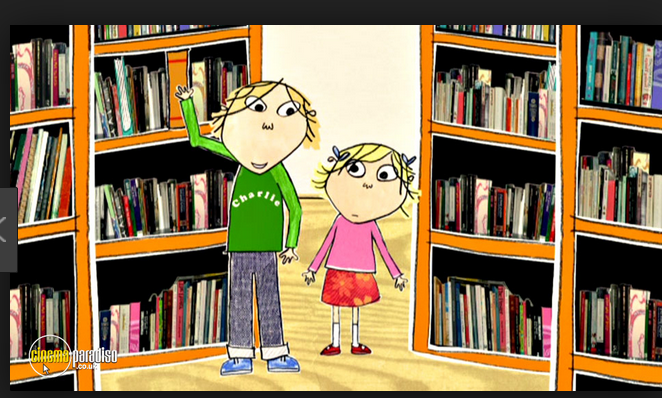
Charlie and Lola in the library by Lauren Child

Want to know more?

The Reading Agency Library Facts Impact report here

You can read a very good argument for libraries and why reading matters by Chris Riddell and Neil Gaiman here and in pictures


How have libraries shaped you?
 ________________________________________________________________

Natascha Biebow,
MBE, Author, Editor and Mentor
 
Natascha is the author of The Crayon Man: The True Story of the Invention of Crayola Crayons, illustrated by Steven Salerno, Elephants Never Forget and Is This My Nose?, editor of numerous award-winning children’s books, and Co-Regional Advisor (Co-Chair) of SCBWI British Isles. She received an MBE for her services to children's book writers and illustrators. She runs Blue Elephant Storyshaping, an editing, coaching and mentoring service aimed at empowering writers and illustrators to fine-tune their work pre-submission. Find her at www.nataschabiebow.com