Showing posts with label The Crayon Man. Show all posts

Monday, 1 May 2023

Are There Any NEW Book Ideas Out There? • by Natascha Biebow

Are there really any NEW book ideas out there . . .? When you have a book idea, do you go online and search if anyone else has done it already?

For example, say you wanted to write a book on the topic of TREES. Here are just seven different ways 'in' to the topic that you might find:

Trees to Spot by Kirsteen Robson and Sam Smith

The Tree Lady: The True Story of How One Tree-Loving Woman
Changed a City Forever
by H. Joseph Hopkins and Jill McElmurry

Tree by Britta Teckentrup

Trees: A Lift-the-Flap Eco Book illus by Carmen Saldana

Little Tree by Loren Long

As an Oak Tree Grows by G Brian Karas

The Wisdom of Trees by Lita Judge


So, arguably, most of the time, the answer is yes – in some shape or form - someone will have already written a book on 'your' topic. Why?

People are often asking the same questions – we’re curious by nature.

Everything reminds us of something . . .

It can be dispiriting, sometimes, to find yourself almost halted by this kind of obstacle before you’ve even really started.


But  . . .


Here’s a glimmer of hope: most ideas HAVE already been done, but they haven’t already been done by YOU.


So, how can you figure out your fresh, new take on an idea, your uniquely YOU story?


Writing coaches and industry professionals will often say:


“Write from the heart.”


“Write what you know.”


“Share what you’re driven to share.”


Yes, if you do this, your writing will come from you and your experience.


But the key here is to find a connection with readers that feels fresh and new. How?


You have to find a way to make your idea resonate with readers in a uniquely YOU way.  


How?


You have to make them say a-ha! or ahhhh!!! or aw! or WOW!  


To understand this, we have to delve into where any ‘new’ ideas come from.


Humans are driven to be creative and innovate. It gives us a boost. But . . .


“There is no such thing as a new idea. It is impossible. We simply take a lot of old ideas and put them into a sort of mental kaleidoscope. We give them a turn and they make new and curious combinations. We keep on turning and making new combinations indefinitely; but they are the same old pieces of colored glass that have been in use through all the ages.” ― Mark Twain, Mark Twain's Own Autobiography: The Chapters from the North American Review

Our ideas are in all kinds of combinations, in a 'mental kaleidescope' 

So how do we make ‘new and curious combinations’ that are amazing and feel fresh and new? How do we create something that feels AUTHENTIC?


GENERATING NEW IDEAS:


To create new ideas, we often start with what’s come before, then question the defaults in order to innovate. In an article for the Smithsonian Magazine, this is summed up perfectly:

“Across the spectrum of human activities, prior art propels the creative process . . .

Before 1908, building a new car was laborious. Each vehicle was custom built, with different parts assembled in different places and then painstakingly brought together. But Henry Ford came up with a critical innovation: he streamlined the entire process, putting the manufacture and assembly under one roof. Wood, ore, and coal were loaded in at one end of the factory, and Model Ts were driven out the other. His assembly line changed the way the cars were built . . .  Ford later said, “I invented nothing new. I simply assembled into a car the discoveries of other men behind whom were centuries of work.” 


So, authors must Start with the BUILDING BLOCKS of our world and our lives and seek out the new. We must be curious. This is why we must look around us – really LOOK.


We must do RESEARCH: listen to people around us, read lots of books, watch movies and documentaries, view art, search for problems that need solving in new ways, get involved in pursuits that are unrelated to writing for creative inspiration. Spend time with our young audiences.


We must ASK QUESTIONS: our writer ears must be attuned and open to possibilities. We must look for adventure and explore.   


Then, we must CHANGE THINGS UP, push the BOUNDARIES of our everyday and knowledge, and look for NEW ANGLES on existing solutions and ideas beyond what we already know.

We must make creativity a habit!


BE PROLIFEROUS


In his book Originals: How Non-Conformists Move the World, Adam Grant suggests creatives should generate a lot of ideas to find the original. 


Originals: How Non-Conformists
Changed the World
by Adam Grant


Surprisingly, he shares that William Shakespeare wrote his famous plays MacBeth, Othello and King Lear at the same time as quite a few ‘un-exceptional’ plays. Similarly, Mozart and Beethoven composed more than 600 pieces in their lifetimes, and only a handful were masterpieces. Picasso painted thousands of paintings and Edison registered over 1000 patents, but each are remembered and revered for a handful of achievements.

Grant also says that most people make the mistake of generating only a handful of ideas and ‘then obsess about refining them to perfection.’ Sound familiar?

So, to create new, innovative ideas, we must push ourselves to generate more of them and think big.


FINDING THE EXTRAORDINARY IDEA


So, now you have a pile of ideas . . . but here’s another problem – how can you figure out which ideas are the ones to pursue? Grant says that as creatives we are too close to our work to evaluate it successfully, which is why we are either often too positive about something (we love what we’ve just made!), or unable to see its faults. The solution? To ask fellow creators because they are “open to seeing the potential in unusual possibilities” and they often don’t have a stake in the outcome of our ideas in the way we do.


So, find a reliable critique group partner or, if you’re lucky enough to have one, listen to your editor, agent or art director – they know what they’re talking about!


REMEMBER! IT TAKES TIME to percolate
to have the thought in the back of our minds long enough to come up with creative and unique idea.


Let's take another evergreen picture book topic (New babies in the family!) and look at some examples of how different creators have approached it and innovated to create a ‘new’ book idea that felt fresh and new and connected with readers:


There's a House Inside My Mummy
by Giles Andrae and Vanessa Caban
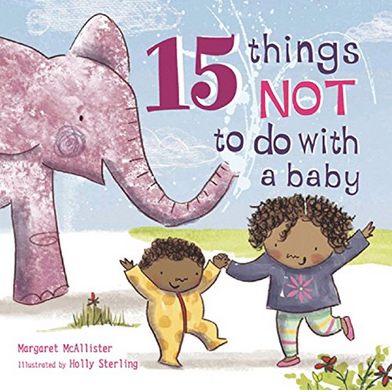
15 Things NOT to Do with a Baby
by Margaret McAllister and Holly Sherling

The Baby's Catalogue by Janet and Allan Ahlberg

Waiting for Baby by Rachel Fuller

The NEW Small Person by Lauren Child

Wolfie the Bunny by Ame Dyckman and Zachariah OHora

There's Going To Be a Baby by John Burningham and Helen Oxenbury

How to Be a Baby by Me The Big Sister by Sally Lloyd-Jones and Sue Heap

Mr Bear's New Baby by Debi Gliori

Mummy Laid and Egg by Babette Cole

On the Night You Were Born by Nancy Tillman

Mommy, Mama and Me by Lesléa Newman and Carol Thompson

Tell Me Again About the Night I Was Born by Jamie Lee Curtis and Laura Cornell


So many ways 'in'! You can change up the target age group, fiction vs. non-fiction, flip the point of view, turn the voice on its head, innovate the structure and so much more!

Even if you don’t come up with a brand new idea, by adding your unique take on it, you could add a new perspective or spin that might feel new and connect with young readers. And THAT is valuable!


_________________________________________________________________

Natascha Biebow, MBE, Author, Editor and Mentor

Natascha is the author of the award-winning The Crayon Man: The True Story of the Invention of Crayola Crayons, illustrated by Steven Salerno, winner of the Irma Black Award for Excellence in Children's Books, and selected as a best STEM Book 2020. Editor of numerous prize-winning books, she runs Blue Elephant Storyshaping, an editing, coaching and mentoring service aimed at empowering writers and illustrators to fine-tune their work pre-submission, and is the Editorial Director for Five Quills. Find out about her new picture book webinar courses! She is Co-Regional Advisor (Co-Chair) of SCBWI British Isles. Find her at www.nataschabiebow.com


Monday, 19 September 2022

How to Answer Curious Questions Kids Ask on School Visits • by Natascha Biebow


I do a fair number of virtual school visits, which are hugely enjoyable ways of connecting with teachers and librarians as well as children in many parts of the world. The highlight for everyone is usually the Q & A when the students get the opportunity to ask questions and get answers to whatever they're curious about.


Other authors and illustrators will be familiar with many of these questions, like:


- Where did you get your idea?

- Why did you become an author?

- How long did it take to make the book?

And even the more personal types of questions, like ‘How old are you? and ‘How much do you earn? Are you rich?’


This is a portrait of me doing a school visit by Angely

Every once in a while, a child will ask you something that gives you pause, perhaps something that you don’t know the obvious answer to and you find yourself umming . . .


Here are a couple that have made me stop and think:

“How many times did you mess up on the book?”


I love the idea that children think that you need to ‘mess up’ to make a book.


And indeed there is a lot of messing up!


In the first draft  . . .


And the umpteenth drafts . . .


One of the umpteenth drafts of my book.

And in the illustration roughs . . .


Steven Salerno's rough doodle for the first spread of The Crayon Man


And sometimes even in the artwork!


Messing up is part of figuring stuff out. Messing up is to be human and it’s how we make better books and learn for next time.


Messing up


is


IMPORTANT!


But I’m not sure I can count how many times I messed up to answer that kid's question . . .


“Are you and the illustrator friends?”

Ooh, wouldn't it be great if you could just hop on the phone to your illustrator, and meet up for pancakes or pizza or something? We could share about our lives, what we are making and maybe find out we both like dogs or collecting cool rocks.


Then I’d tell the illustrator how amazing they are at interpreting the words I'd written.


And congratulate them on making visual magic between words and pictures.


And sometimes, if we were on the subject of the book we're making together, I wouldn’t be able to resist offering my two cents about this and that. 


We'd be friends in no time, I'm sure!


But, if you’ve ever made a picture book, you’ll know that the process is rather different. Usually, the editor and art directors are the ‘go-betweens’, the champions and project directors of the picture book. The author talks to the illustrator through them. Very rarely do they meet – at least until the book is out in the world.


This process allows SPACE for each of the author and illustrator to each create freely and unencumbered, and to carefully weigh up and consider feedback to make the best book possible.


So, authors have to trust that everyone on team publishing has the best interests of the book at heart and that every decision that is made is for the good of creating something amazing for children. Sometimes that is HARD.


I’ve made friends with many authors and illustrators with whom I collaborated with my editor’s hat on. We play together, we write letters (and emails) to each other, we share cookies and coffee and we talk about one of our favourite things – books.

THE CRAYON MAN illustrator Steven Salerno and I have collaborated and exchanged many emails. Unfortunately, we haven’t yet met in person. I’d like to be friends with my book’s illustrator because we share something very important in common – we’ve made a book together!


I didn't know what Steven Salerno looked like until
he shared this photo for a joint blog post on his process.


“Do you sell every book you write?”

This question can be read in two ways:


Do you sell every book that you write?


If we sold every book that was printed that would be super super!

No bookstore returns.

No books pulped.

No more sitting in the bookstore at a signing waiting for a single person - anyone - to come and talk to you and buy a copy – the books would just fly off the shelves and the tables and you'd get to sign them all until they were SOLD OUT!


Do you sell every book you write?


Oh my goodness, wouldn’t that be AMAZING? Can you image if you wrote a book and it sold right away and you didn’t have to wait for ages and ages and ages for it to find a good home with an editor?


But on the flip side, it’s actually quite good that everything I write doesn’t end up

on children’s bookshelves because fairly often it needs polishing and loving and cooking some more, and then re-jigsawing and sometimes even


to


be


THROWN


OUT!


Luckily we have time, kind and generous critique group partners and editors to help us realize THAT.


and . . .


“What happened to Harold?”


Harold C. Smith was Edwin Binney’s cousin, with whom he ran Binney & Smith, the company that made Crayola crayons. Harold was the salesman in the duo, while Edwin enjoyed experimenting and inventing.


Harold made friends all over the world on his travels selling products. He later turned to writing and philantrophy.

Edwin and Harold outside the factory (From
The Crayon Man, illustrations by Steven Salerno)


You can never be quite prepared to second-guess what children might ask.

To get out of a tight situation, you can either quickly Google it under the table or . . . 


. . .  if you’re brave enough, admit you don’t know and make it a game. :We should all look it up, shouldn’t we?!"


What curious questions have young readers asked YOU on your author visits? 


_________________________________________________________________


Natascha Biebow, MBE, Author, Editor and Mentor

Natascha is the author of the award-winning The Crayon Man: The True Story of the Invention of Crayola Crayons, illustrated by Steven Salerno, winner of the Irma Black Award for Excellence in Children's Books, and selected as a best STEM Book 2020. Editor of numerous prize-winning books, she runs Blue Elephant Storyshaping, an editing, coaching and mentoring service aimed at empowering writers and illustrators to fine-tune their work pre-submission, and is the Editorial Director for Five Quills. Find out about her new picture book webinar courses! She is Co-Regional Advisor (Co-Chair) of SCBWI British Isles. Find her at www.nataschabiebow.com
 

Monday, 14 February 2022

How to Promote and Celebrate Your Book with a Global Theme Day! by Natascha Biebow

Last week on Thursday, 11 February it was National Inventors' Day

Who knew? The reason I found out is because Eileen, an Emmy Award-winner, professional ham and YouTuber at KidTime Storytime, contacted me to ask if she could do a new read-aloud of my book THE CRAYON MAN in her signature style with . . . puppets!

When I saw her videos, I couldn't resist. They are hilarious!

Since the book's publication, National Crayon Day on 31 March has been a great hook to promote it, but this got me wondering: what other 'days' are there even out there? As an experiment, I decided to investigate what occasions fellow Picture Book Denners could use to get the word out about their latest or upcoming picture books. How can we engage with new, unexpected audiences for our writing and illustrating through this kind of lateral thinking?

Of course, in true nonfiction writer style, I soon got sucked down the rabbit hole and began imagining all kinds of new books I could write based on some of these cool themes . . . 

February 11 ... 'Day'


There is no end to how creative you can be! I mean . . . 'Don't Cry Over Spilled Milk Day'? 'National Make a Friend Day . . ', 'Cow Appreciation Day', and even 'National Lollipop Day'.

Celebrations are an important part of most cultures' yearly calendars.


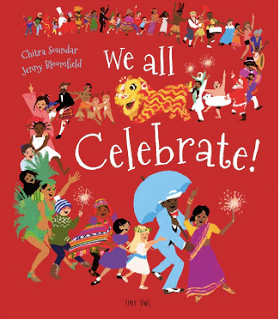
We All Celebrate! by Chitra Soundar and Jenny Bloomfield

In their book, We All Celebrate!, Jenny Bloomfield and Chitra Soundar highlight celebrations from around the world grouped by season. Filled with colour, joy and new customs and traditions for young readers to learn about and discover, it is easy to engage with each one on its featured celebration day. The all-encompassing theme inspires and encourages young readers to connect with cultural holidays around the world. 


Celebrate it also on World Day for Cultural Diversity on 21 May.


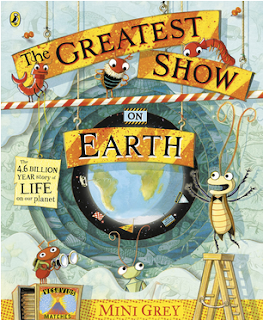
The Greatest Show on Earth by Mini Grey


The Greatest Show on Earth by Mini Grey, which will be published in April, raises the curtain on the 4.6 million year story of Planet Earth. This sumptuous feast of a book is narrated by a friendly troop of insects who put on the show of the evolution of life on Earth – a whistle-stop tour from the birth of Earth, to the age of bacteria, the era of dinosaurs . . .  to present day. 


Celebrate it on Earth Day on 22 April. 


Stop the Clock! by Pippa Goodhart and Maria Christania


Stop the Clock! by Pippa Goodhart and Maria Christania, also published in April, tells the story of a boy who stops the clocks and goes back in time to revisit a very busy and rushed journey to school.  This poignant story reminds us to slow down, take a breath and notice the small details in our busy everyday lives, and even to take time to paint them. 


Celebrate it on World Sauntering Day on 19 June.


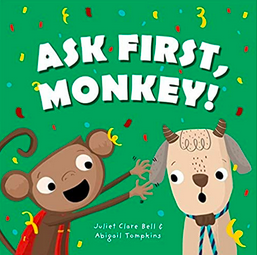
Ask First, Monkey! by Julie Clare Bell and Abigail Tompkins

In Ask First, Monkey!, illustrated by Abigail Tompkins, Juliet Clare Bell tackles an important subject through story. Monkey is the best tickler in the world, ever; even his mum says so. And there's nothing he loves more than tickling ALL his friends at playtime! But what happens if some of his friends don't want to be tickled? This humorous picture book shows young children what consent is, how to consider others' feelings with respect and why it's so important. It empowers young readers to realize that a reason for 'no' is never needed - it just needs to be respected.   


Celebrate it on International Day of Consent on 30 November.
 

Tiptoe Tiger by Jane Clarke and Britta Teckentrup

For every imaginative child still bouncing off the walls at the end of the day, Tiptoe Tiger by Jane Clarke and Britta Teckentrup is the perfect bedtime antidote. The interactive storytelling invites children to tiptoe round the jungle like the little tiger cub – or else scare away the beautiful butterflies and hooting owls – and to watch out for Snappy Crocodile! When at last it's bedtime, sleepy eyes will already be closing, whispering 'Night, night', just like Tiptoe Tiger. 

Celebrate it on Pyjamarama Day on 13 May to promote bedtime stories for all, or even on International Tiger Day on 29 July.


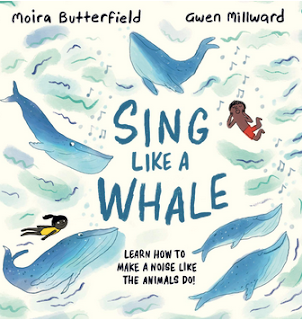
Sing Like a Whale by Moira Butterfield and Gwen Millward

If you read Sing Like a Whale: Learn How to Make a Noise Like the Animals Do! by Moira Butterfield and Gwen Millward, you will learn how to hoot like an owl, howl like a wolf and sing like a whale. Wow! Readers meet 12 animals from around the world and discover the sounds they make, and  why – because animals, just like people, need to get their message and feelings across. 

Celebrate it on World Listening Day on 18 July.

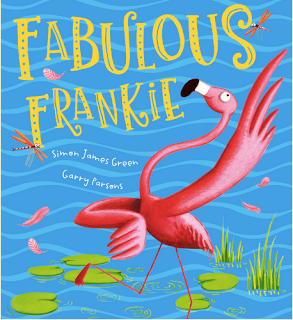
Fabulous Frankie by Simon James Green and Garry Parsons

The hero in Fabulous Frankie by Simon James Green and Garry Parsons is a flamingo who just wants to be fabulous. But how? He's literally surrounded by so many fabulous flamingos, how on earth can he stand out from the crowd? Frankie's friends help him to discover the most important thing of all: the best way to be fabulous is to be YOU!  


Celebrate it on International Being You Day on 22 May.


And today?


Today 14 February, is International Book Giving Day!


Artwork for International Book Giving Day by Viviane Schwarz
 

Will you be a book fairy or book ninja and leave a trail of enticing books around your neighbourhood for kids to pick up and discover? Along the school run, the dentist's waiting room, on the swings, on the walk to the library . . . You can tuck your bookmarks and bookplates inside. Join in the fun!

 
________________________________________________________


Natascha Biebow, MBE, Author, Editor and Mentor

Natascha is the author of the award-winning The Crayon Man: The True Story of the Invention of Crayola Crayons, illustrated by Steven Salerno, winner of the Irma Black Award for Excellence in Children's Books, and selected as a best STEM Book 2020. Editor of numerous prize-winning books, she runs Blue Elephant Storyshaping, an editing, coaching and mentoring service aimed at empowering writers and illustrators to fine-tune their work pre-submission, and is the Editorial Director for Five Quills. She is Co-Regional Advisor (Co-Chair) of SCBWI British Isles. Find her at www.nataschabiebow.com