'Where
do you get your ideas ?' is the first question I am asked, as an author and
illustrator. The second is the eternal 'chicken or egg' question: which comes
first, the words or the pictures? I'll try to answer here.
I am
fascinated by the third element in the making of a picture book - the special
space between the words and pictures into which a child is invited to fill the
gap with their own imagination. If allowed, the reader plays an active
part in the story, breathing their own life into it; when this
happens successfully it's like a tiny explosion in the mind.
These
little explosions can trigger all sorts of responses: they can be shocking;
they can make you laugh; they can be intriguing. The important part is reaching
a conclusion all by yourself rather than have it spoon-fed by the author.
Jon
Klassen is a master of balancing words and pictures and leaving us a gap. Here
is a picture from his new book THIS IS NOT MY HAT, with a fish that looks very
much AWAKE - brilliant!
Because
the ending isn't spelled out, the reader has to work out what happens to the narrator
fish without being told. The ending you come to in your own mind might be
hilarious or horrifying or perhaps it's a completely different ending to the
one the author intended; it doesn't matter, what matters is the huge pleasure
in getting there with your own imagination.
My
first published book was a series of cartoons about being a teenager. I was
interested in the work of Gary Larson - I loved the way he combines a
picture that tells you one thing and a line of text that tells
you another: bingo...something absurd...an explosion...usually of laughter!
So I
started writing/drawing my own cartoons - which turned out to be very good
training for writing picture books. It's an exercise in paring down what you
are trying to say to its absolute essence, allowing the words and pictures to
come together creating a friction or a vibration, like forcing two magnets
together that don't want to meet. Synergy.
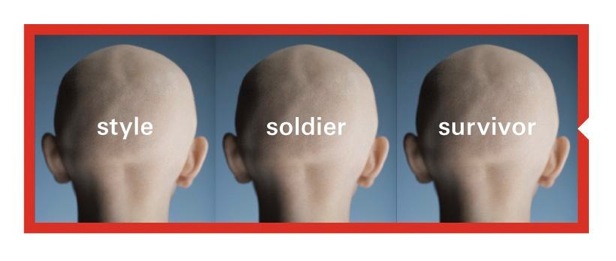
An
example of the connection between words and pictures is cleverly done in a
series of HCBC adverts, putting different words with the same picture. It
is startlingly effective - to have one's mind prompted into making so
many different associations to the same picture, making it look or 'feel'
different each time.
This
power between words and pictures is for me what makes picture books so
special, why they have a magic that is hard to capture in animation or apps.
I'm all for telling stories in different ways using different
formats - pictures that move and dance and sing, with buttons to press and things
that squeak. Although I love all this, there is infinitely more pleasure in
making those pictures dance and sing in one's own mind, to feel those synapses
snapping to make it come to life in a way that is unique to you, giving power
to the reader.
With
my very first picture book 'FLY AWAY KATIE' I had decided I wanted to be an
'author' as well as an illustrator. I set about writing a story that was
about 4000 words too long, getting myself into a terrible muddle describing
everything that was happening, how the character was feeling on each page. One
day I sat down, threw out all the words and just drew the story in a series of
pictures...and there I had it. I added a few words to
help the story along and left it up to the reader to decide how Katie was
feeling.
So
back to the 'which comes first' question, writing or drawing? Capturing ideas
and turning them into stories is an elusive business; the essential elements,
of words, picture, idea, never seem to be in the same place twice. I
doodle in my sketch books, images, phrases anything that has caught my
attention. Sometimes if I'm very lucky a drawing cross-fertilizes with another
image or a phrase, and the juxtaposition of two things will create a spark and lead
to a story. My book PENGUIN started with this sketch of a toothy penguin and
the words 'bit hard very hard on the nose.'
The
beauty of being an author/illustrator is that you can prune your own words and
let the pictures do the work. Very young children are visually literate and can
read body language far earlier than they can read words. On this page in
Penguin, I could have described the tantrum that Ben was having, but I didn't
need to - , the pictures are enough.
At the
end of the book Penguin says 'everything' in pictures alone. At
first my editor and I were a bit worried that readers might flounder on this
page, with no words to guide them through the story. But rather than leaving
the reader stumped, it gives the child a chance to be the storyteller, to bring
it to life in their own words.
Children's
authors don't have to illustrate their own work, they just have to invite the
illustrator to dance with them, being careful not to tread on their toes. I'm
doing this dance at the moment with my Mum, Joyce Dunbar. She has written a
text called PAT-A-CAKE BABY. Mum wrote some words, I did some doodles. Mum
wrote more words and we danced chaotically, not sure who was leading until we
learnt the steps, and now we're nearly ready to invite people to dance with us.
It
doesn't matter which comes first, the pictures or the words, so long as when they
come together you can hear an unexpected and wonderful fizzing in the mind of the reader.
To find out more about guest blogger, Polly Dunbar,