Showing posts with label kristen fulton. Show all posts
Friday, 21 November 2014
True Story Picture Books (or Creative Non-Fiction: It’s All About the Story) by Juliet Clare Bell
Are you sitting comfortably?
I’m not.
I’m itching to get up and discover. I feel like a puppy who hasn’t quite worked out which way she wants to go first and is darting from one place to another, happily, but slightly barking…
I’ve got the bug back. After feeling uninspired for quite some time, I’m very very excited about writing picture books again. I feel like I’ve re-understood something I knew a while back when I was writing my chocolate book, but had kind of forgotten.
I’m writing this in National Non-fiction November, in praise of non-fiction -although I reckon the term ‘non-fiction’ has a dry, almost negative, feel about it. Almost as if it’s not something worthy of a term in its own right, just that it is not something else. It’s not fiction, which I as an author –and reader- love. But what I love about fiction is STORY. And the best non-fiction is exactly that. So I’m re-thinking how I think of it in my head: I write picture books and at the moment, the picture books that I’m really drawn to writing are true story picture books, which sounds more fun than non-something else (to me, at least).
So what’s the real difference?
Apart from the fact that the story is true, there isn’t a great difference –if you do it really well. A great true story picture book still makes the best use of language and rhythm, repetition and sometimes even rhyme. It still makes use of the form of the picture book –exciting readers by interesting use of page turns.
The beautiful Me...Jane by Patrick McDonnell (Little, Brown, 2011).
It still exploits the rule of threes…
Story has to be at the very heart of it.
A Splash of Red: The Life and Art of Horace Pippin (Jen Bryant and Melissa Sweet; Knopf; 2013)
And your heart has to be at the very heart of it too, when you’re writing it. Don’t write a true story picture book if the story doesn’t fire you up, first because your reader won’t love it, and also, because you’ve got to research and research takes time. Lots of time.
A close writer friend, Rebecca Colby, and I, were part of the Breaking into Nonfiction panel at the recent British SCBWI annual conference. Anita Loughrey blogged about the panel here.
Me on the far left, with Rebecca, next left at the Nonfiction Panel at the 2014 British SCBWI Annual Conference, Steve Rickard (Ransom), Sophie Thomson (Pearson) and Kersti Worsley (OUP).
It was loads of fun and we talked with lots of other writers and editors who were similarly fired up by the idea of beautifully crafted picture books that tell true stories. It feels like something really special is in the air… UK editors are certainly seemingly more interested now than before, but what’s changing?
I wrote about the market for creative non-fiction picture books in an earlier PBD blog post about the Cadbury book I was researching at the time. With the Common Core (adopted by almost all states in the US), 50% of texts for upper primary aged children in schools need to be informational, which means that publishers are taking on many more new true story picture books than ever before. And they’re winning prizes that have traditionally been won by fictional picture books.
And now in the UK, Nosy Crow has teamed up with the National Trust to produce children’s books that relate to National Trust properties. Although the UK market isn’t going to be as big as the US market (given their schools and library market in the light of the Common Core), I think that UK publishers are looking closely at what’s happening in the US market. It’s a really exciting time to be writing in this area.
So, what should you write about?
There are so many thousands of amazing stories out there, waiting to be told. It’s true of fiction ones, and it’s true of real life ones. What you need to do is be receptive to looking/listening out for them.
Here are some things you can do:
Talk to people
Talk to your family. What true stories did you love as a child? Growing up in our family of eight, we used to sit around for hours at the dinner table eating lots but talking even more. My parents were natural storytellers and loved telling, as well as reading, us stories. So I talked with my sister yesterday on the phone for over an hour and together we came up with over sixty ideas for true story picture books. Sixty (that’s this year’s PiBoIdMo sorted)… No wonder I’m on a crazy writing high today… My dad and his lovely new wife came up with a great idea for one, too, when we were chatting about it a few weeks ago. And today, I arranged to go on a really exciting research trip for one of these ideas in just two weeks’ time with another sister who feels similarly excited about the potential project. What a brilliant way to hang out with your favourite people and come up with great ideas/do research at the same time!
What true stories have captured your children's imaginations? What are they doing at school that’s really interesting? My ten-year-old came home from school earlier this week having seen half of a documentary about something (sorry –can’t say what, as I’ve nicked the idea for myself). They were going to watch the other half the next day. When she said to her teacher “I don’t think I can wait till tomorrow cos it’s too exciting!” her teacher said “Please don’t watch it at home [it was on Youtube]. I can’t wait to see all your faces when you see what happens!” So a topic that the children and teacher were all really excited about… Talk to your children (or other primary-aged children).
Talk to librarians and library staff.
They’re brilliant for knowing what people come in looking for and for saying what’s been covered before but not been done well. They’re also pretty fun people to hang out with (thanks to my lovely Kings Heath Library friend who I was out with last night, who told me about certain famous people who’d been written about lots but never in an exciting enough way.) Go on, you know you want to... Have fun and support your local libraries at the same time.
Given that the National Trust and Nosy Crow are now in partnership, have a look at different National Trust properties and land and think of what related stories are there to be told that really fire your imagination…
Watch telly, listen to radio programmes, read newspapers...
Check out the US Common Core -whether you're writing in the UK or the US or anywhere else.
I love stories and people. I want to understand better why people do the things they do (which is why I was a psychologist for so many years in my life-before-children). So for me, I’m fascinated by the person behind the invention/organisation/discovery...
Which inventions/organisations/discoveries fascinate you?
It could be the story behind the invention of the toilet... (Curse you, tiny toilet -I did actually have to look up 'how to draw a toilet' to get something even vaguely resembling one)
Or it could be a favourite organisation...
You can research them superficially and quickly to find which of them has a great real life story behind it. We came up with sixty ideas, seventeen of which I’m feeling really excited about. Those seventeen might result in my following up, perhaps, eight really seriously over the coming year. And mostly from brainstorming with a sister who I’d happily spend hours every day talking to about anything. This really is something you can have heaps of fun with.
Think about organisations behind the stories that you love. Is it possible that they could commission you to write a story for them? For my next book, More Than a Chocolate Factory: The Remarkable Story of the Cadbury Brothers,
Richard and George Cadbury (c) Cadbury Archive
it was Bournville Village Trust that approached me (and Jess Mikhail, the illustrator) and commissioned us rather than the other way round, but I would absolutely approach an organisation now if I felt that I loved a story that related to them and could do it justice. And I’ve loved the whole social reform and philanthropy side of the Cadbury story so much that I’m really interested in writing more stories with that at its heart.
Finally, think about stories where someone has done something against the odds. Could you turn that into a story that children will love and be inspired by?
The biggest problem may be curbing your enthusiasm. Right now I feel a bit like the guy from The Fast Show, who thinks everything is "brilliant!"
And one brilliant thought leads to another… and another…
I’ve had loads of fun brainstorming ideas and now it’s time to do the superficial research on the ones I’m too excited about not to check out now. I’ve set myself a deadline for emailing a list and a summary of a number of ideas for true story picture books that I promised I’d send to an editor. So next week I’m going to be researching all week to whittle it down to a manageable number of ideas to work with for now.
To anyone thinking of writing true stories for children, and to those who are already doing it, good luck. There are SO many stories out there, I think there’s room for lots of us to tell the amazing stories that amaze us.
(There’s a brilliant facebook group that is dedicated to non-fiction picture books: Wownonficpic, and a great four-week online course run by Kristen Fulton).
Do you have any tips for coming up with great ideas for true story picture books? If you’re happy to share, we’d love to read them in the comments below.
Juliet Clare Bell is author of The Kite Princess (Barefoot Books, recently endorsed by Amnesty International) and Don’t Panic, Annika! (Piccadilly Press, recently featured on CBeebies). Her next picture book, More Than a Chocolate Factory: The Remarkable Story of Richard and George Cadbury, was commissioned by Bournville Village Trust, and is currently being illustrated by Jess Mikhail. She has seriously got the bug for telling true stories in her favourite form, picture books.
Clare lives happily in Birmingham, UK, with her three children (always a source of inspiration for true life and fictional stories, and life in general), almost within sniffing distance of the chocolate factory which she’s written about. Which is brilliant…
www.julietclarebell.com
National Non-Fiction November is the Federation of Children’s Book Groups’ annual celebration of all things factual. Born out of National Non-Fiction Day, the brain child of Adam Lancaster during his years as Chair, the whole month now celebrates all those readers that have a passion for information and facts and attempts to bring non fiction celebration in line with those of fiction.
Sunday, 23 March 2014
Turning Black and White into Colour: Creative Nonfiction Picture Books ... and Chocolate by Juliet Clare Bell
George Cadbury aged about 20 (c) Cadbury Archive.
I’ve fallen in love, and I’m having a whirlwind romance with [cue page turn]...
Creative nonfiction picture books.
Creative nonfiction picture books are simply picture books where the story happens to be true. Sounds really simple but it took me a while to work out that’s what I wanted to do...
I’d thought about writing non-fiction for younger children before. But the passion wasn’t there. I love picture books. I love the way the words and pictures are so much more together than they are separately. I love the drama that can be created in such a short space. I love the form and the constraints.
There was plenty of really interesting information in the nonfiction books I was looking at...
Save The Orangutan (c) Sarah Eason, Powerkids Press.
They all felt very educational –which isn’t a criticism at all. I love learning and I was enjoying reading them but they didn't make me want to write them (like good picture books do). So I shelved the idea of writing nonfiction until something that really grabbed me turned up. Then one day ... [cue page turn]
Something that really grabbed me turned up.
An illustrator friend, Jess Mikhail, and I were both approached by Bournville Village Trust, in Birmingham, UK. Would we consider writing and illustrating a picture book together about Bournville? This is where the Cadbury brothers built their famous chocolate factory in the late nineteenth century, followed by a model village, created for the benefit of the factory workers, wider community and society. The story is fascinating. It’s passionate, political, philosophical, ground-breaking with an extraordinary family at its heart. And of course, there’s chocolate. Lots of chocolate. Would we consider creating this picture book?
(That's meant to be an excited me, pretending to have to ponder on the question that actually has an obvious answer. Didn't quite turn out that way...)
[cue the page turn where everyone knows the answer and can shout it out loudly together:]
YES!
Unusually, because this has been commissioned by BVT rather than a traditional publisher, we get to choose the angle and approach for the book and the design. At first, I thought we’d go down the route of fun historical book with lots of interesting facts and a mix of illustration, photos, letters etc.. There are some really interesting and fun books like that that we looked at:
I've read Mandy Ross's Children's History of Birmingham over and over and it's great.
(c) Mandy Ross, Hometown World.
...and we've really enjoyed the Avoid... books.
Avoid Being a Second World War Evacuee by Simon Smith, David Salariya and David Antram, Bookhouse.
I originally thought that our book might end up somewhat similar in format to these books.
But without thinking too much more about the structure, or indeed trying to impose in advance which story I’d try and tell, I got on with the research...
...and what an exciting area to research.
(My walk up to the entrance, where the amazing archives are located.)
I immersed myself in the world of the Cadburys and chocolate.
I’ve had amazing access to the archives and I’ve interviewed some fascinating people in their eighties and nineties, who used to work in the factory and whose families worked there well before. I’ve toured the Bournville Village Estate
(Old photos of Bournville Village Trust. Copyright BVT)
and watched footage that’s over one hundred years old.
I’ve read letters and handwritten personal reminiscences about the 1880s
(c) Cadbury Archive
(c) Cadbury Archive
Recognise this signature and what it became? (c) Cadbury Archive
and I’ve got access to incredible photos...
But back to the structure –and creative nonfiction...
After a while of playing around with different ideas, Jess and I decided we’d like for it to be a real picture book, telling a real story. I got loads of nonfiction picture books out of the library. Some of them were full of fascinating facts and were really well written. But I didn’t find any beautiful ones that were telling a story. So I asked at the library if there were any they thought were really unusual, arresting, beautiful. The librarian came up with one that she felt was in a completely different league from the others. But we couldn’t find a copy anywhere. I kept asking what made it so special and she said, “you’ll know when you see it”. I reserved it but in the meantime, I couldn’t resist and I bought it, too.
Can We Save The Tiger? by Martin Jenkins and Vicky White is indeed a beautiful book, which unusually for a nonfiction book, was shortlisted for the Kate Greenaway Award in 2012.
(c) Martin Jenkins and Vicky White, Walker Books
But I couldn’t find any others –except one story we had at home that was first out in 1999:
This beautiful book, Stone Girl, Bone Girl is about Mary Anning, the girl who inspired the popular children's tongue-twister She Sells Sea Shells on the Sea Shore (c)Laurence Anholt and Sheila Moxley, Frances Lincoln Books).
(c) Laurence Anholt and Sheila Moxley (Frances Lincoln Books)
And then someone from my fantastic online critique group (most of whom are American) posted up about WOW Nonficpic, an online nonfiction picture book forum and about an online course that was coming up, run by nonfiction picture book author, Kristin Fulton, which some of us might be interested in. And I feel like I entered into a new world of creative nonfiction that is much more common in the US than here in the UK. There was lots of talk about different, beautiful creative nonfiction picture books and my wish-list grew and grew...
I decided to do the four-week online course, where I was introduced to yet more beautiful creative nonfiction picture books.
The beautiful, simple creative nonfiction picture book, Me...Jane about the childhood of Jane Goodall (c) Patrick McDonnell, Little, Brown.
(c) Patrick McDonnell, Little, Brown.
Balloons Over Broadway (c) Melissa Sweet, Houghton Mifflin
from Balloons Over Broadway (c) Melissa Sweet, Houghton Mifflin
Tree Lady by H Joseph Hopkins, Beach Lane Books.
A Splash of Red (c) Jen Bryant and Melissa Sweet, Knopf
From A Splash of Red (c) Jen Bryant and Melissa Sweet, Knopf
Henry's Freedom Box (c) Ellen Levine and Kadir Nelson, Scholastic Press
Locomotive (c) Brian Floca, Simon and Schuster.
I wanted to be immersed in a world of books that was new to me (and which there was little access to in the UK) and to be surrounded (virtually) by other people who were passionate about the form of creative nonfiction in the way that I’m so often surrounded by those writers who are passionate about picture books. The course was extremely good (I’d very seriously recommend it to anyone writing or interested in writing nonfiction picture books)–and timely for me. I’ve learned lots, and have now got hold of a pile of books that I can use for inspiration (about completely different subjects). I’d already fallen in love with the research and the story for our book, but now I’d fallen in love with the form of book, too.
About four months after I’d starting researching the book, I decided which story I wanted to tell (the history is so fascinating I could have told lots). I spent weeks working on a picture book structure and testing it out with other writers.
And I presented it to all the relevant people in Bournville earlier this week and it got the big thumbs up.
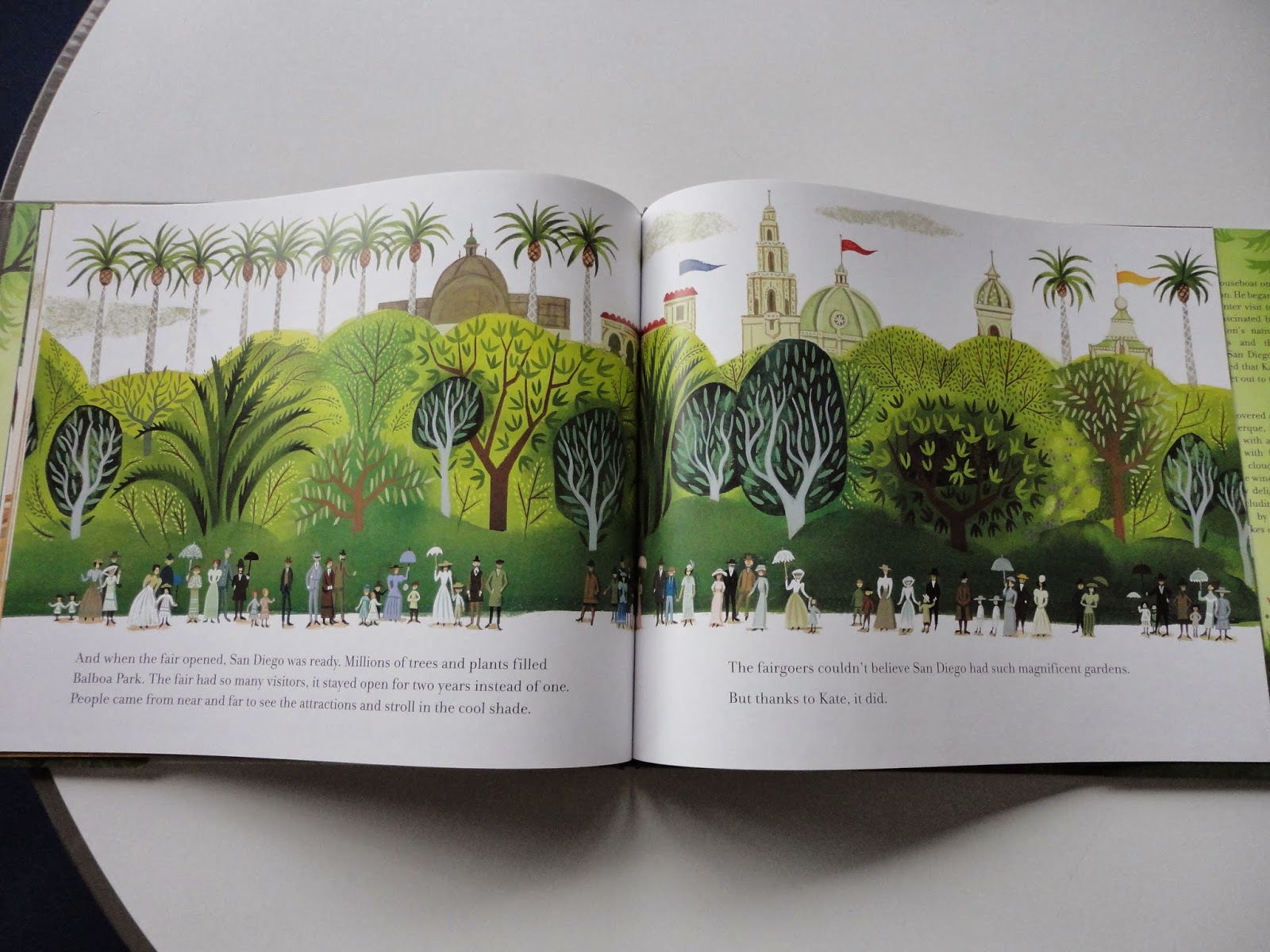
Creative nonfiction is very much like a fiction picture book. It’s about the story and the way you tell it; the use of page turns and the highs and lows. The expectation and surprise and like all good picture books, it needs to stand up to being read again and again. And the illustrations must be lovely, as with all good picture books.
The very beautiful The Journey Home by Fran Preston-Gannon, Pavilion Books. It's not quite creative nonfiction (it's a made up story about endangered species) but it's beautiful and inspirational.
(c) Fran Preston-Gannon, Pavilion Books.
I’m so excited.
First, by the story –of two innovative young Quaker brothers...
Richard Cadbury in later years (c) Cadbury Archive
George Cadbury as an older man (c) Cadbury Archive
who did something remarkable. The death of their beloved mother had left their father, John Cadbury,
John Cadbury (c) Cadbury Archive
a broken man and his cocoa factory and business was failing badly. With great integrity, humanity, sacrifice and an extraordinary vision, they took on the business, and turned it round to become incredibly successful throughout the world, whilst at the same time working to create much better working conditions,
Bournville, the 'factory in a garden' 1879 (c) Cadbury Archive
The girls' dining room (c) Cadbury Archive
living conditions
from this...
Birmingham slums (c) Cadbury Archive
to this...
(c) Cadbury Archive
circa 1905 (c) Cadbury Archive
Bournville Green (c) Cadbury Archive
Early cottages built for the new model village (1905) (c) Cadbury Archive
Early housing (c) Cadbury Archive
Almshouses for former factory workers, built by Richard Cadbury (c) Cadbury Archive
First Bournville cottages, 1880 (c) Cadbury Archive
and spiritual and physical conditions for many thousands of people.
Early shot of girls at the factory (c) Cadbury Archive
Bournville Friends Meeting House (c) Cadbury Archive
(c) Cadbury Archives
Friends Hall 1901 (c) Cadbury Archive
Girls' Physical Training Den, 1902 (c) Cadbury Archive
Camp school (or 'school on a barge') 1919 (c) Cadbury Archive
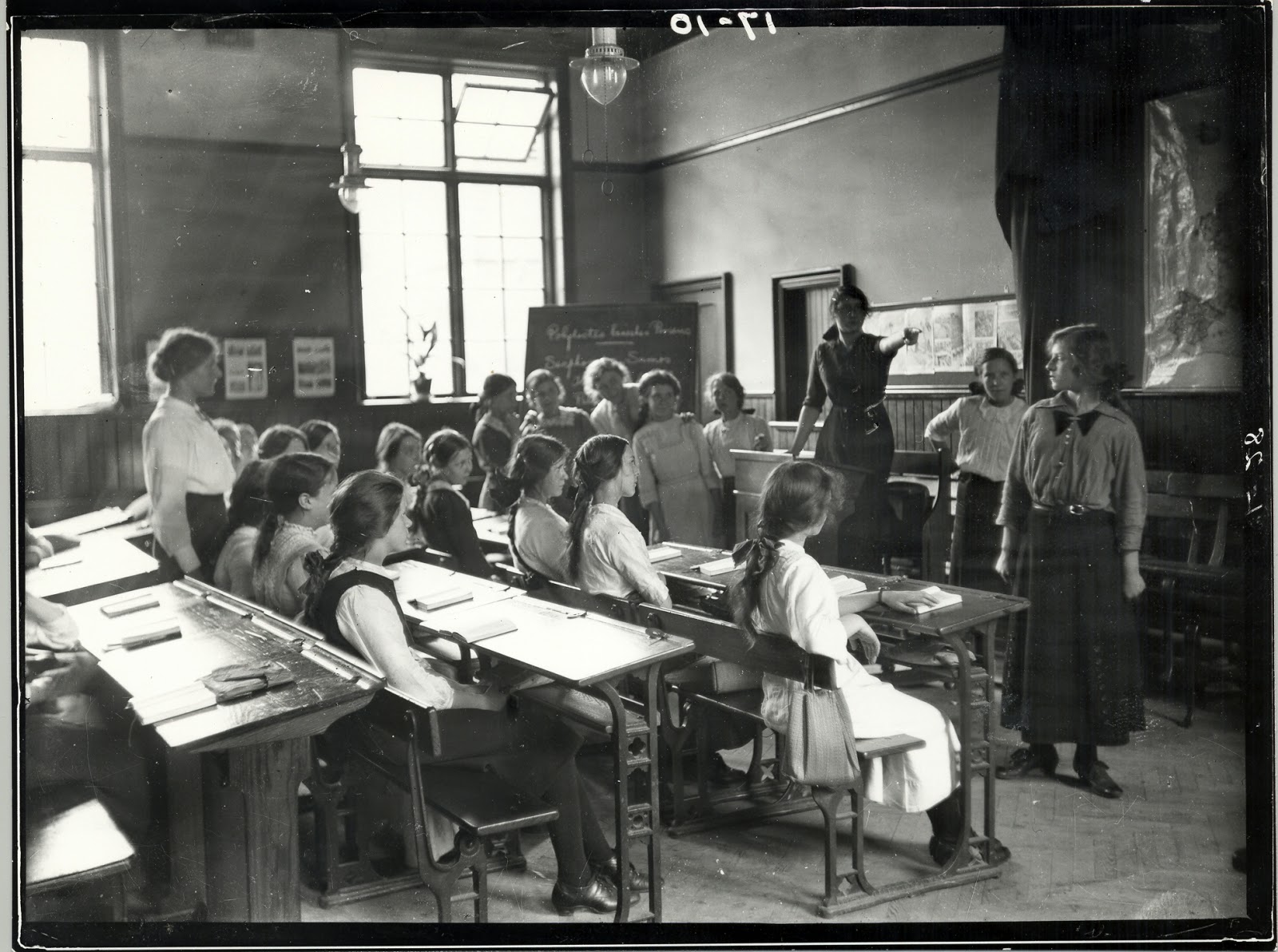
Day continuation school (c) Cadbury Archive
(c) Cadbury Archive
Girls' gymnastics, 1912 (c) Cadbury Archive
Swimming lessons, provided free during work time, 1910/1911 (c) Cadbury Archive
But I’m also really excited about having discovered creative nonfiction. I’ve got several other creative nonfiction books I’d really like to write after this one. I think that this love affair will go far...
I’ve spent so much of my time up at the factory archives, breathing in the sumptuous smell of chocolate as I get off the number 27 bus, I know I’m going to feel quite bereft when it’s over. It’s been like a dream job and I don’t want it to end.
But it’s time to get down to the actual writing now, bringing colour to the black and white, having made piles of notes over the past few months. The first really really rough draft will only take a couple of days to write as I know the story so well and I’ve got my structure sorted. Then I’ll spend the next couple of months playing with the language, fleshing it out and editing it.
OK, we're not quite (?!) there yet, but we will be... once I've finished the text and Jess has illustrated it...
As the wonderful David Almond said at a talk I went to last year:
“Make it lovely.”
And that’s what we plan to do.
What are your thoughts on creative nonfiction? Why are there so many more beautiful creative nonfiction picture books in the US than in the UK? Do UK publishers not feel there is a market for them? Are they there and I’m missing them? Or is there going to be the same explosion of these books in the UK in the coming years? I really hope so. Jess Mikhail and I are in an unusual position of being able to create what we most want to create, knowing that it will be produced and published (in conjunction with BVT), but it would be fantastic to see lots more on the shelves in schools, libraries and bookshops...
www.julietclarebell.com
I’ve fallen in love, and I’m having a whirlwind romance with [cue page turn]...
Creative nonfiction picture books.
Creative nonfiction picture books are simply picture books where the story happens to be true. Sounds really simple but it took me a while to work out that’s what I wanted to do...
I’d thought about writing non-fiction for younger children before. But the passion wasn’t there. I love picture books. I love the way the words and pictures are so much more together than they are separately. I love the drama that can be created in such a short space. I love the form and the constraints.
There was plenty of really interesting information in the nonfiction books I was looking at...
Save The Orangutan (c) Sarah Eason, Powerkids Press.
They all felt very educational –which isn’t a criticism at all. I love learning and I was enjoying reading them but they didn't make me want to write them (like good picture books do). So I shelved the idea of writing nonfiction until something that really grabbed me turned up. Then one day ... [cue page turn]
Something that really grabbed me turned up.
An illustrator friend, Jess Mikhail, and I were both approached by Bournville Village Trust, in Birmingham, UK. Would we consider writing and illustrating a picture book together about Bournville? This is where the Cadbury brothers built their famous chocolate factory in the late nineteenth century, followed by a model village, created for the benefit of the factory workers, wider community and society. The story is fascinating. It’s passionate, political, philosophical, ground-breaking with an extraordinary family at its heart. And of course, there’s chocolate. Lots of chocolate. Would we consider creating this picture book?
(That's meant to be an excited me, pretending to have to ponder on the question that actually has an obvious answer. Didn't quite turn out that way...)
[cue the page turn where everyone knows the answer and can shout it out loudly together:]
YES!
Unusually, because this has been commissioned by BVT rather than a traditional publisher, we get to choose the angle and approach for the book and the design. At first, I thought we’d go down the route of fun historical book with lots of interesting facts and a mix of illustration, photos, letters etc.. There are some really interesting and fun books like that that we looked at:
I've read Mandy Ross's Children's History of Birmingham over and over and it's great.
(c) Mandy Ross, Hometown World.
...and we've really enjoyed the Avoid... books.
Avoid Being a Second World War Evacuee by Simon Smith, David Salariya and David Antram, Bookhouse.
I originally thought that our book might end up somewhat similar in format to these books.
But without thinking too much more about the structure, or indeed trying to impose in advance which story I’d try and tell, I got on with the research...
...and what an exciting area to research.
(My walk up to the entrance, where the amazing archives are located.)
I immersed myself in the world of the Cadburys and chocolate.
I’ve had amazing access to the archives and I’ve interviewed some fascinating people in their eighties and nineties, who used to work in the factory and whose families worked there well before. I’ve toured the Bournville Village Estate
(Old photos of Bournville Village Trust. Copyright BVT)
and watched footage that’s over one hundred years old.
I’ve read letters and handwritten personal reminiscences about the 1880s
(c) Cadbury Archive
(c) Cadbury Archive
Recognise this signature and what it became? (c) Cadbury Archive
and I’ve got access to incredible photos...
But back to the structure –and creative nonfiction...
After a while of playing around with different ideas, Jess and I decided we’d like for it to be a real picture book, telling a real story. I got loads of nonfiction picture books out of the library. Some of them were full of fascinating facts and were really well written. But I didn’t find any beautiful ones that were telling a story. So I asked at the library if there were any they thought were really unusual, arresting, beautiful. The librarian came up with one that she felt was in a completely different league from the others. But we couldn’t find a copy anywhere. I kept asking what made it so special and she said, “you’ll know when you see it”. I reserved it but in the meantime, I couldn’t resist and I bought it, too.
Can We Save The Tiger? by Martin Jenkins and Vicky White is indeed a beautiful book, which unusually for a nonfiction book, was shortlisted for the Kate Greenaway Award in 2012.
(c) Martin Jenkins and Vicky White, Walker Books
But I couldn’t find any others –except one story we had at home that was first out in 1999:
This beautiful book, Stone Girl, Bone Girl is about Mary Anning, the girl who inspired the popular children's tongue-twister She Sells Sea Shells on the Sea Shore (c)Laurence Anholt and Sheila Moxley, Frances Lincoln Books).
(c) Laurence Anholt and Sheila Moxley (Frances Lincoln Books)
And then someone from my fantastic online critique group (most of whom are American) posted up about WOW Nonficpic, an online nonfiction picture book forum and about an online course that was coming up, run by nonfiction picture book author, Kristin Fulton, which some of us might be interested in. And I feel like I entered into a new world of creative nonfiction that is much more common in the US than here in the UK. There was lots of talk about different, beautiful creative nonfiction picture books and my wish-list grew and grew...
I decided to do the four-week online course, where I was introduced to yet more beautiful creative nonfiction picture books.
The beautiful, simple creative nonfiction picture book, Me...Jane about the childhood of Jane Goodall (c) Patrick McDonnell, Little, Brown.
(c) Patrick McDonnell, Little, Brown.
Balloons Over Broadway (c) Melissa Sweet, Houghton Mifflin
from Balloons Over Broadway (c) Melissa Sweet, Houghton Mifflin
Tree Lady by H Joseph Hopkins, Beach Lane Books.
A Splash of Red (c) Jen Bryant and Melissa Sweet, Knopf
From A Splash of Red (c) Jen Bryant and Melissa Sweet, Knopf
Henry's Freedom Box (c) Ellen Levine and Kadir Nelson, Scholastic Press
Locomotive (c) Brian Floca, Simon and Schuster.
I wanted to be immersed in a world of books that was new to me (and which there was little access to in the UK) and to be surrounded (virtually) by other people who were passionate about the form of creative nonfiction in the way that I’m so often surrounded by those writers who are passionate about picture books. The course was extremely good (I’d very seriously recommend it to anyone writing or interested in writing nonfiction picture books)–and timely for me. I’ve learned lots, and have now got hold of a pile of books that I can use for inspiration (about completely different subjects). I’d already fallen in love with the research and the story for our book, but now I’d fallen in love with the form of book, too.
About four months after I’d starting researching the book, I decided which story I wanted to tell (the history is so fascinating I could have told lots). I spent weeks working on a picture book structure and testing it out with other writers.
And I presented it to all the relevant people in Bournville earlier this week and it got the big thumbs up.
Creative nonfiction is very much like a fiction picture book. It’s about the story and the way you tell it; the use of page turns and the highs and lows. The expectation and surprise and like all good picture books, it needs to stand up to being read again and again. And the illustrations must be lovely, as with all good picture books.
The very beautiful The Journey Home by Fran Preston-Gannon, Pavilion Books. It's not quite creative nonfiction (it's a made up story about endangered species) but it's beautiful and inspirational.
(c) Fran Preston-Gannon, Pavilion Books.
I’m so excited.
First, by the story –of two innovative young Quaker brothers...
Richard Cadbury in later years (c) Cadbury Archive
George Cadbury as an older man (c) Cadbury Archive
who did something remarkable. The death of their beloved mother had left their father, John Cadbury,
John Cadbury (c) Cadbury Archive
a broken man and his cocoa factory and business was failing badly. With great integrity, humanity, sacrifice and an extraordinary vision, they took on the business, and turned it round to become incredibly successful throughout the world, whilst at the same time working to create much better working conditions,
Bournville, the 'factory in a garden' 1879 (c) Cadbury Archive
The girls' dining room (c) Cadbury Archive
living conditions
from this...
Birmingham slums (c) Cadbury Archive
to this...
(c) Cadbury Archive
circa 1905 (c) Cadbury Archive
Bournville Green (c) Cadbury Archive
Early cottages built for the new model village (1905) (c) Cadbury Archive
Early housing (c) Cadbury Archive
Almshouses for former factory workers, built by Richard Cadbury (c) Cadbury Archive
First Bournville cottages, 1880 (c) Cadbury Archive
and spiritual and physical conditions for many thousands of people.
Early shot of girls at the factory (c) Cadbury Archive
Bournville Friends Meeting House (c) Cadbury Archive
(c) Cadbury Archives
Friends Hall 1901 (c) Cadbury Archive
Girls' Physical Training Den, 1902 (c) Cadbury Archive
Camp school (or 'school on a barge') 1919 (c) Cadbury Archive
Day continuation school (c) Cadbury Archive
(c) Cadbury Archive
Girls' gymnastics, 1912 (c) Cadbury Archive
Swimming lessons, provided free during work time, 1910/1911 (c) Cadbury Archive
But I’m also really excited about having discovered creative nonfiction. I’ve got several other creative nonfiction books I’d really like to write after this one. I think that this love affair will go far...
I’ve spent so much of my time up at the factory archives, breathing in the sumptuous smell of chocolate as I get off the number 27 bus, I know I’m going to feel quite bereft when it’s over. It’s been like a dream job and I don’t want it to end.
But it’s time to get down to the actual writing now, bringing colour to the black and white, having made piles of notes over the past few months. The first really really rough draft will only take a couple of days to write as I know the story so well and I’ve got my structure sorted. Then I’ll spend the next couple of months playing with the language, fleshing it out and editing it.
OK, we're not quite (?!) there yet, but we will be... once I've finished the text and Jess has illustrated it...
As the wonderful David Almond said at a talk I went to last year:
“Make it lovely.”
And that’s what we plan to do.
What are your thoughts on creative nonfiction? Why are there so many more beautiful creative nonfiction picture books in the US than in the UK? Do UK publishers not feel there is a market for them? Are they there and I’m missing them? Or is there going to be the same explosion of these books in the UK in the coming years? I really hope so. Jess Mikhail and I are in an unusual position of being able to create what we most want to create, knowing that it will be produced and published (in conjunction with BVT), but it would be fantastic to see lots more on the shelves in schools, libraries and bookshops...
www.julietclarebell.com
Subscribe to:
Posts (Atom)


.jpg)