Showing posts with label Blue Elephant Storyshaping. Show all posts

Monday, 2 December 2024

How to Imagine a Picture Book World • By Natascha Biebow

The World's A Wonderful Place If You Can Only Visualize It!


When children are young, their actual world is relatively small and they are just beginning to grasp what the wider world looks like. Day-to-day revolves around home, routines, family, the neighbourhood, nursery and preschool, and everyday tasks and celebrations. Yet young children have vivid imaginations with almost unlimited scope. From just under a year, their pretend play takes off and they soon start to play with props and people around them as if they were real. 


Enriched pretend play helps young children develop empathy and social skills, learn new concepts, gain confidence and independence, understand how the world works, and improve motor skills.


When children see the possiblities in books, this can both validate their imaginative play and serve as a springboard for new ideas.


In picture books, writers and illustrators can do just about anything as long as the internal logic is sound.


Pairing seemingly random characters and objects together create such interesting, fun and compelling worlds.


A bucket portal into an ocean world? Yes!


From Billy's Bucket by Kes Gray and Garry Parsons


Or even a bucket that is full of dinosaurs – didn’t you know?


From Harry and the Bucketful of Dinosaurs Go to School by Ian Whybrow and Adrian Reynolds


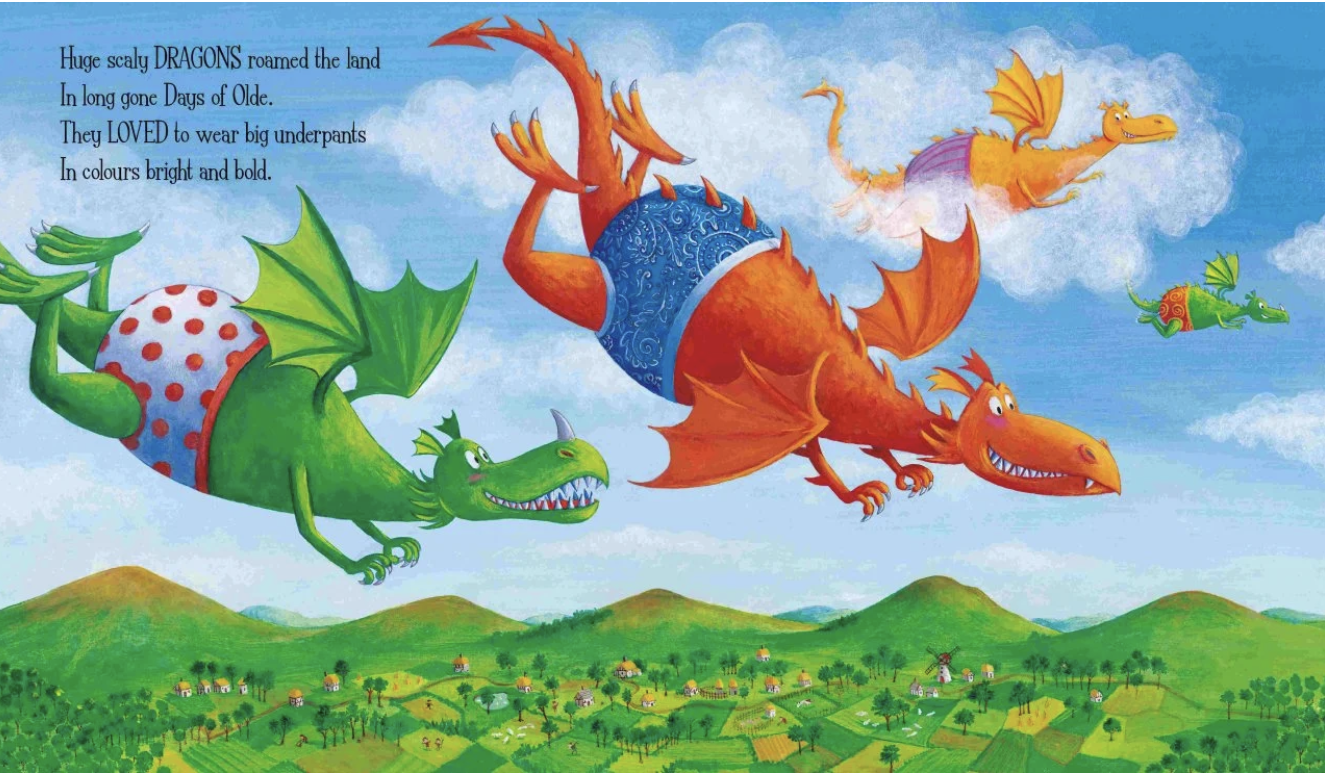
Dragons that wear underpants. Of course!


From Dragons Love Underpants by Claire Friendman and Ben Cort

A Tiger who drinks all the water in the tap – certainly.


From The Tiger Who Came to Tea by Judith Kerr

A dragon who scarfs tacos?


From Dragons Love Tacos by Adam Rubin

A generous witch with room for everyone on her broom . . .


From Room on the Broom by Julia Donaldson and Axel Sheffler


A boy who can sail alone to the land of the monsters and be King . . .


From Where the Wild Things Are by Maurice Sendak


A seed who is bad (but doesn't mean to be)?


From The Bad Seed by Jory John and Pete Oswold

Cows that type and Ducks that negotiate. . .


From Click, Clack, Moo, Cows That Type by Doreen Cronin and Betsy Lewin


Crayons that rebel . . .


From The Day the Crayons Quit by Drew Daywalt


A pigeon who wants to drive a bus . . .?


From Don't Let the Pigeon Drive the Bus! by Mo Willems


A snowdog that can fly! 

From the Snowman and the Snowdog based on the characters created by Raymond Briggs


EVERYTHING is possible!


Imaginative play is empowering and fun. And it’s a great excuse to just PLAY.


What book world will you create? Where will you go and who will be there?


_________________________________________________________________


  Natascha Biebow, MBE, Author, Editor and Mentor
 
  Want to level up your picture books? I am launching a new  online picture book course!

  Natascha is the author of the award-winning The Crayon Man: The True Story of the Invention of Crayola Crayons, illustrated by Steven Salerno, winner of the Irma Black Award for Excellence in Children's Books, and selected as a best STEM Book 2020. Editor of numerous prize-winning books, she runs Blue Elephant Storyshaping, an editing, coaching and mentoring service aimed at empowering writers and illustrators to fine-tune their work pre-submission, and is the Editorial Director for Five Quills. Find out about her picture book webinar courses! She is Co-Regional Advisor (Co-Chair) of SCBWI British Isles and was awarded an MBE for her services to children's book writers and illustrators. Find her at www.nataschabiebow.com


Monday, 12 August 2024

Rejection and Rubbish Are the Essential Stuff of Creation • by Natascha Biebow

I have been reading this book:


How to Fly A Horse: The Secret History of Creation,
Invention and Discovery
by Kevin Ashton


Ashton is a technology pioneer, whose own personal journey as an inventor proves his point. It was only as a result of tens of thousands of hours of work, filled with failures, mistakes and flashes of inspiration, that he was able to build ‘the internet of things’.


He debunks the myth that creativity is the remit of the few and that geniusus create in a dramatic moment of ‘eureka’ inspiration. According to Ashton, there are no tricks or quick fixes, just hours of ordinary to reach the extraordinary.


The title is intriguing, isn’t it? It comes from the story of the Wright Brothers’ process of inventing a flying machine. They were the first people to fly, not because they were the first to build an airplane (many people had similar ideas!), but because they problem-solved how to make it fly step-by-step, rather than in one big leap. They observed how birds flew, but when they tried to replicate this, they noticed their contraption moved erratically like an 'untrained horse'. Solving the problem of air gliding plus balancing when dealing with a ‘bucking horse’, required failure, lateral thinking and resilience until they eventually put all the parts together.


The Wright Flyer airborne during the first powered flight at Kitty Hawk, North Carolina, United States of America, 17 December 1903. Orville Wright is the pilot while Wilbur Wright runs alongside.

What does his have to do with being a picture book writer? Lots!


Here are some of my take-aways:


Ahston argues that creativity is innate, as much part of being human as walking, talking or eating. People are not equally creative, just like we are not all equally athletic or mathematical thinkers, but everyone can do it.  


• Creation is the result of many small incremental steps: when we look carefully, we can see that every innovation has been built on the foundation of what has come before us. So, we are building on the sum of the work of authors and illustrators who have preceded us, across generations, continents and cultures. There is always room to innovate further.


So, when we look at the competition and feel overwhelmed by all the amazing books already out there, or when we think someone else has already covered a topic about which we'd like to create a picture book, we can take a deep breath and continue.


• Everything you start with will probably be rubbish: what we first produce will not be as good as what we can create once it’s been reviewed, fine-tuned, refined, or even thrown out and begun again. So, start we must.  


“Good writing is bad writing well edited”  Ashton writes.


So it’s important to just start, repeat and repeat again. Stretch ourselves to power through the nay-saying voices in our head and the temptations to get way-laid by interruptions (coffee, email, researching randomia, the washing, the dog . . .). Just work!


• Rejection is essential: everything is created by the process of failure to foundation.


When we look around and admire others’ amazing work, we often do not see what was thrown away, what failed and what didn’t make the cut. Rubbish is the foundation for innovation. Something to remember, too, when we receive those rejection letters when submitting - it's an opportunity to try again and do better!


“Innovation is whatever remains when all our failures are removed.” 


In every picture book I’ve ever edited, there is a whole process that unfolds behind the scenes, but you wouldn’t glean any of the frustrations, micro-decisions, re-thinks, and amends that go into each spread from looking at the finished book. Which is how it should be! Here is just one example of this:


From Cotton Cloud Refuses to Rain by Elizabeth F Hill and Hannah George (published by Five Quills)


Figuring out how to show this turning point moment where Cotton Cloud is upset, thinking her rain might have made people sad was tricky. To give it more impact, we suggested zooming in and deleting the detail on the ground. The editor, designer, author and illustrator collaborated closely to solve this problem. (From Cotton Cloud Refuses to Rain by Elizabeth F Hill and Hannah George)


The final artwork highlights the characters' emotional turning point with much more impact and draws in readers into the moment. (From Cotton Cloud Refuses to Rain by Elizabeth F Hill and Hannah George)


The next spread needed adjusting too. (Picture books have an annoying habit of when you fix one thing, another unravels, but ultimately the end result is so much better!) Here, we see how Cotton Cloud's rain has brought joy and growth to the parched landscape, animals and people. This early rough was a great starting point, but we wanted to add more expression and emotion to this key moment. (From Cotton Cloud Refuses to Rain by Elizabeth F Hill and Hannah George)


In this new rough, the characters are more prominent and Hannah's signature and delightful details draw in the readers with their stories. The author and I discussed amending the text to accompany the revised image - see final artwork below. (From Cotton Cloud Refuses to Rain by Elizabeth F Hill and Hannah George)


(From Cotton Cloud Refuses to Rain by Elizabeth F Hill and Hannah George)


We each bring our point of difference, our unique ‘us’ to our work. It’s important to create prolifically, building on each other’s creativity in order to innovate.


“There are more people creating, so there are more tools in the tool chain . . . so we have more time, space, health education, and information for creating.” Each creator is essential – and there’s room for all of us.


I found Ashton's book fascinating and I’d highly recommend it for the curious creator.  More importantly, reading its stories provided me with an uplifting sense of the possible in what I might create, renewed confidence and hope. 


_________________________________________________________________


Natascha Biebow, MBE, Author, Editor and Mentor
 
Want to level up your picture books? I am launching a new course!

Natascha is the author of the award-winning The Crayon Man: The True Story of the Invention of Crayola Crayons, illustrated by Steven Salerno, winner of the Irma Black Award for Excellence in Children's Books, and selected as a best STEM Book 2020. Editor of numerous prize-winning books, she runs Blue Elephant Storyshaping, an editing, coaching and mentoring service aimed at empowering writers and illustrators to fine-tune their work pre-submission, and is the Editorial Director for Five Quills. Find out about her picture book webinar courses! She is Co-Regional Advisor (Co-Chair) of SCBWI British Isles and was awarded an MBE for her services to children's book writers and illustrators. Find her at www.nataschabiebow.com

Monday, 22 April 2024

BIBLIOTHERAPY: BOOKS ABOUT BIG FEELINGS HEAL! • by Natascha Biebow

If you know me, it’s no secret if that I don’t go anywhere without a book to read. At the end of the day, I turn to a book to offer a quiet space of calm, a welcome escape that sets me up for a good night’s sleep. Reading makes me feel centred and whole. I like to sit and look at my bookshelf and find the book for that moment, for that frame of mind, for that state of heart. THERE IS A BOOK FOR THAT!


There's a book for that, no matter what!

Much has been written about the importance of books in instilling empathy in young readers, and how reading is the key for children’s success in later life. But can reading also heal? Are books actually good for our mental health?


According to neuroscientist and science journalist Richard Sima, “Researchers are investigating the impact of reading experiences and reporting evidence of promising mental and social health benefits . . . Now practitioners are exploring new models using the literary arts to support mental health in clinics, classrooms, and communities worldwide.”


Young children may have not yet experienced the whole wide world,
but they still have big feelings and need ways to process and deal with them.


We are wired for story. In the early years, the lines between pretend and reality are frequently blurred. Young children are often deeply connected to fictional characters and toys, interacting with them as if they were real. They are naturally drawn to telling and inventing stories in their imaginative play.

For young children fictional characters can seem rea

Reading stories allows children to step into others’ shoes, building neural pathays in their brains that prompt new ways of responding to situations (Tamir, D. I. et al., 2016). The more these new neural routes are used and practised, with each re-reading of the story, the more routine they become. Reading with a trusted adult can help children navigate their own big feelings and experiences, because stories validate children’s experiences and emotions and model new ways of thinking. 


Reading together can be healing.


In this study, researchers proposed that Bibliotherapy could offer a low-cost and accessible way to improve the mental health. How does it work? There are three stages:

Identification: the reader identifies with a story character and bonds with them.


Catharsis: through the story, the reader experiences the conflict alongside the character and how s/he resolves it.


Insight: the reader reflects on their own circumstances in relation to the story – the characters’ emotions, behaviours and conflict resolution model - and considers how they might apply these tools to their own lives.


Bibliotherapy


• validates young readers’ emotions and experiences

• models how to self-regulate, deal with conflict and big emotions

• opens a dialogue using the story as a vehicle for starting the discussion


I recently attended an excellent SCBWI talk by Melissa Manlove, formerly Executive Editor at Chronicle Books, “The Big Feelings Picture Book Workshop: Transforming Your Past Into Reader's Futures”. In the seminar, Manlove argued that “children's emotional lives are as big and as rich as adults’—and that they need stories that honor that and help them to navigate these essentially human experiences.”


All children deserve a wide variety of books to reflect their feelings and experiences. Libraries in schools and communities are essential resources for creating access to bibliotherapy!


Something Melissa said in her talk resonated with me – happy children are not children who don’t know pain, trauma or difficult situations; they are not children who don’t have big feelings.  


All children are dealing with something, small problems – like finding friends or fear of the dark – and difficult, bigger issues – like having lost a loved one, grappling with injustice, or the displacement of war –


But the difference is that happy, well-adjusted children know there is a path to the top of the mountain:


THEY HAVE A BOOK FOR THAT!


#ReadForEmpthy Collection 2024

Stories children them that there is a path, a way forward to get to the other side of the hard, bigger issues. Children need to know that there are ways to slay their dragons, to deal with their problems. 


Stories offer a path - empathy, hope and sometimes solutions.
 

Books offer a safe space for exploring big feelings and big or small problems. 


Melissa encouraged authors to not shy away from tackling big feelings and big issues in picture books, just because they’re for younger readers, but instead to show children the path for how they might solve and navigate these through story. It is up to us to create the book for THAT! ⭐

⭐

By tapping into our own big feelings and ways to navigate life, our childhood memories and experiences, and then innovate in a child-centred way, we can create books that will empower and resonate with the young readers of the future. ⭐

⭐

*Find recommendations of books that inspire empathy in the #ReadForEmpthy Collection 2024
*And Books that Help when the Words are Hard to Find on Books That Help

___________

Natascha Biebow, MBE, Author, Editor and Mentor

Natascha is the author of the award-winning The Crayon Man: The True Story of the Invention of Crayola Crayons, illustrated by Steven Salerno, winner of the Irma Black Award for Excellence in Children's Books, and selected as a best STEM Book 2020. Editor of numerous prize-winning books, she runs Blue Elephant Storyshaping, an editing, coaching and mentoring service aimed at empowering writers and illustrators to fine-tune their work pre-submission, and is the Editorial Director for Five Quills. Find out about her new picture book webinar courses! She is Co-Regional Advisor (Co-Chair) of SCBWI British Isles. Find her at www.nataschabiebow.com


Monday, 27 November 2023

Write Picture Books Like the PROs – Create a Rock-Solid PREMISE first! • by Natascha Biebow

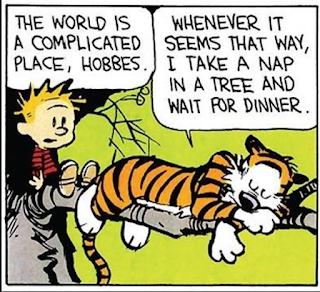
The art of writing a picture book is deceptively difficult. (It can be tempting to take a good long nap when you're stuck or in need of inspiration and fortitude when submitting . . .)


Summed up perfectly in this cartoon by Calvin and Hobbes by Bill Waterson


Here's why:

Most picture books start with an idea.

IDEA – the initial inspiration for the story. The reason why the book is being written.

Yay! An idea is top-notch. Now, you can dive right in and write your picture book. You've made a good start, you might argue . But wait . . . there's a catch – picture books written in this way often lack both emotional resonance and cohesive narrative flow. 

This is because many ideas have been done as books before. This is also why you might be getting rejection letters that say your book 'feels too familiar' and 'doesn't stand out in the competitive marketplace'.

More experienced creators will write out an outline and figure out key elements in the PLOT.

PLOT – is just what happens in the story.

This is a great start too, however it still often leads to books that aren't compelling enough. Why? Because the author hasn't addressed a key factor - WHY should anyone care about this story?

Waiting to plot out the book until after you've figured out what makes the book tick can save you a lot of time!

So how do you develop that initial idea into something that will make editors, agents, and most importantly, young readers take notice?

You need a Rock-Solid Premise!


If you figure out your rock-solid premise first, you'll stay on course and not go walkabout as you figure out
how to fix your picture book that just isn't resonating or selling. As inspired by Calvin and Hobbes (by Bill Waterson),
artfully balancing their way to the other side of the stream. Don't make the mistake of falling in or getting lost in the woods!


PREMISE — The unique way YOU are going to develop that idea into a compelling, marketable picture book with resonance and impact.

This is a KEY step that many picture book creators miss when developing their idea. By taking the time to work out a solid premise, you can take your picture book to the next level by making it unique, memorable and powerful.

To give you an idea of how this can work, let's look at a bestselling picture book that is celebrating 20 years:

DON'T LET THE PIGEON DRIVE THE BUS by Mo Willems


Premise: a child-like pigeon wants to drive the bus, but the driver has left the reader with strict instructions to mind the bus and not let the pigeon drive it. The pigeon begs, wheedles and negotiates, trying all the tactics that young readers might recognize from when they are trying to get grown-ups to do what they want. The pigeon gets increasingly frustrated and angry, but the readers keep on telling him "NO!" 

From Don't Let the Pigeon Drive the Bus! by Mo Willems


When the driver returns and thanks them at the end of the story, the pigeon is sad, but still hopeful. Now, he's dreaming bigger with his sights set on driving . . . a truck!


From Don't Let the Pigeon Drive the Bus! by Mo Willems


In an interview on CBS Mornings, Mo Willems said, "I think of my audience, but I never think for my audience."

In the first book of his bestselling series, the author places the child firmly in the driver's seat. The interactive dialogue format itself encourages creativity and imagination. The book is something kids can play with. It is also a springboard for imagining new adventures for the pigeon character.

The reason this premise is so strong is that the role-reversal resonates with both children and adults alike. Willem's child-centred plot, character motivation and humour are seamlessly interwoven to create a very simple, but unique and compelling story that resonates. 


Crafting a strong PREMISE is a powerful (and often missed) pro skill. It is the core concept that gives your book a reason to exist. It's what takes an idea that many other writers may have had, and makes it uniquely yours. It takes craft and skill – and sometimes 'cooking time' – to develop a solid premise that will make your book stand out in the competitive marketplace. It's well worth spending some time to consider your premise before you start writing.


_________________________________________________________________


Natascha Biebow, MBE, Author, Editor and Mentor
 
Want to know more? Take a deep-dive and learn how to develop a rock-solid premise and how it can empower you to create the perfect hook for your pitch and query letter here.

Natascha is the author of the award-winning The Crayon Man: The True Story of the Invention of Crayola Crayons, illustrated by Steven Salerno, winner of the Irma Black Award for Excellence in Children's Books, and selected as a best STEM Book 2020. Editor of numerous prize-winning books, she runs Blue Elephant Storyshaping, an editing, coaching and mentoring service aimed at empowering writers and illustrators to fine-tune their work pre-submission, and is the Editorial Director for Five Quills. Find out about her new picture book webinar courses! She is Co-Regional Advisor (Co-Chair) of SCBWI British Isles. Find her at www.nataschabiebow.com