Showing posts with label picture book craft. Show all posts

Monday, 2 December 2024

How to Imagine a Picture Book World • By Natascha Biebow

The World's A Wonderful Place If You Can Only Visualize It!


When children are young, their actual world is relatively small and they are just beginning to grasp what the wider world looks like. Day-to-day revolves around home, routines, family, the neighbourhood, nursery and preschool, and everyday tasks and celebrations. Yet young children have vivid imaginations with almost unlimited scope. From just under a year, their pretend play takes off and they soon start to play with props and people around them as if they were real. 


Enriched pretend play helps young children develop empathy and social skills, learn new concepts, gain confidence and independence, understand how the world works, and improve motor skills.


When children see the possiblities in books, this can both validate their imaginative play and serve as a springboard for new ideas.


In picture books, writers and illustrators can do just about anything as long as the internal logic is sound.


Pairing seemingly random characters and objects together create such interesting, fun and compelling worlds.


A bucket portal into an ocean world? Yes!


From Billy's Bucket by Kes Gray and Garry Parsons


Or even a bucket that is full of dinosaurs – didn’t you know?


From Harry and the Bucketful of Dinosaurs Go to School by Ian Whybrow and Adrian Reynolds


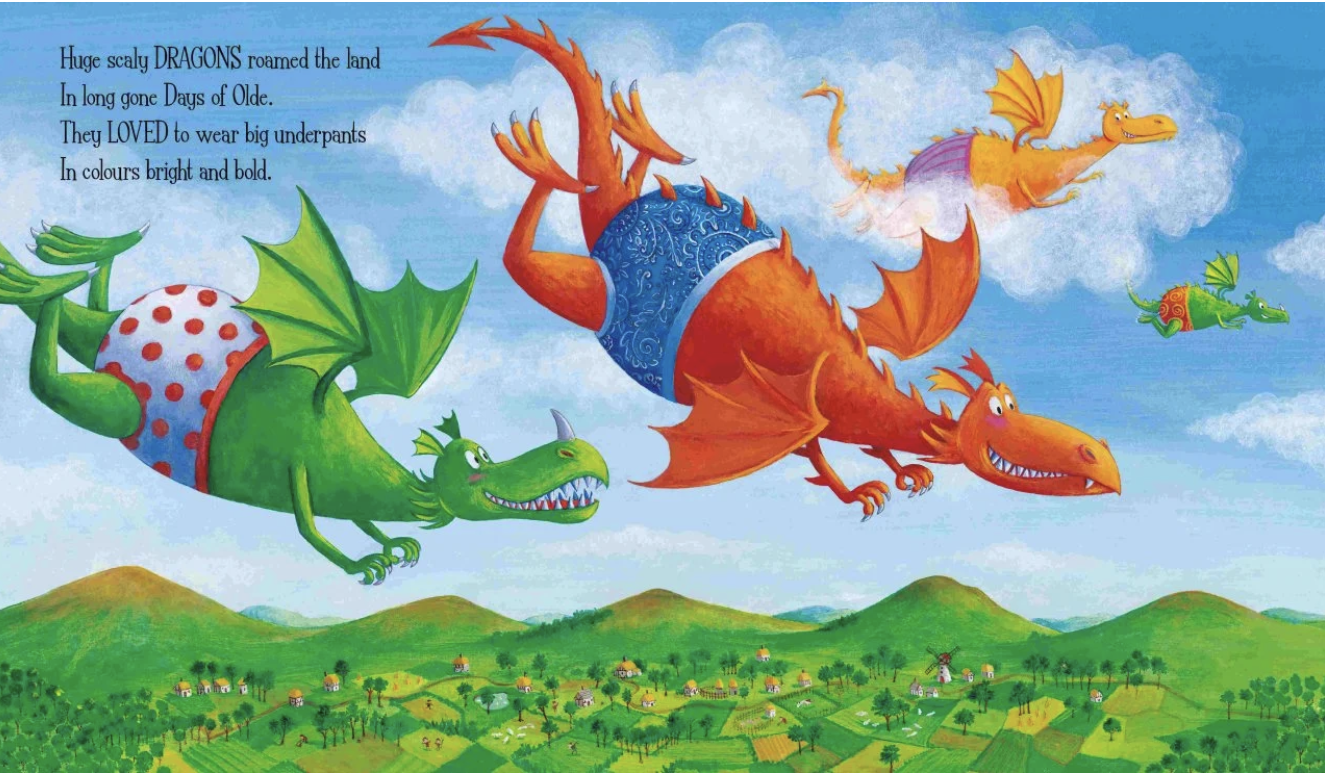
Dragons that wear underpants. Of course!


From Dragons Love Underpants by Claire Friendman and Ben Cort

A Tiger who drinks all the water in the tap – certainly.


From The Tiger Who Came to Tea by Judith Kerr

A dragon who scarfs tacos?


From Dragons Love Tacos by Adam Rubin

A generous witch with room for everyone on her broom . . .


From Room on the Broom by Julia Donaldson and Axel Sheffler


A boy who can sail alone to the land of the monsters and be King . . .


From Where the Wild Things Are by Maurice Sendak


A seed who is bad (but doesn't mean to be)?


From The Bad Seed by Jory John and Pete Oswold

Cows that type and Ducks that negotiate. . .


From Click, Clack, Moo, Cows That Type by Doreen Cronin and Betsy Lewin


Crayons that rebel . . .


From The Day the Crayons Quit by Drew Daywalt


A pigeon who wants to drive a bus . . .?


From Don't Let the Pigeon Drive the Bus! by Mo Willems


A snowdog that can fly! 

From the Snowman and the Snowdog based on the characters created by Raymond Briggs


EVERYTHING is possible!


Imaginative play is empowering and fun. And it’s a great excuse to just PLAY.


What book world will you create? Where will you go and who will be there?


_________________________________________________________________


  Natascha Biebow, MBE, Author, Editor and Mentor
 
  Want to level up your picture books? I am launching a new  online picture book course!

  Natascha is the author of the award-winning The Crayon Man: The True Story of the Invention of Crayola Crayons, illustrated by Steven Salerno, winner of the Irma Black Award for Excellence in Children's Books, and selected as a best STEM Book 2020. Editor of numerous prize-winning books, she runs Blue Elephant Storyshaping, an editing, coaching and mentoring service aimed at empowering writers and illustrators to fine-tune their work pre-submission, and is the Editorial Director for Five Quills. Find out about her picture book webinar courses! She is Co-Regional Advisor (Co-Chair) of SCBWI British Isles and was awarded an MBE for her services to children's book writers and illustrators. Find her at www.nataschabiebow.com


Monday, 22 April 2024

BIBLIOTHERAPY: BOOKS ABOUT BIG FEELINGS HEAL! • by Natascha Biebow

If you know me, it’s no secret if that I don’t go anywhere without a book to read. At the end of the day, I turn to a book to offer a quiet space of calm, a welcome escape that sets me up for a good night’s sleep. Reading makes me feel centred and whole. I like to sit and look at my bookshelf and find the book for that moment, for that frame of mind, for that state of heart. THERE IS A BOOK FOR THAT!


There's a book for that, no matter what!

Much has been written about the importance of books in instilling empathy in young readers, and how reading is the key for children’s success in later life. But can reading also heal? Are books actually good for our mental health?


According to neuroscientist and science journalist Richard Sima, “Researchers are investigating the impact of reading experiences and reporting evidence of promising mental and social health benefits . . . Now practitioners are exploring new models using the literary arts to support mental health in clinics, classrooms, and communities worldwide.”


Young children may have not yet experienced the whole wide world,
but they still have big feelings and need ways to process and deal with them.


We are wired for story. In the early years, the lines between pretend and reality are frequently blurred. Young children are often deeply connected to fictional characters and toys, interacting with them as if they were real. They are naturally drawn to telling and inventing stories in their imaginative play.

For young children fictional characters can seem rea

Reading stories allows children to step into others’ shoes, building neural pathays in their brains that prompt new ways of responding to situations (Tamir, D. I. et al., 2016). The more these new neural routes are used and practised, with each re-reading of the story, the more routine they become. Reading with a trusted adult can help children navigate their own big feelings and experiences, because stories validate children’s experiences and emotions and model new ways of thinking. 


Reading together can be healing.


In this study, researchers proposed that Bibliotherapy could offer a low-cost and accessible way to improve the mental health. How does it work? There are three stages:

Identification: the reader identifies with a story character and bonds with them.


Catharsis: through the story, the reader experiences the conflict alongside the character and how s/he resolves it.


Insight: the reader reflects on their own circumstances in relation to the story – the characters’ emotions, behaviours and conflict resolution model - and considers how they might apply these tools to their own lives.


Bibliotherapy


• validates young readers’ emotions and experiences

• models how to self-regulate, deal with conflict and big emotions

• opens a dialogue using the story as a vehicle for starting the discussion


I recently attended an excellent SCBWI talk by Melissa Manlove, formerly Executive Editor at Chronicle Books, “The Big Feelings Picture Book Workshop: Transforming Your Past Into Reader's Futures”. In the seminar, Manlove argued that “children's emotional lives are as big and as rich as adults’—and that they need stories that honor that and help them to navigate these essentially human experiences.”


All children deserve a wide variety of books to reflect their feelings and experiences. Libraries in schools and communities are essential resources for creating access to bibliotherapy!


Something Melissa said in her talk resonated with me – happy children are not children who don’t know pain, trauma or difficult situations; they are not children who don’t have big feelings.  


All children are dealing with something, small problems – like finding friends or fear of the dark – and difficult, bigger issues – like having lost a loved one, grappling with injustice, or the displacement of war –


But the difference is that happy, well-adjusted children know there is a path to the top of the mountain:


THEY HAVE A BOOK FOR THAT!


#ReadForEmpthy Collection 2024

Stories children them that there is a path, a way forward to get to the other side of the hard, bigger issues. Children need to know that there are ways to slay their dragons, to deal with their problems. 


Stories offer a path - empathy, hope and sometimes solutions.
 

Books offer a safe space for exploring big feelings and big or small problems. 


Melissa encouraged authors to not shy away from tackling big feelings and big issues in picture books, just because they’re for younger readers, but instead to show children the path for how they might solve and navigate these through story. It is up to us to create the book for THAT! ⭐

⭐

By tapping into our own big feelings and ways to navigate life, our childhood memories and experiences, and then innovate in a child-centred way, we can create books that will empower and resonate with the young readers of the future. ⭐

⭐

*Find recommendations of books that inspire empathy in the #ReadForEmpthy Collection 2024
*And Books that Help when the Words are Hard to Find on Books That Help

___________

Natascha Biebow, MBE, Author, Editor and Mentor

Natascha is the author of the award-winning The Crayon Man: The True Story of the Invention of Crayola Crayons, illustrated by Steven Salerno, winner of the Irma Black Award for Excellence in Children's Books, and selected as a best STEM Book 2020. Editor of numerous prize-winning books, she runs Blue Elephant Storyshaping, an editing, coaching and mentoring service aimed at empowering writers and illustrators to fine-tune their work pre-submission, and is the Editorial Director for Five Quills. Find out about her new picture book webinar courses! She is Co-Regional Advisor (Co-Chair) of SCBWI British Isles. Find her at www.nataschabiebow.com


Monday, 27 November 2023

Write Picture Books Like the PROs – Create a Rock-Solid PREMISE first! • by Natascha Biebow

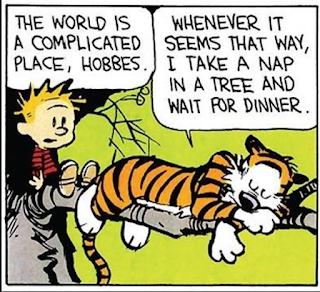
The art of writing a picture book is deceptively difficult. (It can be tempting to take a good long nap when you're stuck or in need of inspiration and fortitude when submitting . . .)


Summed up perfectly in this cartoon by Calvin and Hobbes by Bill Waterson


Here's why:

Most picture books start with an idea.

IDEA – the initial inspiration for the story. The reason why the book is being written.

Yay! An idea is top-notch. Now, you can dive right in and write your picture book. You've made a good start, you might argue . But wait . . . there's a catch – picture books written in this way often lack both emotional resonance and cohesive narrative flow. 

This is because many ideas have been done as books before. This is also why you might be getting rejection letters that say your book 'feels too familiar' and 'doesn't stand out in the competitive marketplace'.

More experienced creators will write out an outline and figure out key elements in the PLOT.

PLOT – is just what happens in the story.

This is a great start too, however it still often leads to books that aren't compelling enough. Why? Because the author hasn't addressed a key factor - WHY should anyone care about this story?

Waiting to plot out the book until after you've figured out what makes the book tick can save you a lot of time!

So how do you develop that initial idea into something that will make editors, agents, and most importantly, young readers take notice?

You need a Rock-Solid Premise!


If you figure out your rock-solid premise first, you'll stay on course and not go walkabout as you figure out
how to fix your picture book that just isn't resonating or selling. As inspired by Calvin and Hobbes (by Bill Waterson),
artfully balancing their way to the other side of the stream. Don't make the mistake of falling in or getting lost in the woods!


PREMISE — The unique way YOU are going to develop that idea into a compelling, marketable picture book with resonance and impact.

This is a KEY step that many picture book creators miss when developing their idea. By taking the time to work out a solid premise, you can take your picture book to the next level by making it unique, memorable and powerful.

To give you an idea of how this can work, let's look at a bestselling picture book that is celebrating 20 years:

DON'T LET THE PIGEON DRIVE THE BUS by Mo Willems


Premise: a child-like pigeon wants to drive the bus, but the driver has left the reader with strict instructions to mind the bus and not let the pigeon drive it. The pigeon begs, wheedles and negotiates, trying all the tactics that young readers might recognize from when they are trying to get grown-ups to do what they want. The pigeon gets increasingly frustrated and angry, but the readers keep on telling him "NO!" 

From Don't Let the Pigeon Drive the Bus! by Mo Willems


When the driver returns and thanks them at the end of the story, the pigeon is sad, but still hopeful. Now, he's dreaming bigger with his sights set on driving . . . a truck!


From Don't Let the Pigeon Drive the Bus! by Mo Willems


In an interview on CBS Mornings, Mo Willems said, "I think of my audience, but I never think for my audience."

In the first book of his bestselling series, the author places the child firmly in the driver's seat. The interactive dialogue format itself encourages creativity and imagination. The book is something kids can play with. It is also a springboard for imagining new adventures for the pigeon character.

The reason this premise is so strong is that the role-reversal resonates with both children and adults alike. Willem's child-centred plot, character motivation and humour are seamlessly interwoven to create a very simple, but unique and compelling story that resonates. 


Crafting a strong PREMISE is a powerful (and often missed) pro skill. It is the core concept that gives your book a reason to exist. It's what takes an idea that many other writers may have had, and makes it uniquely yours. It takes craft and skill – and sometimes 'cooking time' – to develop a solid premise that will make your book stand out in the competitive marketplace. It's well worth spending some time to consider your premise before you start writing.


_________________________________________________________________


Natascha Biebow, MBE, Author, Editor and Mentor
 
Want to know more? Take a deep-dive and learn how to develop a rock-solid premise and how it can empower you to create the perfect hook for your pitch and query letter here.

Natascha is the author of the award-winning The Crayon Man: The True Story of the Invention of Crayola Crayons, illustrated by Steven Salerno, winner of the Irma Black Award for Excellence in Children's Books, and selected as a best STEM Book 2020. Editor of numerous prize-winning books, she runs Blue Elephant Storyshaping, an editing, coaching and mentoring service aimed at empowering writers and illustrators to fine-tune their work pre-submission, and is the Editorial Director for Five Quills. Find out about her new picture book webinar courses! She is Co-Regional Advisor (Co-Chair) of SCBWI British Isles. Find her at www.nataschabiebow.com


Monday, 18 September 2023

Picture Books Then and Now: A Springboard for Inspiration • by Natascha Biebow


I’ve been playing! I was curious to see how picture books on the same theme might have evolved over time. How have creators added new angles to these themes? How might this be linked to our perception of children? And how has the imagery, portrayal of children, artwork mediums used and book design changed?

Arbitrarily, I chose four themes/topics*:

-       Manners

-       A Traditional Tale  

-       Pets

-       Bedtime


Here are some quick observations that I gleaned from my playful exercise:


- Previously, picture books had a lot more text.

- The text explained the action and followed a more linear plot; books were often more educational rather than entertaining.

- Early books featured words and pictures laid out on separate pages, rather than integrated as we see today (this was largely dictated, of course, by the constraints of design and printing processes).
- Contemporary picture books are often humorous, sometimes even irreverent, and allow more scope for interaction with the reader and space for interpretation.

- Contemporary creators have a lot more lee-way to play with structures and innovative lenses to convey their themes and explore these topics.


Many of these findings are predictable and not wholly surprising, because our perception of childhood has altered significantly since the 1900’s. Scientists have made massive strides in their research on how children develop and identifying their needs. Consequently, this has widely influenced parents and carers’ attitudes towards how to care for, entertain and educate children. In addition, the advent of desktop publishing and digital printing processes has empowered illustrators and publishers to produce books with novelty elements and more elaborate typography and design.


MANNERS:


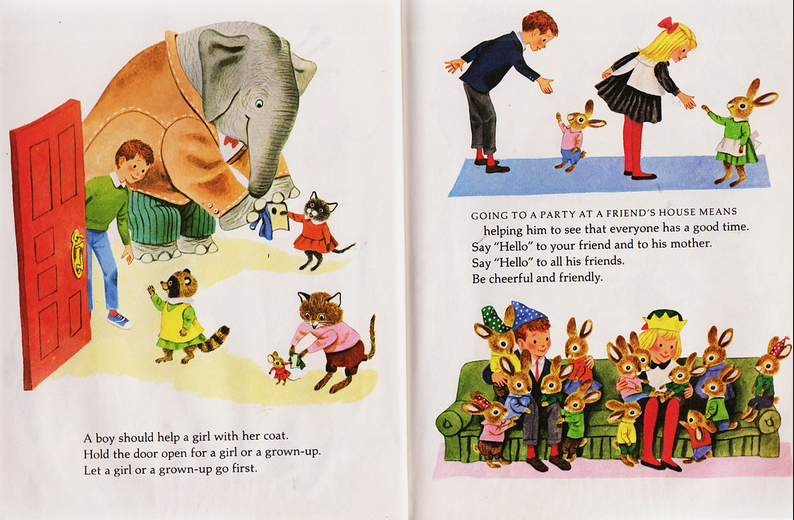
My Little Golden Book of Manners by Parish and Scarry
 

From My Little Golden Book of Manners by Parish and Scarry


From My Little Golden Book of Manners by Parish and Scarry


My Little Golden Book of Manners by Peggy Parish and Richard Scarry – published 1962

In an attempt to demonstrate good manners to boys and girls, furred and feathered friends show them how it’s done.


How Do Dinosaurs Eat Their Food? by Yolen and Teague

How Do Dinosaurs Eat Their Food? By Jane Yolen and Mark Teague – published 2005
This book hones in on table manners - just like children, dinosaurs have a hard time learning to behave at the table. They belch and make noises when they chew, they throw down their cup and pick at their food. The text plays with irony by assuming the child reader knows exactly how to tell those naughty dinosaurs how to behave!


We Don’t Eat Our Classmates by Higgins

We Don’t Eat Our Classmates by Ryan T. Higgins – published 2018
In this hilarious picture book, the twist is that the main character is a carnivorous dinosaur who has to learn how to behave in a classroom full of children. Of course, she wants to EAT them! Taking the humour to another level, this book challenges young readers to figure out how the main character should behave and appeals to both adults and children.


Excuse Me!: A Little Book of Manners by Katz
 

Excuse Me!: A Little Book of Manners (Lift-The-Flap Book) by Karen Katz – published 2002

This board book introduces children to “Please" and "Thank You" and “Excuse me” and “Sorry”.


From Excuse Me!: A Little Book of Manners by Katz

 
From Excuse Me!: A Little Book of Manners by Katz
The book features situations familiar to contemporary children, such as burping at a meal, receiving a special present from granny, or breaking a sibling’s toy. Each lift-the-flap reveal prompts the child with a polite phrase response.


A TRADITIONAL TALE:


I chose the Three Little Pigs:


The Three Little Pigs by Vera Southgate and Robert Lumley

Three Little Pigs by Vera Southgate and Robert Lumley – published 1965  

This version contains all the classic lines (“By the hair of my chinny chin chin/I will not let you come in” . . .  “I’ll huff and puff and I’ll blow yourself in”). 


From The Three Little Pigs by Vera Southgate and Robert Lumley

 
The first two pigs get eaten – yes! – and the third little pig spends the last part of the book outwitting the wolf, until the wolf meets his end in the cooking pot.


The True Story of the 3 Little Pigs! by Sciezca and Smith

The True Story of the 3 Little Pigs!
By Jon Sciezca and Lane Smith – published 1989

In this funny, irreverent version, the traditional tale is told from the wolf's point of view. As Alexander T. Wolf explains it, the whole Big Bad Wolf thing was just a big misunderstanding. Al Wolf was minding his own business, making his granny a cake, when he realized he was out of a key ingredient. He innocently went from house to house to house (one made of straw, one of sticks, and one of bricks) asking to borrow a cup of sugar. Could he help it if he had a bad cold, causing him to sneeze gigantic, gale-force sneezes? Could he help it if pigs these days use shabby construction materials? And after the pigs had been ever-so-accidentally killed, well, who can blame him for having a snack?


The Three Little Wolves and the Big Bad Pig by Trivizas and Oxenbury

From The Three Little Wolves and the Big Bad Pig by Trivizas and Oxenbury

The Three Little Wolves and the Big Bad Pig by Eugene Trivizas and Helen Oxenbury – published 1993

This version also turns the traditional tale on its head and instead of focussing on the three little pigs, the main characters are the three little wolves who are up against the ‘bad little pig’. When the three wolves set out to build themselves a house, they must use stronger and stronger materials to outsmart the Big Bad Pig, who instead of huffing and puffing, uses a sledgehammer, a pneumatic drill and finally . . . dynamite to take down their house! But when the wolves build a beautiful house made of flowers, and the Big Bad Pig start to huff, he instead inhales the fragrance and is transformed, realizing how horrible he’s been.


The Three Little Pigs by Baxter and Lewis


From The Three Little Pigs by Baxter and Lewis
 

The Three Little Pigs: Ladybird First Favourite Tales by Nicola Baxter and Jan Lewis – published 2011  

In this version, the first (boy) and second (girl) pigs build a house of straw and sticks and meet their end when the Wolf blows them down. The third little pig’s house of bricks is solid, and so the Wolf tries to lure him out to meet him to gather turnips, apples and go to the fair. Each time, the pig sees through the Wolf’s trickery. At the end of the book, as in the traditional tale, he lures the very angry, frustrated Wolf down the chimney into the cooking pot and lives peacefully ever after.


ABCs:


Though notoriously tricky to translate, ABC alphabet books are a great way to introduce letters to young readers and there have been many innovative versions over the years.  


ABC by Mary Kendal Lee  


From ABC by Mary Kendal Lee

ABC by Mary Kendal Lee – published 1958

Written in rhyming couplets for each letter, featuring a boy and a girl.


ABC by Brian Wildsmith

From ABC by Brian Wildsmith

From ABC by Brian Wildsmith

ABC by Brian Wildsmith – published 1963

Beautifully painted, this ABC book introduced children to art as it celebrated each letter. It was – and still is - also notably an innovative, outstanding example of British design, production and typography.  

A to Z by Sandra Boynton

From A to Z by Sandra Boyton

A to Z by Sandra Boynton – published 1984

The alphabet gets a seriously silly twist in this rhyming board book that features animal actions for the very young.


My First ABC Book (DK)

My First ABC Book – published by DK – published 2003

Dorling Kindersley was a trend-setter in publishing non-fiction in a distinctive style – photographs of real objects on a white background.


ABC (Think, Touch, Feel) by Deneux

From ABC (Think, Touch, Feel) by Deneux

ABC (Think Touch Feel) by Xavier Deneux – published 2016

This is an exquisitely designed chunky board book that invites small hand to explore the letters of the alphabet using dynamic, tactile features. It encourages sensory learning through unique cut-outs and raised letters.

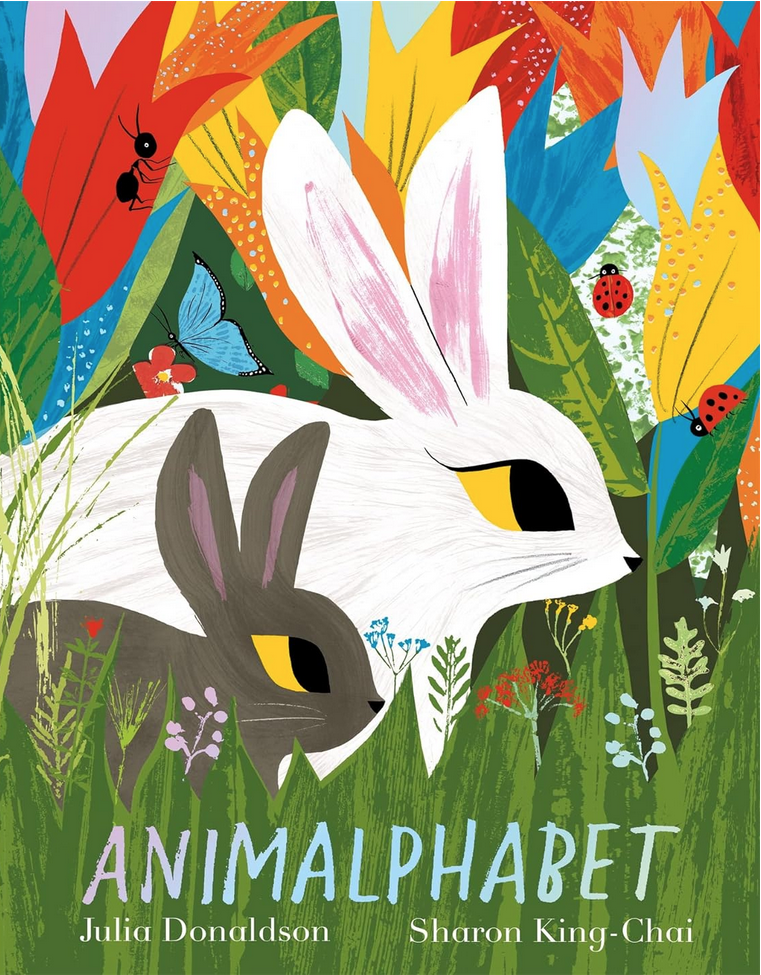
Animal Alphabet by Donaldson and Chai


From Animal Alphabet by Donaldson and Chai

Animal Alphabet by Julia Donaldson ­­and Sharon King-Chai – published 2018

Peep-through pages and fold-out flaps create a guessing game that invites young readers to compare different animals, and learn comparison words and adjectives from the natural world.


PETS:


The theme of wanting a pet is an age-old one but it’s gone through some interesting incarnations, not so different from each other in that usually the plot line is that the child really wants a pet, and the parents object . . . As in these examples:


Pets by Ratzewberger and Phillips


From Pets by Ratzewberger and Phillips

 
From Pets by Ratzewberger and Phillips

Pets by Anna Ratzewberger, illustrated by Katherine L. Phillips – published 1954

It’s pet day at school and the children share about how they take care of their pets and train them.


I Want a PET by Lauren Child


I Want a PET by Lauren Child – published 1999

Lauren Child’s deliciously funny picture book depicts a child who really wants a pet, but Mum, Dad, Granny and Grandad aren't keen on any of her suggestions! Sheep will follow them everywhere, an octopus would leave eight dirty footprints wherever it went and boa constrictors might squeeze them too tightly.  The solution to please everyone?


From I Want a PET by Lauren Child


An egg that isn’t quite a pet yet . . . but it will be soon. Young readers can imagine what might be inside! 


What Do You Do If Your House is a Zoo? by Kelly and Laberis

From What Do You Do If Your House is a Zoo? by Kelly and Laberis
 

What Do You Do If Your House is a Zoo? by John Kelly and Steph Laberis – published 2019

Oscar’s getting a pet! But which pet should he pick? And what on earth will he do when they all move in? His house is like a zoo!  The surprise reveal is that the perfect pet is . . . a gorgeous, loving, three-legged dog.


BEDTIME:


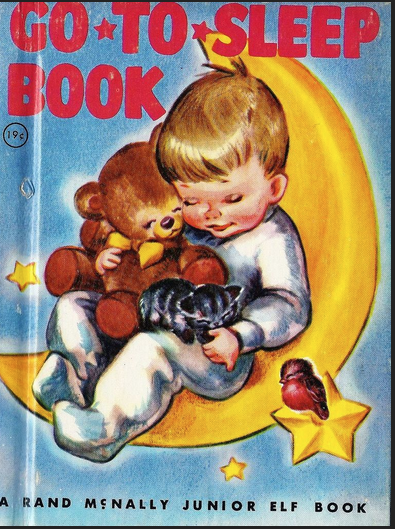
Go-to-Sleep Book (Little Boy) by Helen Earle Gilbert and Frances Wosmek – published 1949

Go-to-Sleep Book (Little Girl) by Helen Earle Gilbert and Frances Wosmek – published 1949 


Go-to-Sleep Book (Little Girl) by  Gilbert and Wosmek


Go-to-Sleep Book (Little Boy) by Gilbert and Wosmek


From Go-to-Sleep Book (Little Boy) by Gilbert and Wosmek

From Go-to-Sleep Book (Little Boy) by Gilbert and Wosmek

From Go-to-Sleep Book (Little Boy) by Gilbert and Wosmek

Simple, repetitive phrasing with a simple plot – all the animals are so tired and sleepy and so is the little … boy/girl. The snuggle down into their warm beds, yawn and – go to sleep!


Tell Me Something HAPPY Before I Go to Sleep by Gliori

Tell Me Something HAPPY Before I Go To Sleep by Debi Gliori – published 1999

Willa is a little bunny who is scared to go to sleep – she might have a bad dream. Her older brother Willoughby tells her to think of all the happy things that will be waiting for her in the morning. Willa finally feels tired, yawns, and snuggles up with her cuddly toy, knowing her big brother will be there in the morning.


Llama, Llama, Red Pajama by Anna Dewdney

From Llama, Llama, Red Pajama by Anna Dewdney

Llama, Llama, Red Pajama by Anna Dewdney – published 2005

Llama Llama is tucked in by her mama, but she’s not at all sure about being left alone. What if her mama is gone? The worries escalate until Llama Llama makes an epic fuss, hollering loudly for her mama! Mama reassures her that even though her mama might be busy or away, she’s always right here in Llama’s heart. With a goodnight kiss and a cuddle, this is enough to get Llama to sleep at last!


Don't Let the Pigeon Stay Up Late! by Mo Willems

From Don't Let the Pigeon Stay Up Late! by Mo Willems

Don't Let the Pigeon Stay Up Late! By Mo Willems – published 2007

It's getting late and time for bed. Readers must help the bus driver and make sure that the pigeon doesn’t stay up late while goes to brush his teeth and get ready for bed. But the pigeon is wide awake! He’s not tired and instead, he’s in the mood for a hot-dog party! This plot follows some similar parameters as the stories above – not tired, tries lots of excuses, eventually feels tired and goes to sleep – with the added interactive element that is heaps of fun for young readers to join in.


Can't You Sleep, Little Bear? by Waddell and Firth
 

Can’t You Sleep, Little Bear? By Martin Waddell and Barbara Firth – published 2013

This Kate Greenaway-winning story is about Little Bear, who just can't sleep because there is dark all around him in the Bear Cave. Not even Big Bear's biggest lantern can light up the dark enough. So, Big Bear takes Little Bear outsides, cuddles him and shows him the moon, and finally, Little Bear feels comforted enough to go to sleep. 


I Don't Want to Go to Bed! by Tony Ross

From I Don't Want to Go to Bed! by Tony Ross

I Don't Want to Go to Bed! by Tony Ross – published 2017

Little Princess asks the infamous question, “Why do I have to go to bed when I'm not tired?” She tries to distract the grown-ups with shouts about monsters in the cupboard, hairy spiders, and thirst. When she finally goes to bed and the King goes to kiss her goodnight, she’s vanished. A frantic search round the castle finds her tucket up in the basket with the cat (keeping her and her stuffed toy, Gilbert safe). In a funny twist, the princess wakes up the next morning and announces she is going to bed.


 *

Apart from having fun exploring, playing is important for creators to gain new inspiration and perspectives on our work. It can also help us to stay connected to our inner child. And it’s fun!  


*Of course, there are many, many books on these topics, so for the purposes of this blog post, I’ve had to choose . . . but do jump in in the comments to add your favourites, please!

 
_________________________________________________________________


Natascha Biebow, MBE, Author, Editor and Mentor

Natascha is the author of the award-winning The Crayon Man: The True Story of the Invention of Crayola Crayons, illustrated by Steven Salerno, winner of the Irma Black Award for Excellence in Children's Books, and selected as a best STEM Book 2020. Editor of numerous prize-winning books, she runs Blue Elephant Storyshaping, an editing, coaching and mentoring service aimed at empowering writers and illustrators to fine-tune their work pre-submission, and is the Editorial Director for Five Quills. Find out about her new picture book webinar courses! She is Co-Regional Advisor (Co-Chair) of SCBWI British Isles. Find her at www.nataschabiebow.com