Showing posts with label LGBTQ. Show all posts

Tuesday, 8 November 2022

The rise of the unicorn, from medieval tapestries and magical horns to frappuccinos and picture books - Garry Parsons

Unicorns are well established members of the picture book bestiary, but where did they come from and how long are they staying?
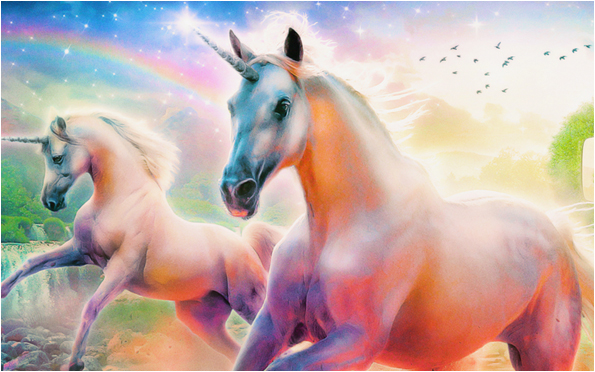

The unicorn, it seems, has origins in all sorts of places, from Chinese mythology to early Christian folklore, as well as sources being found in India and Persia. 

The Hindu epic, Mahabharata tells of a human bodied unicorn called "Gazelle Horn" which has to be lured from the forest by the King's beautiful daughter in order to guarantee rainfall over the kingdom. 

The Chinese unicorn, Ch'i-Lin, also lives alone in the forest. It's body gives off light and it has a voice like a monastery bell. Ch'i-Lin is the very meaning of benevolence and wisdom and is so allusive that it is only seen when the kingdom is ruled virtuously. 


Unicorn Cake!


Unicorns were a special fascination in the West during medieval Christian times. Still depicted with a fiery wild nature, they were also imbued with a loving spiritual benevolence. They were imagined in art as a metaphor for Christ.

This medieval unicorn, also aloof, rare and solitary, could only be coaxed from the forest by a virgin, where it willingly allowed itself to be captured. This 'capture' is interpreted as as the Spirit's willingness to be incarnated through the body of the Virgin Mary.


Virgin and Unicorn 1602 - Domenichino (1581 -1641)

So the general idea of the unicorn is that it of a wild, solitary creature, capable of great strength and speed and a creature that cannot be simply captured alive, unless by lure or trickery or it's own willing desire to be united as Spirit with matter. Most importantly, it has magical powers and is distinguished by a single horn in the centre of the forehead. 


The Unicorn in Captivity - Tapestry 1495 - 1505 Brussels


Pulling our search for unicorns back from the mythological a little, is Elasmotherium sibiricum, otherwise known as the Siberian unicorn. Elasmotherium went extinct an estimated 39,000 years ago. Related to the five surviving species of rhino we know today, only twice as big (weighing 3.5 tonnes and standing 2.5 metres high) in Elasmotherium's day, there were as many as 250 different species of this ancient rhino. 


Elasmotherium sibiricum


What's fascinating about this animal is that it went into extinction around the same time that Neanderthals went extinct, meaning that they would have been sharing Eurasia with both modern humans and Neanderthals. Clearly though,  it wasn't all rainbows and sparkles for Elasmotherium, so where does our modern unicorn come from?


danaisabellaa


Throughout the medieval period and long after, the unicorn and especially the horn, was thought to hold magical powers. In the 16th and 17th Century, trade in unicorn horn powder was thought to hold the ability to detect poison or purify contaminated water as well as healing wounds and illness. The horns were not unicorn horns of course but the tusks of narwhal or elephant. Nevertheless, this trade in 'magical' horn gave the unicorn a commercial value as well as mythical and perpetuated the unicorn's reputation for being rare and elusive - a creature you would know about but never saw and would certainly never capture. 

Gradually however, the belief in the unicorn horns magical abilities to heal began to be met with scepticism, as did the belief in it's actual existence, and so the enthusiasm for the mythical creature waned and the golden age of the unicorn for this period came to an end.


The Narwhal's tusk used as evidence for the existence of the unicorn


It wasn't until the rediscovery of the Lady and the Unicorn tapestries in the late 19th Century that a new spark of interest developed for the unicorn. 

The Lady and the Unicorn tapestries were a series of six woven hangings, created in the style of mille-fleurs ("thousand flowers") made in Flanders from wool and silk. The tapestries are now considered one of the greatest works of the middle ages in Europe. Each of the six tapestries includes a noble lady depicted with a unicorn on her right and a lion to her left, and have been attributed as the inspiration for the French Symbolist painter, Gustave Moreau, in his canvas 'The Unicorns'.  

Later still, during the 1950's, Jean Cocteau designed a ballet inspired by the tapestries, and so the unicorns presence came to the surface of popular consciousness once more.


The Lady and the Unicorn Tapestries - Musee de Cluny - Paris


The Unicorns - Gustave Moreau 1885

Racing forward to the modern era, the unicorn also made it's mark for the LGBTQ community with it's fusion of the rainbow flag (created by American artist Gilbert Baker) and becoming a joyous symbol of diversity and  acceptance and appearing on T-shirts, flags and banners at pride events around the world.


Starbucks Unicorn Frappuccino


Unicorns get a real boost from the popularity of 'My Little Pony' in the 90's but it's not until later that the mythical beast begins to make a real significant cultural comeback. 

Fuelled by social media and the arrival of the Unicorn Frappuccino from Starbucks in 2016, unicorn fever takes off  exponentially a year later with My Little Pony; The Movie, voiced by Zoe Saldana, Emily Blunt and Kristin Chenoweth, becoming a huge hit at the cinema box office and propelling all sorts of unicorn merchandise into the mainstream market.


My Little Pony - The Movie 

Instagram feeds become flooded with the new, vibrant, glitter effused, pastel coloured sparkling unicorn colours that we are familiar with today - a magical universe away from our worn out friend from the past, Elasmotherium.


Vibrantandpure


From unicorn toast and unicorn beauty products (complete with with make-up tutorials on youtube) to unicorn inflatables, unicorn cakes, unicorn eyelashes, unicorn nails, unicorn slippers, unicorn onesies and of course...unicorn picture books!


A selection of unicorn picture books from Dad Suggests


So regardless where the latest unicorn fever has come from, it is certainly alive in our minds and galloping wild through our imaginations. The latest golden age of the unicorn is well and truly underway and looks like it is here to stay... for a while at least.


So celebrate National Unicorn Day on 9th April with a sprinkle of glitter and a slice of unicorn cake!

                                                                               ***

Garry Parsons is an illustrator of children's picture books including The Who's Whonicorn of Unicorns and Daisy and the Trouble with Unicorns, both written by Kes Gray and published by Puffin. 

And to confirm that the trend for unicorns is here to stay (at least for a little while longer), The Who's Whonicorn of Unicorns 2nicorn is coming to a bookseller near you, soonicorn!


@icandrawdinos www.garryparsons.co.uk


                                                                              ***


Sunday, 19 June 2022

Pride Month Picture Books, a celebration! - Garry Parsons


Pride Month is in full swing and this year the UK celebrates 50 years of the Pride movement. 
For the month of June, members of the LGBTQ+ community and their allies celebrate their identities, accomplishments, and reflect on the struggle for equality.

Pride Month marks the police raid that prompted the Stonewall riots which in turn led to the establishment of LGBTQ+ rights. The raid took place during the early morning of June 28, 1969, at the Stonewall Inn in Greenwich Village, Manhattan, a popular gathering place for young gay men, lesbians, bisexuals, and transgender people. The LGBTQ+ community held a series of demonstrations to protest against the raid and called for the establishment of safe spaces for gay people, where they could congregate without fear of being arrested or becoming victims of violence. These riots served as a catalyst for the rights of LGBTQ+ people. Since then, the LGBTQ+ community annually commemorates the years of struggle for civil rights and the ongoing pursuit of equality in the form of a pride celebration, now widely observed with parties, parades, concerts, and other events that celebrate a diverse identity.

In the UK, the first official UK Pride Rally was held in London on July 1, 1972 (chosen as the nearest Saturday to the anniversary of the Stonewall riots of 1969) – so 2022 marks the 50th year of the Pride movement in Britain.

So what does this have to do with picture books? Well, we are all different to a greater or lesser degree and every day we meet people different from ourselves. It is vitally important that children get to read about all different types of people and families to promote an attitude of empathy and acceptance. Everyone should be able to see themselves represented in the books they read to support a positive environment for each of us so we can be free to be who we are.  

I've picked out some examples of brilliant picture books supporting diversity and asked some of the creators involved for their views on what Pride month means to them personally and why picture books are so important.


Nen And The Lonely Fisherman - Ian Eagleton & James Mayhew

James Mayhew is the illustrator of Nen and the Lonely Fisherman.

"For me, Pride month is both an opportunity to celebrate and feel part of an amazing, welcoming community and also a time to reflect on those who fought so hard for LGBTQ rights and how we must never take those rights for granted. The future relies on educating people and that's why I feel strongly that we need picture books to show children positive examples of different kinds of relationships. For too long the heteronormative 'happy ending' has reinforced the problem. Books like Nen and the Lonely Fisherman gently teach acceptance and empathy." - James Mayhew.


 Nen And The Lonely Fisherman - Ian Eagleton & James Mayhew


Forever Star - Gareth Peter & Judi Abbot

Gareth Peter is the author of Forever Star illustrated by Judi Abbot, a rhyming story about a same sex couple adopting a child.

"To me, Pride means family. We have a two daddy family and we have adopted two amazing boys. This was all possible because of Pride and all that the amazing LGBTQ plus community have done. So I will always be thankful and appreciative of Pride for allowing my dream to come true and become a dad. Pride should always be a colourful, accepting, tolerant and happy celebration and that's just like our family. Happy Pride everyone!" - Gareth Peter.


Harry Woodgate is the author and illustrator of Grandad's Camper. In this moving story, Grandad tells his granddaughter about the adventures he used to have with Gramps.

"Pride is a wonderful opportunity to celebrate our LGBTQ+ friends, family and community, but more than anything I feel that it's a time to reflect on and campaign for the progress that still needs to be made, especially in the face of increasingly damaging legislation.
We know children's books are powerful tools for building empathy, kindness, confidence and emotional literacy, which is why it's so important that every child is able to access literature which is why it's so important that every child is able to access literature which reflects a diverse and inclusive range of identities, experiences and family setups." - Harry Woodgate.


Grandad's Camper - Harry Woodgate


Llama Glamarama - Simon James Green & Garry Parsons


Simon James Green is the author of Llama Glamarama, a story celebrating differences and of being true to yourself.

"One element of Pride is about being true to yourself, living your life fearlessly and boldly, and celebrating everything that makes you unique. I think that's something everyone should embrace, whatever their age and that's why it's so important to see that message in picture books" - Simon James Green.


For me, Pride month is an uplifting recognition of the strength of my identity and a validation that whatever family set up you have, a family is a family.
Here are a few more picture books worthy of your attention this June and in the months and years beyond.


The Pirate Mums - Jodie Lancet-Grant & Lydia Corey


The Pirate Mums - Jodie Lancet-Grant & Lydia Corey


Hello Sailor - Andre Sollie & Ingrid Godon


Hello Sailor - Andre Sollie & Ingrid Godon


We Are Family - Patricia Hegarty & Ryan Wheatcroft


Uncle Bobby's Wedding - Sarah S Brannen & Lucia Soto


Happy Pride Everyone!


                                                                                   ***


Garry Parsons is an illustrator of children's books and the illustrator of My Daddies! also written by Gareth Peter. A picture book celebrating same-sex parents, shared story time and introducing children to the different kinds of family in the world today.

My thanks to James Mayhew, Gareth Peter, Harry Woodgate and Simon James Green for their heartfelt contributions.
 
Garry's work can be seen here
Follow Garry on twitter and instagram @icandrawdinos