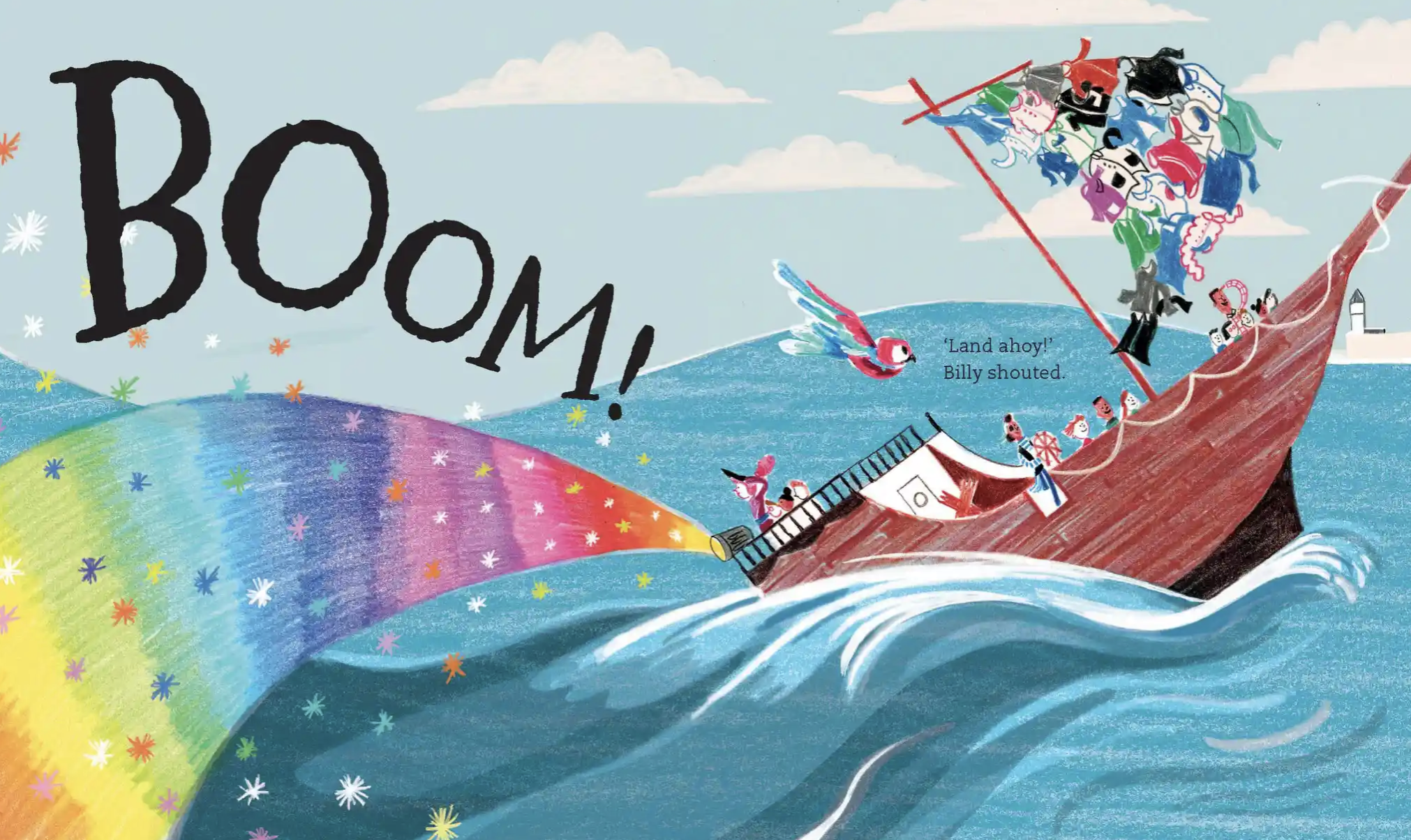
Showing posts with label Simon James Green. Show all posts

Sunday, 19 June 2022

Pride Month Picture Books, a celebration! - Garry Parsons


Pride Month is in full swing and this year the UK celebrates 50 years of the Pride movement. 
For the month of June, members of the LGBTQ+ community and their allies celebrate their identities, accomplishments, and reflect on the struggle for equality.

Pride Month marks the police raid that prompted the Stonewall riots which in turn led to the establishment of LGBTQ+ rights. The raid took place during the early morning of June 28, 1969, at the Stonewall Inn in Greenwich Village, Manhattan, a popular gathering place for young gay men, lesbians, bisexuals, and transgender people. The LGBTQ+ community held a series of demonstrations to protest against the raid and called for the establishment of safe spaces for gay people, where they could congregate without fear of being arrested or becoming victims of violence. These riots served as a catalyst for the rights of LGBTQ+ people. Since then, the LGBTQ+ community annually commemorates the years of struggle for civil rights and the ongoing pursuit of equality in the form of a pride celebration, now widely observed with parties, parades, concerts, and other events that celebrate a diverse identity.

In the UK, the first official UK Pride Rally was held in London on July 1, 1972 (chosen as the nearest Saturday to the anniversary of the Stonewall riots of 1969) – so 2022 marks the 50th year of the Pride movement in Britain.

So what does this have to do with picture books? Well, we are all different to a greater or lesser degree and every day we meet people different from ourselves. It is vitally important that children get to read about all different types of people and families to promote an attitude of empathy and acceptance. Everyone should be able to see themselves represented in the books they read to support a positive environment for each of us so we can be free to be who we are.  

I've picked out some examples of brilliant picture books supporting diversity and asked some of the creators involved for their views on what Pride month means to them personally and why picture books are so important.


Nen And The Lonely Fisherman - Ian Eagleton & James Mayhew

James Mayhew is the illustrator of Nen and the Lonely Fisherman.

"For me, Pride month is both an opportunity to celebrate and feel part of an amazing, welcoming community and also a time to reflect on those who fought so hard for LGBTQ rights and how we must never take those rights for granted. The future relies on educating people and that's why I feel strongly that we need picture books to show children positive examples of different kinds of relationships. For too long the heteronormative 'happy ending' has reinforced the problem. Books like Nen and the Lonely Fisherman gently teach acceptance and empathy." - James Mayhew.


 Nen And The Lonely Fisherman - Ian Eagleton & James Mayhew


Forever Star - Gareth Peter & Judi Abbot

Gareth Peter is the author of Forever Star illustrated by Judi Abbot, a rhyming story about a same sex couple adopting a child.

"To me, Pride means family. We have a two daddy family and we have adopted two amazing boys. This was all possible because of Pride and all that the amazing LGBTQ plus community have done. So I will always be thankful and appreciative of Pride for allowing my dream to come true and become a dad. Pride should always be a colourful, accepting, tolerant and happy celebration and that's just like our family. Happy Pride everyone!" - Gareth Peter.


Harry Woodgate is the author and illustrator of Grandad's Camper. In this moving story, Grandad tells his granddaughter about the adventures he used to have with Gramps.

"Pride is a wonderful opportunity to celebrate our LGBTQ+ friends, family and community, but more than anything I feel that it's a time to reflect on and campaign for the progress that still needs to be made, especially in the face of increasingly damaging legislation.
We know children's books are powerful tools for building empathy, kindness, confidence and emotional literacy, which is why it's so important that every child is able to access literature which is why it's so important that every child is able to access literature which reflects a diverse and inclusive range of identities, experiences and family setups." - Harry Woodgate.


Grandad's Camper - Harry Woodgate


Llama Glamarama - Simon James Green & Garry Parsons


Simon James Green is the author of Llama Glamarama, a story celebrating differences and of being true to yourself.

"One element of Pride is about being true to yourself, living your life fearlessly and boldly, and celebrating everything that makes you unique. I think that's something everyone should embrace, whatever their age and that's why it's so important to see that message in picture books" - Simon James Green.


For me, Pride month is an uplifting recognition of the strength of my identity and a validation that whatever family set up you have, a family is a family.
Here are a few more picture books worthy of your attention this June and in the months and years beyond.


The Pirate Mums - Jodie Lancet-Grant & Lydia Corey


The Pirate Mums - Jodie Lancet-Grant & Lydia Corey


Hello Sailor - Andre Sollie & Ingrid Godon


Hello Sailor - Andre Sollie & Ingrid Godon


We Are Family - Patricia Hegarty & Ryan Wheatcroft


Uncle Bobby's Wedding - Sarah S Brannen & Lucia Soto


Happy Pride Everyone!


                                                                                   ***


Garry Parsons is an illustrator of children's books and the illustrator of My Daddies! also written by Gareth Peter. A picture book celebrating same-sex parents, shared story time and introducing children to the different kinds of family in the world today.

My thanks to James Mayhew, Gareth Peter, Harry Woodgate and Simon James Green for their heartfelt contributions.
 
Garry's work can be seen here
Follow Garry on twitter and instagram @icandrawdinos


Monday, 22 June 2020

Why empathy is a force for social justice - Garry Parsons


Last week my first collaboration with author Simon James Green Llama Glamarama was published. This is a picture book about a llama called Larry who has a secret passion for dancing. The cover is a shiny, sparkly gold and Larry holds a glittering red bowler hat (inspired by Sally Bowles’ hat in the movie Cabaret) and a rainbow feather boa. It's jolly and it's camp!

Add caption

Back in January, the publicity team at Scholastic began firming up plans for bookshop events and some literary festival appearances in anticipation of a June publication date for Llama Glamarama that coincided with UK Pride month. Plans revolved around a theme of celebration, with music and dancing being the focus, something akin to a child-friendly Pride march with a lively, fun carnival vibe.
Simon and I had glittery hats, rainbow scarves and a disco playlist with dance moves that we were planning to share with the kids.


However, not unlike the rest of the world, we hadn't planned for the arrival of a global pandemic, nor had we expected to be the witnesses of such a terrible event in the USA. 

So, with event plans cancelled and bookshops closed, our launch day, like that of many other new publications became entirely virtual,  in an online world reverberating with everyone's reactions to these traumas, expressed with anger, sympathy and everything in between.
The idea of bringing a jolly, camp book with a shiny, sparkly gold cover into a world suffering from unprecedented levels of fear had me feeling a little nervous. My concern was that it could, at best, seem like just a bit of light relief or, at worst, trivial, banal and uncaring.

Undaunted, we prepared a downloadable party pack of things to make, eat and colour along with a jolly Spotify playlist for children to host their own Glamarama carnival party at home. A conscious effort to promote the book through its fun and colourful nature. This is a picture book after all!

But my concerns were missing the point. Larry’s story in Llama Glamarama is not about trying to find diversions from the world’s problems or denying they exist by offering rainbows and glitter as a distraction.  Larry’s story is an exploration of believing in yourself. His journey to get there is not easy and is even a little painful to see at times.  

Llama Glamarama Simon James Green & Garry Parsons - Scholastic


As author and illustrator, our collaborative aim was to elicit empathy for Larry’s plight, inviting the reader to step into his shoes, just for a moment (cowboy boots actually, inspired by a pair worn by Dolly Parton).

Dolly Parton. Camp icon and children's literacy promoter

Over the last decade neuroscientists have discovered that most of us have empathy wired into our brains, debunking the notion that we are solely self-interested creatures.
A Cambridge University study led by Maria Nikolajeva, Professor of Education, found that “reading fiction provides an excellent training for young people in developing and practising empathy and theory of mind, that is, understanding of how other people feel and think”.

Roman Krznaric, author of Empathy: Why It Matters, and How Can I Get It 

“We are homo empathicus  says writer and cultural thinker Roman Krznaric, founder of The Empathy Library. “There has been an extraordinary shift … a concept that has been buried in psychology textbooks for nearly a century – empathy – is coming to be seen as one of the fundamental forces for tackling global challenges.”
Krznaric goes on to explain that a crucial method of expanding our empathy is by making the imaginative leap into other people’s lives through books and films.

Of course we all knew this already on some level.  We’ve all been moved by words and images we’ve read and by movies we’ve watched that have touched us. But in murky times like these, where the challenges of the world are so apparent, to consider actively developing empathy through reading seems like the best action to take.

Joseph Coelho

Writer Joseph Coelho put it like this:
"Focusing on the young and developing their empathy skills strikes me as the best possible action we can take in these troubling times, equipping the next generation with the tools to help them avoid the storms we find ourselves in, storms that are very much a result of a lack of empathy, an inability to communicate and an unwillingness to understand."

So for the youngest readers it starts with picture books.
Looking through my book shelves at home I’ve picked out a few picture books that I enjoy because they take me on that imaginative leap Roman Krznaric describes.  


As an illustrator I’m drawn to the moment in each of these stories where the character hits the lowest level just before they undergo a realization or an experience that transforms them or their situation for the better, when we as the reader are invited to pause and feel what it’s like to be in their shoes.
Perfectly Norman Tom Percival - Bloomsbury

Me and My Fear Francesca Sanna - Flying Eye Books

The New Neighbours Sarah McIntyre - David Fickling Books

The Lion Inside Rachel Bright & Jim Field  - Orchard

Melrose and Croc Emma Chichester Clark - HarperCollins

Piper Emma Chichester Clark - Andersen Press

Developing empathy helps children understand their own and other people's feelings and becomes the foundation for building good relationships. Empathy is a force for social justice and if there ever was a time when we need it, it’s got to be now.

***


For a wealth of information on promoting empathy through reading as a core life skill visit the Empathy Lab website.

Find out more about Roman Krznaric and the Empathy Library here.

Garry Parsons is an illustrator of children’s books. 
LLama Glamarama is written by Simon James Green and published by Scholastic


Garry Parsons @icandrawdinos
http://www.garryparsons.co.uk

Further reading.


Sunday, 2 February 2020

Doctor Doodle-little - How to converse with animals through drawing (with a little help from a rescue dog) - Garry Parsons


It's not often we give ourselves space to examine what we do day to day in any great detail. I've recently been working on three picture books where the characters are all animals and because of a busy timetable I've been jumping between these books at different stages of their development.  This has resulted in a lot of intensive drawing. 


Drawing out the characters and working on the first roughs is always a favourite part of the process for me. The combined sketching and researching is always enjoyable and inevitably turns up some unexpected surprises. And, since “How do you come up with the characters?" is a question I’m often asked, I’ve been making mental notes about how the process reveals itself, which is not something I usually pay that much attention to. In considering this question, one of the challenges of coming up with an animal character is finding how to imbue it with human characteristics but maintaining its animal form and nature.


The first of the three animal books I mentioned I’ve been working on is about a llama who lives in a rather quiet and regimented community but who has a passion for dancing which he secretly expresses at night. 

My starting point for a new picture book is to gather suitable images, in this case llamas, and create a board on Pinterest that I can fill with resource material.  This becomes like a mood board for the whole book that I can add images and return to for reference as I go. But drawing animals as surrogates for complex human lives can be tricky for an illustrator. Physically they might have to hold things - books, cups or maps - and if they have hooves or feathers this can be a challenge.  They might have to wipe a tear from a cheek, lie on a sun lounger, climb up a ship’s rigging, ride a bike or remove a splinter from a dog's paw, and, if your character is a horse with clumsy hooves or a tyrannosaurus rex with a giant head, thumping great body with tiny arms and only two digits on each ‘hand,’ the physical logistics can be thorny.  


In the llama’s case he had perform to dance moves. He was required to twist, stamp his feet and keep in time to the techno beat! Not that easy with four legs and a neck that’s as long as your body, and my job as illustrator is to make this look as convincing and as normal as possible, to give life to the text as naturally as possible. 


Personally, I love this challenge. Sometimes the character just appears before me as I’m drawing, but most other times it involves a lot of rubbing out. Drawing and re-drawing, rubbing out completely and then more drawing. Often a relatively simple line might take a few goes to get it ‘right'. 
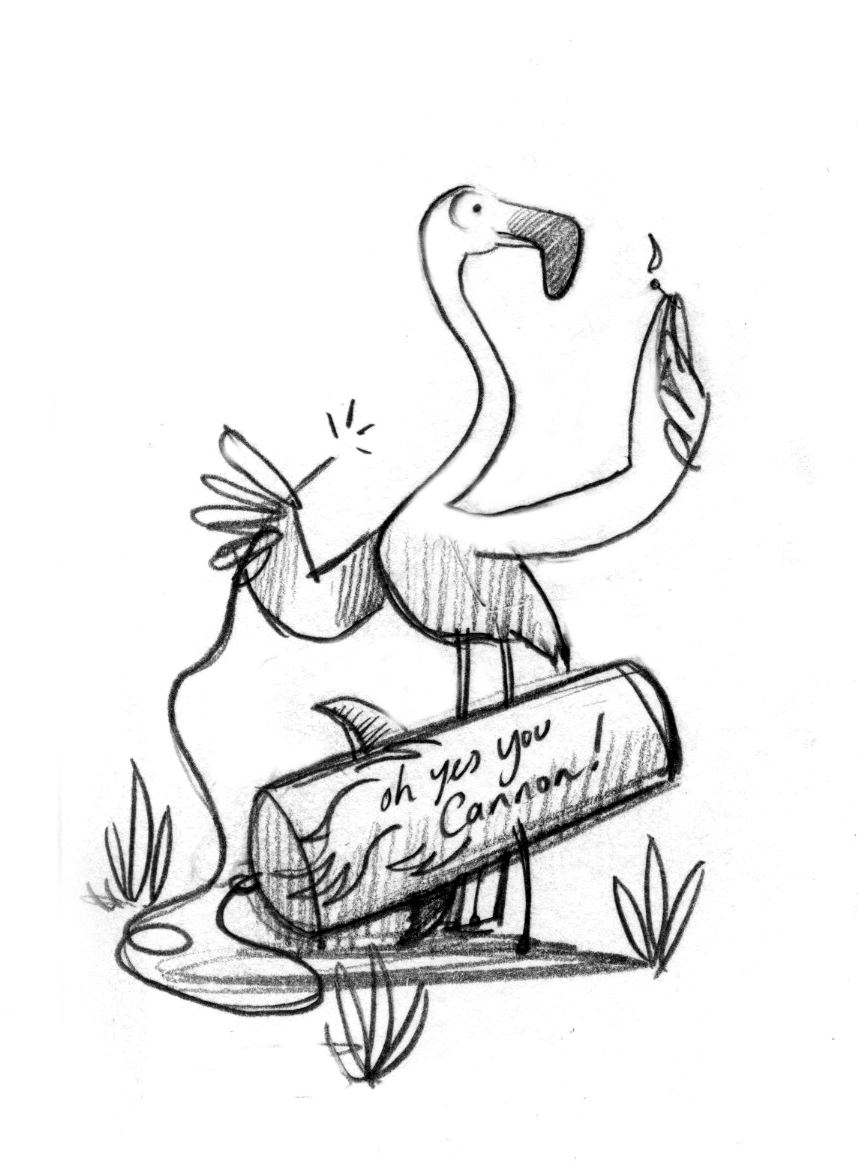
It still fascinates me what ‘right’ actually is or how I even determine I've reached it but all I know is that I have to keep going until I get there, until it looks ‘right’ and, more importantly, feels right. One way of knowing I’ve achieved this is if it makes me laugh. I distincly remember being in the cinema as a child watching The Muppet Movie. Having only ever seen the TV show of the Muppets where their felt bodies are mostly obscured from the waist down to hide the puppeteers, in the movie you see Kermit riding a bicycle, legs and all, singing along with no visible signs of strings or puppeteers. This had me in tears of laughter for most of the movie and, I admit, periodically since then!


When I feel I get a character drawing ‘right’, it somehow resonates with that image of Kermit on a bike within me and I know I’ve got something right. Psychiatrist!

When I visit schools my assembly presentation consists of me asking the pupils what things they might need in order to be an illustrator - the first being a pencil. Sounds basic, I know, but then I tell them that my pencil has a secret sidekick and not only that but my pencil is in LOVE! ...Groan! Yuk! 


We usually have to go through a myriad of different possiblilties  as to who or what this sidekick love interest is until someone yells, a rubber!  What is difficult to get across is the idea that it takes time and a lot of re-drawing to get it down. All they see is a fully formed character sketch that has taken  a lot of skill but been executed in an instant. It never comes out perfect, I tell them when it’s their turn to draw, it’s all about feeling when it’s right for you. After a day of character drawing, which has included plenty of drawing and erasing, I might only be left with two or three drawings that are ‘right’, and all the effort of achieving this is only apparent in the diminished size of the rubber and the debris surrounding it.


One of the other books I’m working on is about a flamingo. He is concerned with his looks. 
These sketches are still at the earliest stages, but once I felt I was happy with his general appearance as a flamingo I then needed to make him express his inner desire for marvelousness. Combining him, with his awkward long legs (as you know, birds legs often bend at the knee in the opposite direction to ours, as is the case for flamingos which is another challenge to anthropomorphise) and his long neck and wings into fashion poses I’d gathered onto my Pinterest board had me laughing out loud. 


This is usually the time a friend who works in the city calls me on the phone distraught from a heavy board meeting exclaiming the pressures of work life and asks me how I’m getting on? 
Oh fine I say, I’m drawing a Kookaburra on a sun lounger drinking a margarita


Facial expression is everything and this can also take an amount of drawing and re-drawing too. I can spend twenty minutes positioning and repositioning a dot in an eye to get the feel I’m after, but then, if I'm lucky, it sometimes works first time. The third book I mentioned I'm working on follows a whole bunch of birds on a poolside holiday. Birds lying on inflatables, wearing rubber rings, drinking cocktails and wearing sunglasses. Plenty of scope for unnatural fowl positions, funny expressions and awkward limbs.


Dogs are great for studying expressions and maybe a lifetime of living with them has had an influence on how I draw emotion in animals' characters. Having recently lost a dog with expressive features (Olive was a grand 17 years old) and now being the owner of a new rescue dog, Lily, I can already see everything I might need for characterisation in her face. She’s does a particularly good sorrowful look, great for visualising the problem moment in a picture book story.


Which brings me to Doctor Dolittle, originally a story by Hugh Lofting about a respected physician and bachelor who learns the secret to speaking to animals from his parrot, Polynesia and which is currently having another turn at the cinema. After seeing the film with my kids I felt a little bit like the doctor myself, conversing with the animals but via a pencil and rubber instead of a parrot, with the help of a dog from the rescue centre.


                                                                              ***

Garry Parsons has illustrated many picture books from wonderful authors. The Llama Glamarama by Simon James Green publishes this June from Scholastic. The image of the horse removing a splinter from the dog's paw is from "Dr Hoof" by Diana Kimpton, also published by Scholastic.
Follow Garry on twitter @icandrawdinos