Showing posts with label maslow's hierarchy of needs. Show all posts

Monday, 15 January 2024

Could overlooking some of your physiological needs indirectly be holding you back from completing creative projects? Oh No, George! realisation and ADHD by Juliet Clare Bell


I happened to read Oh No, George! by Chris Haughton in bed last night (having not read it for about three years).


                                          My bedtime reading for the last couple of weeks


Do you ever get that thing where something you’ve read loads before suddenly resonates in a new way?


                                                  Oh No, George! (c) Chris Haughton (2012)

…because for the first time (that I remember at least; I may have read it and completely forgotten that I had) I saw the quote before Chris Haughton's dedication:


“Freedom is secured not by the fulfilling of one’s desires, but by the removal of desire… No man is free who is not master of himself”  Epictetus.

Without throwing myself into ADHD books, research, podcasts, getting some really good ADHD help over the last year and then trying something really new back in August, I would not have understood that quote at all. But suddenly it illuminated perfectly how the removal of a specific desire had allowed me to uncover something fundamental that was getting in my way (which I'd not realised) and which I could finally work on, freeing me to finish creative projects in a new, improved way. What’s holding you back (if something is) will be different from what was holding me back but thinking about your physiological needs and whether they are really all being met might help you uncover it so you can thrive creatively…

So back to Oh No, Clare (sorry, George)!...

Harris (George’s human) asks George if he’ll be good whilst Harris is out:


                                                 Oh No, George! (c) Chris Haughton (2012)

He’s (I’ve) even got his (my) eyes closed -I’ll genuinely fool myself into believing I'll be good/stick at something. Once he’s opened his eyes, he’s already moved to hoping rather than knowing

And then when he inevitably stuffs up, here comes the ADHD disappointment of having done it again…


                                               Oh No, George! (c) Chris Haughton (2012)

But he’s forgetful, too (ADHD, anyone?) and he soon moves from mistake to mistake. The next time he’s tempted…


                                                Oh No, George! (c) Chris Haughton (2012)

he’s even got the ADHD eyes… those ‘I could just quickly do this other thing and still be able to make my deadline’ eyes…

Eventually, after a LOT of distraction and being found out comes the real ADHD shame, perfectly encapsulated by this page:


                                               Oh No, George! (c) Chris Haughton (2012)

 And the cycle repeats. I absolutely love this book and always have done -as have my children and all the children I’ve read it with. It’s beautiful, funny, poignant (but I'd never seen myself in it until this time round)…

We don’t have to feel sad (for long) for George. He forgets his mishaps pretty quickly. We’re seeing a snapshot of their lives together and Harris is clearly very familiar with George and his urges. Harris and George have a lovely relationship and Harris still loves George when things go wrong (every ADHDer needs a Harris!). BUT happily for George -and Harris, George doesn’t have adult responsibilities and longer term hopes and dreams that he’s just aware enough of to know that he’s messing up (like lots of adults with ADHD do). George doesn’t need to be free (a la Epictetus) to pursue his projects. He can have an awesome life with the ever-understanding Harris. But what about us?

Like the lovely George, I had also always been happy and optimistic about getting it right this time (whatever ‘it’ is) but for me, it was always followed by ‘if I can just…’ I was George-level un-self-aware: self-aware enough to feel shame when it went wrong (which it did, a lot) it but un-self-aware enough that I genuinely thought I was self-aware. I was definitely George (until recently). I knew what I was meant to do/not meant to do, but I couldn’t make myself do it/not do it. But unlike George, I wasn’t a really appealing dog, beautifully crafted by Chris Haughton that we all love and feel compassionate towards. I was an adult with adult responsibilities who kept not showing up how I wanted to -in writing and in life, but without the lovely Harris to help pick up the pieces.


Do you find yourself thinking

This is the year I’m going to be different/do things differently?

I know I can write/illustrate/create more, be more, be better

[followed by the inevitable] if I can just…

use better systems, have a better year plan, be a new and better version of myself?

I always thought that. Each year, each new productivity planner (there are very, very many), each new conference, retreat, goal-setting session, in fact pretty much every day…

But

What if we’re trying to treat the symptoms and not the cause? Maybe we’re starting way too high up in our hierarchy of needs? Maybe we really need to attend to what’s near the bottom?


And if you’re interested, check out Translating ADHD’s podcasts on a slight reimagining of Maslow’s Hierarchy of Needs for people with ADHD… (and episodes 149-153).

Physiological needs

How aware are you of your physiological needs? It might sound like a silly question but I think I was pretty unaware for most of my life until the powerful combination of ADHD and perimenopause left me dangerously forgetful, brain-foggy and lacking in the ability to follow even the most ordinary routines (keys in the fridge, frozen food in the cutlery drawer, leaving the hobs on, forgetting to lock up). You can’t be responsible for children and be forgetting to turn off the hob… so things that had seemed advisable but optional (getting enough sleep etc) became absolutely necessary.

The needs, discussed below, whilst being considered crucial for people with ADHD, are really important for everyone -and fit pretty neatly into Rangan Chatterjee’s Four Pillar Plan to a healthier life, too.


                                                The 4 Pillar Plan (c) Rangan Chatterjee (2018)

So maybe think really honestly about these needs…

Are you really getting enough sleep and at the right time -for you?

I can’t burn the candle at both ends like I did up until even three or four years ago. It’s different for different people and at different points in your life. I used to be a night owl but I love waking up at six to write which means being asleep as close to 10pm as possible. I'm a wreck for days now if I go to bed later. But most of the time now, I wake up, not feeling tired (which is a real revelation for me).

Are you getting enough movement -for you? And is it movement you like? (A note: I need to not think of it as exercise, because I’ve always connected exercise with losing weight/changing shape/being a better version of myself. For me, movement now is to do with being able to think more clearly -and that’s a positive motivator as my job is mostly about thinking! My movement comes mostly in the form of: [1] walking to places I need to get to, fast (so I'm on a mission); [2] dancing unfiltered to loud music on my own (usually with a disco light I can move from room to room) to get me in the proper state for sitting down at my desk and writing if I feel a bit sluggish or tired or don’t feel in the right mood yet; [3] very gentle jogging on the spot to get my focus back on my work if I’m feeling a bit jittery because I’m finding it hard; and [4] regular moving of my feet back and forth on my wooden roller foot massager (costs about £6).


These are the types of movement that work for me. I wanted to be the person who wants to go for a walk for its own sake, especially as there’s a lovely park five minutes’ walk away but I’ve learned that it’s not the kind of movement I like for its own sake. If you stay curious and non-judgemental, can you think of anything you’re doing because you ‘ought’ to like it and if so, if there’s anything you could swap it for that is something you actually do like? It really helps to keep it up when it’s not about self-sacrifice…


Putting the right things -for you- in your body.

For people with ADHD that may well mean: Vitamin D, omega 3, iron, lots of protein (including at breakfast) and very possibly stimulant (or non-stimulant) ADHD medication. And for people who are perimenopausal, this may well mean hormone replacement therapy (HRT; I absolutely could not function without it.) As someone who is still on the waiting list for stimulant medication, I’ve tried all the other ones and they’ve been helpful. But by far the most life-altering thing I’ve found has been not eating sugar (except fruit). I can’t stress enough that it is nothing to do with trying to change shape (please read Sonya Renee Taylor’s excellent The Body is Not an Apology


                        The Body is Not an Apology. 2nd Edition (c) Sonya Renee Taylor (2021)

or listen to the Sonya Renee Taylor in conversation with Brene Brown). I had noticed that I seemed more sluggish/brain foggy/forgetful when I was eating lots of sugar (which I’d do when I was feeling stressed about anything) and I decided to do an experiment for a week and stop eating sugar at the same time as stopping scrolling on my phone before 11am. Within three days, I noticed a big difference in terms of my focus. And I realised that it wasn’t so much that the lack of sugar improved my memory, but that I was no longer feeling anything like as impulsive as I’ve felt all my life (and I’ve never had the desire to scroll on my phone since, either, having scrolled for hours every day prior to experimenting with it). Prior to that, if I was writing and got to a tricky part and started feeling discomfort, my thoughts would have immediately turned to chocolate as a way to make me feel better, or failing that, scrolling. Once I’d stopped eating sugar, I found that when things got hard when I was writing, I didn’t have that jittery compulsive feeling, and my thoughts didn’t turn to external ways of removing the discomfort. And something quite extraordinary (for me, at least!) happened…

I have learned to tolerate discomfort and sit with uncomfortable feelings! Sophie Hannah, poet, novelist and writing coach,has talked about this: if you’re trying to write and you start feeling uncomfortable thoughts, what is the worst that will happen? You’ll feel uncomfortable. What’s the best that will happen? You’ll finish the piece that you’re writing. Not having something to take away the discomfort immediately in the form of chocolate or scrolling has allowed me to feel more comfortable with discomfort and finish (and even dare to start) projects that I wouldn’t have finished (or even dared  to start) before. I would never have guessed that refraining from eating sugar would reduce my distractibility and impulsivity, improve my focus and help me learn to tolerate discomfort -in an easy way. But it has. Maybe once I’m on stimulant medication, I’ll get a similar level of calm and lack of distractibility with the increase in dopamine. I’m all for desire -wanting something, and working towards getting it as long as it’s not hurting anyone else, but many of us with ADHD have experienced the unpleasant side of desire that feels all-consuming and out of our control. We so often go for the big emotions because they give us that dopamine hit but it’s a very short-term hit and having experienced the absence of clawing desire for the last four months, I have to say I’d choose peace and control, or Epictetus’s freedom, over chocolate -even as a lifelong devotee.

Are there any changes to putting things or not putting things into your body that might help you with your focus, concentration, distractibility? Again, this has nothing to do with changing body shape or appearance, but has to do with thinking more clearly so you can be more creative.


Mindfulness

Finally, it’s worth thinking about how mindfulness in its wider form might help you (not directly physiological needs but still relevant I think). Personally, I really struggle with sitting-down meditation or yoga as I don’t feel still enough for it so I’ve looked for other ways to feel mindful. Think about what makes you still? What helps you feel at peace? It might not be what works for someone else. For me, it’s dark and water, and I’ve learned to incorporate both into my life during my working day and week.

Writing in the dark stills me like almost nothing else. I do it at 6am each morning, in bed, and it’s like a magical time where it feels like all the world’s asleep (including my internal editor). Perfect.


And water -works for me. Top three water/work combinations:

3 Listening to waves sounds (or even rain) through headphones as I write or read

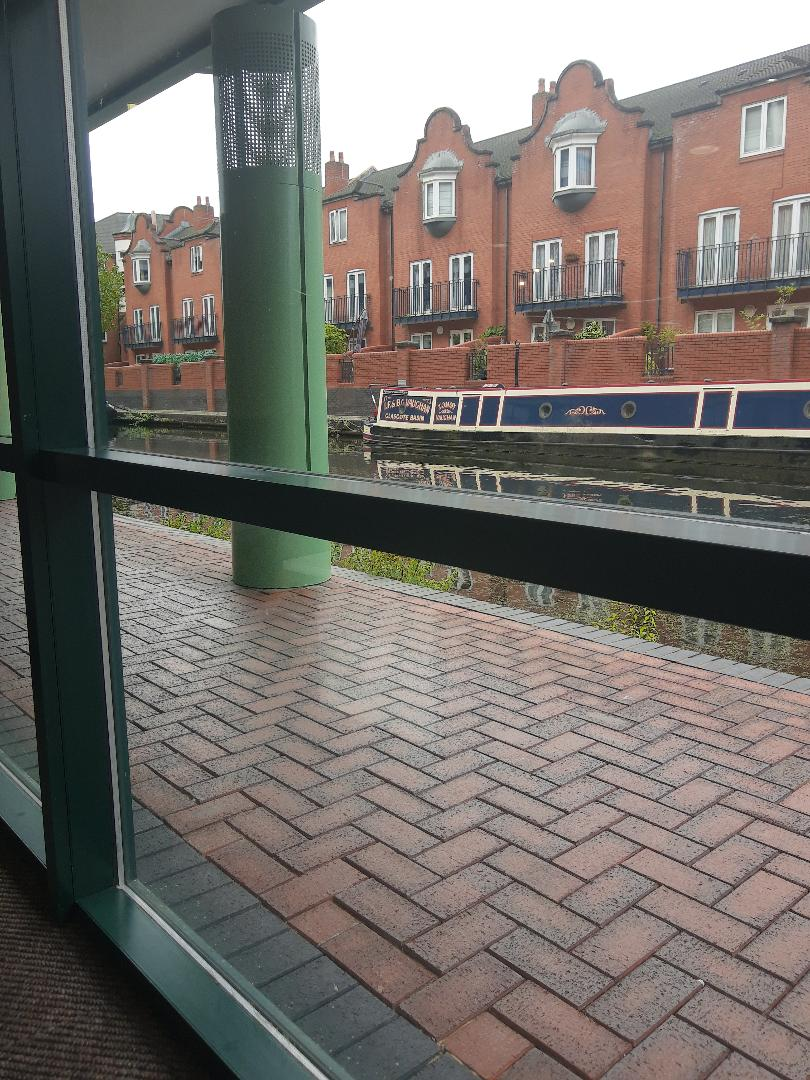
2 Writing by water -there’s a perfect spot by the canal in town where I write once a week for hours


1 Jacuzzi -joint first with writing in the dark for feeling still. Who knew? The bubbles mean you are constantly being moved around just enough (so you don’t have to be making those movements yourself as you would outside of water) and it’s noisy enough to block out most of the conversation around you and to still your own mind. It’s like the humming, vibrating baby chairs for fretful babies. Perfect. It’s where my mind is the stillest it ever gets and I can think really clearly about my work.

I am extremely aware of how fortunate I am and the privilege I have in being able to access these things, including a gym (which I literally only use for writing, in and out of the jacuzzi; if a jacuzzi would help you think, lots of Sports Direct gyms have a jacuzzi and cost £20 per month including all classes); the right kind of ADHD/perimenopause nutrition; an ADHD assessment; ADHD medication (which I'll get once I finally get to the front of the waiting list) and Access to Work support from the Department of Work and Pensions. If anyone wanted help with where or how to get ADHD support (particularly in the UK), please get in touch and I’ll try and get some information up on my website shortly, including a guide to getting Access to Work for ADHD, which I wrote but took out as the blogpost was already too long.


I’m glad George lacks the self-awareness to change -because it’s in his nature to be impulsive and he has such a great time and he’s going to forget his shame really quickly and get back to living his best life. And he’s a dog. In a story (thank you, Chris Haughton for such a wonderful book). But as adults with responsibilities and wanting to write and or illustrate our stories, and deadlines (and for some of us, ADHD), attending to our physiological needs might be a good place to start exploring Epictetus's possible freedom…

If you have any thoughts on what has helped free you up to make the most of your creativity, or would like to share what's been getting in your way and if something has helped, please let us know in the comments below. Juliet Clare Bell is a children’s author of over 35 picture books and early readers and is also branching out into some longer writing projects which she is now confident she can actually finish… She does author visits in mostly primary, but sometimes secondary, schools, and you can find her at www.julietclarebell.com


Tuesday, 12 January 2021

Our window of tolerance: how do we cope in lockdown no. 3 by Juliet Clare Bell


Write it on your heart that every day is the best day in the year. He is rich who owns the day, and no one owns the day who allows it to be invaded with fret and anxiety. Finish every day and be done with it. You have done what you could. Some blunders and absurdities, no doubt crept in. Forget them as soon as you can, tomorrow is a new day; begin it well and serenely, with too high a spirit to be cumbered with your old nonsense. This new day is too dear, with its hopes and invitations, to waste a moment on the yesterdays.


Great words from Ralph Waldo Emerson, but how do we possibly keep this positive -and preferably creative, too-  as writers and illustrators in the new lockdown?

This isn’t a blogpost full of my amazing lockdown secrets of success. Like many people, I’ve barely coped with much of it. But I asked a few friends, writers and children what had helped them, and I’m determined to steal anyone’s suggestions if they work (I’m hoping you might leave what’s working for you in the comments). So here are some tips from others -and me- which I hope might be useful.

And after one of those difficult days, when we feel we could have done it very differently, we can at least wake up the following morning and “not to be cumbered with my old nonsense of yesterday”…

Someone recently introduced me to Dan Siegel (a clinical professor of psychiatry at UCLA)'s Window of Tolerance. It's the optimal zone of arousal in which each of us is able to function and thrive (see the diagram below). Environmental changes (amongst other things) can push us out of that window into hyper-arousal or hypo-arousal, and for many of us, we've been pushed into one or other (or both) in response to the fear surrounding the pandemic. There's a useful, short article on people's Window of Tolerance in relation to the current pandemic climate: you can read the article here


And there's a really clear video (though six minutes’ long) on what a window of tolerance is and how to get back into your window here:


Pre-covid, I think I had a reasonably large window of tolerance within which I operated in quite a calm, effective way:

Relatively large window of tolerance

During the pandemic, that window has shrunk considerably:

considerably smaller window of tolerance...

Many of us would like to get our larger windows of tolerance back and here are a few of the ways we might do it…

BE KIND TO YOURSELF

Just to make clear, being positive or productive doesn’t have to mean our usual level of positive or productive. It might just be more than you’ve managed in a while, or better than yesterday, or just anything at all… It’s important to be kind to ourselves and others and to remember that for many of us (see the red writing):


 For an interesting, short read from Mars Vista on the pandemic seen through Maslow's hierarchy of needs, click here:

I really find that letting go of days that haven’t gone well (a la Ralph Waldo Emerson) has helped. Fellow PB Denner, Natascha Biebow says on being kind to yourself: “You might not be able to write or illustrate as much as you'd like during these times, but maybe you can read or snatch a moment to daydream ideas whilst doing a chore. Often, I find myself challenging my brain to solve a plot problem or figure out another story quandary in the minutes before I fall asleep. It's something!”. 

Take those somethings!

YA author, Olivia Levez, provided lots of practical tips for staying positive but also says: “On days I’m feeling a bit low, I coddle myself as if I’m my own child, with snuggly blankets, hot water bottle and cosy socks, my comfiest clothes, an indulgent bath”. Things she avoids: waking up to newsfeed, catastrophising, being relentless with goals, tasks, targets, and things that help: listening to birdsong, saying, ‘I’m feeling x’ instead of ‘I’m x’, writing negatives on one page of a journal and turning them into positives on the other. And when fellow PB Denner Jane Clarke’s creativity “goes awol, I turn to jigsaws until it returns”.

One of our Christmas jigsaws, and we did finally find the missing piece (in case it was bothering you)...

Be kind. We need to have basic needs met before we can feel as creative as we might want to. In these extraordinary times, many people's safety and other basic needs are not being met and we may not always be able to create as we would like. But in case you’d like to try…

 STRUCTURE

Most people mentioned how having a structure helped them. One child always writes down what she plans to do the following day before she goes to bed. She writes it on a fresh piece of paper each night, rather than in a notebook, so that each piece of paper feels like a new day (very Ralph Waldo Emerson!).  

YA author, Olivia Levez, also finds that: “structure helps. I curate my day to give plenty of treats between writing sessions: yoga, hot chocolate and biscuits, a walk with a friend.” One of my daughters and I have started going out for a half-hour walk before coming home for school/work and it’s lifted our spirits and started the day feeling energised and ready for it.

I've been surprised, but really pleased, to find that this first week of school lockdown has actually been productive. I’ve been struggling to feel motivated for a while now, but with the children working hard in their rooms all day with live lessons, I’m actually finding it easier to be focused than when they were at school last term. Not wanting to slack off whilst they can’t has really motivated me.

WORKING TOGETHER, REMOTELY

Our local SCBWI group used to have a write-in once a week. We’d meet together somewhere (usually at mine), and just write together. Clearly we can’t do that anymore (although the children have been a bit of a proxy for that), but it’s possible to recreate it to some extent online. Early on during the first lockdown, I did some online write-ins with fellow picture book writers from my local SCBWI group. We’d log in on zoom, say hello and what we were planning on writing, and then just write. I could look up and see them writing away and they could see me. Sometimes it’s easier to stay writing when someone can see what you’re doing! After a bit writing slump, I think I’m ready to start doing it again. If you haven’t tried it, it’s worth a go…

CONTACT WITH OTHER WRITERS

Jane says “I live on my own and online meetings are keeping me going… [and the] meet ups with fellow authors and children’s poets keep creativity ticking over as we set each other small writing challenges every week”.

Every time I meet online with other writers I remember how much it sustains me. In a normal year, I’d see writers in person most weeks, have monthly local meetings, weekends away in small groups of writers I know well, and in bigger groups of writers I know less well. These events are such an important part of my life. I live with three teenage children whom I adore, but spending proper time away with adults is so important, and surrounding myself with writers is great for writing but also for the inspiration and energising. I forget so quickly how important it is (because I’m thinking of practical day-to-day things for the family) but talking to other writers on video calls regularly, whether it’s one to one or in a group is a great way to feel positive. And I know we still have to wait for it, but we’ve started talking tentatively about writing weekends away later in the year when it’s ok again. It’s still a way away but just talking about it makes it feel real and gives us something to look forward to.


Online SCBWI nonfiction conference which was really stimulating...

ACCOUNTABILITY

Natascha says: “I've recently re-connected with my critique group and we've decided to make each other accountable by meeting every month and sharing our work. Having a friendly group or even just another person to help you focus and spur you along is very encouraging. (If you don't have a critique group, I'd recommend joining the SCBWI for a supportive and welcoming community)”.

Like Natascha, making myself accountable to someone else really helps me keep going. I’m very fortunate to have a brilliant accountability partner, fellow picture book author Rebecca Colby, and we meet weekly online. We’re discussing something that’s really important to both of us, and I always come away feeling more inspired, even if I’ve not got much done.

DIFFERENT WAYS TO BE CREATIVE

Maybe have a go at a different kind of art. Children's author Mo O'Hara says: “I have discovered that writing books is not my only way to be creative. I’ve written poems and songs and loved it!  I’m also allowing myself to be  interested in exploring drawing and crafts too.  I’ve always been too scared of being terrible  to try but thanks to extra time in Lockdown and the ‘Zero f***s ‘ to give attitude that comes after 50 I have decided to let myself have a go even if it turns out I am terrible.  Who will ever know?!!!”


EXERCISE

Most people I asked talked about exercise, including yoga (both online and alone). I’ve just started my first ever online yoga course and even though I never ‘got’ yoga before, it’s working for me now. If you’re like me and need more motivation than normal, you could try doing it with a friend (it really helps that mine’s run by my sister-in-law and I know some of the other people doing it).

I also copied my accountability partner and got an exercise bike with a laptop table on it


 which means I can cycle during our accountability sessions, phone calls or watching any zoom events that don’t require my looking or sounding professional

I have yet to learn the art of looking calm and professional whilst pedalling...

And I copied my sisters and got a fitbit! Prior to the first lockdown, I’d hardly done any exercise (apart from countless school runs for years) in twenty years, so that’s definitely something positive I’ll take from this… (I’ll take all the positives where I can!). And we’re even doing some Just Dance (which I’m terrible at but is lots of fun).

NATURE

Most writers I spoke with talked about the importance of nature for them.

Mo O’Hara says “I am making myself go for long walks” (note the making myself. It’s the same with me. I have to make myself because I don’t generally want to. That’s where structure works for me. Anyway, Mo continues:

"Connecting with nature is a great way to re-centre yourself… I had no idea there were soooooo many parakeets in London parks!!!!” 

Surely no parakeets here, Mo?

But look more closely...

There really are!!!

I also discovered the same in my local park in Birmingham (where do all those parakeets come from)?!

(anyone else reminded of Cockatoos, here?)


(c) Quentin Blake, Cockatoos


Jane also goes for regular walks: “seeing nature continuing and even flourishing through all this is uplifting”.


This tree on our terraced block never fails to lift my spirits

When we had snow on Friday morning of last week, we knew it might be our only chance so we left the house in the dark and took the sledges to a local park and the children sledged quickly before coming home, eating breakfast and starting school at 8.45am.  

We’re snatching moments more than we would have done because we need that buzz to keep us going. One of my children met up for a five-minute snowball fight (socially distanced, of course) with her school friend and neighbour during breaktime. I love the spontaneity for joyful activities and it’s a brilliant reminder to me, too, to enjoy unexpected things.

a random sundial on a walk...


And specifically thinking of creativity, something that’s quick and structured (it happens every day in January) which is great for boosting creativity is:

STORYSTORM

I’ve been doing Storystorm and its predecessor, PiBoIdMo (created by the wonderful Tara Lazar) for years now. If you’re struggling to feel creative, there’s a daily blogpost that encourages you to come up with a new idea every day. I've not started properly yet this year (unlike other years) but I’m hoping that this blogpost will encourage me to practise what I preach. I read my first Storystorm post of the year today (Day 10 as I write) - and not only did it get me thinking creatively –which is nice, I came up with three ideas, and the topic of the post was so relevant to what I’m writing today. It’s just what I needed to hear, with Kirsten Pendreigh finding joy in the journey. She was talking about process over product and I'd urge you to read the post. It’s just what I needed to hear.

If you’re looking for other ways to get motivated (or re-motivated with your story) and you’ve been questioning the point of it in this current climate, listen to this short video by Teri Terry, who wrote to herself in the first lockdown to get her back into it:


READING

Mo O’Hara talked about an unexpected positive of covid insomnia: it gives her more time to read! “I’m getting through my ‘To Be Read’ pile much faster because I’m reading more late at night”. But has anyone else been struggling with reading? I was, massively–at least until a couple of weeks ago.

I’ve been really distracted, and wanting distraction (with background noise on all the time). Reading didn’t feel distracting enough, and it was too quiet. So a couple of weeks ago I started with distracting noise in the background, and tried reading again. The joy of writing picture books is that reading picture books is part of the job, so I started by reading a few picture books, then a few more, and within a few days, I was reading children’s novels again, and nonfiction, and a week later, I’m reading Victor E Frankl’s Yes to Life (In spite of everything) which feels extremely relevant at the moment:


Yes to Life (In Spite of Everything) Victor Frankl

And the distracting noise? It only took about five minutes before it go really annoying and I was ok to read in silence. Last night, I put on a yoga Spotify playlist, and that was a great background to reading when I didn’t want silence but wanted something calm. If you’re struggling with reading, I’d really recommend it. It’s helping, creatively, too.

SMALL THINGS

We can look for the small things that make it a bit easier. I’ve bought a really cheerful furry blanket cover for my bed so my work space –which is my bedroom- looks less like a bedroom. But it also doesn’t look like an office. I’ve taken out the desk, and put in a small sofa and some plants so it feels really calm. And it helps!


I’ve also discovered the calmest place in the house –in my daughter’s bedroom:

It's an egg chair that she's filled with blankets and cushions, with fairy lights around it and surrounded by a blanket to block out most light!

And my lovely daughter has kindly allowed me to sit in it and read/reflect.

It has an instant calming effect and I love it

We want to be within our window of tolerance so we can cope with everything that’s going on around us, but also so we can flourish and be creative and help others navigate these difficult times. I hope that some of these suggestions are helpful in expanding your window –if it’s shrunk like mine certainly has- and helping to bring you back into it when you’re pushed out. I’d love to hear what works for you –and any tips you have so please do leave a comment if you can.

Be kind to yourself. This too shall pass. x

Clare is the author of over 35 books, including eight picture books. Her website is www.julietclarebell.com.