
I happened to read Oh No, George! by Chris Haughton in bed last night (having not read it for about three years).

My bedtime reading for the last couple of weeks
Do you ever get that thing where something you’ve read loads
before suddenly resonates in a new way?

Oh No, George! (c) Chris Haughton (2012)
…because for the first time (that I remember at least; I may
have read it and completely forgotten that I had) I saw the quote before Chris Haughton's dedication:

“Freedom is secured not by the fulfilling of one’s desires, but by the removal of desire… No man is free who is not master of himself” Epictetus.
Without throwing myself into ADHD books, research, podcasts,
getting some really good ADHD help over the last year and then trying something
really new back in August, I would not have understood that quote at all. But
suddenly it illuminated perfectly how the removal of a specific desire had allowed me
to uncover something fundamental that was getting in my way (which I'd not realised) and which I could
finally work on, freeing me to finish creative projects in a new, improved way. What’s holding you back (if something is) will be different from what was holding me back but thinking about your physiological needs and whether they are really all being
met might help you uncover it so you can thrive creatively…
So back to Oh No, Clare (sorry, George)!...
Harris (George’s human) asks George if he’ll be good whilst
Harris is out:

He’s (I’ve) even got his (my) eyes closed -I’ll genuinely fool
myself into believing I'll be good/stick at something. Once he’s opened his eyes, he’s already moved to
hoping rather than knowing…
And then when he inevitably stuffs up, here comes the ADHD disappointment
of having done it again…

But he’s forgetful, too (ADHD, anyone?) and he soon moves
from mistake to mistake. The next time he’s tempted…

he’s even got the ADHD eyes… those ‘I could just quickly do
this other thing and still be able to make my deadline’ eyes…
Eventually, after a LOT of distraction and being found out comes
the real ADHD shame, perfectly encapsulated by this page:

Oh No, George! (c) Chris Haughton (2012)
We don’t have to feel sad (for long) for George. He forgets
his mishaps pretty quickly. We’re seeing a snapshot of their lives together and
Harris is clearly very familiar with George and his urges. Harris and George
have a lovely relationship and Harris still loves George when things go wrong
(every ADHDer needs a Harris!). BUT happily for George -and Harris, George
doesn’t have adult responsibilities and longer term hopes and dreams that he’s
just aware enough of to know that he’s messing up (like lots of adults with
ADHD do). George doesn’t need to be free (a la Epictetus) to pursue his
projects. He can have an awesome life with the ever-understanding Harris. But what
about us?
Like the lovely George, I had also always been happy and optimistic about getting it right this time (whatever ‘it’ is) but for me, it was always followed by ‘if I can just…’ I was George-level un-self-aware: self-aware enough to feel shame when it went wrong (which it did, a lot) it but un-self-aware enough that I genuinely thought I was self-aware. I was definitely George (until recently). I knew what I was meant to do/not meant to do, but I couldn’t make myself do it/not do it. But unlike George, I wasn’t a really appealing dog, beautifully crafted by Chris Haughton that we all love and feel compassionate towards. I was an adult with adult responsibilities who kept not showing up how I wanted to -in writing and in life, but without the lovely Harris to help pick up the pieces.
Do you find yourself thinking
This is the year I’m going to be different/do things
differently?
I know I can write/illustrate/create more, be more, be
better
[followed by the inevitable] if I can just…
use better systems, have a better year plan, be a new and
better version of myself?
I always thought that. Each year, each new productivity
planner (there are very, very many), each new conference, retreat, goal-setting
session, in fact pretty much every day…
But
What if we’re trying to treat the symptoms and not the
cause? Maybe we’re starting way too high up in our hierarchy of needs? Maybe we
really need to attend to what’s near the bottom?

And if you’re interested, check out Translating ADHD’s
podcasts on a slight reimagining of Maslow’s Hierarchy of Needs for people with ADHD… (and episodes 149-153).
Physiological needs
How aware are you of your physiological needs? It might
sound like a silly question but I think I was pretty unaware for most of my
life until the powerful combination of ADHD and perimenopause left me
dangerously forgetful, brain-foggy and lacking in the ability to follow even
the most ordinary routines (keys in the fridge, frozen food in the cutlery
drawer, leaving the hobs on, forgetting to lock up). You can’t be responsible
for children and be forgetting to turn off the hob… so things that had seemed advisable
but optional (getting enough sleep etc) became absolutely necessary.
The needs, discussed below, whilst being considered crucial
for people with ADHD, are really important for everyone -and fit pretty neatly
into Rangan Chatterjee’s Four Pillar Plan to a healthier life, too.

The 4 Pillar Plan (c) Rangan Chatterjee (2018)
So maybe think really honestly about these needs…
Are you really getting enough sleep and at the right time -for
you?
I can’t burn the candle at both ends like I did up until
even three or four years ago. It’s different for different people and at
different points in your life. I used to be a night owl but I love waking up at
six to write which means being asleep as close to 10pm as possible. I'm a wreck for days now if I go to bed later. But most of the time now, I wake up, not feeling tired (which is a real revelation for me).
Are you getting enough movement -for you? And is it movement
you like? (A note: I need to not think of it as exercise, because I’ve
always connected exercise with losing weight/changing shape/being a better
version of myself. For me, movement now is to do with being able to think more clearly
-and that’s a positive motivator as my job is mostly about thinking! My
movement comes mostly in the form of: [1] walking to places
I need to get to, fast (so I'm on a mission); [2] dancing unfiltered to loud music on my own (usually
with a disco light I can move from room to room) to get me in the proper state
for sitting down at my desk and writing if I feel a bit sluggish or tired or
don’t feel in the right mood yet; [3] very gentle jogging on the spot to get my
focus back on my work if I’m feeling a bit jittery because I’m
finding it hard; and [4] regular moving of my feet back and forth on my wooden
roller foot massager (costs about £6).

These are the types of movement that work for me. I wanted to be the
person who wants to go for a walk for its own sake, especially as there’s a
lovely park five minutes’ walk away but I’ve learned that it’s not the kind of
movement I like for its own sake. If you stay curious and non-judgemental, can
you think of anything you’re doing because you ‘ought’ to like it and if so, if
there’s anything you could swap it for that is something you actually do like?
It really helps to keep it up when it’s not about self-sacrifice…
Putting the right things -for you- in your body.
For people with ADHD that may well mean: Vitamin D, omega 3,
iron, lots of protein (including at breakfast) and very possibly stimulant (or non-stimulant)
ADHD medication. And for people who are perimenopausal, this may well mean hormone replacement therapy (HRT; I absolutely could not function without it.) As someone who is still on the waiting list for stimulant medication,
I’ve tried all the other ones and they’ve been helpful. But by far the most
life-altering thing I’ve found has been not eating sugar (except fruit). I
can’t stress enough that it is nothing to do with trying to change shape (please
read Sonya Renee Taylor’s excellent The Body is Not an Apology

The Body is Not an Apology. 2nd Edition (c) Sonya Renee Taylor (2021)
or listen to the Sonya Renee Taylor in conversation with Brene Brown). I had noticed that I seemed more sluggish/brain foggy/forgetful
when I was eating lots of sugar (which I’d do when I was feeling stressed about
anything) and I decided to do an experiment for a week and stop eating sugar at
the same time as stopping scrolling on my phone before 11am. Within three days,
I noticed a big difference in terms of my focus. And I realised that it wasn’t
so much that the lack of sugar improved my memory, but that I was no longer feeling
anything like as impulsive as I’ve felt all my life (and I’ve never had the
desire to scroll on my phone since, either, having scrolled for hours every day
prior to experimenting with it). Prior to that, if I was writing and got to a
tricky part and started feeling discomfort, my thoughts would have immediately
turned to chocolate as a way to make me feel better, or failing that, scrolling.
Once I’d stopped eating sugar, I found that when things got hard when I was
writing, I didn’t have that jittery compulsive feeling, and my thoughts didn’t
turn to external ways of removing the discomfort. And something quite
extraordinary (for me, at least!) happened…
I have learned to tolerate discomfort and sit with
uncomfortable feelings! Sophie Hannah, poet, novelist and writing coach,has
talked about this: if you’re trying to write and you start feeling uncomfortable
thoughts, what is the worst that will happen? You’ll feel uncomfortable. What’s
the best that will happen? You’ll finish the piece that you’re writing. Not
having something to take away the discomfort immediately in the form of
chocolate or scrolling has allowed me to feel more comfortable with discomfort
and finish (and even dare to start) projects that I wouldn’t have finished (or even dared to start) before. I would never have guessed that refraining from eating sugar
would reduce my distractibility and impulsivity, improve my focus and help me
learn to tolerate discomfort -in an easy way. But it has. Maybe once I’m on stimulant
medication, I’ll get a similar level of calm and lack of distractibility with
the increase in dopamine. I’m all for desire -wanting something, and working
towards getting it as long as it’s not hurting anyone else, but many of us with
ADHD have experienced the unpleasant side of desire that feels all-consuming
and out of our control. We so often go for the big emotions because they give
us that dopamine hit but it’s a very short-term hit and having experienced the
absence of clawing desire for the last four months, I have to say I’d choose peace
and control, or Epictetus’s freedom, over chocolate -even as a lifelong
devotee.
Are there any changes to putting things or not putting
things into your body that might help you with your focus, concentration,
distractibility? Again, this has nothing to do with changing body shape
or appearance, but has to do with thinking more clearly so you can be more
creative.
Mindfulness
Finally, it’s worth thinking about how mindfulness in its
wider form might help you (not directly physiological needs but still relevant I think). Personally, I really struggle with sitting-down
meditation or yoga as I don’t feel still enough for it so I’ve looked for other
ways to feel mindful. Think about what makes you still? What helps you
feel at peace? It might not be what works for someone else. For me, it’s dark
and water, and I’ve learned to incorporate both into my life during my working
day and week.
Writing in the dark stills me like almost nothing
else. I do it at 6am each morning, in bed, and it’s like a magical time where
it feels like all the world’s asleep (including my internal editor). Perfect.

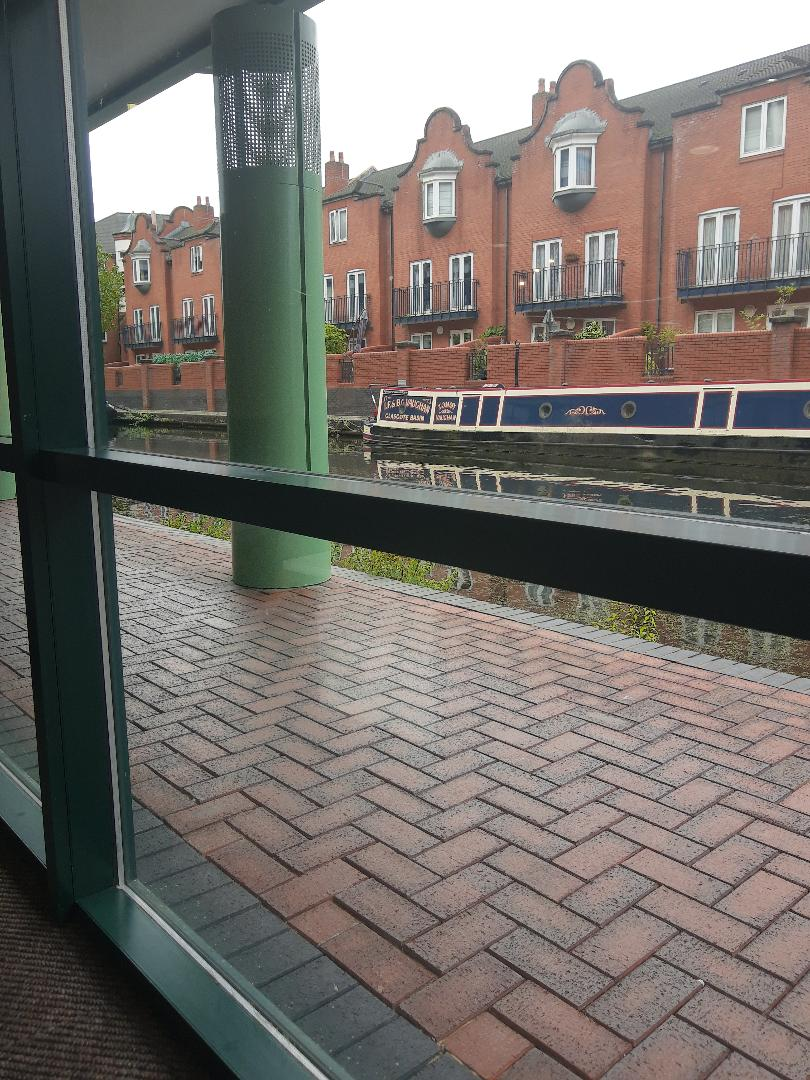
And water -works for me. Top three water/work combinations:
3 Listening to waves sounds (or even rain) through headphones
as I write or read
2 Writing by water -there’s a perfect spot by the canal in
town where I write once a week for hours
1 Jacuzzi -joint first with writing in the dark for feeling
still. Who knew? The bubbles mean you are constantly being moved around just
enough (so you don’t have to be making those movements yourself as you would
outside of water) and it’s noisy enough to block out most of the conversation
around you and to still your own mind. It’s like the humming, vibrating baby
chairs for fretful babies. Perfect. It’s where my mind is the stillest it ever
gets and I can think really clearly about my work.
I am extremely aware of how fortunate I am and the privilege I have in being able to access these things, including a gym (which I literally only use for writing, in and out of the jacuzzi; if a jacuzzi would help you think, lots of Sports Direct gyms have a jacuzzi and cost £20 per month including all classes); the right kind of ADHD/perimenopause nutrition; an ADHD assessment; ADHD medication (which I'll get once I finally get to the front of the waiting list) and Access to Work support from the Department of Work and Pensions. If anyone wanted help with where or how to get ADHD support (particularly in the UK), please get in touch and I’ll try and get some information up on my website shortly, including a guide to getting Access to Work for ADHD, which I wrote but took out as the blogpost was already too long.
I’m glad George lacks the self-awareness to change -because it’s
in his nature to be impulsive and he has such a great time and he’s going to
forget his shame really quickly and get back to living his best life. And he’s
a dog. In a story (thank you, Chris Haughton for such a wonderful book). But as
adults with responsibilities and wanting to write and or illustrate our stories,
and deadlines (and for some of us, ADHD), attending to our physiological needs
might be a good place to start exploring Epictetus's possible freedom…
If you have any thoughts on what has helped free you up to make the most of your creativity, or would like to share what's been getting in your way and if something has helped, please let us know in the comments below. Juliet Clare Bell is a children’s author of over 35 picture books and early readers and is also branching out into some longer writing projects which she is now confident she can actually finish… She does author visits in mostly primary, but sometimes secondary, schools, and you can find her at www.julietclarebell.com


