
by Eoin McLaughlin
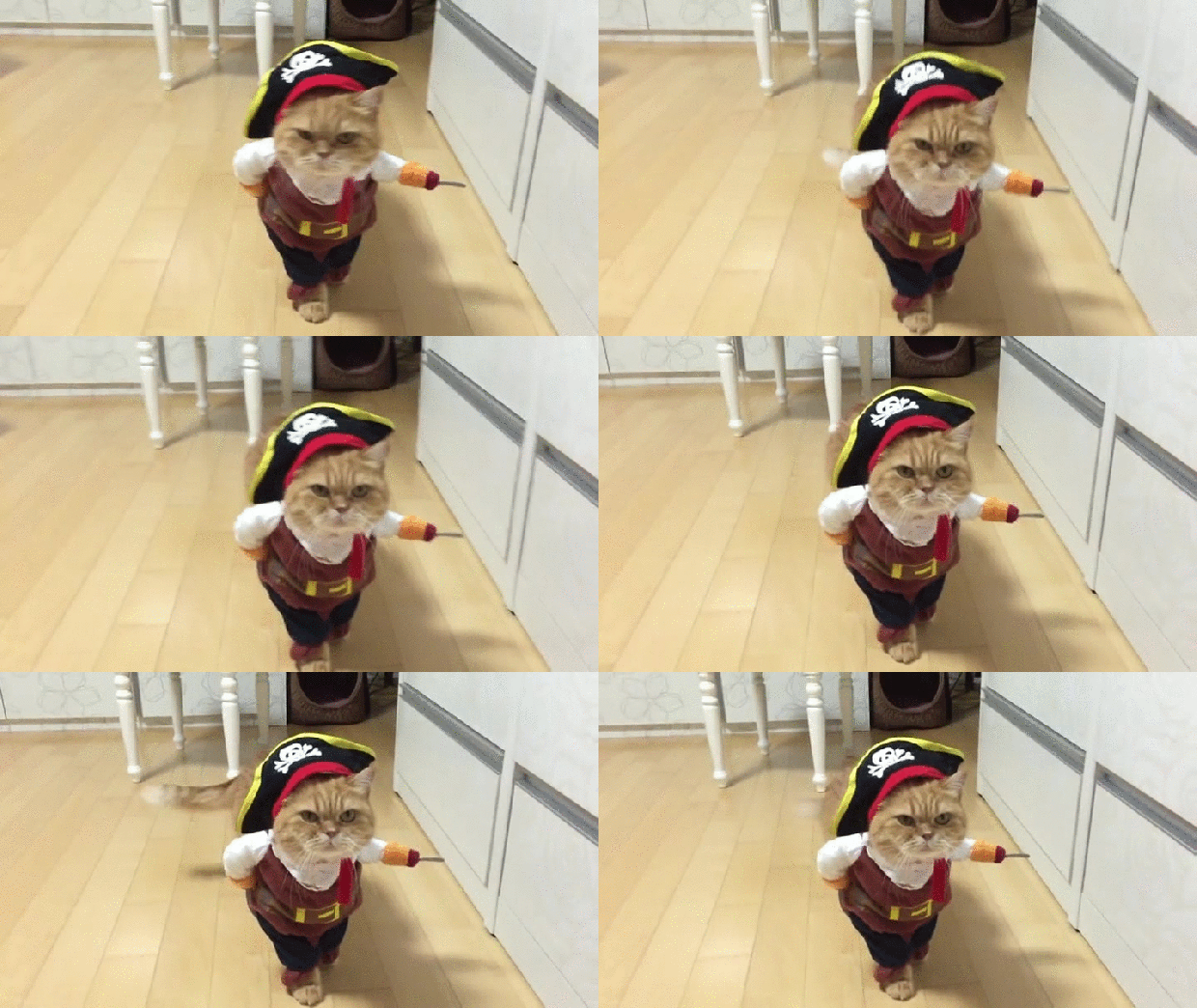
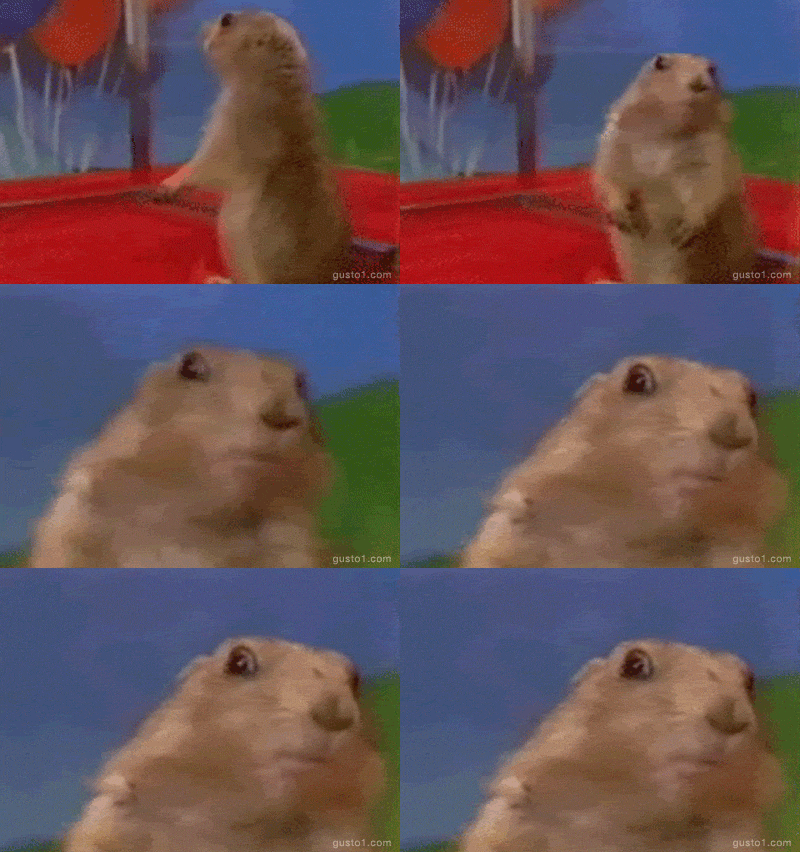
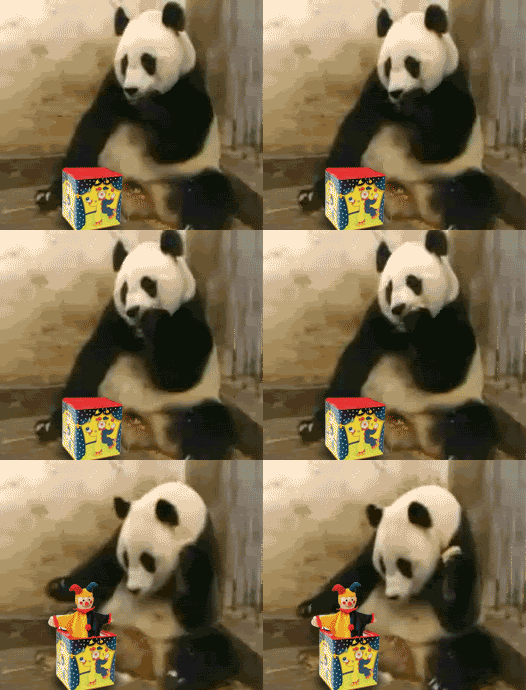
There’s nothing the internet loves more than funny animals. And by ‘funny animals’ I mean animals behaving like us humans. What could possibly be funnier? It feels like we’ve all pored over the cat who thinks he’s a pirate, the gopher with the evil look and the sneezing panda since time began. But it’s easy to forget that Youtube is only 11. The internet meme is in its infancy.
But picture books are not. Ever since John Newbery published A Little Pretty Pocket-Book, picture books have understood, like no other medium, the comic potential of the right animal doing the wrong thing. All the way from the White Rabbit and Jemima Puddle-Duck to The Tiger Who Came to Tea and Gorilla. More often than not, there’s a funny animal at the centre of our favourite tales. Each generation seems to find their own unique slant on the joke, whether it’s greedy pandas peddling donuts or vicious bears trying to locate their hats. The funny animal is the comic gift that keeps on giving.
 Four years ago, James Catchpole sold my first picture book to Dial Books. While waiting for it to come out, I have:
Married.
Moved house three times.
Realised that I love mayonnaise.
And written my first blog post (you’re reading it, hope it’s going okay!)
Amongst all that, I’ve also been reading and writing as much as I can in the hope of learning ‘The Art of Picturebooking’. And whilst, as James will tell you, I’m still very much in Key Stage 0, I have noticed an increasing number of funny animals creeping into my texts. One features an octopus learning to swim, another a bear as a detective. It seems I’m succumbing to the power of the funny animal. Whilst I’m fully embracing this as a good sign that I might be making some progress, it has made me wonder: when did animals start being funny?

There’s a small scrap of Ancient Egyptian papyrus in the British Museum, dating from the 13th Century BC. It was drawn by a scribe, for sale to ordinary Egyptians outside his local temple. What’s unusual about the papyrus, is that it depicts a cow sitting on a plow, as if she were a farmer rather than a farmyard animal. According to Daniel Antoine, one of the curators at the British Museum, Egyptian texts are full of exactly this kind of imagery. Seeing animals performing human activities was one of the Ancient Egyptians’ all-time favourite gags. It had them LOL’ing and RROTFL.
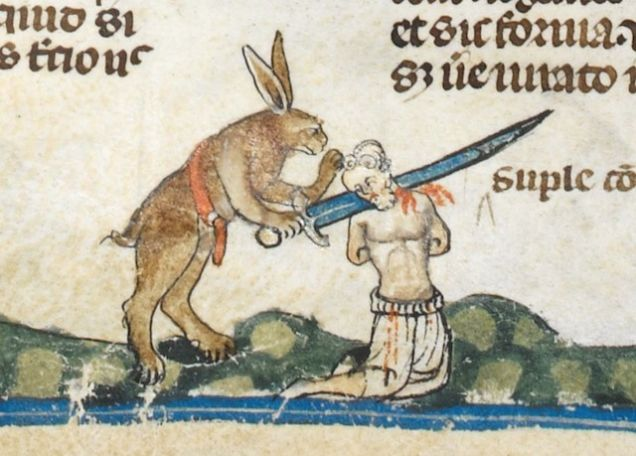
Daniel directed me towards further papyri (yes, apparently that’s the plural) where I found lions playing board games, wolves heading to the shops and cats shepherding ducks. And funny animals didn’t stop there, in medieval marginalia they seem to specialize in dark humour. [Left]
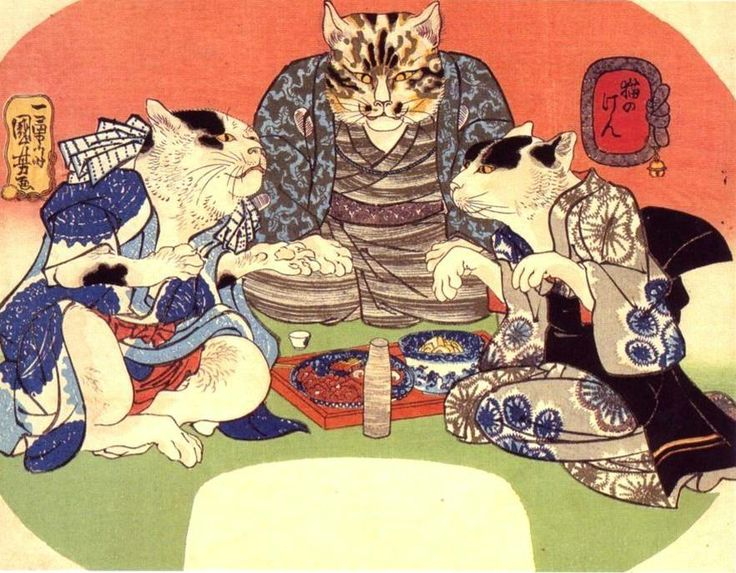 And by the 18th century, Japanese artist Utagawa Kuniyoshi seems to have already perfected the cat joke. [Left a bit, down a bit]
Whilst the funny animal isn’t regarded the world’s oldest recorded joke (that’s widely credited to be a Sumarian corker about farting) it’s very, very close. One man’s papyrus is another man’s Youtube. Funny animals have been making humans laugh for at least 5,000 years, and presumably much, much longer (before papyrus or papyri).
I guess almost all of us would count our sense of humour as one of the things most personal to ourselves, one of the things that makes us who we are and the primary reason we love the people we do. It’s quite amazing to think that we have this bond in common with our most ancient ancestors. We could have shared a good laugh with them over the picture of a cow and a plow in 5,000 BC or by showing them any number of fantastic, funny animal picture books published in 2016.
Isn’t that a nice warm feeling? Let’s bask for a moment in the amazement of inter-generational-super-connection…
Ahhhh…
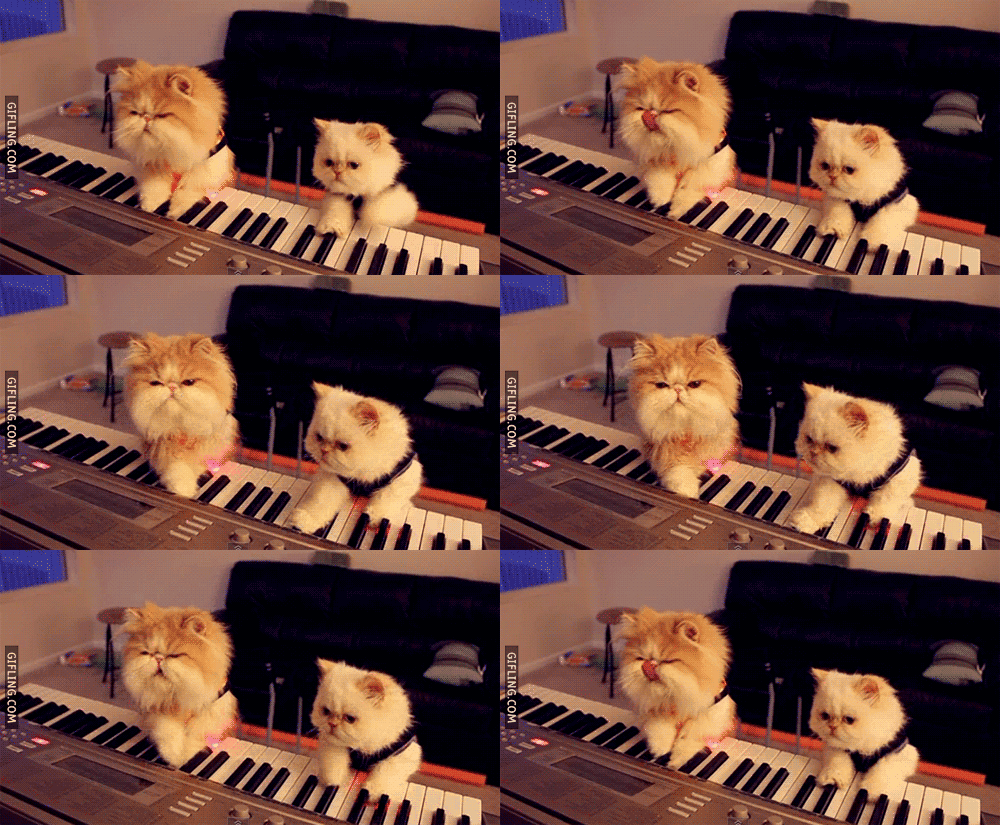
But it does pose a more serious question: “Why, after all that time, are we still picking the very same animals to be funny? For five millennia ducks, dogs, frogs, cows, cats and pigs have been getting things all their own way. Sure, they’ve been a hoot, but isn’t it time to draw a line? Shut the pen? And close the barn door? Wouldn’t it be a good idea to try some new animals for a change? Don’t you think?!” It was at this point that Daniel from the British Museum stopped replying to my emails. He’s obviously part of the funny animal conspiracy. I had no idea how deep it ran.
Regardless, it’s time to make a change. All of us gathered here have the unique opportunity to end thousands of years of subjugation. That’s why, right here, right now (drum roll please) I’m launching ‘The Campaign For Getting More Weird Animals, Things Like Marmots And Poison Dart Frogs, Onto Our Papyri, By Which I Mean Children’s Books’, or ‘TCFGMWATLMAPDFFOOPBWIMCB’.
Granted, it could do with a catchier name. Perhaps we can think of a new one at the first annual meeting, taking place at The National Hystrix Sanctuary.
For the next 5,000 years, bring on the musk ox, the capybara and the skink.
To kick things off @eoinmclaughlin will be tweeting a 142 character funny animal story every day this week, featuring a very deserving, obscure animal. Just leave your favourite weird animal in the comments.
Eoin’s first book, This is NOT a Bedtime Story is coming soon from Penguin Random House (Dial Books). More to follow from Walker and Bloomsbury.


