Showing posts with label James Catchpole. Show all posts

Friday, 10 August 2018

#OnlyOneOfMe: Making a picture book in just a few weeks • Michelle Robinson

We have a guest post this week from former Picture Book Den team member Michelle Robinson about Only One of Me, a very special picture book Michelle has written with Lisa Wells. You can find out more about the project and read the book's text on Michelle's blog.


I swear: no deadline will ever stress me out again.

Since announcing our intention to produce #OnlyOneOfMe on July 31st, it's been go, go, go. With the help of my amazing agent, James Catchpole I've been spearheading a campaign to make a top quality heirloom picture book for charity.

Thankfully there isn't only one of me. The team is small but tight knit, and everyone is pulling together to make it happen. Illustrators Catalina Echeverri and Tim Budgen are currently burning the midnight oil, more than earning the right to be referred to as, "The hardest working people in the business".


Before the nitty gritty: I'm auctioning the rare opportunity to have an in-depth picture book manuscript critique with me, with all proceeds going to the fund. You can bid here!


Let me tell you a little about the book: Written from the perspective of a terminally ill parent, Only One Of Me is an expression of undying love for their children. What makes it so unique is that it was written by someone in that terrible situation.

Lisa and baby Saffia
Lisa Wells was diagnosed with stage 4 bowel and liver cancer at the end of 2017. Her doctors told her she has between just two and twelve months to live. Lisa and her husband Dan have two lovely little girls, Ava-Lily, 5 and Saffia, 9 months. I don't need to say anything more about it, really. It's too sad to think about. But for Lisa and Dan there's no getting away from it.

How do you go about preparing yourself to leave everyone you hold dear behind? 

I can only begin to imagine, and I'm so glad that for me it's just hypothetical. I wish I had a magic wand and could change the future for Lisa. The only wand I have is my pen - so I've given it a wave with Lisa's help.

Our story is designed to help dying parents express their feelings, giving them a lasting and tangible token of comfort to leave behind. Thanks to Lisa's courage, energy and loving nature - and thanks to all the people who are donating, spreading the word and supporting the Only One Of Me team throughout this crazy busy time -  her voice will bring comfort not just to her own family but countless others like them.

So how do you create a picture book in just a few weeks? You fly by the seat of your pants and call in favours from as many generous experts as you can!

Tim's initial character sketches for dad
We were inundated with hundreds of submissions from illustrators. I reckon we had to make our decision faster than any editor ever in the history of publishing! We chose to go with both Tim and Catalina. This way we could produce two different books - one for mums, one for dads - with the freedom to draw human characters instead of gender neutral animals. It also meant no single artist was going to bear the burden of the project alone. The two are forming a great partnership behind the scenes, supporting one another in every decision - there are so many to make, and we have to make them at break neck speed!

What should the characters look like? How can we be sure to make the characters diverse and inclusive? How do we convey the depth of sorrow involved while ultimately providing comfort? What colour scheme? What type style? Spreads? Single pages? The list is endless! Thankfully Catalina and Tim have plenty of support.

The counsellors at WHY We Hear You, our official charity partner, have been helping guide us, as have our publisher, Graffeg and my own super agent, James Catchpole. It's faster, easier and cheaper to get Tim and Catalina together in London (Graffeg are based in Cardiff Bay) for a brainstorming session, so my friends at Walker Books have offered to host, feed and advise them on Tuesday 14th August. In short, Tim and Catalina have a lot of support - but even so, they basically have to create a spread a day to meet our August 30th deadline.

We are so close to full funding - and we print on September 21st!


Huge thanks to Rob Hayward and the team at CPI Antony Rowe, Melksham, and are aiming to hold a fundraising launch party on the same day. To say timings are tight is an understatement! If the books aren't ready in time, we'll be celebrating thin air! We simply can't afford to mess this up.

But we won't. The whole team is dedicated, committed and fired up. We are determined that Lisa will get to enjoy the thrill and satisfaction of seeing her book in print before she dies.

DONATE HERE!

Thank you to everybody who has read the story, spread the news, donated and sent words of encouragement! It means so much. We've had donations ranging from £2 to £250 and every single one is equally appreciated. The more we raise, the more books we can ultimately print - our bookbinders are very generously doing the first run free of charge, which is phenomenal, but we predict a bit of a frenzy in sales!

I should say that the book will be available to everyone, but has been designed as a resource for dying parents. Do keep a copy on your shelf, but be careful sharing it with young children if you're a parent in fine fettle! We wouldn't want to cause any undue anxiety! You will have the option to buy copies and donate them directly to charity, either under your own steam or via WHY We Hear You, who will help see that the books get to where they're most needed.

So wish us luck! Luxuriate in your deadlines! And above all, live, laugh and love. 

Michelle x


Michelle Robinson is the bestselling author of picture books such as A Beginner's Guide to Bear Spotting and Goodnight Spaceman

Monday, 3 October 2016

The Balloon Analogy: When to share new work?

by Michelle Robinson


I was struggling with a new story recently. In a moment (or two... or maybe five) of pathetic insecurity, I said as much to my agent. I suppose I just needed him to say, “Keep writing. You can do this.” What he actually said was, “Send it my way, perhaps I can help.”

NOOOOOOO.

It was too early to share. The draft was too draughty. Showing it to my agent might have put the kibosh on it. Not that his advice wouldn't be good. It always is, even when it's not necessarily what I want to hear. But experience tells me it would have been counterproductive to share my work at such a fledgling stage. Here's why.


I was having enough trouble with the voices in my own head. My own internal critic was already throwing enough opinions around. My characters were also muscling in on the act. I didn't need to add another critical voice into the mix, no matter how astute. 

I needed to work through some issues with plot. The problems were all of my own making. The solutions also needed to come from me - otherwise what would that do to my confidence? Letting someone else solve my problems denies me the satisfaction of solving them through elbow grease and perseverance. 

I would have totally wasted his time. That early draft has since been binned, as have several subsequent ones. In fact the idea has entirely metamorphosed and what I'm now working on bears no resemblance to the draft my agent would have seen. 

The long, arduous, frustrating writing process is just that: process. My agent doesn't need to suffer with me. Besides, even when I present him with a highly polished text there will still be plenty of suffering ahead (sorry, James.) Several drafts later, I’m starting to think my new story is almost ready to share. I just need to tie a knot in it first, a la the tried and trusted...

...Robinson Balloon Analogy


Share a story or an idea too early, and it’s like making a hole in the balloon before you’ve even started blowing it up. Doubts are voiced. Different ideas are put forward. Your original thought peters out - poof - like so much hot air. 

Blow some air into the balloon first - and tie a knot. If you don’t, your story can go whizzing off out of your control. Sure, it’ll make a triumphant fart sound along the way, but ultimately it’ll fall flat. Firm it up as well as you can before sharing.

So: blow it up and tie the knot. If you want to be extra sure, cover it in papier mâché and wait for the glue to set. Now you’re ready to share. Your agent or your editor will help you decorate it just right - but it will be much less likely to go POP!

That's what I think, anyway. How about you? Does impatience make you want to shout your ideas from the rooftops, or do you prefer to keep your ideas a closely guarded secret? Perhaps sharing an early idea has led to collaborative triumph? Share, if you dare, in the comments below. Thanks for reading!


Michelle Robinson’s latest picture book, Goodnight Spaceman, is now available with a CD of Tim Peake reading it in space. Yeah baby. Michelle has a silly amount of books out in 2017 and is sure to blow up lots of balloons by way of celebration.

Find out more about Michelle and her books at http://michellerobinson.co.uk/

Monday, 15 August 2016

WHEN DID ANIMALS START BEING SO FUNNY?

by Eoin McLaughlin


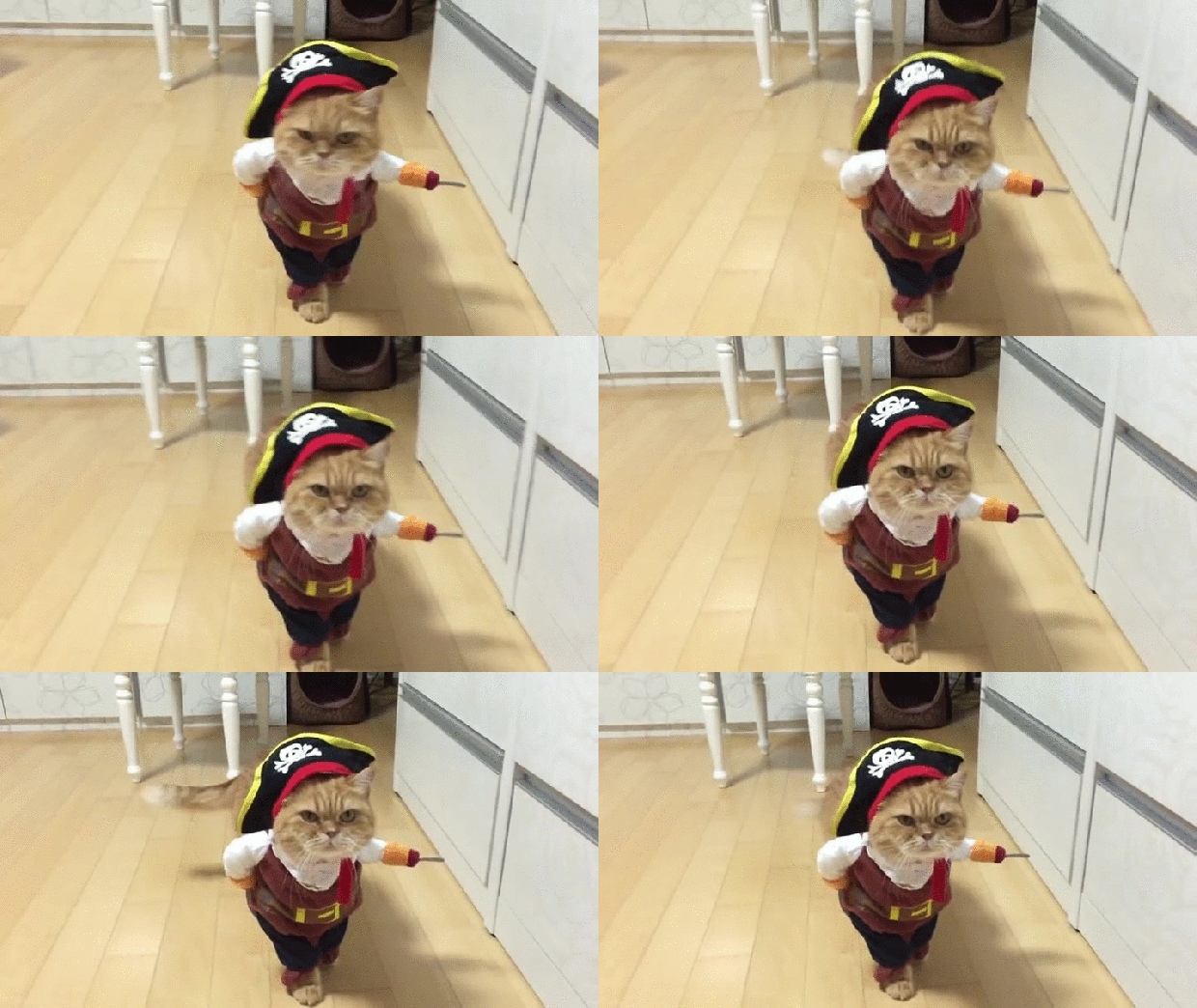
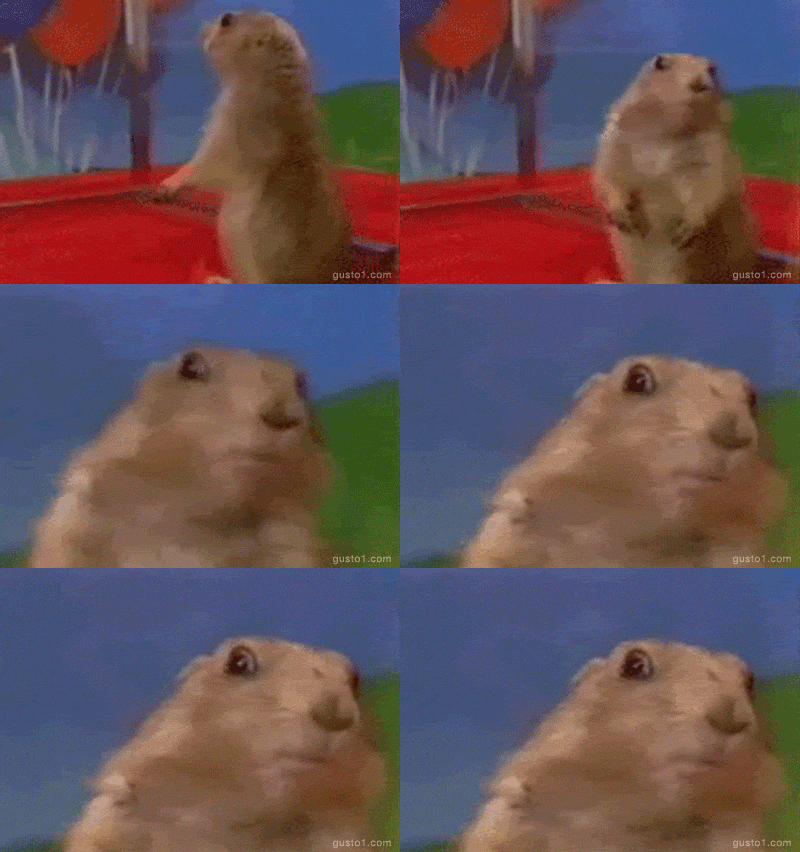
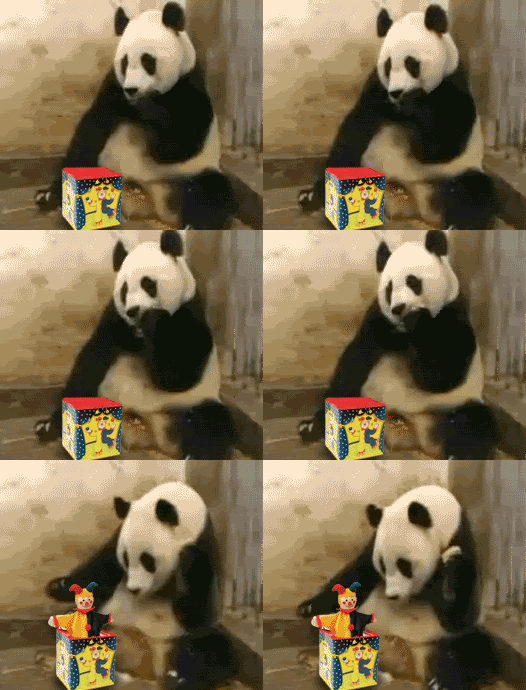
There’s nothing the internet loves more than funny animals. And by ‘funny animals’ I mean animals behaving like us humans. What could possibly be funnier? It feels like we’ve all pored over the cat who thinks he’s a pirate, the gopher with the evil look and the sneezing panda since time began. But it’s easy to forget that Youtube is only 11. The internet meme is in its infancy.  
But picture books are not. Ever since John Newbery published A Little Pretty Pocket-Book, picture books have understood, like no other medium, the comic potential of the right animal doing the wrong thing. All the way from the White Rabbit and Jemima Puddle-Duck to The Tiger Who Came to Tea and Gorilla. More often than not, there’s a funny animal at the centre of our favourite tales. Each generation seems to find their own unique slant on the joke, whether it’s greedy pandas peddling donuts or vicious bears trying to locate their hats. The funny animal is the comic gift that keeps on giving.


Four years ago, James Catchpole sold my first picture book to Dial Books. While waiting for it to come out, I have:
Married.
Moved house three times.
Realised that I love mayonnaise.
And written my first blog post (you’re reading it, hope it’s going okay!)
Amongst all that, I’ve also been reading and writing as much as I can in the hope of learning ‘The Art of Picturebooking’. And whilst, as James will tell you, I’m still very much in Key Stage 0, I have noticed an increasing number of funny animals creeping into my texts. One features an octopus learning to swim, another a bear as a detective. It seems I’m succumbing to the power of the funny animal. Whilst I’m fully embracing this as a good sign that I might be making some progress, it has made me wonder: when did animals start being funny?

There’s a small scrap of Ancient Egyptian papyrus in the British Museum, dating from the 13th Century BC. It was drawn by a scribe, for sale to ordinary Egyptians outside his local temple. What’s unusual about the papyrus, is that it depicts a cow sitting on a plow, as if she were a farmer rather than a farmyard animal. According to Daniel Antoine, one of the curators at the British Museum, Egyptian texts are full of exactly this kind of imagery. Seeing animals performing human activities was one of the Ancient Egyptians’ all-time favourite gags. It had them LOL’ing and RROTFL.
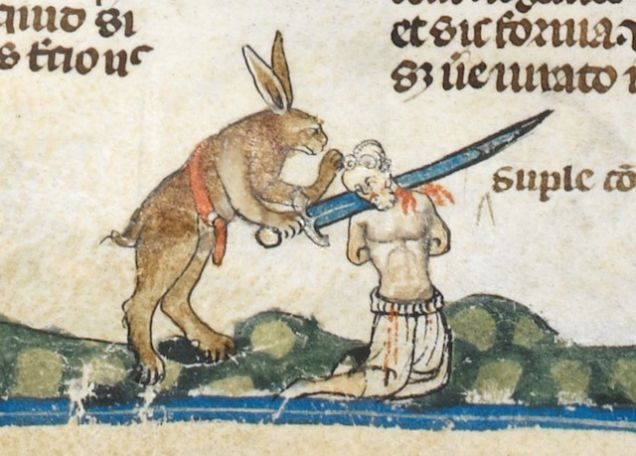
Daniel directed me towards further papyri (yes, apparently that’s the plural) where I found lions playing board games, wolves heading to the shops and cats shepherding ducks. And funny animals didn’t stop there, in medieval marginalia they seem to specialize in dark humour. [Left]

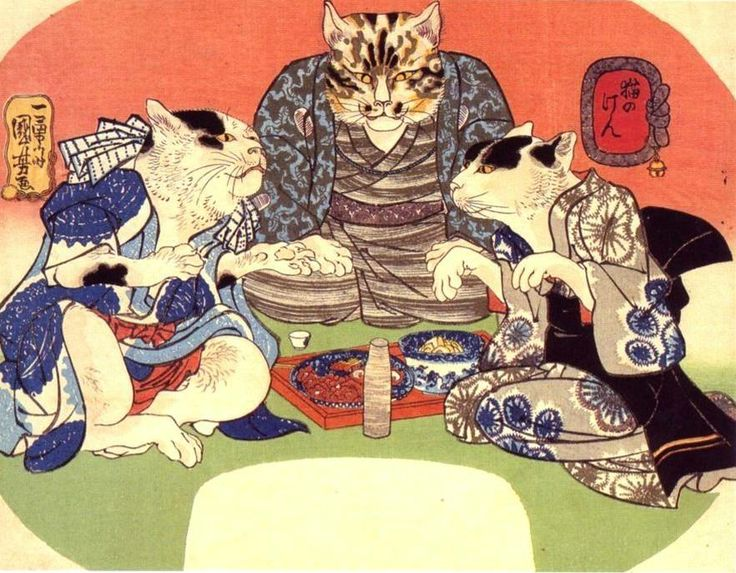
And by the 18th century, Japanese artist Utagawa Kuniyoshi seems to have already perfected the cat joke. [Left a bit, down a bit]


Whilst the funny animal isn’t regarded the world’s oldest recorded joke (that’s widely credited to be a Sumarian corker about farting) it’s very, very close. One man’s papyrus is another man’s Youtube. Funny animals have been making humans laugh for at least 5,000 years, and presumably much, much longer (before papyrus or papyri).


I guess almost all of us would count our sense of humour as one of the things most personal to ourselves, one of the things that makes us who we are and the primary reason we love the people we do. It’s quite amazing to think that we have this bond in common with our most ancient ancestors. We could have shared a good laugh with them over the picture of a cow and a plow in 5,000 BC or by showing them any number of fantastic, funny animal picture books published in 2016.
Isn’t that a nice warm feeling? Let’s bask for a moment in the amazement of inter-generational-super-connection…
Ahhhh…

But it does pose a more serious question: “Why, after all that time, are we still picking the very same animals to be funny? For five millennia ducks, dogs, frogs, cows, cats and pigs have been getting things all their own way. Sure, they’ve been a hoot, but isn’t it time to draw a line? Shut the pen? And close the barn door? Wouldn’t it be a good idea to try some new animals for a change? Don’t you think?!” It was at this point that Daniel from the British Museum stopped replying to my emails. He’s obviously part of the funny animal conspiracy. I had no idea how deep it ran.
Regardless, it’s time to make a change. All of us gathered here have the unique opportunity to end thousands of years of subjugation. That’s why, right here, right now (drum roll please) I’m launching ‘The Campaign For Getting More Weird Animals, Things Like Marmots And Poison Dart Frogs, Onto Our Papyri, By Which I Mean Children’s Books’, or ‘TCFGMWATLMAPDFFOOPBWIMCB’.
Granted, it could do with a catchier name. Perhaps we can think of a new one at the first annual meeting, taking place at The National Hystrix Sanctuary.
For the next 5,000 years, bring on the musk ox, the capybara and the skink.
To kick things off @eoinmclaughlin will be tweeting a 142 character funny animal story every day this week, featuring a very deserving, obscure animal. Just leave your favourite weird animal in the comments.

Eoin’s first book, This is NOT a Bedtime Story is coming soon from Penguin Random House (Dial Books). More to follow from Walker and Bloomsbury.

Monday, 4 July 2016

YOU SAY 'POTATO', I SAY 'SPUD'

by Michelle Robinson


Happy July 4th, America. Independence is a sore point here in Britain right now. Amid all the gloom, I suppose there's still a place for the flippant, the fun and the frivolous. I hope this post brings a smile to your face, if only a teeny tiny one.


Some words just don't cross over the pond. For writers it's a pain in the bum (or the butt, depending on which side of the Atlantic you're sitting). Wherever you're writing, you may wish to go right ahead and avoid some of these nuisance words:-

Sneaker - What is this, America? Sounds like a stealthy fart to me. If we’re talking running shoes, it’s a trainer or even a dap.

Butt - My daughter has started using this word because she watches imported cartoons. It doesn't work in a British accent. We have bums and bottoms.

Cookie - Here in the UK this can only refer to a pale biscuit with chocolate chips in it. Any other ‘cookie’ is just a different kind of biscuit. What you call a biscuit, America, is in fact a scone - and a scone is absolutely not a biscuit. I'm glad we got that one clear.


Color - We spell it colour. Just because you’re bigger than us doesn’t mean you can take away our Us. Ditto favorite/favourite. Stop being so annouying.

Herbs - Please pronounce the 'h'. As in heathens.


Truck - It’s a lorry. That ‘street car’ of yours is a tram. The big red one is a fire engine.

Elevator - It’s a lift. It’s easier for kids to say and they don’t get it confused with escalators (‘moving stairways’ to you).


A-LU-min-um - It’s a-lu-MINI-um, actually. We’ll forgive you on this one because even the guy who named it couldn't make up his mind. 

Drugstore - Sounds practically illegal to us Brits. We call it the chemist’s or the pharmacy.

Freeway - Steady on, this sounds dangerously close to freewheeling. It’s the motorway, where one drives one’s motor, mater.

Rotary - You don’t have many of these bad boys over there. Over here, it’s a roundabout. Don’t ever visit Swindon.

Pants - What is wrong with you people? They’re TROUSERS. Only Superman wears pants on the outside. Also, if something is 'pants', it's bad. 


Underwear - PANTS. Or if you're a girl, you might call your pants knickers. Wallace and Gromit call them undercrackers and they should know. Underpants sounds a bit snooty.


Sweater - Why would you use this word when you could treat your mouth to ‘jumper’? Say it with me, America. ‘Jumper.’ Now go and Google Sultans of Ping.

Galoshes - You can’t wang a galosh. They’re WELLIES.

Robe - It’s a dressing gown. Only Her Majesty wears a robe.

Diaper - Nothing useful rhymes with this. For picture book purposes can we all just agree that nappy is so much easier to work with?

Bathing suit - What century is this? Come on, prissy pants, it’s a cozzie.


Gum - This is glue. Please don’t go confusing us over this, especially our kids. No one wants to chew on a pritt stick.

Math - Did you forget to + the 's’?

Vacation - This is a holiday, actually. Our holidays are for life, not just for Christmas.


Goof off - This sounds like a euphemism. Please can we muck about instead? 

Recess - Sounds vaguely dental. Play time or break.

Parking lot - It’s a car park. (Where cars go to play, presumably.)

Cross walk - We call this a zebra crossing because we’re just so adorable. At least we used to be. *Brexit sigh*

Crossing guard - We have lollipop men and lollipop ladies. We like them, very much.

Gas - We use this to heat our homes and for cooking. We put petrol or fuel in our cars.

Sidewalk - Pavement is the word you’re looking for.

Dumpster - We call this a skip. I have no idea why. I concede: your word is better.

Apartment - Posh word for a flat.

Diner - We say ‘cafe’ to help us sound more European. I guess we'll be ditching 'cafe' soon.

French toast - It’s eggy bread, thank goodness, or we may not be allowed to make it post-Brexit.

French fries - These are CHIPS. Maybe we'll agree that the skinny ones are fries.


Potato chips - Crisps, because they’re crisp and it has fewer syllables.

Jelly - Last time I checked this was actually called jam.

Jello - Hello? This is jelly.


Mom - MUM. Apart from in the Midlands.

Restroom - Stop being coy. It’s the loo, the lavvy, the toilet or the bog. 

Faucet - Again, not great for pre-school rhyming. Let’s stick with tap.

Closet - We say wardrobe. Give it a try.

Trash can - Bin. Surely ours is a better word?

Mail - Post. As in, er… Royal Mail. I’ll have a word with them about that.

Soccer - Don’t even get us started on this one. Not now. It’s football. Your version of football is just plain silly.

Flashlight - Torch.

Band-aid - A charity supergroup headed up by Sting. We call those sticky bandage things plasters.

Fall - Autumn is so much more ...autumnal.

Eggplant - Aubergine.

Zucchini - Courgette.

Cilantro - Coriander. I’m glad I don’t write cook books.

Stand in line - This is queuing. We are the international champions.

Lady bug - Ladybird. Julia Donaldson wrote a whole book based on rhyming it with ‘heard’ and I bet no one asked her to rewrite that.

Any others I ought to have included? Do please add them in the comments below. If you're outside Britain, please also feel free to tell us you still love at least 48.1% of us and that somehow it's all going to be okay. 

Meanwhile, my book ‘The Forgetful Knight’ publishes in the US on July 7th, illustrated by Fred Blunt who lives in Swindon and negotiates roundabouts on a daily basis. In America, they’re hailing our book as ‘Monty Python for kids’. That crazy British humoUr, eh?

Find out more about Michelle Robinson and her books, including advice on writing picture books here.


Tuesday, 26 January 2016

This is NOT a Happy Agent - James Catchpole

We'd like to welcome our guest blogger for this week, James Catchpole of The Catchpole Agency.

The Catchpole Agency which represents authors and illustrators of children’s books from picture books up to YA. James is the agent. Lucy prefers to keep her role mysterious.


New Agency Website


This is a story about a side of publishing authors probably prefer not to think about. It may have a moral, but if it does we don't know what it is. It may be a cautionary tale of sorts, we don’t know - we haven’t got to the end yet.

Sometimes an author has a really great idea, one that seems to spring almost fully formed, that makes you wonder "how hasn't this been done before?" Sometimes, that’s because it has. So as an agent, I check. This particular idea - we'll call it 'This is NOT a Happy Agent' for now, because using the real title would scupper any chance of a happy ending - had not been done before. It was 2012 and this was an original idea for a picture book text, with an original title - a title that ran through the thread of the story, a title that summed up the text and was repeated like a fabulous, memorable refrain. One you could imagine children chanting along with their parents.

Agents may be characterised as soulless money people, but don’t believe it - it is exciting when you see a text like this. And especially so when, as in this case, it was by an unpublished author (let’s call him, er… Dave) who I’d only just pulled from the submissions pile.

I thought this story could (nothing is sure in this business) break this young author. I read it to my wife. She was impressed. She is not easily impressed.

This is a Happy Agent


So I did what an agent does - I took this shiny new text around to all my best contacts. I took it to Bologna and read it out to all the major publishers. Sure enough, it was pretty damn popular. Some editors passed on it regretfully, others held on to it gleefully and passed it around the office - to their team, to Sales, to I don’t know who else. That’s the way this business works.

Reading this back in the context we’re now in, it seems strange to me that the industry does work this way. A new author, an original idea, and what do I do with it? I go and shout this original idea around the assorted editors of New York and London. But until this month, this way of working hasn’t ever seemed strange to me. This is just the way it is. The industry works on trust. It has to.

'This is NOT a Happy Agent' (ahem) was indeed bought - back in 2012 - by a big US publisher (hooray!). I was excited, the author was excited.

And then, for various reasons unrelated to the quality of the text, things kinda stalled. The editor who’d bought it moved elsewhere, the illustrators the new editor wanted weren’t available... Now, in 2016, they’re still looking for an illustrator. Frustrating, but not hugely surprising - it’s the way it goes sometimes - picture books can be a long game.

Skip forward to two weeks ago, when something odd happened. “Isn’t ‘This is NOT a Happy Agent’ one of Dave’s books?” my wife shouted through to me. Yes, so? “Then why is there a photo of a book on Twitter called 'This is NOT a Happy Agent', by someone else entirely?’ Oh.

A pile of books...


I had absolutely no idea. I knew this couldn’t be our author’s book. But sure enough there it was - a photo of an advance copy of a book with exactly the same title, but with another author’s name, sitting on Twitter. I know the editor who’d posted the picture well (she’s lovely btw). She works for a big London publisher - er..Goliath Kids UK? that'll do - which is actually the sister company of Dave’s publisher in the US.

So here it gets murky. Because as I said, I showed 'This is NOT a Happy Agent' to everyone. In fact, I’d read it out to Goliath Kids UK back in 2012, and discussed it with their editors a few times since.

So what had happened? A quick search told me that yes, Goliath were bringing out 'This is Not a Happy Agent' - by their own author (let’s call him John Smith) - in March. 6 weeks’ time as of writing.

I emailed the editor and her boss. They were clear: the title was not their author’s idea, it had come from within their own team. I suppose they didn’t want me to think their author might have plagiarised it somehow, from mine. This hadn’t crossed my mind – they’d never met, I’d checked. And anyway, much more logical to suppose it was Editorial’s idea, given they’d actually heard the title before.

I reminded them. They seemed to take it in their stride. So would they change their title? No.

To say this is frustrating is an understatement. Whether consciously or unconsciously, it’s more than likely that my author’s title was plagiarised by Goliath Kids UK. What’s worse 'This is Not a Happy Agent' seems in no way organic to their story. Their story is totally different to ours. Applied to theirs, it’s just a catchy title, whereas it runs through ours like words through a stick of rock.

But if Goliath go ahead and publish, Dave’s title will most likely have to change - can you really have two picture books with identical titles coming out within a year or two of each other? And in losing the title his story will lose a prime part of its cachet.

Dave has had other ideas since then, and after a couple of years of trying, late last year I suddenly sold four of his texts in as many months to two top London publishers. I’m sure it’s going to happen for him. But now I'm starting to wonder...the four texts I've just sold were seen by other publishers besides the ones who bought them. What's to stop their titles or their ideas being stolen before they come to be illustrated and published? How should I advise my author? What should we advise our many other authors, all of who rely on this same trust?

Perhaps this trust doesn't really exist. These are all good people we’re dealing with here, and we all know how easy it is to come up with someone else's idea while believing it's your own...But that's why you check. Perhaps there just aren’t any systems in place within publishers to stop things like this happening? And once they have - as in this case - it’s just handed over to Legal (watch this space…).

But can it really just be a question of whoever publishes first? That all feels rather Elizabethan. Or does it happen, and we just don’t hear about it? Am I breaking some unspoken rule of the industry in discussing this? (Maybe!) Do I need to guard my clients’ ideas more heavily in the future?

In that case, maybe all that will prevent a publisher from plagiarising is the threat of reputational damage? In which case, perhaps the best thing I can advise a new author to do is the most counter-intuitive. Should they actually go public? Should they blog and tweet about the titles they’ve sold, put it all out there on public record online? (Not unprecedented, these days...) Should they not rely on privacy and trust, but lay down a challenge: here are my ideas, here I am laying claim to them.

That could present a whole lot of new problems for the industry. But I suppose at least it would take a brave publisher to claim so publically an idea that wasn’t theirs in the first place.

Feedback appreciated! Comments can always be anonymous...


James and Lucy Catchpole


P.S If a picture book actually called 'This is NOT a Happy Agent' appears in the bookshops, you heard it here first - we will be cross.

Click here for aother guest blog post by James Catchpole.

Sunday, 3 August 2014

DON'T DO IT! - how NOT to write a picture book by Malachy Doyle


 1. Don’t think it’s easy. You need to have lived. You need to have read (lots and lots).  You need to have something to say. You need to have developed a voice, a style, an ease of telling…

2. Don’t over-write it. Write the story, then cut, cut, cut! Every word needs to need to be there, and the fewer the better (preferably under 500). Prune the beginning, cut to the quick, then chop, rebuild, chop, rebuild, chop, chop, chop till it’s perfect.  


 3. Don’t describe stuff. Just tell the story – the speech and the action. The illustrator will add colour to your world, and depth to your characters and their story. 

5. Don’t illustrate it, unless you’re an illustrator (and a very good one, at that).

 
6. Don’t ask someone else to illustrate it for you, either. The publisher will find the right person.

7. Don’t tell the illustrator how to do their job. You wouldn’t want them telling you how to write it.


 9. Don’t rhyme, unless the story steadfastly refuses to be told any other way. And unless you’re a brilliant rhymester, with perfect scansion.

10. Don’t lose touch with children. You’re writing for the young people of now and of the future. You need to know, understand and very much like them.    

11. Don’t skimp on the reading aloud. Rhythm, and a delightful ease in the telling, are key - and only reading your story aloud many many times will show if it’s perfect.


12. Don’t just write a story. Write one that needs to be told, with something real and true of yourself in it. Write with heart, from somewhere deep inside you. Write something that truly affects and enchants the reader / listener - something that matters.

13. Don’t make it too easy for your main character. Get them into trouble. Then more trouble. Then, just when you think it couldn’t get any worse...


14. Don’t think it’s easy. (Didn't I say that somewhere before?) Only the best is good enough for children. The best words in the best places, the best characters in the best stories… 

15. Don't expect to make a fortune. Or even a decent living. Do it because you have to.  Do it because you have stories inside you demanding to be told. Write because you're a writer.

16. And don’t send a story out till it’s finished. A picture book may take months, even years, and hundreds of drafts, to get right. Ask it every question, look at it from every angle, till you’re completely satisfied with it. And then…

GOOD LUCK!


(with thanks to James and Celia Catchpole, Martin Waddell, Mem Fox and everyone else along the way…)

Malachy’s latest picture book is called Peek-a-Book, and it’s illustrated by Rowan Martin and published by Parragon Books on August 8.

His storybook Pete and the Five-a-Side Vampires is published by Firefly Press on September 18 - and the most exciting thing about this one, for Malachy, is that it’s illustrated by his daughter Hannah!  Whoopy-doo!  


Saturday, 1 March 2014

Introducing... Michelle Robinson

Hello, I'm children's author Michelle Robinson. Thank you for welcoming me into the Picture Book Den! I've been reading the blog for a long time, so I feel very honoured to find myself ‘on the inside’. I thought my first post ought to be an introduction - after all, contrary to the belief of anyone who asks me what I do for a living, there’s absolutely no evidence that I am indeed  ‘the next JK Rowling’, so you probably won’t have heard of me. Yet. 

My first picture book came out in 2012, I’ve now got ten on the shelves, another ten in production, many more doing the rounds and a squillion duff ones cluttering up my desktop. Maybe I’m not the next JKR, but I'll happily settle for The First Me.

FACTS: I love picture books and am woefully short on shelf space.

I used to be an advertising concept bod and copywriter. I wrote radio ads for a long time, so setting up ideas and resolving them quickly - as well as reading them aloud - set me up well for writing picture books. 

I met fellow Picture Book Denner, Malachy Doyle on an Arvon course that he tutored some years ago. It was through his help and guidance that I found my agent and got published. Malachy will be on my Christmas list forever.

When writing, I try to choose the simplest words and use as few as possible. I chuck in the odd big word as I don’t believe in talking down to children. Books are a great place to learn new words. (As a child, I adored reading the dictionary. Still do.)

I got majorly into reading when I moved schools aged five, spotted a girl with her head in a Famous Five book and thought 'That looks fun'. She became my best friend and I spent all my pocket money on second hand Blytons.


I always dreamed of becoming a children’s author. My dad told me it didn’t matter that we weren’t rich; I could achieve anything I wanted if I worked hard enough. I believed him; I believed in myself. I worked hard and my dream came true. I can’t tell you how incredible that feels. Now I give my own children the same advice my dad gave me - and I have my very own books to back it up.

I have two children, Arthur (four) and Heidi (two). They take up most of my time, which is magic - but I do appreciate the two mornings a week when they're at nursery and I can write (and iron, vacuum, bake, eat all the baking, etc.).

I'm Patron Of Reading for my local first school. It's brilliant. I get to spend time with wonderful kids and introduce them to brilliant books they might not otherwise encounter. 

My pet publishing hate is people being secretive about the road to publishing. There's always space on the shelves for more great books, and children deserve quality. I'm always happy to share any 'wisdom', hence my website features a regular-ish advice section called Pencil Tips.

I like cake a little bit too much.

Finally - violins at the ready - I'm writing this from a hospital bed. I'm currently getting hardcore drugs and custard free on the NHS, and attempting to write a first draft of a children's novel while I'm bed bound. It's not going terribly well. I blame the high temperature.

I'm really looking forward to contributing to the Den and getting to know you all a little better. 
With warmest wishes (currently about 38°), 
Michelle Robinson

For more on Michelle Robinson, including writing advice, colouring sheets and free audio games to accompany her picture books, visit her website. 

Monday, 4 February 2013

It's not only the pictures that give picture books their power... by James Catchpole of The Catchpole Agency


There are many good things about working in children’s literature. 

One of them is how frequently you find yourself having earnest, reasoned conversations about not entirely reasonable things, like whether, if anthropomorphized fruit have arms and legs, cheese and eggs should too. (A reasonable conclusion turns out to be yes, but not sausages or frozen chickens – that would be weird.) 

Another good thing is how that precious, childish, ragged edge of fantasy does – somehow – find its way from an author’s pen, via the stewardship of an agent, right to the top of one of those great glass cliffs in London (into which all but a few of the smaller publishers have now been subsumed), so that still, when you sign in at the desk in the sterile, corporate lobby and take the lift to the 14th floor, the clean-lined, pale-toned, open-plan office that greets you nevertheless bears its happily incongruous traces, in shelves upon shelves of beautiful, colourful, anarchic and fantastical books.    

But maybe the best thing about working in children’s literature is simply the range of storytelling. True, not all subjects and not all human experiences are covered here (no sex, most obviously), but the power and breadth of children’s fantasy – fantasy as real for them as reality is for us – more than compensates. And subject isn’t everything. Think of the range of ways a story can be told, and must be told, in order to enthral someone almost fully grown, and someone so small they’ve barely begun to be.

So this range and variety might be the best thing of all, I think: to be able to work on a picturebook in the morning, and a novel in the afternoon. And probably best in that order, because there’s something special about picturebooks that sharpens the tools of storytelling (and in my case, editing).

Picturebooks are how our agency began. Celia studied to be a visual artist – a sculptor – and has used that trained eye to spot talent in illustrators, and help them develop it. I hope I’ve inherited some of her instinct in that regard, to compensate for a lack of formal training in the visual. 

My training was in words, and in music, a useful diversion so I later found, because it helps hone a sense of narrative in the abstract. Composers think of narrative structure in abstraction, ABACA. Writers often conceive of structure more instinctively or superficially, but the deeper, unconscious structure of storytelling is there all the same, hidden beneath the surface flow of paragraphs and chapters.

Picturebooks, like the simplest musical forms, impose a rigorously explicit structure on narrative. Thirteen and a half spreads to do all that a story (or a piece of music, in fact) has to do: establish a home, complicate matters, leave, and then resolve and return. And somehow that little journey has to intrigue and absorb us, carry us along, move us and then finally satisfy us. 

Novels, like symphonies, may go here and there, may slow to a crawl then tear ahead to the finish, but picturebooks have no room to meander. As with poems, in the best picturebooks, every word earns its place. Picturebooks are the art and the science of storytelling distilled to their essence. 

And maybe, after all, that’s the best thing about working in children’s literature: that ideal alchemy of wild, ragged fantasy, and the formal discipline of narrative, which picturebooks in particular mix and brew so well.

 If you want to find out more about what Celia and I do, the link to our website is www.thecatchpoleagency.co.uk 
(though you may have to wait a day or two while BT chases down a cyber-gremlin that appears to have chewed through a cable, somewhere out in the ether...)