Tuesday, 19 February 2013

Chicken or Egg? by Polly Dunbar

'Where do you get your ideas ?' is the first question I am asked, as an author and illustrator. The second is the eternal 'chicken or egg' question: which comes first, the words or the pictures?  I'll try to answer here. 

I am fascinated by the third element in the making of a picture book - the special space between the words and pictures into which a child is invited to fill the gap with their own imagination. If allowed, the reader plays an active part in the story, breathing  their own life into it;  when this happens successfully it's like a tiny explosion in the mind.

These little explosions can trigger all sorts of responses: they can be shocking; they can make you laugh; they can be intriguing. The important part is reaching a conclusion all by yourself rather than have it spoon-fed by the author.

Jon Klassen is a master of balancing words and pictures and leaving us a gap. Here is a picture from his new book THIS IS NOT MY HAT, with a fish that looks very much AWAKE - brilliant!

Because the ending isn't spelled out, the reader has to work out what happens to the narrator fish without being told. The ending you come to in your own mind might be hilarious or horrifying or perhaps it's a completely different ending to the one the author intended; it doesn't matter, what matters is the huge pleasure in getting there with your own imagination.


My first published book was a series of cartoons about being a teenager. I was interested in the work of Gary Larson - I loved the way he combines a picture that tells you one thing and a line of text that tells you another: bingo...something absurd...an explosion...usually of laughter! 


So I started writing/drawing my own cartoons - which turned out to be very good training for writing picture books. It's an exercise in paring down what you are trying to say to its absolute essence, allowing the words and pictures to come together creating a friction or a vibration, like forcing two magnets together that don't want to meet. Synergy.


An example of the connection between words and pictures is cleverly done in a series of HCBC adverts, putting different words with the same picture. It is startlingly effective - to have one's mind prompted into making so many different associations to the same picture, making it look or 'feel' different each time.
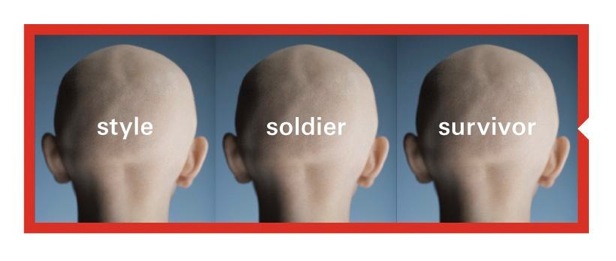


This power between words and pictures is for me what makes picture books so special, why they have a magic that is hard to capture in animation or apps. I'm all for telling stories in different ways using different formats - pictures that move and dance and sing, with buttons to press and things that squeak. Although I love all this, there is infinitely more pleasure in making those pictures dance and sing in one's own mind, to feel those synapses snapping to make it come to life in a way that is unique to you, giving power to the reader.

With my very first picture book 'FLY AWAY KATIE' I had decided I wanted to be an 'author' as well as an illustrator.  I set about writing a story that was about 4000 words too long, getting myself into a terrible muddle describing everything that was happening, how the character was feeling on each page. One day I sat down, threw out all the words and just drew the story in a series of pictures...and there I had it. I added a few words to help the story along and left it up to the reader to decide how Katie was feeling.


So back to the 'which comes first' question, writing or drawing? Capturing ideas and turning them into stories is an elusive business; the essential elements, of words, picture, idea, never seem to be in the same place twice.  I doodle in my sketch books, images, phrases anything that has caught my attention. Sometimes if I'm very lucky a drawing cross-fertilizes with another image or a phrase, and the juxtaposition of two things will create a spark and lead to a story. My book PENGUIN started with this sketch of a toothy penguin and the words 'bit hard very hard on the nose.'


The beauty of being an author/illustrator is that you can prune your own words and let the pictures do the work. Very young children are visually literate and can read body language far earlier than they can read words.  On this page in Penguin, I could have described the tantrum that Ben was having, but I didn't need to - , the pictures are enough.


At the end of the book Penguin says 'everything'  in pictures alone. At first my editor and I were a bit worried that readers might flounder on this page, with no words to guide them through the story. But rather than leaving the reader stumped, it gives the child a chance to be the storyteller, to bring it to life in their own words. 


Children's authors don't have to illustrate their own work, they just have to invite the illustrator to dance with them, being careful not to tread on their toes. I'm doing this dance at the moment with my Mum, Joyce Dunbar. She has written a text called PAT-A-CAKE BABY. Mum wrote some words, I did some doodles. Mum wrote more words and we danced chaotically, not sure who was leading until we learnt the steps, and now we're nearly ready to invite people to dance with us.

It doesn't matter which comes first, the pictures or the words, so long as when they come together you can hear an unexpected and wonderful fizzing in the mind of the reader.


To find out more about guest blogger, Polly Dunbar,


Thursday, 14 February 2013

For The Love Of Picture Books, by Pippa Goodhart


Today is Valentine’s Day, a day for love, and I want to celebrate that by looking at the kind of love that is expressed in the sharing of books, and of picture books in particular. 

Readers of a blog such as this one are, I imagine, going to be people who are in the habit of sharing books, passing books on to people we feel will particularly enjoy them, and then comparing our experiences of those books.  That’s a joy.  But I think that the sharing that happens with picture books is best kind of book sharing of all.  Why? 

Because when one person reads a picture book to another, or to a group of people, those people are all experiencing the book at the same time, together.  They share each other’s reactions to the book.  How much more delicious to laugh together at a joke, and enjoy another’s enjoyment as well as our own.  How reassuring to have the company of somebody else when the book experience is unsettling or puzzling.  There’s a mental, and sometimes an actual, holding of hands as we progress through a story like that.

There can be great physical intimacy in sharing an illustrated book.  You have to be close in order to study the pictures.  Besides, picture books are often read at bedtime, side by side in bed, or with a child snuggled on an adult’s lap as the words of the story are read, warm-breathed, into ears, and pictures looked at.  Even when reading a picture book to a whole class of children, those children tend to be sitting, close-packed, on a floor, perhaps idly twiddling a neighbour’s hair, and certainly giggling as one of them farts! 
More than that, the sharing of a story in this way is a shared adventure/romance/trauma/laugh.  It is bonding to go through such experiences in company, especially in the company of people you love.

Picture books are a sharing format; sharing the showing of the story in the pictures with the telling of the story in words.  The reading of it is shared too because it tends to work around an adult reading out loud the words of the book’s text whilst a child is equally busy ‘reading’ the pictures, and that child is very likely to have things to point out and show the adult once the adult has finished their own reading task.  Most picture book reading involves a pleasing pause over each spread as the book’s double (or larger) audience study the pictures and compare notes about how characters are feeling or contemplate what might be about to happen. 

Why am I banging on about sharing?  Because today is International Book GivingDay.  This is a wonderful initiative with worldwide scope for its simple, brilliant, idea - 

We should give books to each other today. 

Give books to friends.  Or give them to strangers at the bus stop; to anybody who you think would appreciate them.  There are fun freely downloadable book plates to print out and stick into the book you give, to mark this book giving occasion.  I am giving copies of You Choose and Just Imagine to my local GPs surgery for children and parents to share as they await appointments.   

Amazingly, the scope of this scheme is worldwide.  There are links on the website to schemes in India and Africa, enabling us to give books to children who are unlikely to ever own a books any other way.  Easy to share, and important too.

The illustration, above, of mother and daughter sharing a book is by Jan Ormerod, taken from her book ‘101 Things To Do With A Baby’, published by Little Hare.  I used that picture both because it wonderfully captures that precious time-out from the hurly-burly of family life that a shared book affords, and because, very sadly, Jan died last month.

Jan’s first book for children, ‘Sunshine’, came out in 1981 when I had just begun working in a children’s bookshop.  Wordless, beautiful, true to life and funny, it was a revolutionary book.  ‘Moonshine’ followed, and Jan signed my copy for me.  ‘101 Things To Do With A Baby’ became a family favourite with my three small daughters, and 'The Frog Prince' and 'Lizzie Nonsense' are books I use in teaching people wanting to write for children.  I met Jan a few times over the decades, and was always star-struck.  She was, and is, a hero of mine.
'101 Things To Do With A Baby' is published by Little Hare.

Saturday, 9 February 2013

What's at the Heart of a Picture Book - Paeony Lewis

I suspect it was seeing all the Valentine hearts in shop windows that provoked this blog. It got me thinking that good picture book stories tend to be written on more than one level. At the heart of the story there will be an emotional truth. This can add inner strength to a story and make it more than just a series of events. It gives a story purpose and a writer will usually know this 'heart' when they first start writing.

I remember reading *Winnie the Witch to my children. It's enormous fun and at the heart of the story Winnie learns to appreciate and accept people (i.e. a black cat) for who they are. Even though the 'heart of the story' wasn't too obvious, without this underlying purpose, a delightful book would have been weaker and not so satisfying,

Julia Donaldson’s *The Snail and the Whale is also subtle about its heart. Without banging us on the head, the story tells us to be happy with who we are and that even if you're small you can do big things (and it’s within your power to save a giant whale).

Whilst Lauren Child’s amusing *Maude: The Not-So-Noticeable Shrimpton has the same theme, although this time it’s much more overt and there's no question that you shouldn't be happy with who you are. Why? Because being unobtrusive and quiet can be a talent (stops you being eaten by tigers – bet you didn’t realise that!).


Michael Rosen’s gloriously naughty *Little Rabbit Foo Foo is another book in which the theme is clear. Without any saccharine we appreciate that everything has consequences (and don’t ignore people with power!). When the out-of-control rabbit ignores the admonishments of the adult and keeps bopping everyone on the head, he’s finally turned into a real little monster. Eek! Even very young children understand and enjoy this story.


So when I write a story I ask myself, ‘What is this story about?’ I look for two answers to my question. For example, on the surface, *Best Friends or Not? is about two little polar bears who don’t want to play the same games. Below the surface, the story is about how friendship sometimes needs compromise.

Another example is my *I’ll Always Love You, in which a young bear breaks his mum’s favourite honey bowl and worries that now she won’t love him. At its heart the story is about the unconditional love of a parent, although everything has consequences.

Sometimes I think that the heart of these two stories is too obvious (I do write subtle stories too!). And yes, to an adult they might seem that way. That’s where it gets tricky. How deeply do we want a child to think about a story? How much is realistic? A child of three or four has little experience of the world. Therefore perhaps not all books need to be so subtle that they’ll only be understood once they’re discussed. Plus some children are further along in their development than others, and some rarely see books. Also, do most tired parents have philosophical discussions about picture books? Don't the majority simply read the stories aloud and make the most of that gentle time together at the end of the day?

Thus should all picture books be clearly accessible to all children? No, I'm not saying that. Picture books for older children, that make everyone think, are appreciated by teachers, emotionally mature children, and those parents who don’t focus purely on the number of words in a book. Recently republished, *The Three Robbers by Tomi Ungerer is not a cuddly bedtime book. It’s stylish, vicious and disturbing and includes pepper spray and a gun. At the same time we see that perhaps good can come out of evil, that we’re all redeemable, and that people can be more valuable than glittering treasure. The illustrations also hint at hidden themes and it’s a book that could be discussed at length in a primary school. I must admit I can’t make up my mind about this book.

A less controversial book that’s aimed at older children is *The Black Book of Colours by Menena Cottin. Yet again, here’s a book that fundamentally is about being happy with who you are. Thomas is blind and through poetic description, braille, and all-black embossed pictures, we discover there are other wondrous ways to see the world. I think it’s a shame the braille isn’t raised enough for non-sighted readers, but it’s still beautiful and  a great book for discussion.

So whether you want to read or write an accessible book for young children, or a thought-provoking book for older readers, at its heart there must be an underlying purpose. Something to give strength to the story. Mind you, sometimes authors (and illustrators) don’t see all the themes and inner meanings in their own books. I’ll admit that when I wrote I’ll Always Love You, I never saw the parallels with Christianity and never anticipated its popularity with churches. Even the author doesn’t always see everything!
This blog post is by Paeony Lewis
www.paeonylewis.com

*Picture Books listed:
Winnie theWitch by Valerie Thomas, Illus Korky Paul
The Snail and the Whale by Julia Donaldson, Illus Axel Schaffler
Maude: by Lauren Child, Illus Trisha Krauss
Little Rabbit Foo Foo by Michael Rosen, Illus Arthur Robins
Best Friends or Not? by Paeony Lewis, Illus Gaby Hansen
I'll Always Love You by Paeony Lewis, Illus Penny Ives
The Three Robbers by Tomi Ungerer
The Black Book of Colours by Menena Cottin, Illus Rosana Faria

Thanks to Marc Falardeau for the heart photograph.

Monday, 4 February 2013

It's not only the pictures that give picture books their power... by James Catchpole of The Catchpole Agency


There are many good things about working in children’s literature. 

One of them is how frequently you find yourself having earnest, reasoned conversations about not entirely reasonable things, like whether, if anthropomorphized fruit have arms and legs, cheese and eggs should too. (A reasonable conclusion turns out to be yes, but not sausages or frozen chickens – that would be weird.) 

Another good thing is how that precious, childish, ragged edge of fantasy does – somehow – find its way from an author’s pen, via the stewardship of an agent, right to the top of one of those great glass cliffs in London (into which all but a few of the smaller publishers have now been subsumed), so that still, when you sign in at the desk in the sterile, corporate lobby and take the lift to the 14th floor, the clean-lined, pale-toned, open-plan office that greets you nevertheless bears its happily incongruous traces, in shelves upon shelves of beautiful, colourful, anarchic and fantastical books.    

But maybe the best thing about working in children’s literature is simply the range of storytelling. True, not all subjects and not all human experiences are covered here (no sex, most obviously), but the power and breadth of children’s fantasy – fantasy as real for them as reality is for us – more than compensates. And subject isn’t everything. Think of the range of ways a story can be told, and must be told, in order to enthral someone almost fully grown, and someone so small they’ve barely begun to be.

So this range and variety might be the best thing of all, I think: to be able to work on a picturebook in the morning, and a novel in the afternoon. And probably best in that order, because there’s something special about picturebooks that sharpens the tools of storytelling (and in my case, editing).

Picturebooks are how our agency began. Celia studied to be a visual artist – a sculptor – and has used that trained eye to spot talent in illustrators, and help them develop it. I hope I’ve inherited some of her instinct in that regard, to compensate for a lack of formal training in the visual. 

My training was in words, and in music, a useful diversion so I later found, because it helps hone a sense of narrative in the abstract. Composers think of narrative structure in abstraction, ABACA. Writers often conceive of structure more instinctively or superficially, but the deeper, unconscious structure of storytelling is there all the same, hidden beneath the surface flow of paragraphs and chapters.

Picturebooks, like the simplest musical forms, impose a rigorously explicit structure on narrative. Thirteen and a half spreads to do all that a story (or a piece of music, in fact) has to do: establish a home, complicate matters, leave, and then resolve and return. And somehow that little journey has to intrigue and absorb us, carry us along, move us and then finally satisfy us. 

Novels, like symphonies, may go here and there, may slow to a crawl then tear ahead to the finish, but picturebooks have no room to meander. As with poems, in the best picturebooks, every word earns its place. Picturebooks are the art and the science of storytelling distilled to their essence. 

And maybe, after all, that’s the best thing about working in children’s literature: that ideal alchemy of wild, ragged fantasy, and the formal discipline of narrative, which picturebooks in particular mix and brew so well.

 If you want to find out more about what Celia and I do, the link to our website is www.thecatchpoleagency.co.uk 
(though you may have to wait a day or two while BT chases down a cyber-gremlin that appears to have chewed through a cable, somewhere out in the ether...)

Wednesday, 30 January 2013

Books With Very Few Words, Some With None At All - Karen Saunders


This might be quite an unusual post for a writer, but today I wanted to blog about picture books that have limited, or no text. 

These sorts of books offer extensive opportunities for discussion with children, through talking about the pictures and what they can see on the pages.  They also offer children the chance to ‘read’ a book by themselves, as they can understand so much of what is happening just from looking at the illustrations, encouraging reading confidence. 

The pictures within these sorts of books can be interpreted so many different ways and imaginations can run riot, something that’s so important for encouraging creativity in the young. They also allow readers a chance to experience the subtle world of expressions such as body language and intonation, and begin to understand how these things work.  

So here goes, my top five books that fit into this category.

            You Choose, by fellow Picture Book Den blogger Pippa Goodhart, illustrated by Nick Sharatt

My toddler adores this award-winning picture book. We’ve found it’s particularly good for him to read and look at in the car by himself. Pippa has blogged about her book here in detail, but essentially it’s a book that's not actually a story as such, but one where children can make choices. They can decide where they’d like to live, where they’d like to go, who they'd like their friends to be, what they’d like to eat…there are many excellent discussions to be had from this book!


      Rosie’s Walk, by Pat Hutchins

Rosie the hen goes for a walk, while a wily fox tries to catch her. Rosie is completely oblivious to everything that’s going on behind her, as the fox gets out-manoeuvred at every turn. The way the fox gets his comeuppance causes much hilarity for the reader, because although what happens to the fox is never vocalised, no words are necessary for this very visual humour. This book has limited text, but you can get the complete gist of the story from the pictures alone. 


      Hug, by Jez Alborough

Ah, the book that really tests an adult’s reading skills, getting them to interpret just one word, ‘Hug’, in many, many, different ways. A monkey walks through the jungle, looking for his Mummy, seeing other animals hugging along the way. It’s a great demonstration of the intonation of language, how a word can mean different things depending on how it’s said, and also of body language – we understand how the monkey is saying the word just from the expression on his face.


       The Snowman, Raymond Briggs

A Christmas classic that can be enjoyed anytime (For some reason, Christmas books go down particularly well in our house in the height of summer). The Snowman tells of a young boy who builds a snowman that comes to life. Beautiful illustrations do all the story-telling work, and the expressions on the young boy’s face show us how he is feeling and what he is experiencing. A wonderful first opportunity for young children to ‘read’ a story.


      The Baby’s Catalogue, Janet and Allen Ahlberg

The Baby’s Catalogue is a fabulous book, which features very little text, instead it shows the lives of several babies and what they do in their days. The babies sleep, eat, watch their mummies and daddies, cause chaos in the house, play with their pets and siblings, sit in their high chairs, have their baths and go back to bed. There’s no story as such,  but there are plenty of familiar things to see and discuss.

These are five books I’ve loved sharing with children, but which are your favourites?

Come find me on the web at www.karensaunders.co.uk or 'like' me on Facebook at www.facebook.com/karensaunderswriter

I tweet, too, @writingkaren

Wednesday, 23 January 2013

Some thoughts on rhythm in picture books - Moira Butterfield

When I first started to think about this blog I was going to relay the good news that rhythm, offered to small children in the form of songs, poetry and picture books, helps to develop the brain. Now, thanks to the BBC, I’ve discovered that rhythm is even more important than that. Turns out it’s vital to humankind!

Good rhyme helps to anchor a text beautifully and is great fun to read, of course, but this blog is about rhythm – a pattern of beats in a sentence that makes it easy, natural and fun to read. It does a lot more than that, it seems. 

A couple of weeks ago I saw a TV programme (Science Club) in which a small baby had a little hatful of brain sensors popped on her tiny head. Experiments proved that her brain was not merely responding to rhythm but predicting what would come next. The baby had the innate ability to follow sound patterns, which would in turn help her to develop language (and possibly maths, too). This, the scientists suggested, was what separated humans from the rest of animal kind and might have helped them to start communicating in a sophisticated language when everything else was still squeaking and growling. In other words, it seems we’re hard-wired to pick up on rhythm and it helps us eventually to learn to speak.

"Hey Mum, my brain's getting smarter!"

So a tiny baby is already receptive to rhythm, and scientists studying brain development confirm that rhythm helps small children to grow their neural pathways. Very young humans grow their brains at a phenomenal rate, sparking up these neural pathways all over the place – like a tree growing branches. These brain connections help us to do things. Babies start off not doing very much, and as they grow into toddlers and beyond they make more and more neural connections and so start engaging with the world. Rhythm apparently helps to create the neural pathways and repetition helps to strengthen them.

Perhaps all this is why adults instinctively sing nursery rhymes and ‘coo’ to babies. It most definitely suggests that it’s a good idea to read and reread rhythmic text to all small growing children, even the tiny ones. It turns out that babies quickly start to look intently at lips to work out how to copy the shapes that talking makes. So repeated rhythmic sentences (rereading that seemingly simple but well-crafted picture book regularly) can only help.

Science is beginning to prove what we already innately sense. I like to think of parents in prehistory starting it off, perhaps imitating a rhythmic bird call for their babies, then trying it on a drum.


For my part, I think rhythm has an amazing power to help memory. Many’s the time I’ve marvelled at how my brain recalls great chunks of meaningless non-rhyming pop lyrics from long-forgotten songs that weren’t important to me. They just stuck in my head. I think they were glued in by the musical rhythm.

Apart from having these learning superpowers, rhythm in a sentence is vital to someone reading out loud, of course. It makes the reading smooth and natural. Bad rhythm snags the reader, like tripping over a stone.

Rhythmic sentences could be said to be a form of spoken music– the structure of a tune without the tune. In fact, a good rhythmic picture book text is easy to sing, and after countless reads of the same picture book to my sons I’ve been known to do exactly that, to vary the experience for us all.

So rhythm helps the reader to make the experience of reading a picture book an engaging one for all concerned.

To sum up, rhythmic sentences – those that have a good working beat pattern like the beats of a song line – are a powerful tool for helping children learn communication, and they are a vital aid to the reader.

"I think I'll read War and Peace next."

In my next blog I’ll do some deconstructing of the best rhythmic non-rhyming sentences in picture book examples, to discover what works best. I’ll also be examining where problems can occur. All recommended text examples welcome. 

In the meantime you can bask in the knowledge that by writing rhythmic sentences you are not only making them easier to read but you are helping to develop children’s brains.

You probably knew so, but now scientists have said so!

Sunday, 20 January 2013

Want to see my writing desk? (Malachy Doyle)


I’ve always been fascinated by shots of writers’ and artists’ workspaces, so if you want a snoop at the desk of a picture book writer, here’s mine, at the end of a working day.

 
On the printer are two sculptures of me and my wife, Liz, made by our clever son, Liam, and given to us as Christmas presents.  He usually works on blood and gore for horror films, so it’s nice to see him making something pleasant for once (Liz, I mean, not me…).  Also a top shell picked up on one of my walks round the island where I live, and a gecko bought in Santiago at the end of my Camino back in November.


Next to the printer is a beautiful bronze hare, who’s watched over me for many moons as I write. Sitting at his feet is a little art deco rabbit. 

 
On my screensaver is a photo of the view from my window, over the water to Errigal - my mountain, my muse.  It was taken when there was snow on top - a rare but magical event.   Every afternoon I walk the beaches of my island with my dogs, but occasionally, if I've written something I'm really pleased with (or just need a dose of Errigal exhilaration, for whatever reason), I treat myself to a walk up the mountain. 

Next to the keyboard is a card drawn by my good friend (and illustrator of three of my books) Jac Jones.  ‘Peace beyond Christmas’ Jac’s written, in English and Welsh, and inside he credits the image as ‘copyright Jones and Picasso.’ 

 
On my desk (a massive old green-leather-topped lawyer’s desk – I love it!) is my Penguin  Rhyming Dictionary – an essential tool for any picture book writer who succumbs to the temptation to versify. 

On the sheet of paper next to the keyboard is a print-out of the last thing I’d written.  A little bit of fluff that maybe might sneak its way onto the back page of a future picture book:

This story was written with glee
By someone anonymous. Me!
My name I refuse to disclose.
Can you guess by my stupendous nose?   
 (I'm seeing an illustration here of a masked man with a mighty schnozz)

Oh no, I’ve just noticed – go on take a look –
It’s written right there at the front of the book!
(And the pictures are great, don’t you think?  Well, I do!
They’re by …..   ....., and they’re specially for you.)

Under the rhyming dictionary is a copy of The Snow Queen illustrated by Bernadette Watts.  I love both the story and the illustrations, but the real reason it’s on my desk is because it’s a hardback that’s big enough to carry round the house (and outside) with print-outs of my stories on.  For me to catch my story by surprise, reading it aloud in the shed, the garden, the toilet...  To give to Liz to read and comment on (with her big pink pen)...  It’s always this book.  It’s become a ritual, a totem, like my hare, my island, my mountain...


In the background some of my children’s books, including a shelf of foreign editions of ones I’ve written.   I particularly like when they come through in Korean! (This is Charlie is My Darling, by the way.)

 
I'm hoping some other Picture Book Denners might add to this posting, showing us their desk and maybe telling us a little about it - the more untidy the better!

And if anyone else would like to tell us about where they write, and what's around them as they do so, it'd be lovely to hear from you.   


Tuesday, 15 January 2013

The Gate Keepers - Lynne Garner


As a picture book writer I'm very aware I have to write a story not only children will love but also a story that a whole list of people I call 'the gatekeepers' will enjoy. This list consists of:
  • Commissioning editor
  • Marketing department
  • Bookseller
  • Purchaser 

This is a lot of people to get my story passed before it lands in front of the eyes of a child. I therefore have to ensure my story fulfills the criteria each one of these gatekeepers has. So let's consider each of them:
 
Commissioning editor
It's very difficult if not impossible to work out what editors want. However I've found many prefer a story to be character led. So when writing I have to try to create a strong character. Often this character has to overcome a conflict or shows signs of 'growth' during the story. So a plot has to have a strong start, an interesting middle and a satisfying end. 

Marketing department
A marketing department require a book that can be sold globally. This is the reason some publishers prefer animals as main characters because they can cross most borders. The marketing department also want a book that will sell well to a parent or grandparent but also someone buying for an institution such as a school or library. 

Bookseller
Similar to the marketing department a bookseller require a book they can place on their shelves and will sell itself (they don't have the time or money to 'push' every book they hold in stock). This is why so much time is spent on the 'look' of a book. 

Purchaser
Let's be realistic although a picture book is aimed at children it is an adult who purchases it. They are looking for a story they won't mind reading 10, 20, 30 or more times. So they are not only looking for a book that is interesting to read but also one they find visually pleasing.         

So I was wondering what picture book have you picked up recently and thought these gatekeepers know/don't know what makes a good book.