Showing posts with label SCBWI. Show all posts

Monday, 28 March 2022

Ten ways to kickstart your writing if you’re stuck by Juliet Clare Bell

In case you're in need of a boost to your creativity at the moment (I have been!) here's a list of ten things you could try...


1 Be kind to yourself and seek out good company. If you’re anything like me you may still not be seeing as many people as you did pre-covid. We haven’t started back with our in-person once a month local SCBWI picture book group yet or our once a week writing together sessions we did for some time. I feel very lucky to have been able to go away for two weekends very recently with writer friends


                                          SCBWI Writing Retreat 2022 (masks off for eating)

I used to use retreats as a time to write but these weekends were a time to reflect and think,  and most of all, be in really good company, talking about writing and being honest about how we’ve all been finding life and writing after the last two years… I am rejuvenated (and without meaning to, came up with a great idea for a picture book). f you’re not able to go away, try and connect in a different way -on a walk (in person with someone, or failing that, on a call to a friend elsewhere) or on zoom if you can still face it!

2 Be kind to yourself and read -either somewhere super nice and cosy


or in bed (with electric blanket underneath and weighted blanket on top -in my case) whether that’s with a physical book (for me, in my chair) or an audio book in bed…

And don’t feel like it can’t be as fun if you schedule it. I do fifteen minutes in my cosy chair after I’ve got completely ready for bed, with lovely lighting and bird song on spotify, and I frequently read at scheduled times with one of my teenagers in cosy silence. I will forget to do it if I don't have a reminder but it's lovely when I do it.

Try picture books and other books. They can all help you find your way back, even if they don’t seem connected to what you’re writing initially. I’m currently listening to Brene Brown’s  The Gifts of Imperfection 


-I'd highly recommend it...  I’ve also been listening to Elizabeth Gilbert’s Big Magic


I don’t necessarily share her opinions about the universe deliberately putting positive things in your way but it doesn’t make any difference to how much I get out of the book and how it encourages me back into creativity.

3 Be kind to yourself and have a little book of small successes (for writing and writing-related successes) and write in it every day. My small successes are often very small (like sitting at my desk for fifteen minutes and doing a task I didn’t feel inclined to do but did anyway) and I am only allowed to write wholly positive things in there. 


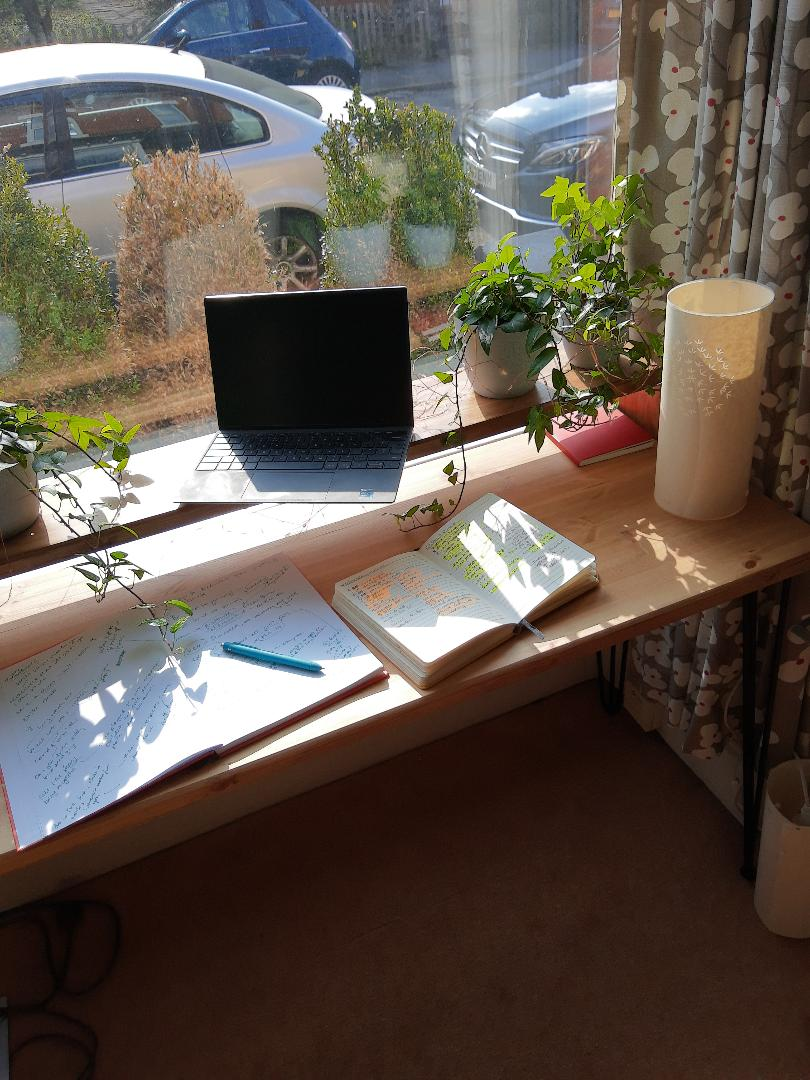
I do this at the end of the day, before bed, so I’m finishing on a high note and I do it at my desk with lovely calm lighting so it feels like a treat.


 If I ever choose to read it, it is wholly positive, whether the success I’m reading is finishing a book or doing half an hour of taxes in one sitting…

4 Be kind to yourself and surround yourself with plants. I nicked this idea straight off my middle daughter and it’s been very lovely indeed.


5 Be kind to yourself and get a good working area if possible. Until I carved out my good working area earlier this year in my bedroom and bought my desk (some months after I’d done a huge clear-out), my good working area was my bed. It wasn’t actually very good but I did make sure it was a happy area by covering it with a lovely yellow blanket. I love my desk so much and it makes it way easier to get down to work.

6 Be kind to yourself and try and find ways to work less on computer and more on paper. I have to remind myself of this a lot as I’m wont to forget things quickly, but you can actually have your computer screen closed quite a lot of the time when you’re working on a picture book and it gives your working environment a very different (and often nicer) feel.

7 Be kind to yourself and look after your body -eat the right foods and exercise. For me (a perimenopausal woman with ADHD) that means religiously eating lots of flaxseed every breakfast without fail with yogurt, chia seeds, apple, toasted flaked almonds and a bit of honey, and it means cutting out almost all refined sugar. Two years ago I would never have dreamt of eating that and ate Coco Pops or cornflakes or another sugary cereal for breakfast, and lots of chocolate. But I borrowed the idea off other women of a similar age and it’s made a huge difference -as has HRT- helping my memory and reducing brain fog (very useful for writing!)   And do whatever exercise works for you. For me, it’s jogging gently on the spot at home at regular times throughout the day and it does wonders for my concentration.

8 Be kind to yourself and embrace whatever works for you. It doesn’t matter if anyone else thinks it’s weird. You do you -whether that means dancing around the kitchen to seriously uncool music or jogging super-slowly in tiny steps up and down your not-so-large kitchen whilst you wait for the kettle to boil… 


If you jog with tiny enough steps the kitchen seems pretty big (and it's great to get concentration back if you're losing it)...


or putting on slippery socks so you can slide around on your floor, or playing tig at the park with your teenage children, or watching Brokenwood with a child whilst finishing a blogpost 


     Seeking out good company at home, too, for writing, reading or just good old hanging out...

or learning to play the ukelele just for fun...
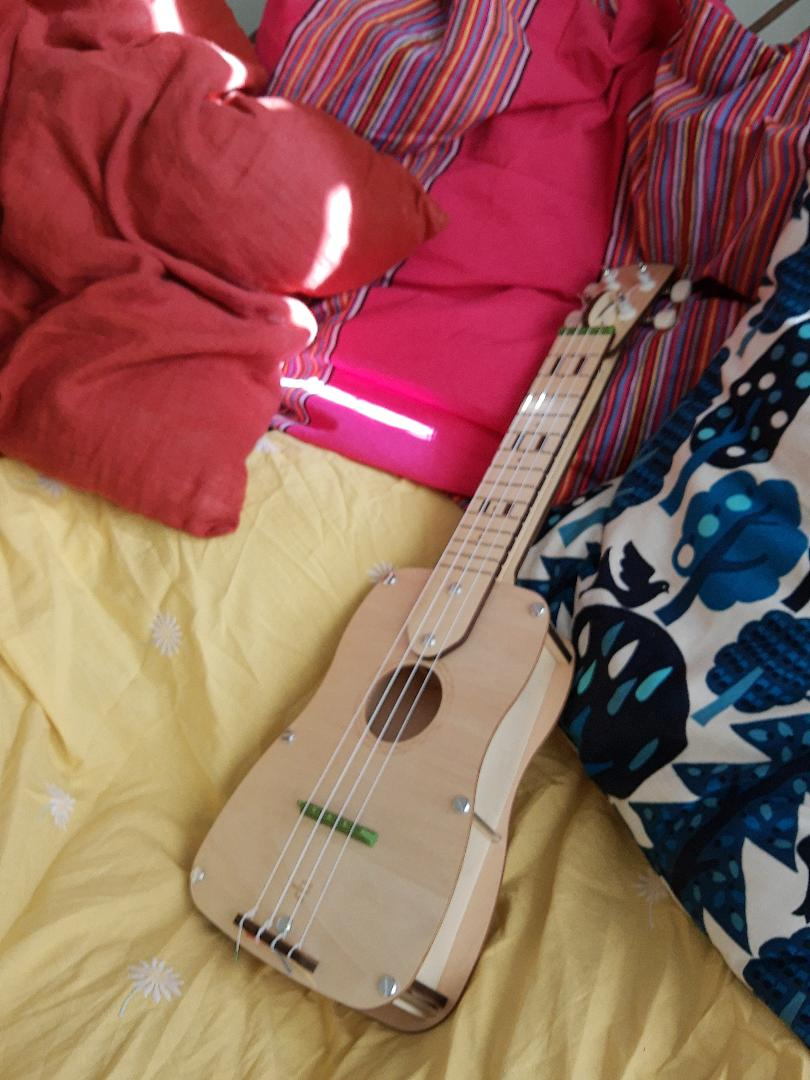

or using an actual sticker chart to motivate you to do all the helpful things that help things along…


     It may seem childish, but I don't care. I nicked the idea off one of my children and it works for me! 

9 And then be kind to yourself and think really carefully: is what you really want to be doing? If it is (and it’s fine if it isn’t) then plan your days (after years and years of trying different productivity journals and numerous variations on to do lists, I’ve finally found a way that works: a simple brightly coloured book (so I love using it and I can’t lose it -at least not as easily as less colourful books) with half the day’s page taken up with a random brain dump of absolutely everything I need to do and the other half a schedule based on the brain dump. All done the night before so I know exactly what I'm doing at the beginning of each day -magic! And I get to use a highlighter once I’ve completed something...

        It's very yellow and I lose it way less than anything else -and who doesn't love a highlighter?


 and then be kind to yourself and…

10 be authentic, take your inspiration and strength from everywhere and allow your re-invigorated mind to write what moves you.


These are things that have made a big difference to me recently and I'm getting more writing done and having more fun doing it! Let's all remember to be kind to ourselves (and of course, each other). What are your top tips for feeding your soul and being in a better place to write? I'd love to hear them in the comments below...

Clare is the author of around 40 books (picture books and early readers) and is editing her first young adult novel. She's recently questioned whether she wants to be moving on to older books now her children are much older but once she let herself imagine not writing more picture books she realised how much she actively wants to write picture books and it's really helped her focus.

www.julietclarebell.com


Monday, 6 December 2021

REJECTION! How to Find the Upside and Create Even Better Work by Natascha Biebow


You’ve all heard them – the stories of how famous authors got hundreds of rejections before they got their book deal (and maybe even got rich).


And you’ve probably heard all the usual advice about how to deal with rejection:

- listen to feedback – join a critique group, cogitate those nuggets that a ‘nice’ rejection letter wings back to you and be prepared to revise.

- take a break and do something different; put your manuscript away for a while so that you can look at it again with fresh eyes.


- practise your craft – bum on seat, keep learning from other writers and take a course or do some mentoring if you can.

- listen to your gut – you know your story and sometimes you have to go right back to the beginning to find it.

- shelve your book; work on another project; always keep trying something new.


And . . . here’s the biggie:

Have courage and patience. Develop a thick skin!


Sounds easy on paper, right? But . . . 


. . .  rejections are hurtful. They sting. They seem like they are a failing on our part, as if they were a measure of our success and worth as authors. Rejections feel like something we should perhaps brush under the carpet. It’s much nicer to talk about good news . . . or the weather.

Even though they are so numerous and common – an everyday part of making it as a writer, really – we find it hard to TALK OPENLY about rejections.


But rejection is actually so commonplace that it should be a NORMAL part of being a writer, or indeed any creative. What if it were ‘normal’ to be rejected, something to be EXPECTED and that we shared more openly?


Rejection is, after all, really a bi-product of learning our craft – it means we’re taking risks and innovating!

If we never failed, we wouldn’t learn what we were good at. It would be difficult to keep improving and produce the best possible work. And, given that we’re creating for young readers, this is means we should be constantly stretching ourselves to make books that are worthy of our audience.


In her book THE REJECTION THAT CHANGED MY LIFE, Jessica Bacal shares some tips for reframing rejection that I’ve found helpful:

- Taking a leaf out of Professor Patricia Linville’s theory of ‘self-complexity’, which is the “phenomenon of having more than one ’self-aspect’, or definition of ourselves”, Bacal suggests considering rejection as just ONE part of your life, and instead focusing on other parts of your life about which you feel positive.

To do this, you can make a list of the things that you CAN do well. For fun, I had a go making a list of all the things I am good at that I wouldn’t put in my cover letter:


Bacal also suggests looking to psychologist Dr Kristin Neff’s theory of ‘self-compassion’ for inspiration. It has three parts:

1. First, acknowledge rejection – allow yourself to feel the pain of rejection and process all the emotions you need to feel.

2. Talk to yourself about the rejection as you would a friend and do something to make yourself feel better. Watch something funny, eat a cookie, binge watch your favourite TV show, share a laugh. Be compassionate towards yourself. Be KIND!
3. THEN normalize the rejection as part of a universal experience – we all experience rejections in life. Yes, make it normal. And, here’s the key:

If you can be part of a group connected in your suffering, this can really help! Having a writing community, such as SCBWI, can be key to helping you to deal with and move past rejection.

This rang true for me, certainly!


If rejection is the new normal for working writers, it will help us to build the emotional stamina to continue to create even better work. If we practise being rejected by failing often, it becomes easier to push ourselves to keep creating and becomes less crushing each time we get a ‘no’.  


In the words of novelist Barabara Kingsolver:


This manuscript of yours that has just come back from another editor is a precious package. Don’t consider it rejected. Consider that you’ve addressed it ‘to the editor who can appreciate my work’ and it has simply come back stamped ‘Not at this address’. Just keep looking for the right address.”


It’s important keep rejection in proportion.


Celebrating small wins and being kind is definitely helpful. But I’ve also begun to consider that maybe rejection can actually help me become more creative, because it means I’m constantly having to pivot, re-consider my work, and think outside the box.


Rejection is not some scary THING out there. It’s just an ordinary, normal part of being a writer. It just means NO, not this and not yet.


YOU have the power to make it into a YES by being prepared to work at your craft. No one said being a writer was easy. Still, I am visualizing that YES!

________________________________________________________


Natascha Biebow, MBE, Author, Editor and Mentor

Natascha is the author of the award-winning The Crayon Man: The True Story of the Invention of Crayola Crayons, illustrated by Steven Salerno, winner of the Irma Black Award for Excellence in Children's Books, and selected as a best STEM Book 2020. Editor of numerous prize-winning books, she runs Blue Elephant Storyshaping, an editing, coaching and mentoring service aimed at empowering writers and illustrators to fine-tune their work pre-submission, and is the Editorial Director for Five Quills. She is Co-Regional Advisor (Co-Chair) of SCBWI British Isles. Find her at www.nataschabiebow.com


Tuesday, 19 October 2021

The best defined single tip I’ve heard about writing narrative nonfiction: Candace Fleming and her VITAL IDEA by Juliet Clare Bell

We are all too aware of the many disadvantages and often grave difficulties faced in a long-term pandemic. Today I'd like highlight a positive thing for writers, particularly those who may not yet be published and who are really trying to hone their craft. With so much having been moved online, over here in the UK we have had the chance to attend lots of US webinars about the craft of picture books that we’d never normally get the chance to (as they’d have previously happened in person). Given that narrative nonfiction is so much bigger in the States than it is here (and that many UK writers write with US publishers in mind as a result), nonfiction webinars have been particularly useful.

 I’ve taught writing classes and been part of a writing panel on narrative nonfiction, and I’ve written three nonfiction books, all commissioned but for different markets:


Two Brothers and a Chocolate Factory: The Remarkable Story of Richard and George Cadbury (illustrated by Jess Mikhail, BVT; Junko Tabei: One Step at a Time (illustrated by Evelt Janais) and Do Bees Dance (illustrated by Adam Linley)


And I’ve written several blogposts for the picture book denabout narrative nonfiction. I’ve got loads of narrative nonfiction picture books which have been really useful for research and for comparison.


                                A small selection of my narrative nonfiction book collection

It’s something I’m really interested in, and especially so at the moment when I’m editing my latest narrative nonfiction picture book which I was thinking and researching about for a long time before I actually started writing it.

Well, there was. Many nonfiction writers might be familiar with this concept -and I’ve worked at doing this myself but I’ve never known it as well explained as Candace’s explanation. I can’t talk you through the whole webinar as it is hers -and anyone who’s interested in writing nonfiction, whether you’re already published in the genre or not, I’d highly recommend attending any sessions she does, but she’s blogged about this idea herself, so I can highlight the principle behind the general idea:


                                     Giant Squid by Candace Fleming and Eric Rohmann


Candace Fleming’s

VITAL IDEA

for nonfiction.


Candace breaks it down into your TOPIC and your VITAL IDEA


When you set out to write a nonfiction book, you usually have the general topic in mind, and often you will start your research around the topic without yet knowing the angle you’re going to take. For example, with our book Two Brothers and a Chocolate Factory: The Remarkable Story of Richard and George Cadbury (illustrated by Jess Mikhail)


 the broad topic was given to us. We were commissioned by Bournville Village Trust to write a children’s book on some aspect of the Cadbury family. That was all. So I set to work looking at the extraordinary archives attached to the factory in Bournville, UK, and at Birmingham Central Library, and I started reading books on the entire Cadbury family… There were many interesting stories to be told but after a good deal of research I found something that spoke to me more than all of the fascinating things I was reading. It was the story of Richard and George Cadbury and the creation of the chocolate factory and later, Bournville Village. So that was the TOPIC.

The story itself was fascinating but what really hooked me was looking into the personal archives and reading about why they wanted to do what they did: Richard and George were keenly aware of their good fortune and worked tirelessly -in many ways- towards sharing their good fortune with others. And this was my VITAL IDEA.

When I wrote the book, I didn’t know about the term VITAL IDEA but it’s really interesting to look back over the book and identify what Candace talks about. Once you’ve chosen your vital idea -and there can only be ONE in a picture book, then the rest of your research can be honed. This VITAL IDEA will be the heart of your story, and information you have -however interesting- that does not speak to the vital idea does not belong in that story. It can feel very harsh (but hey, you can put it in the back matter). Anyone who’s done a lot of research for a book knows there are so many things that would engage your reader, but your job is telling the story of your VITAL IDEA. It’s why you can have so many picture books on the same topic and they are all so different.

And this is what I love about narrative nonfiction: the vital idea for the story is really personal to the author. As Candace states, you need to think (once you know enough about your topic)

what is it that I -rather than anyone else- have to say about this topic to the child reader?

This concept (without using the term vital idea) is really interestingly discussed throughout the book Narrative Nonfiction Writers Dig Deep -where authors tell the personal stories behind why they chose their topics and the particular angle of the story:


                                   Nonfiction Writers Dig Deep (edited by Melissa Stewart)

For me, when it came to the Cadbury story, I had grown up with the Quaker philosophy (my dad and his Irish family for generations had been Quakers) and although I’m not a Quaker, I went to Quaker Meeting regularly for a while as a child and have always liked a lot of their philosophy. Our local Amnesty International and CND groups where I grew up were dominated by Quakers -they were actively involved in trying to make the world a better place to live. And the more I read of George Cadbury’s writings on responsibility and society, the more I felt that their story was highly relevant to our current climate. I would find quotes from him, almost one hundred years old, that felt like they could have just been written. The Quaker philosophy was never going to take up a big part of the book (it was only referred to specifically in one sentence of the story) but I appreciated how it underpinned so much of what they felt and how they lived their lives. And we (Jess, the illustrator, and I) both lived within three or four miles of Bournville and the Cadbury factory. All these reasons came together to form the vital idea -the story that only I could tell in that particular way because of my engagement with the subject.


So there is only one vital idea and that has to be honoured throughout the story. And this will affect the mood and the language used. As Candace says, when you know your vital idea, you hone your language accordingly and this is what makes the language ‘soar’, which editors are always so keen to see.

Even though I’d pretty much applied this to the Cadbury book (and to the Junko Tabei book) without having used the terminology of vital idea, I applied it to my editing for my current book, which took a lot of research before I realised what I wanted at the heart of the story.


                                                    Lots of notes for my current manuscript

 I can’t write it about here as the book is not out yet (nor even yet sold) but articulating the vital idea to myself, writing it down and honing it until it was really precise, meant that I was able to edit more effectively and ruthlessly, even killing my darlings -things I really wanted to share with the reader but weren’t important enough to my vital idea (but all is not lost: I get to sneak them into the back matter!) And I’ve been able to adapt the language slightly to help bring out that vital idea…

For anyone who is interested, I’d recommend checking out the Writing Barn webinars and all the SCBWI online events. Some of the digital SCBWI events are free to SCBWI members but the regional ones (like Candace’s one) have a small fee.


Do you have any brilliant tips for nonfiction writing? Have you applied the vital idea principle to your manuscript? I’d love to hear any thoughts or suggestions in the comments below. Thank you.

Juliet Clare Bell (always called Clare) is a children’s author of more than thirty books -but who will always love learning new perspectives on writing and thinking from fellow authors. www.julietclarebell.com


Monday, 4 October 2021

From Here to There . . . Why SCBWI is Key to Getting YOU There


SCBWI turns 50 this year. It started out when Lin Oliver and Stephen Mooser, two newbie writers, commissioned to write some children’s books, sought to learn more about their craft and the publishing industry. Finding no established organization, they decided to start something. Responding to their advert, Sue Alexander suggested getting in touch with published author Jane Yolen, who was keen to help out.


Lin Oliver, Founder and Executive Director, SCBWI


Stephen Mooser, Founder, SCBWI


At the library, Lin read and researched the children’s book section, then wrote to 10 authors inviting them to a conference. She received 10 replies. Dr Seuss sent an apology in the form of a hand-typed letter: ‘the more I talk as a talking author, the less I write as a writing author’. Steve’s dad licked the mailing labels and Lin’s mum made the potato salad for lunch.

And from there, it grew . . . 


At the SCBWI Big 50 Conference,
Lin shares the letter she received from Dr Seuss


The founding members started a monthly Bulletin at Lin’s kitchen table (it is still published today), and the friends started pouring in: Judy Blume, Uri Shulevitz, Sid Fleishman, Tomie dePaola, Judy Blume, Ezra Jack Keats, Dawn Freeman, Myra Cohn Livingston, Mildred Fitzwalter, James Marshall, Walter Dean Myers, Laurence Yep, Arnold Lobel, Lee Bennett Hopkins, Paula Danziger - the great voices upon which the organization was built, who became friends and colleagues, organizing conferences and meet-ups. 


Acclaimed author Jane Yolen was a founding member of SCBWI.
Bear Outside
is her 400th book.


More friends joined: Jerry Pinkney, Lois Lowry, Arthur Levine, Bruce Coville, Christopher Paul Curtis, Pam Munoz Ryan, Elaine Konigsburg, Linda Sue Park, Karen Cushman, Virginia Hamilton and Dan Santat – the community was formed, and still is, by volunteers.


The Bulletin 1971

The Bulletin, May 2021 artwork by
Maple Lin


Now, 50 years later, the SCBWI is the largest international professional organization for children’s book creators with over 26,400 members in 70 regions around the globe. The British Isles region, founded in 1996 by author Gloria Hatrick and E. Wein, started in a similar way, and now its published members are those to whom new(er) authors and illustrators find inspiration – Candy Gourlay, Chitra Soundar, Jane Clarke, Sara Grant, Mo O’Hara, Kathy Evans, Sarah McIntyre, Bridget Marzo, Jasmine Richards, A M Dassu, Patrice Lawrence, Teri Terry, Sarwat Chadda, James Brown, Loretta Schauer and many others.


SCBWI British Isles Conference Mass Book Launch 2019

Why am I telling you all this? I was inspired by a talk at the SCBWI big 50 summer conference by Dan Santat in which he spoke about his creative journey from the beginning to #1 New York Times bestselling and award-winning author and illustrator. What struck me was that he talked about how when you look back at the creative path you took, and you are in awe of what has transpired in the all the years you’ve been in the business; you look back at your work and you see that there is really no ‘there’ because you continue to grow, find out about yourself and – and, here’s the important bit – you do this with SCBWI as your family.


#1 New York Times bestselling and award-winning author and illustrator
Dan Santat and his picture books

In the words of Lin Oliver: Picasso once said ‘Inspiration is great, but when it comes, it better find you working’. So, we must combine our talents, with our training and our dreams and our passions and then combine it with hard work. But even more than this, we are more if we are part of a supportive community because the path to creation is often a very solitary one.  


When you are part of a community of critique groups, networking connections, friendships and happenstance opportunities such as those you find in SCBWI, standing on the shoulders of the published friends who came before you, innovating and finding new paths then the creative journey as you grow from here to ?there?, the possibilities are infinitely expanded.


The themed Mass Book Launch cake features mini book covers made out of icing

What you get out of the SCBWI isn’t something you can quantify – it’s somehow more than the sum of all its parts. Sure, your membership offers practical things like


• critique groups

• webinars, podcasts and conferences

• mentorships, retreats and masterclasses

• 1-1s with industry professionals

• scholarships, grants & awards

• industry insider newsletters
• marketing & publicity opportunities, training and support

• porfolio showcases

• mass book launches


But did you know that you can . . .

• banter with an agent at a party?

• make like-minded friends – the kind you can ask questions of at all stages of your career?
• make insider connections with industry professionals and super-famous authors & illustrators by organizing an event you’ve always dreamed about?

• raise your profile by writing for and editing for Words & Pictures, the British Isles’ regional magazine, or contributing illustrations?

• get top tips on how to connect with those disruptive kids in your school visit audience?

• buddy up to create promotional opportunities?

• get discovered through the Undiscovered Voices initiative?

• make some art that might land you a 1-1 meeting with an art director in NYC?

get your book cover made out of icing on a Mass Book Launch cake?

• eat pizza with a librarian?


Author Mike Brownlow with his icing cake cover of Ten Little Monsters at the SCBWI Annual Mass Book Launch

These are just some of the priceless gems that you can tap into at whatever stage of your career you find yourself.


Here’s a story about HOW IT'S WORKED FOR ME:


KitLit TV studio recording of the read-aloud
with Julie Gribble in NYC

Some time ago, I was really STUCK with my picture book writing – I needed a new direction. Cue fellow SCBWI member and PB Denner, Juliet Clare Bell, who recommended an online non-fiction writing course with Kristen Fulton. As part of the course, I wrote a new book. Shortly afterwards, I attended an SCBWI conference, where I met author Sandra Nickel, who was a faculty member and whom I knew through SCBWI France/Switzerland. Sandra’s agent, Victoria Wells Arms was also presenting at the conference. At the drinks party after the wrap-up, Sandra invited me to meet her agent. This makes it sound easy, but I was not at all sure I could find the courage to even talk to her. After the conference, I pitched my book to Victoria and she became my agent, too. Encouraged by the advice and success of fellow SCBWI authors Candy Gourlay, Sara Grant and Mo O’Hara who run a fabulous author bootcamp to help empower us to market ourselves successfully, I peeked out from under my rock and decided to apply for an SCBWI Marketing grant. After all, what did I have to lose? Well, I got it! I used more SCBWI Connections to help me organize a mini book tour to launch my book, THE CRAYON MAN, and even film a Read Aloud with KitLit TV (another SCBWI connection!), and so it goes. 


Paula Danziger of Amber Brown fame was an inspiration
to never give up and stay true to your voice.

It was an inspirational talk for the SCBWI British Isles in London in the early 90’s (when it consisted of only a handful of members), by legendary author Paula Daniziger – one of those aforementioned founding members Lin recruited –  that inspired me to join and, soon after, volunteer. Who knew I’d still be volunteering and going ‘there’ on my  picture book craft journey alongside fellow members some 23 years later?! (Psst, it even took me to the Palace to meet Prince Charles, who knew?!)


Truly, a gold mine of friendship, connections, and information about publishing the world over is yours with your SCBWI membership if you make the most of it, even more if you volunteer. Plus, volunteering is meant to be good for your health!


All those moments of SCBWI glitter add up to something precious – a heartfelt THANK YOU to Lin, Steve and all the other authors and illustrators and creatives who have built the treasure that is SCBWI!


  ____________________________________________________________


Natascha Biebow, MBE, Author, Editor and Mentor

Natascha is the author of the award-winning The Crayon Man: The True Story of the Invention of Crayola Crayons, illustrated by Steven Salerno, winner of the Irma Black Award for Excellence in Children's Books, and selected as a best STEM Book 2020. Editor of numerous prize-winning books, she runs Blue Elephant Storyshaping, an editing, coaching and mentoring service aimed at empowering writers and illustrators to fine-tune their work pre-submission, and is the Editorial Director for Five Quills. She is Co-Regional Advisor (Co-Chair) of SCBWI British Isles. Find her at www.nataschabiebow.com


Monday, 15 March 2021

Can I REALLY be a real writer? FOMO is slowing me down • by Natascha Biebow


I have been telling stories since I was small. 


I told stories to anyone who would listen, especially the dogs!


As a kid, we used to go on long car journeys to the south of Brazil, and I’d babble on, creating all kinds of shenanigans for my fictional characters. My grandmother lived in England, so I’d send her recorded tapes with songs and stories in the mail (in times way before the internet was invented). 


A creative writing assignment in school? On it. 


This is a whole 'collection' of short stories written in school,
loving saved for me by my mother.


A short story about a cup and a saucer - who is more important?

 Poetry competition for the school newsletter? Yes! 


I used to write poetry even. Not now!


I loved to write, but I never imagined I’d actually be a published writer when I grew up.


Like many writers I know, there is no shortage of stories we could invent or tell. But when it comes to wondering if we’ll ever get them put inside a book that will land in the hands of other readers, children, often DOUBT sets in. Even if we are published, we doubt we can do it again . . . and even another time.


I’ve been pondering this.


I can draft a story no problem. In fact, I have drawers full of stories (metaphorically speaking, of course – they are all filed on my computer, a folder for each one, many drafts in each folder . . . ). My agent and I send out the most polished ones. And we wait.


But, here’s where the problem begins. WAITING. The silence while publishing grinds its wheels starts to conjure up DOUBT again. Will anyone ever say ‘yes’?


And then there are all those other writers who are doing so well – I hear and see the noise at events and on social media – successes celebrated, reviews, awards, new books launched . . . all seemingly much faster than I can get my next one finished and signed up. I’m thrilled for my fellow writers, I really am, but still, DOUBT is a mean spiral of negative thoughts that escalates, question after question:


Should I be doing something I’m not?

Am I missing out?

Why is it not happening?

Should I be submitting there instead or to this or that competition?

Should I be writing something else?

Should I spend more time marketing my book or writing a new one or . . .?

But I already have so many stories, should I be  . . . ?

What if . . . what if . . . what if . . .?

Maybe I should dig out that novel, but I’m halfway through this picture book and that idea and . . .  What to work on? What do those editors want anyway?

PLUS I really need to earn an actual living, so I’d probably better focus on doing that.


THEN I start to make excuses for not writing:


I don’t have enough time.

I’m busy homeschooling and juggling so much right now, I really don't have the headspace for writing a great book at the moment.

I’ll just clean the house and then I’ll write if there’s time.

I can’t write that book right now.

Someone else has probably done that already.

If I don’t send that story out on submission, it can’t get rejected.

I just got a rejection, maybe I should take a little break.

I don’t know how that story ends . . .

Maybe I was only ever meant to write one book?!

Maybe I’ll just bake some cookies and think about my story instead.

I’ll never earn enough from my writing.


Oh my goodness. STOP! BREATHE!


FOMO (Fear of Missing Out) is taking over my head (and my heart).


I need a new story.


I need to remember to start THINKING and ACTING like a writer:


First, I need to remember – everyone has their own journey and this is mine. I will never be a series fiction writer churning out books quickly. I will be a book-every-so-often-that-is-inspired-and-cooked-over-time kind of author.


I start by breathing and being grateful that I am this kind of writer.


Sometimes, it can take a bit of time to figure out where you fit and to be OK with this, not trying to pigeon-hole yourself to be like others. FOMO doesn’t serve me well, I’ve realized. The slot for someone else won’t fit me comfortably. THERE IS SPACE FOR EVERYONE.


Next, I make two columns:


- how long editors take to consider submissions
- rejections (it might be the wrong manuscript at the wrong time; it’s not necessarily always about me or the story.)
- how much publishers will pay for a book and/or put in for marketing spend
- what other authors are doing
- the current state of the marketplace and trends
- what kind of writing I write


- bum on seat – commit to writing on a regular basis and stop making excuses for why I don’t have enough time to write. I need to put it in my diary. I need to plan ahead for the time I will write so that I’m not wasting time ‘preparing’.

- take webinars and courses to keep learning and improving my craft. There are some great free and low-cost webinars that can help me learn from other authors, illustrators and publishing professionals. I’ve been enjoying the great interviews on the weekly Kid-Lit Distancing socials

- be active in a writing community like SCBWI to find support, learn new skills, and make connections that will stand me in good stead when my next book comes out
- get critiques of my work – join a critique group or pay a literary consultant for their expert objective eye
- read lots of mentor texts - aloud

- keep an eye and an ear on what is going on in the market, but limit social media so it doesn’t become a distraction 

- spend time with children who are my audience and observe

- be brave and be prepared to re-think and re-visualize books that have been rejected; re-write! and reconnect with my vision
-  reach out to librarians and teachers to make new connections to promote my published book

- stop waiting for an editor to say yes and write more books so I have some on the back-burner while others are on submission

- research my new book ideas and reach out to experts

- look out for 1-1 or competition opportunities


Most importantly, I realize I can take control of the ‘no’ – either the rejection letter or the nearly, not quite feedback from editors – and choose how I will react. Will I let DOUBT set in with its breathless questions bringing on inertia and excuses, or will I look at my list of actions I can take and get stuck in and make a start?


LOOK! The list of things I can do is soooooo much longer than the other list, though arguably, the weight isn’t quite equal in that ultimately, we are all waiting for an editor to say ‘yes’ to that project we are passionate about.


It’s like any problem: it needs chunking down


Then, perhaps, the process of being a ‘real’ writer begins to look more achievable.

Plus, I am a storyteller, after all, so I’m going to weave a story around this. Once there was a girl who dreamt of becoming a writer with lots and lots of books when she grew up. But . . .  there were many obstacles in the way. Does it have a happy ending? Only the author can write THAT story.  


 ______________________________________________________________________________________


Natascha Biebow, MBE, Author, Editor and Mentor

Natascha is the author of the award-winning The Crayon Man: The True Story of the Invention of Crayola Crayons, illustrated by Steven Salerno, winner of the Irma Black Award for Excellence in Children's Books, and selected as a best STEM Book 2020. Editor of numerous prize-winning books, she runs Blue Elephant Storyshaping, an editing, coaching and mentoring service aimed at empowering writers and illustrators to fine-tune their work pre-submission, and is the Editorial Director for Five Quills. She is Co-Regional Advisor (Co-Chair) of SCBWI British Isles. Find her at www.nataschabiebow.com