
You know when you first start writing, and how you keep your writing habit secret for a while, or only speak about it apologetically? And then once you’ve been doing it a while and feel more confident in your area, you might talk about with more certainty, and maybe you get a book published, and you feel more legitimate again…?

The joy of having your first book published and feeling like a 'real writer'. A young (non-panicking) Annika jumping for joy (on my behalf) at my first book, Don't Panic, Annika!
(illustrated by Jennifer E Morris, 2011)
But what about when you feel legitimate in one area of writing but start doing something in a brand new one? Do you have to start again as a complete newbie? What strategies from one can you bring to the other? And can you keep some of that confidence, or do you have to go back to those terrible apologetic conversations with people about what you’re currently writing?
Well in the spirit of allowing yourself to be vulnerable
and to take risks in order to be and know who you are (which is central to the
story I’m writing), I’m ’fessing up, even though I’m at the early apologetic
stage:
I AM WRITING A NOVEL.
I had to delete and change that from ‘I AM TRYING
TO WRITE A NOVEL’, the language I’ve absolutely slipped back into now I’m
writing in a completely new field. But I am
writing one. It may never end up getting published, but I AM writing it, rather
than ‘trying to write it’ and I am trying to use what I already know from
writing picture books.
I love learning from other people, and so I asked a
few children's writer-y friends who have done/are doing both children's novels and picture books, for
their thoughts…
First, I wanted to know how easy is it to work on
both at the same time?
I asked this because I have so far found it
extremely difficult to think about both. It turns out, the writers I asked who liked writing
both genres all found the switching easy. Here’s Sophia Bennett, successful,
award-winning author of novels including Unveiling Venus, Threads and Love Song …. and who has at least one new picture
book out in 2019 (she can't say too much about anything at the moment, but having read a draft of one of them, I can tell you that she is an exquisite picture book writer).

“Finding the time is extremely difficult. But when
I do, I actually love skipping from one to the other, because each one uses
different brain space and makes coming back to what I was doing before feel
fresh, and a pleasure.”

(c) Jacob Sager Weinstein (2017)
Jacob Sager Weinstein is the author of The City of Secret Rivers (an absolute favourite with one of my children), for which he has been shortlisted for the Branford Boase award for most
promising new author, and the upcoming picture book Lyric McKerrigan, Secret
Librarian (illustrated by Vera Brosgol).

(c) Jacob Sager Weinstein and Vera Brosgol (2018)
He agrees with Sophia:
“In some ways, it’s easier than just
working on one kind of book — if I’m not in the right frame of mind for one,
I’m often in the right frame of mind for the other. God knows I still
procrastinate, but at least I have the option of procrastinating
productively”.
Productive procrastination? I look forward to that…
Productive procrastination? I look forward to that…
Wendy Meddour, author of many books, including the Wendy Quill series

(c) Wendy Meddour and Mina May (2013)

(c) Wendy Meddour and Duncan Beedie. Stefano the Squid, Hero of the Deep will be out with
Little Tiger Press
and also finds the
shift easy, and does it based on timing:
“I generally treat myself to writing picture books on weekends …and work on novels at night (after I’ve finished work and the kids are in bed)”.
“I generally treat myself to writing picture books on weekends …and work on novels at night (after I’ve finished work and the kids are in bed)”.
I’m feeling more hopeful now. I had
naively thought when I started that I could work on my novel from 6-7am each
morning, and then do everything else (picture books, author visits, admin etc)
during the rest of the time available and that I could make the switch easily.
But unlike the authors, above, I found it almost impossible to think about
picture books at all whilst I was in the really early stages of doing the
novel. As a picture book writer, I think loads about structure as it’s so
critical to a picture book. I knew that I know how to write; I knew I know how
to structure a picture book, but what I didn’t know was whether I could
structure a novel. And so I made myself work on the structure and get that sorted
(including having a description of each scene) before I actually started writing
out the story at all. There was no way I was going to embark on a full-length
novel if I wasn’t sure I could complete it in a way that made sense (I had started
an adult novel about 17 years ago but never got beyond Chapter 3 as I just didn’t
have a structure for the whole thing, even though I had hundreds of pages of
rough notes about the characters). This was before I’d written picture books,
and now I’m used to plotting and I’ve seen how a longer story can crumble so
quickly without decent foundations. And, taking to heart the sentiment of Seamus Heaney's wonderful poem (with apologies to him for the spurious connection of his poem to the subject of children's novel writing, as opposed to love -but it's a great poem, and reading, of) Scaffolding I would never embark on such an enormous story without feeling I’d got my scaffolding in order:
Seamus Heaney reading his poem, Scaffolding
As Sophia says:
“I do find each novel daunting… knowing I’m going to risk writing for a whole year about something readers may not connect with when it’s done. You never know. That aspect of novel writing seems mad. At least with a picture book it’s quicker!”
Exactly. That’s why it’s taken so long for me even to consider trying to write a novel again. And at least if you have the scaffolding
there, you feel more confident that what will stand at the end of it will be
solid. Ish. And now, having finished the structure for the first draft, it feels
like I don’t have to hold it all in my head anymore; I can just write what I’m
told to (by me), looking at each scene description and following its structure.
As a picture book writer, this feels much more familiar –and safe- and I am now
going to put my Wendy Meddour hat on and write the novel at certain specified
times of the week, and picture books at others, and I have just in this last
week got back into thinking about picture books again. (Unless I am in need of
a bit of Jacob's productive procrastination (thank you, Jacob), in which case I might be really frivolous,
and swap...).
So how do the picture-book-and-children's novel writers I spoke with use strategies
for plotting and structuring one type of book for the other?
Sophia:
“I am a planner. With all my books - adult, young adult and picture books - I plan and research a lot before I start, and more as I go. Even so, the story moves off in directions I wasn’t quite expecting. With all of them, my core subject is something I’m passionate about, so I put a lot of myself into them.”

Sophia Bennett
“I am a planner. With all my books - adult, young adult and picture books - I plan and research a lot before I start, and more as I go. Even so, the story moves off in directions I wasn’t quite expecting. With all of them, my core subject is something I’m passionate about, so I put a lot of myself into them.”
And on using novel writing strategies for a picture
book?
“I think of it in various acts! Even though I only
have a few hundred words to play with, I have my opening section, the building
action, the climax and the resolution. I try and use interesting dialogue. I
research a lot, think hard about the characters and have it plotted out in my
head before I start, but then let the poetry of the words lead me on as I
write.
As I’m new to picture books I don’t really have
strategies for it - just an endless learning process. Hopefully I’ll have
something to bring from it to the other books eventually. It might be to do
with how much you can leave unsaid and still get the message across. I keep
finding that the more words I cut, the better it gets.”
Candy, your
thoughts?
Candy Gourlay,
award-winning author of Tall Story and Shine

(c) Candy Gourlay, 2010
whose first picture book, Is It a
Mermaid? (illustrated by Francesca Chessa, Otter Barry Books, 2018) is just out

(c) Candy Gourlay and Francesca Chessa (2018)
and whose new novel, Bone Talk (David Fickling Books, 2018) will be out later this year, talked about
writing picture books as an author of children's novels:
“because novel writing has a lot
to do with structure, I find myself applying longer format structural rules to
my picture book writing. Like putting a plot pivot at the very middle of a
story. And thinking hard about context and set up to create a satisfying pay
off. I do this a million times over the course of writing a novel … so I can
chart a reader's emotional arc as they read the novel. But in picture books,
you only get one shot at satisfying your reader”.

(c) Candy Gourlay (2018)
And Jacob?
“Plot is probably more important in a
novel than in a picture book. A picture book can be purely about language or character or a single
emotion; a novel needs a well-structured story to drive it forward. For better
or for worse, my picture books are very plot-driven. I’m in awe of PBs that
don’t have a traditional plot, and I have no idea how to write one.
“When you’re writing a picture book,
you have to think carefully about every single word. With a novel, it’s easier
to let flabby language slide. My last major rewrite of a novel is always to
read it through and cut out as many words as I possibly can. I’m only realising
it now, as I answer this question, but that definitely involves looking at my
novel with the eyes of a picture book writer.”
Wendy, on the
other hand, is not a natural planner:
“I’m not a good
planner. I wish I was. But I’m not. I just love to write. This is true for both
my picture books and novels. It’s the idea that is crucial. I never know
exactly where I’m going to find myself. I just trust that some part of my brain
does.
With both novels and
picture books, an idea starts fizzing, one that I can’t ignore, so I write it
out furiously. Then edit. And edit. And edit. Ideas often emerge when I’m
trying to process an experience in real life: say, a worry about someone or
something, or a topic I feel strongly about at the time: child refugees, migration,
Islamophobia, childhood anxiety, library closures, sexism. Whatever. Writing it
out (in fictional form) allows me to feel like I’m doing something productive.
As to strategies, having always been an avid reader, I’m very familiar with
both genres, so although it feels like a ‘natural process’ when I’m writing,
and I’m not a planner as such, I think I am probably quite technical in my
writing without being particularly conscious of it. I’ve read so many novels
and picture books over the years that I know how to structure them, hook the
reader and vary the pace. I also teach creative writing at Exeter University,
so am used to giving lectures about ‘character’, ‘style’ and ‘form’”.
Malachy Doyle, whose picture book Cinderfella (illustrated by Matt Hunt) is coming out later this year with Walker,

(c) Malachy Doyle and Matt Hunt (2018)
and who has written many picture books, including one of my favourite picture books


(c) Malachy Doyle and Matt Hunt (2018)
and who has written many picture books, including one of my favourite picture books

When a Zeeder Met a Xyder ( (c) Malachy Doyle and Joel Stewart, 2006)
“I find that, when I write longer, it can be very time-consuming because
I craft every sentence, sweat over every word, as I would when writing picture
book. I haven't learnt to run loose. I like to work in miniature -
poetry, picture book, Barrington Stoke length books for older readers. Somehow
it just suits me.
I never
plan. Which may work better for picture book than full-length novel, but it's
just how I work. Find a character, put them in an interesting situation and run
with it. Surprise yourself!”
And what do you find are the advantages
and disadvantages of staying with a story so long when you’re writing a novel
as opposed to a picture book?
Jacob:
“By the time a novel goes to print, I
must have read its 60,000 words two dozen times. That’s like reading one very
repetitive 1,440,000 word novel. I’m sick and tired of it, and I struggle to
remember that readers will be coming to it fresh.
On the other hand, it’s an absolute
joy to plant a little clue on page one of a book, and pay it off in the last
chapter, or even another book. Plus, there’s room for characters to grow
and change and surprise not just the reader but me as well. Picture book characters
still need to go on journeys, but they’re much shorter (and, usually, much less
nuanced) ones".


(c) Jacob Sager Weinstein (2018) Hyacinth and the Stone Thief -second in the trilogy
(out in the US already)
Wendy:
“[with children's novels] I can start behaving like my characters. My children used to ask me to stop being ‘so Wendy Quillish’ when I was mid-series with her. (She’s always taking things too literally and getting into trouble). The dangers of method writing! [But the advantage?] When the writing is flowing, and the words are doing what they should, it feels amazing.
“[with children's novels] I can start behaving like my characters. My children used to ask me to stop being ‘so Wendy Quillish’ when I was mid-series with her. (She’s always taking things too literally and getting into trouble). The dangers of method writing! [But the advantage?] When the writing is flowing, and the words are doing what they should, it feels amazing.
Also, I don’t think I do
move on quickly [from picture books]. All the picture book characters I write
stay with me. The process is very intense. Possibly more intense than novels.
Rapunzel. The Glump. The Peeble. Stefano the Squid. All so very real in my
head. Especially when an illustrator has helped bring them to life”.

(c) Wendy Meddour and Rebecca Ashdown (2016)

(c) Wendy Meddour and Rebecca Ashdown (2016)
Sophia?
“I get to know my characters so well [in a novel]. Also themes emerge as I write that I didn’t know would be important when I started, but which obviously mean a lot to me and bubble up from my subconscious as I go. Often, what the novel ends up being ‘about’ is not at all what I had in mind when I started. Threads is definitely about the power of friendship, for example, but I meant to write about the unknowability of genius and the other girls were just in it to do functional things in the plot. Then their personalities took over and the pleasure came from how they interacted.”
“I get to know my characters so well [in a novel]. Also themes emerge as I write that I didn’t know would be important when I started, but which obviously mean a lot to me and bubble up from my subconscious as I go. Often, what the novel ends up being ‘about’ is not at all what I had in mind when I started. Threads is definitely about the power of friendship, for example, but I meant to write about the unknowability of genius and the other girls were just in it to do functional things in the plot. Then their personalities took over and the pleasure came from how they interacted.”
And which do you prefer, or find
easier to write?
Jacob:
“Picturebooks originally came more naturally to me. Before I turned to kids books, I had written short stories and screenplays for [adults]. Like a short story, a picture book is an intense narrative burst. Like a screenplay, a picture book text is just one part of a collaboration with a visual artist. So the skills I had spent years developing were much more applicable to PBs.
“Picturebooks originally came more naturally to me. Before I turned to kids books, I had written short stories and screenplays for [adults]. Like a short story, a picture book is an intense narrative burst. Like a screenplay, a picture book text is just one part of a collaboration with a visual artist. So the skills I had spent years developing were much more applicable to PBs.
Now that I’ve written two MG novels (and a few
drafts of a third), I think I’ve finally got the hang of it, and I don’t think
either form is easier than the other.
I don’t have a preference, which is why
I write both! I consider myself really lucky that I can work in both forms”.

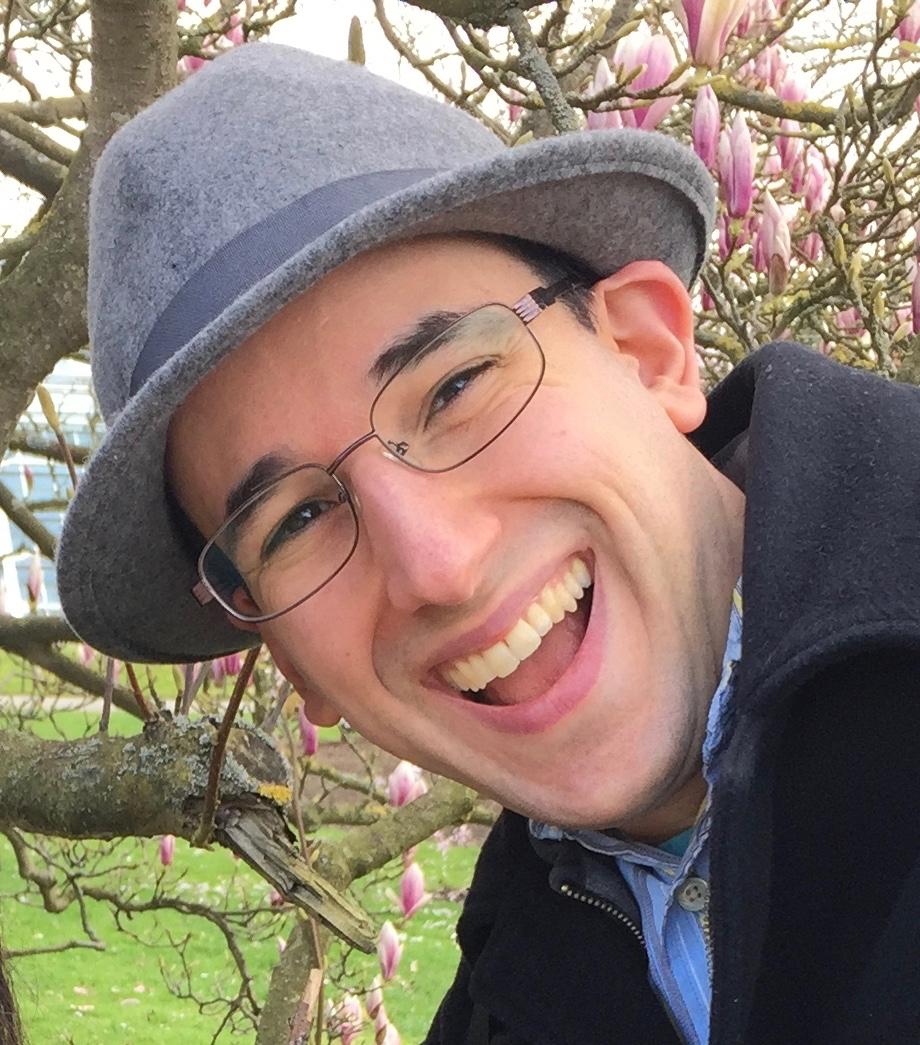
A 'really lucky' Jacob Sager Weinstein
Wendy:
“I enjoy all forms of
writing. They exercise different parts of my brain and allow me to explore
ideas and play with thoughts in different ways… Adapting my style or tone of
voice to suit the intended audience is all part of the fun. Rhyming picture
books come very easily, as they have a certain silliness and structure, but if
I can hear a character’s voice in my mind, then I’m off”.
Sophia:
“I find both difficult. The only books I have ever
found easy were the very first one I wrote - an (unpublished) adult detective
story, and book two of the Threads trilogy, when the characters just seemed to
do whatever I needed them to without question. I think I enjoy writing picture books
more though. Because every word counts, I can take pleasure in each one. I also
love imagining what an illustrator will do. I want to write one for 5-7 year
olds about Abstract Impressionism, so I don’t exactly set myself the easiest
tasks, but I’ll be so pleased if I manage to make it work the way it does in my
head”.


Beads, the only one of Sophia's published books that she found easy to write
And Malachy?
“Picture
books are my first love. I find that when I go teenage - Georgie, Who is Jesse
Flood? for example - I go all angsty. I find that I become the age I was then,
in a strange way. I've decided that I much prefer to inhabit the young happy
enquiring Malachy than the angst-ridden teen Malachy, so that's where I
concentrate my efforts these days.
I also love working with illustrators, and my books becoming more than
the sum of their parts - when an illustrator totally gets where I'm coming from
in my story, but then adds the depth and wonder that they can bring as a gifted
visual artist, true magic, a form of alchemy, can happen. My new picture
book, Molly and the Stormy Sea, out this week from Graffeg, illustrated by the
wonderful Andrew Whitson, is a perfect example of this”.
trailer for Molly and the Stormy Sea (c) Malachy Doyle and Andrew Whitson (2018)
I love picture books. I even found myself feeling guilty for choosing to write a (YA) novel when I’ve pledged my allegiance to picture books. But now I’m writing ‘up’ the novel (that is already planned and plotted), I’m back to continue with both. It may take many, many drafts (probably fewer than the 187 drafts Malachy had for his first picture book, and I hope fewer than the seventeen drafts Sophia did for her first published novel, Threads, before she was ready to send it off and then a further seventeen before it was finished and published, though very possibly not) but I’m ready to go with it. To accept that I’m going to learn a whole lot over the next couple of years about something new, that I’ll make a ton of mistakes along the way (like I encourage young people in schools to do, all the time), that I’ll probably feel the terror that I did when showing my picture book manuscripts back when I started, before I grew a very tough (picture book) skin. Will that toughness extend to showing people my novel? I suspect not, but I also suspect it won’t be quite as awful and raw as it was. And actually allowing yourself to be vulnerable like that is a pretty powerful thing:
Brene Brown's Ted Talk on vulnerability
I will do Jacob’s ‘picture book author’ edit on my
novel where I try and cut lots of words that aren’t necessary. I am hopeful
that writing this novel will also help me write early versions of picture books more
quickly (if I wrote anything like as slowly with the novel, it would be many,
many years before I got my first novel draft out). And that I’ll learn new
things about structuring which will strengthen future picture books, too. Whatever
the outcome, I will finish a first draft, and then a second, and subsequent
ones, and I will learn loads –about story writing and myself. I hope that writing as a teenager won't make me get too angsty. Like Malachy, I was a much happier picture-book aged child than I was a teenager (so thanks for the warning, Malachy). And if it doesn’t
end up as a published novel, well that’s not the end of the world. I will have
gained much more than if I hadn’t tried (I've already read more novels in the past year than I probably had in the previous twenty). And who knows, it might even one day find
itself a home…
Many thanks to Sophia Bennett, Malachy Doyle, Candy Gourlay, Wendy Meddour and Jacob Sager Weinstein for sharing their helpful thoughts on writing in both genres. If you've tried writing picture books and novels, how has the writing and planning of one type affected the writing and planning of the other? I'd love to hear from you with any thoughts, below.
Many thanks to Sophia Bennett, Malachy Doyle, Candy Gourlay, Wendy Meddour and Jacob Sager Weinstein for sharing their helpful thoughts on writing in both genres. If you've tried writing picture books and novels, how has the writing and planning of one type affected the writing and planning of the other? I'd love to hear from you with any thoughts, below.
Juliet Clare Bell is the author of five picture books and three early readers. She would love to add the novel she is currently writing to this, but fully intends to write many more picture books, regardless.
www.julietclarebell.com
www.julietclarebell.com


