Monday, 15 November 2021

Do you control the verse, or does the verse control you? by Michelle Robinson

If you’re serious about writing picture books, you’ve probably been warned-off writing in rhyme. The reason given was most likely that rhyme doesnt easily translate, making it hard to sell co-edition rights and limiting potential profits.


I expect you’ve argued back: Rhyming hasn’t done Julia Donaldson any harm. Loads of popular and successful picture books are written in verse.


It’s all true. You know what else is true? Those popular and successful books are exceptional, and your attempt at rhyming text is most probably  not.


It’s an uncomfortable fact to deliver, and an even harder fact to swallow, but it’s still a fact. Ask any editor, agent or skilled writer of rhyming picture book texts. We get sent dreadful text after dreadful text, and are left wondering, how can the writer not see how bad they are at this?


Let’s just break that bit in bold down a second. 

Rhyming. Picture book texts.


Writing rhyme requires skill.

Writing picture books requires skill.

Writing popular and successful rhyming picture books requires at least double the skill, a wing, a prayer, plenty of pig-headed determination and a backbone of steel for dealing with all the editing, let alone handling the rejections.


So how do you acquire those skills? And how do you learn to tell the difference between top quality verse and terrible rhyme? The answer is straightforward, but getting there isn’t easy. You work, hard. 


You pick every word with consideration. You edit your own work ruthlessly and tirelessly. If there even might be a better alternative, you chuck out your favourite line and try a new one.


You keep all of the following in mind at every stage: plot, character, sense and logic, age appropriateness, commercial appeal, rhythm, timing, accent and pronunciation, syllables, stresses, emotional arcs, story beats, universality, originality, overall word count, word count per page, page turns, potential changes of scene in the illustrations… There’s more, but that’s enough to be going on with. 


You write and you rewrite, over and over and over again, taking all of the above into consideration along the way. If you don’t, it will show. Nothing is more obvious than inexperienced (or lazy, but I’ll give you all the benefit of the doubt) writing. 


To make it simple, let’s just take the most basic step — rhyming. The inexperienced writer finds the first rhyming word and tells herself, “That’ll do”. This might lead to the occasional happy result (for example Spaghetti with the Yeti, a lovely rhyming book cleverly crafted by Charlotte and Adam Guillain), but by and large it will force your story to take a particular and constrictive path. 


If you’ve ever tried writing in rhyme, you’ll know what I mean. When you pick a word just and only because it rhymes, the verse is leading you. To master writing rhyming picture books, you need to keep working until the opposite becomes true. 


Through hard work, you will learn how to control the words, and not be led by them. Here’s an admittedly silly example.


You come up with a line that you like. Let’s say it goes,


A mouse took a swim in a deep, dark pond.


I like that, you think to yourself, whatever happens next, that line’s a keeper. Now I just need to think of something that rhymes with pond…


A mouse took a swim in a deep, dark pond.

He said to himself, “What might be beyond?”


That works, you kid yourself. The grammar’s questionable, but it’s a solid rhyme, and it seems to bounce along okay. I reckon I can get away with it.


No, you can’t, it’s rubbish. No one speaks like that, so your character instantly sounds inauthentic. And the next bit now has to be about what’s beyond the pond, so your plot is being dictated by the rhyme, too. 


The experienced writer will stop here and start over. But starting again is hard work and raises lots of difficult questions. Who is the mouse? Would a mouse really swim? Why? Might a different character and setting work better? Does that opening line sound oddly familiar? etc., etc.


But what the heck, you’ve made two lines rhyme, and that feels like a solid start. Onwards! Although… it’s getting hard to find rhymes for ‘pond’. Not to worry, there’s always rhymezone.com.


Bond. Fond. Frond. Wand…


Ooh, a wand — he could be a MAGIC mouse, that might be fun. Look at me, I’m writing in rhyme!


A mouse took a swim in a deep, dark pond.

He said to himself, “What might be beyond?”

So he swapped his swimming trunks for a magic wand.

And he waved it around, then his hair turned blonde.


You;’re only four lines in and, because the verse has led you and not the other way around, you’ve already made several rods for your back. 


The rhythm is clunky and the beat is off. You’ve created a weird aquatic mouse with clothing and hair. You’ve also made him magical, for no reason other than the rhyme suggested it, and now you have to write a story about him rescuing his barnet. This is nonsense — and not in a good way. Can you imagine a whole story this bad? Line after line of poorly crafted, ill-conceived non-story? 


Those of us working in publishing don’t have to imagine them, we get sent them all the time.


A skilled writer will not let the rhyme lead them. They will not remain so wedded to a line that they sacrifice sense, rhythm, logic — and the rest.


A skilled writer will grab the reins and force the story to work, and work flawlessly, so that the rhymes are so neat, so carefully chosen and constructed that you barely even notice they’re there. 


The reader won’t be left questioning the choice of character or their journey, because the story will make perfect sense. When read aloud, it will cast a spell over the room. It might bounce and invigorate, or comfort and calm, and it will resolve in the most satisfying way. 


No clunkiness. No raised eyebrows. No double takes. No words that only work when read aloud in a certain accent. No made up words (unless you’re Dr. Seuss). No blonde mice. Just a great story that would stand up just as well if you rewrote it in prose — which skilled writers are often required to do.


Writing in rhyme is enormous fun and I would encourage anyone to give it a go. But please think twice before submitting i t as finished work. Have you really finished, or have you only just begun?


Michelle Robinson 


Michelle is the author of many picture books, including Lollies award-winning Ten Fat Sausages, illustrated by Tor Freeman. Her books have been read and sold all over the world, and even on the International Space Station. She is still learning to write flawless rhyme. 

Website: www.michellerobinson.co.uk 

Twitter: @MicheRobinson

Instagram: @MichelleRobinsonBooks


Tuesday, 9 November 2021

Alfred Bestall and the enduring life of Rupert - Garry Parsons

Alfred Bestall's illustrations for Rupert Bear have had a huge influence on my work as an illustrator and this blog post is a little visual celebration to honour his work.


Rupert Bear was originally created for The Daily Express in 1920 by Mary Tourtel, an established artist and children's book illustrator. Mary's husband, Herbert Tourtel was a news editor at the paper. 

At that time, The Express needed a comic strip character that could rival the Daily Mail's popular 'Teddy Tail'  strip series for children, and so Herbert turned to his wife to create one. The early Rupert strips were written by Herbert and drawn by Mary, as two cartoons each day and often in rhyme. 

Mary stopped drawing Rupert in 1935 when her eyesight deteriorated and Alfred Bestall was selected to take over. Mary's last published cartoon was Rupert and Bill's Seaside Holiday, appearing in the paper on June 27th and Alfred Bestall's first strip, Rupert, Algy and the Smugglers ran the next day. Unlike Mary, who relied on her husband for the words, Alfred agreed to take on Rupert on his own.  This became a life long dedication, though incredibly, Bestall didn't sign his work for the first 12 years out of respect for Mary until her death in 1948.


Bestall had studied at the Central School of Art in London and was an accomplished artist, exhibiting pictures in the Royal Academy and forging a career as a commercial artist making regular illustrated contributions to Punch and Tatler before taking on Rupert as a way to secure more regular work. 


He also served in World War 1 as a motor transport driver in the British Army where he transported troops and ammunition, often under enemy fire.


Bestall developed the classic Rupert story format: the story is told in picture form (generally two panels each day in the newspaper and four panels to a page in the annuals), in simple page-headers, in rhyming two-line-per-image verse, and as running prose at the foot. Rupert Annuals can therefore be "read" on four levels. 


Alfred retired from drawing the Daily Express strips in 1965 at the age of 73 creating 273 Rupert stories in all. He continued to draw for the Annuals until 1983.


I adored the Rupert books as a child and like many children, I was given a Rupert annual as a Christmas present each year. 

I would practice my signature a few times before I scrawled my name inside and then I’d read them cover to cover. I loved the illustrations and the myriad of characters and that you were given the choice of how you read the stories but even then I'd often skip the reading altogether and make up my own narrative from the illustrations.

One of the most absorbing parts about the books for me then, as now, is getting lost in the end papers.


If you are interested in Alfred Bestall's life and work, read Caroline G. Bott's 'The Life and Works of Alfred Bestall' (Bloomsbury, London, 2003). For a shorter read online, try Lambiek Comiclopedia here.


Garry Parsons is an illustrator of children's books. You can find him here and follow him @icandrawdinos on instagram and twitter.


                                                                                     ***


Monday, 1 November 2021

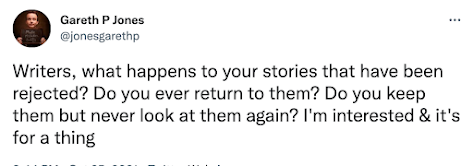
What Happens to Rejected Books? By Gareth P Jones

Being a writer means dealing with rejection, but what happens to the stories that never made it? Do you look at them with sadness, shame or regret? Do you still have hope that will one day they will find homes? Can you bear to read them? Every writer is different, so I asked the question on Twitter.


I had 50 replies from a wide selection of writers. These replies were interesting, revealing, helpful and heartening and this blog is an attempt to summarise them. 

Reject the Rejects

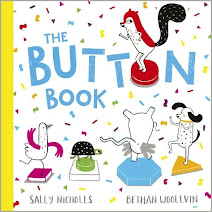
Personally, I rarely look at my rejected books. The way I deal with rejection is to emotionally detach myself from the work and begin work on something new. I'm not the only one. Children’s author, Sally Nicholls replied, “I have quite a short statement span when it comes to ideas and have usually moved onto something else.”


Animator/Illustrator Steve May replied: “They sit in a folder & never really get revisited because they all feel a bit 'tainted'.” 

Tainted is a great word. I feel like these unloved ideas have let me down – although it’s more likely that I’ve let them down. As author/publisher, Lucy Courtney points out, this is especially gruelling with certain picture books. “It’s the carefully worked rhyming texts that kill me. Too good to bin! Not good enough to publish! Impossible to revise!”

But are we being too hard on our previous efforts? Books are rejected for all kinds of reasons and so much is about timing, luck and circumstances. And sometimes it’s impossible to completely move on. Picture book author Dr Fiona Barker replied, “Some of them go and sit quietly in a corner, ashamed of themselves. But others won’t keep quiet and are quite demanding and high maintenance.

Recycle & Reuse

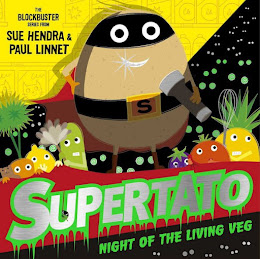
A lot of the replies revealed a Frankenstein-like approach. Author/illustrator, Paul Linnet wrote: “I dismantle the stories and use them for parts.” 


Writer/editor Sean McSweeney finds it helpful to give his stories a cooling off period before going back to “plunder bits for other work.”

Bloomsbury commissioning editor/author, Jonathan Eyers agrees. “All the good stuff gets cannibalised eventually. I've even lifted descriptions and dialogue from one project to another, and sigh secretly with relief that the earlier one didn't get published because things work better in the later one.”

Author, Ashok Banker replied, “I mine them for material. I'll often lift characters, plotlines, even entire chapters and then revise extensively and use it in the new work.”

Here we see writers are plunderers, miners and, er… cannibals, but I enjoyed hearing this more positive approach. Writer/editor Roz Kay wrote a novel that was rejected by everybody for several years so she “took two of the chapters, buckled them together, and called it a short story, which was selected for publication in an international competition.”

Unpublished Not Unloved 

Teen fiction author, Tamsin Winter reminds us that unpublished isn't the same as unsuccessful. “My son insists on me reading one of them again and again,” she replied. “It’s a hit in our house.” 

Writer/Photographer Lou Abercrombie keeps the faith. “I completely believe in all of them! I can't bear to think of them as never being read by someone.” We’ve lived with these characters so long, it can be hard to let them go. Author/Artist/Lecturer NJ Simmonds wrote, “It’s weird to love fictitious people then never see them come to life.”

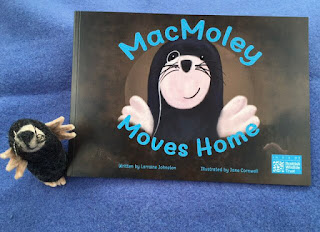
For writers such as Lorraine Johnson, self-publishing is the answer. “I was given good feedback but a ‘don’t feel enthusiastic enough to proceed’ kind of knock backs. I self-published it and it’s doing well!”


Lost Stories Found

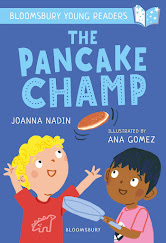
So many of the replies were 'good news' stories. Author/Academic, Jo Nadin said, “They sit in a folder called ‘books in need of a home’. Every few years they get resubmitted elsewhere (and sometimes to the same place), and every so often they get accepted. Markets change. Editors move.”


Author, Kerry Drewery’s latest novel, The Last Paper Crane was initially rejected, but she told me, “It sat on a shelf for a few years and then with advice from new editor, I tweaked it and it found a home.”

Anna Wilson writes books for adults and children and her next picture book "went around the houses, but found a home eventually and now it looks STUNNING!” 

Picture Book Den children’s author, Clare Helen Walsh said, “I have a picture book coming out in 2022 that I first wrote at the end of 2018. I came back to it twice before getting it just right. There was something about it.”

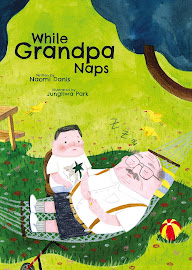
New York based picture book author. Naomi Danis wrote to tell me: “Several of my picture books got published after ten or more years of being rejected. Enough of the rejections included some words of encouragement to keep me going. I submitted I HATE EVERYONE for 11 years, and WHILE GRANDPA NAPS for 17 years. I'm never sure if it is encouraging or discouraging for people to learn it can take so long.”


I don’t about you, but it gives me great hope to hear so many accounts of authors who didn’t give up on their work and who rejected rejection and found acceptance. Or, as children’s author, Emma Read put it, “I really needed to read this today. There is hope for the unloved stories after all.”


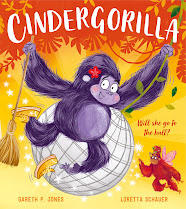
Gareth P Jones is the author of 45 published books – and countless more that lie in the dark recesses of his computer. After writing this blog he's thinking of going back and looking at them. His published works include The Thornthwaite Inheritance, Solve Your Own Mystery: The Monster Maker, Rabunzel and CinderGorilla.

And if you want to read the full twitter thread, you can find it here.  

Monday, 25 October 2021

WRITING FAIRY-TALE RETELLINGS by Clare Helen Welsh and Friends

We all have our favourite childhood fairy tales, and so it’s not surprising that writers draw on well-known characters and narratives from traditional tales in their own writing.


This blog post will take a look at the reasons why re-imagined fairy tales are so loved and also look at what to consider when writing your own re-imagined tales.


To do that, I’ve recruited some special guests who’ve agreed to answer my most pressing questions about fairy tales and also offered their top tips!


GARETH JONES: 


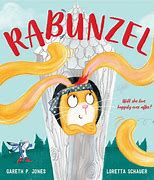
Gareth is the author of a fantastic series of fairy tale re-imaginings with Loretta Schauer, including Rabunzel and Cindergorilla. I was keen to know how he had found the market to be for fairy tale stories.


What do you think the market is like for fairy tale retellings?


Gareth said:


"Once I had written Rabunzel, I sent it directly to my editor, Melissa at Egmont (now Farshore) Books. It sat unread in her inbox for months but when she did read it, she liked it so much that she immediately called her sales team. They loved it too. She then picked up the phone and called me to tell me that they wanted the book as the first in a series. None of this is normal for me. I think that the story being an original retelling of a well-known fairy tale really helped. A long eared rabbit that gets locked in a high hutch is a joke that everyone instantly gets. Rabunzel Rabunzel, Let Down Your Ears! Whether or not the series will meet my publisher’s high expectations in terms of sales and foreign rights, I can’t say. I certainly hope it does. But I’ve never had such enthusiasm from a publisher about any of my previous picture books and I think a lot of that is down to it being a fairy tale retelling."


Gareth’s Top Tip for Writing Fairy Tale Retellings:


Fairy tales are problematic. They are often dark, weird and teach lessons that are no longer relevant to our world. They are also full of plot points that would have most editors reaching for the red pen if they were featured in an original story. Why doesn’t Cinderella’s slipper change back? In fact, why does the magic wear off at all? All of these things can be resolved, but it does take a bit of work. There are going to be four books in my series and my feeling is that with each one, I will stray further from the source material as I find ways to resolve these problems to create stories worth telling. With an original story you have to ask why this story is worth telling. With a fairy tale retelling, you have to question what you are bringing to the genre that is new, fresh, funny, interesting and worth hearing. I hope I’ve answered all these questions with Rabunzel and CinderGorilla. And I also hope that readers will also be interested to see what I’ve done with Snowy White next February. As for the fourth book? I’ll have to keep you posted on that because I’m not yet sure what it will be.


LUCY ROWLAND:


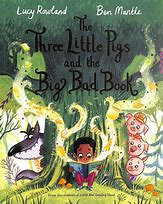
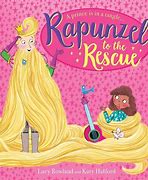
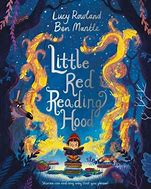
Former Picture Book Denner, Lucy, is no stranger to fairy tale re-imaginings. She is the author of ‘Little Red Reading Hood’ and ‘The Three Little Pigs and the Big Bad Book,’ published by Macmillan and  illustrated by Ben Mantle. She has also written ‘Rapunzel to the Rescue’ with Katy Halford (Scholastic).


From time to time I hear reservations about fairy tale stories, originating from the fact that they don't always have global appeal. Unfortunately, not all countries have the same much-loved tales, which can make them harder to sell globally. I was curious to know how Lucy’s titles had sold internationally. 


How have your fairy tale retellings sold internationally?


Lucy said:


When I started writing re-imagined fairy tales they were quite popular but there seems to have been a slight shift in the industry and have been a little harder to sell, perhaps  because publishers have found them harder to sell abroad.”


Lucy’s texts, which are also in rhyme, have numerous co-editions. Indeed, the brilliant ‘Little Red Reading Hood’ has been translated into several languages including French, Italian and Spanish. Plus, Lucy and Ben have another re-imagined fairy tale in the works with Macmillan– ‘A Hero Called Wolf,’ which confirms to me that the rumours of co-editions don’t stop a publisher buying a fairy tale story if the concept is strong and marketable in enough markets.


Lucy’s Top Tip for Writing Fairy Tale Retellings:


"Try mixing it up! What would happen if you reversed character roles or wrote from a different character's viewpoint? What would happen if it was the same story but in a different world or setting?"


TRACY CURRAN:


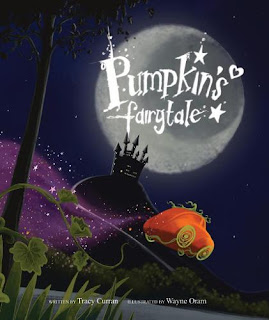
Tracy has just released her debut picture book – Pumpkin’s Fairy Tale - congratulations, Tracy! The story has been brought to life with fabulous illustrations from Wayne Oram. I asked Tracy how she came up with the idea for Pumpkin’s Fairy tale and what it is about fairy tales that inspires her.


How did you come up with the idea for Pumpkin’s Fairy tale and what is it about fairy tales that inspires you?


Tracy said:


“I've always loved fairy tales, from my earliest childhood. They can be light and magical or dark and gritty, they impart valuable knowledge to readers and they are always evolving, which I find exciting. My idea for Pumpkin's Fairytale came from this deep affection I have for fairytales, my love of pumpkins and my curiosity of exploring a different point of view. I've always thought that, in the original story, Cinderella's pumpkin is rather cruelly cast aside after playing an important role. So, I thought I'd bring it (it became a him) to life and see what he had to say about the matter. 'Pumpkin's Fairytale' is the story he told me.”


Tracy’s Top Tip for Writing Fairy Tale Retellings:

“My top tip is to experiment with writing a version in both rhyme and prose. I think rhyme works beautifully in fairy tale retellings but two agents have now asked me to convert to prose, so why not have both up your sleeve! If you automatically prefer to write in prose, then just run wild and have fun!”


PIPPA GOODHART:


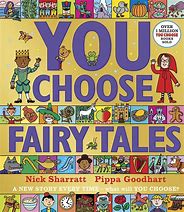
Pippa is the author of the You Choose series with Nick Sharratt. Her fairy tale version allows children to make up their very own fairy tale adventures where they choose what happens next. This is what Pippa had to say about fairy tales and why we love them! 


What do you think it is about fairy tales and fairy tale characters that people love?


Pippa said:


"It must be partly the familiarity of the most well known tales. We’ve heard and seen and been aware of references to them from the youngest age, and there’s something comforting in both that familiarity and the knowledge that we all share those tales as part of our mutual culture. Maybe we sometimes hope for a new slant on that familiar tale? The most well established fairy tales are thrillingly shocking, but safely not in our real world, so we dare to play with big scary things within them."


Pippa’s Top Tip for Writing Fairy Tale Retellings:

"I'd say, think about the emotional heart of the tale. What is it REALLY about at an emotional rather than event level? For example, we all empathise with Cinderella for being the one who is mistreated and left out of things. We can all relate to that. But maybe we could see that from another angle? Long ago (and far away!) I wrote a version of Cinderella from the ‘ugly sisters’ point of view. Who is calling them ‘ugly’? How does that feel? What was it like for them when they acquired this beautiful perfect step-sister? There are multiple stories within each story, and its fun delving in to find them."


And last but definitely not least...


JANE CLARKE:


Jane is the author of a picture book fairy tale detective series, featuring Sky Private Eye. Titles include – ‘Case of the Missing Grandma,’ ‘Case of the Runaway Biscuit’ and ‘Case of the Sparkly Slipper’ based on the stories Red Riding Hood, Gingerbread Boy and Cinderella. The stories have been illustrated by Loretta Schauer and are published by Five Quills. I was keen to know how the process of writing these books was similar and/ or different to her other picture book texts. 

Traditional tales need stick relatively closely to the original tale. Did you find this helpful or restrictive or something else? Can you tell us a little bit about your process?

Jane said:

"I found the process of taking the essential elements of a fairy tale and re-jigging the story with an original twist very different from writing other picture book texts. I enjoyed the challenge and had lots of fun adding creative elements to the story."


Jane’s Top Tip for Writing Fairy Tale Retellings:


 "As well as re-telling the main elements of the tale, reflect the pattern of how the tale is usually told. The rule of 3 is big in fairy tales!"


So to sum up, it’s worth bearing in mind that there are lots of retellings out there. As always, it’s important to make sure you are doing something different and/ or doing something in a different way. Is your premise a high concept idea that will cut through the noise and appeal to a wide market? 


But don't let that put you off! 


There is A LOT  of love for fairy tale retellings. They often feature strongly in our childhoods and in school curriculums, too. They are based upon on characters and arcs we know well, creating opportune moments to switch things up and surprise the reader!


Have you written a fairy tale re-imagining? Do you like reading them? Which are your favourites?


BIO: Clare writes fiction and non-fiction picture book texts - sometimes funny and sometimes lyrical. Her latest picture book is a fairytale retelling inspired by the life and work of Lotte Reiniger. Scissorella is out on November 4th 2021. It's Clare's first book with Andersen Press and it has been wonderfully brought to life by Laura Barrett. You can find out more about Clare at her website www.clarehelenwelsh.com or on Twitter @ClareHelenWelsh.