Showing posts with label ADHD. Show all posts

Monday, 15 January 2024

Could overlooking some of your physiological needs indirectly be holding you back from completing creative projects? Oh No, George! realisation and ADHD by Juliet Clare Bell


I happened to read Oh No, George! by Chris Haughton in bed last night (having not read it for about three years).


                                          My bedtime reading for the last couple of weeks


Do you ever get that thing where something you’ve read loads before suddenly resonates in a new way?


                                                  Oh No, George! (c) Chris Haughton (2012)

…because for the first time (that I remember at least; I may have read it and completely forgotten that I had) I saw the quote before Chris Haughton's dedication:


“Freedom is secured not by the fulfilling of one’s desires, but by the removal of desire… No man is free who is not master of himself”  Epictetus.

Without throwing myself into ADHD books, research, podcasts, getting some really good ADHD help over the last year and then trying something really new back in August, I would not have understood that quote at all. But suddenly it illuminated perfectly how the removal of a specific desire had allowed me to uncover something fundamental that was getting in my way (which I'd not realised) and which I could finally work on, freeing me to finish creative projects in a new, improved way. What’s holding you back (if something is) will be different from what was holding me back but thinking about your physiological needs and whether they are really all being met might help you uncover it so you can thrive creatively…

So back to Oh No, Clare (sorry, George)!...

Harris (George’s human) asks George if he’ll be good whilst Harris is out:


                                                 Oh No, George! (c) Chris Haughton (2012)

He’s (I’ve) even got his (my) eyes closed -I’ll genuinely fool myself into believing I'll be good/stick at something. Once he’s opened his eyes, he’s already moved to hoping rather than knowing

And then when he inevitably stuffs up, here comes the ADHD disappointment of having done it again…


                                               Oh No, George! (c) Chris Haughton (2012)

But he’s forgetful, too (ADHD, anyone?) and he soon moves from mistake to mistake. The next time he’s tempted…


                                                Oh No, George! (c) Chris Haughton (2012)

he’s even got the ADHD eyes… those ‘I could just quickly do this other thing and still be able to make my deadline’ eyes…

Eventually, after a LOT of distraction and being found out comes the real ADHD shame, perfectly encapsulated by this page:


                                               Oh No, George! (c) Chris Haughton (2012)

 And the cycle repeats. I absolutely love this book and always have done -as have my children and all the children I’ve read it with. It’s beautiful, funny, poignant (but I'd never seen myself in it until this time round)…

We don’t have to feel sad (for long) for George. He forgets his mishaps pretty quickly. We’re seeing a snapshot of their lives together and Harris is clearly very familiar with George and his urges. Harris and George have a lovely relationship and Harris still loves George when things go wrong (every ADHDer needs a Harris!). BUT happily for George -and Harris, George doesn’t have adult responsibilities and longer term hopes and dreams that he’s just aware enough of to know that he’s messing up (like lots of adults with ADHD do). George doesn’t need to be free (a la Epictetus) to pursue his projects. He can have an awesome life with the ever-understanding Harris. But what about us?

Like the lovely George, I had also always been happy and optimistic about getting it right this time (whatever ‘it’ is) but for me, it was always followed by ‘if I can just…’ I was George-level un-self-aware: self-aware enough to feel shame when it went wrong (which it did, a lot) it but un-self-aware enough that I genuinely thought I was self-aware. I was definitely George (until recently). I knew what I was meant to do/not meant to do, but I couldn’t make myself do it/not do it. But unlike George, I wasn’t a really appealing dog, beautifully crafted by Chris Haughton that we all love and feel compassionate towards. I was an adult with adult responsibilities who kept not showing up how I wanted to -in writing and in life, but without the lovely Harris to help pick up the pieces.


Do you find yourself thinking

This is the year I’m going to be different/do things differently?

I know I can write/illustrate/create more, be more, be better

[followed by the inevitable] if I can just…

use better systems, have a better year plan, be a new and better version of myself?

I always thought that. Each year, each new productivity planner (there are very, very many), each new conference, retreat, goal-setting session, in fact pretty much every day…

But

What if we’re trying to treat the symptoms and not the cause? Maybe we’re starting way too high up in our hierarchy of needs? Maybe we really need to attend to what’s near the bottom?


And if you’re interested, check out Translating ADHD’s podcasts on a slight reimagining of Maslow’s Hierarchy of Needs for people with ADHD… (and episodes 149-153).

Physiological needs

How aware are you of your physiological needs? It might sound like a silly question but I think I was pretty unaware for most of my life until the powerful combination of ADHD and perimenopause left me dangerously forgetful, brain-foggy and lacking in the ability to follow even the most ordinary routines (keys in the fridge, frozen food in the cutlery drawer, leaving the hobs on, forgetting to lock up). You can’t be responsible for children and be forgetting to turn off the hob… so things that had seemed advisable but optional (getting enough sleep etc) became absolutely necessary.

The needs, discussed below, whilst being considered crucial for people with ADHD, are really important for everyone -and fit pretty neatly into Rangan Chatterjee’s Four Pillar Plan to a healthier life, too.


                                                The 4 Pillar Plan (c) Rangan Chatterjee (2018)

So maybe think really honestly about these needs…

Are you really getting enough sleep and at the right time -for you?

I can’t burn the candle at both ends like I did up until even three or four years ago. It’s different for different people and at different points in your life. I used to be a night owl but I love waking up at six to write which means being asleep as close to 10pm as possible. I'm a wreck for days now if I go to bed later. But most of the time now, I wake up, not feeling tired (which is a real revelation for me).

Are you getting enough movement -for you? And is it movement you like? (A note: I need to not think of it as exercise, because I’ve always connected exercise with losing weight/changing shape/being a better version of myself. For me, movement now is to do with being able to think more clearly -and that’s a positive motivator as my job is mostly about thinking! My movement comes mostly in the form of: [1] walking to places I need to get to, fast (so I'm on a mission); [2] dancing unfiltered to loud music on my own (usually with a disco light I can move from room to room) to get me in the proper state for sitting down at my desk and writing if I feel a bit sluggish or tired or don’t feel in the right mood yet; [3] very gentle jogging on the spot to get my focus back on my work if I’m feeling a bit jittery because I’m finding it hard; and [4] regular moving of my feet back and forth on my wooden roller foot massager (costs about £6).


These are the types of movement that work for me. I wanted to be the person who wants to go for a walk for its own sake, especially as there’s a lovely park five minutes’ walk away but I’ve learned that it’s not the kind of movement I like for its own sake. If you stay curious and non-judgemental, can you think of anything you’re doing because you ‘ought’ to like it and if so, if there’s anything you could swap it for that is something you actually do like? It really helps to keep it up when it’s not about self-sacrifice…


Putting the right things -for you- in your body.

For people with ADHD that may well mean: Vitamin D, omega 3, iron, lots of protein (including at breakfast) and very possibly stimulant (or non-stimulant) ADHD medication. And for people who are perimenopausal, this may well mean hormone replacement therapy (HRT; I absolutely could not function without it.) As someone who is still on the waiting list for stimulant medication, I’ve tried all the other ones and they’ve been helpful. But by far the most life-altering thing I’ve found has been not eating sugar (except fruit). I can’t stress enough that it is nothing to do with trying to change shape (please read Sonya Renee Taylor’s excellent The Body is Not an Apology


                        The Body is Not an Apology. 2nd Edition (c) Sonya Renee Taylor (2021)

or listen to the Sonya Renee Taylor in conversation with Brene Brown). I had noticed that I seemed more sluggish/brain foggy/forgetful when I was eating lots of sugar (which I’d do when I was feeling stressed about anything) and I decided to do an experiment for a week and stop eating sugar at the same time as stopping scrolling on my phone before 11am. Within three days, I noticed a big difference in terms of my focus. And I realised that it wasn’t so much that the lack of sugar improved my memory, but that I was no longer feeling anything like as impulsive as I’ve felt all my life (and I’ve never had the desire to scroll on my phone since, either, having scrolled for hours every day prior to experimenting with it). Prior to that, if I was writing and got to a tricky part and started feeling discomfort, my thoughts would have immediately turned to chocolate as a way to make me feel better, or failing that, scrolling. Once I’d stopped eating sugar, I found that when things got hard when I was writing, I didn’t have that jittery compulsive feeling, and my thoughts didn’t turn to external ways of removing the discomfort. And something quite extraordinary (for me, at least!) happened…

I have learned to tolerate discomfort and sit with uncomfortable feelings! Sophie Hannah, poet, novelist and writing coach,has talked about this: if you’re trying to write and you start feeling uncomfortable thoughts, what is the worst that will happen? You’ll feel uncomfortable. What’s the best that will happen? You’ll finish the piece that you’re writing. Not having something to take away the discomfort immediately in the form of chocolate or scrolling has allowed me to feel more comfortable with discomfort and finish (and even dare to start) projects that I wouldn’t have finished (or even dared  to start) before. I would never have guessed that refraining from eating sugar would reduce my distractibility and impulsivity, improve my focus and help me learn to tolerate discomfort -in an easy way. But it has. Maybe once I’m on stimulant medication, I’ll get a similar level of calm and lack of distractibility with the increase in dopamine. I’m all for desire -wanting something, and working towards getting it as long as it’s not hurting anyone else, but many of us with ADHD have experienced the unpleasant side of desire that feels all-consuming and out of our control. We so often go for the big emotions because they give us that dopamine hit but it’s a very short-term hit and having experienced the absence of clawing desire for the last four months, I have to say I’d choose peace and control, or Epictetus’s freedom, over chocolate -even as a lifelong devotee.

Are there any changes to putting things or not putting things into your body that might help you with your focus, concentration, distractibility? Again, this has nothing to do with changing body shape or appearance, but has to do with thinking more clearly so you can be more creative.


Mindfulness

Finally, it’s worth thinking about how mindfulness in its wider form might help you (not directly physiological needs but still relevant I think). Personally, I really struggle with sitting-down meditation or yoga as I don’t feel still enough for it so I’ve looked for other ways to feel mindful. Think about what makes you still? What helps you feel at peace? It might not be what works for someone else. For me, it’s dark and water, and I’ve learned to incorporate both into my life during my working day and week.

Writing in the dark stills me like almost nothing else. I do it at 6am each morning, in bed, and it’s like a magical time where it feels like all the world’s asleep (including my internal editor). Perfect.


And water -works for me. Top three water/work combinations:

3 Listening to waves sounds (or even rain) through headphones as I write or read

2 Writing by water -there’s a perfect spot by the canal in town where I write once a week for hours
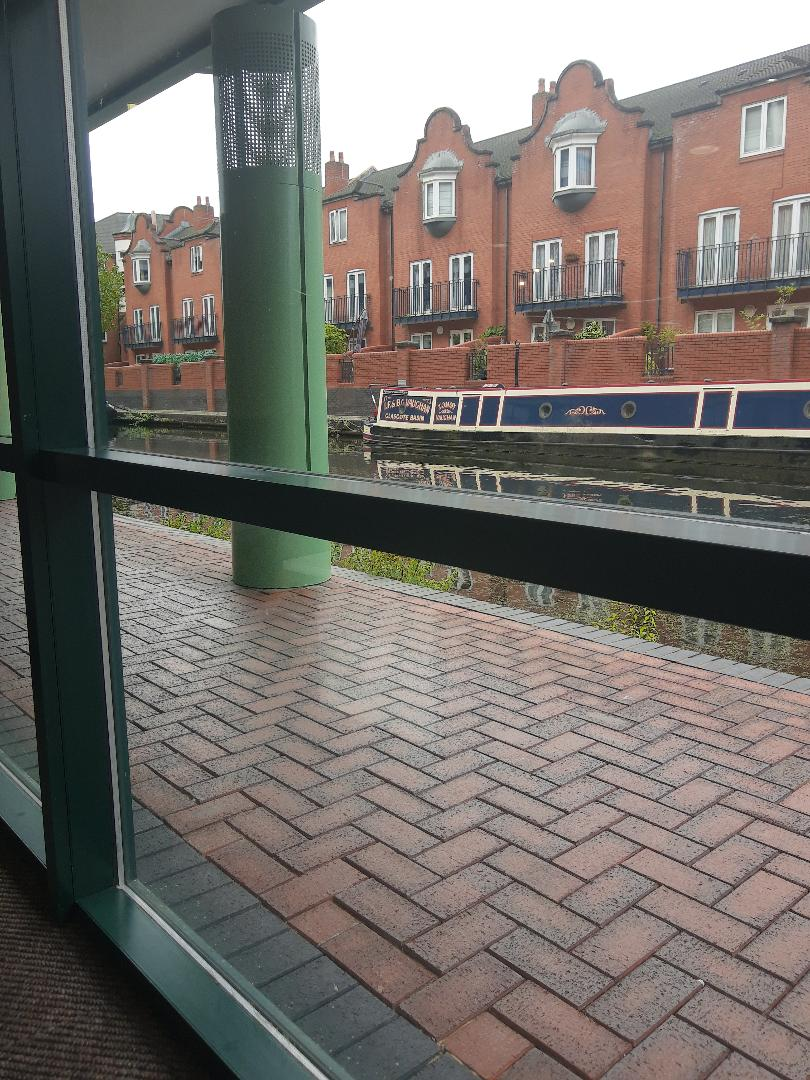


1 Jacuzzi -joint first with writing in the dark for feeling still. Who knew? The bubbles mean you are constantly being moved around just enough (so you don’t have to be making those movements yourself as you would outside of water) and it’s noisy enough to block out most of the conversation around you and to still your own mind. It’s like the humming, vibrating baby chairs for fretful babies. Perfect. It’s where my mind is the stillest it ever gets and I can think really clearly about my work.

I am extremely aware of how fortunate I am and the privilege I have in being able to access these things, including a gym (which I literally only use for writing, in and out of the jacuzzi; if a jacuzzi would help you think, lots of Sports Direct gyms have a jacuzzi and cost £20 per month including all classes); the right kind of ADHD/perimenopause nutrition; an ADHD assessment; ADHD medication (which I'll get once I finally get to the front of the waiting list) and Access to Work support from the Department of Work and Pensions. If anyone wanted help with where or how to get ADHD support (particularly in the UK), please get in touch and I’ll try and get some information up on my website shortly, including a guide to getting Access to Work for ADHD, which I wrote but took out as the blogpost was already too long.


I’m glad George lacks the self-awareness to change -because it’s in his nature to be impulsive and he has such a great time and he’s going to forget his shame really quickly and get back to living his best life. And he’s a dog. In a story (thank you, Chris Haughton for such a wonderful book). But as adults with responsibilities and wanting to write and or illustrate our stories, and deadlines (and for some of us, ADHD), attending to our physiological needs might be a good place to start exploring Epictetus's possible freedom…

If you have any thoughts on what has helped free you up to make the most of your creativity, or would like to share what's been getting in your way and if something has helped, please let us know in the comments below. Juliet Clare Bell is a children’s author of over 35 picture books and early readers and is also branching out into some longer writing projects which she is now confident she can actually finish… She does author visits in mostly primary, but sometimes secondary, schools, and you can find her at www.julietclarebell.com


Monday, 10 January 2022

Extra income stream -and so much more. The value of RLF Fellowships for picture book writers by Juliet Clare Bell


I don’t know about you but I feel really uncomfortable about the money side of writing, and writing-related events (author visits, etc.). I feel very lucky to have an agent who deals with contracts so I don’t have to do the excruciating discussions or negotiations with editors or publishers. Occasionally I do (when it’s a slightly different kind of writing project not covered by my agent) but the less I can have to do with the financial side of it the better. I struggle with the admin for anything but there’s something I find so uncomfortable about sending invoices that it’s enough to make me think twice about taking certain writing events on. And don’t remind me about January 31st tax deadline… (or you probably should, because I forget, many times every day and then have a jolt of remembering and write it down again)


Eek. So talking about finances in a blogpost doesn’t come naturally to me at all, but it’s something we have to do if we’re going to write for our living.

The vast majority of published picture book authors (and other authors) don’t make a living from their books alone, and here is where the RLF (Royal Literary Fund) Fellowship comes into play. I’d heard about RLF Fellowships years ago from my brother-in-law who works in university libraries, and he’d suggested I apply for one. The Royal Literary Fund is a charity that supports authors, and RLF Fellows spend two days a week (during term time) at a university

 
University of the West of England (UWE)'s Frenchay Campus where I'm one of the RLF Fellows


having one-to-one sessions with students about their writing, and a further half day doing the admin, arranging sessions, writing up reports etc. The RLF provides you with a grant given out at the beginning of each term, and it’s generous enough so you can afford to spend the rest of the week writing -and if you don’t earn anything from your books in that year, you’ll still earn more than the average annual earnings for a writer in the UK (I think that’s around £11000 per annum). So it protects writing time for you, and it’s amazing.

It took me over six years after my brother-in-law suggested it to me for me to pluck the courage to apply. You need to have published at least two or three traditionally-published books (I can’t remember exactly) if you’re an author (if you’re a journalist or playwright, it’s slightly different). I looked at some of the people who had Fellowships and I didn’t see any picture book authors, and many of the writers were well-known and had long lists of awards (in fact, my fellow Fellow at UWE last year had previously won the Costa Novel, Costa Book of the Year, James Tait Black Memorial Prize, and had been on loads of impressive shortlists). It didn’t feel like I was worthy of a Fellowship or that I would be successful if I tried. However, six year after forgetting about it, then remembering (and dismissing it as unrealistic) and forgetting, and remembering (and dismissing etc.), I decided to give it a go.

By the time I applied, I knew quite a few other children’s authors who were doing it, or were about to start (still, none of them picture book writers) and I started my application. Successful Fellows suggested that I be really honest in my application and talk not only about things that had gone well for me with my writing, but things that I’d struggled with (and what I’d learned from my own mistakes and struggles and how that could help students). RLF Writing Fellows work with university students to help them with all aspects of writing so I dug deep and thought about anything personal that I might bring to the sessions with students that related to picture books in particular and writing struggles in general. Preparing the application made me focus on how a really good understanding of picture book structure for me might help me help students with their own assignments (mostly essays) and which aspects of writing I feel I have good insight into and which I find really hard I also thought about what I struggled with in university myself. I actually used to work as an academic in university and the thing that I struggled with the most? Definitely the writing!

I was concerned that I’d been too honest in my application but I was over the moon when I was taken on! Even when I had doubts (over all those years) that I wouldn’t be successful in an application, I knew two things: one, that I would like it, and two (for the couple of years before I dared apply, at least) that I actually did believe I had something to offer to the students and that I could do a good job of it.

If you think that it sounds like something you’d be able to do well, and that you’d enjoy (the challenge of helping each student you see to improve on their own work/find better ways of studying, reading and writing) -and you’re eligible in terms of number of books traditionally published, then I’d highly recommend applying -even if you don’t think there’s a great chance of success. I know now at least two other picture book authors who are doing this and I suspect there are others. It’s got to be worth a try!

What I’ve gained from being an RLF Writing Fellow

There is, of course, the financial side to getting a Fellowship (and it was extremely helpful in lockdown where school visits are very few and far between). There is huge value in that relief of knowing there’s money coming in from your writing-related activities whether or not you sell any books. But there’s so much more to it than that.

Having an RLF Fellowship has allowed me, and continues to allow me, to explore. The RLF is there to support writers and so I am justified in researching things beyond what I might be writing right now and allow myself to play when thinking about what I write and what I want to write. I have read more in the last eight months or so than I have in the previous thirty (where I read very little). It’s given me the freedom to think about everything and how that can all fit into writing and any writing-related activities. The Fellowships are generally for two years (so more writers can benefit from them) and although it’s helped me during my Fellowship, it’s actually changed the way I think about lots of things in relation to what I’m really interested in writing, and how I’d like to write it. The benefits from the freedom to write and know you’re financially secure for those years, and the acknowledgement that this is actually you, a writer -and will continue to be you for the long term will continue for the rest of my life.

In terms of the actual sessions with the students, I love them! I enjoy it even more than I thought I would (and it’s especially good to do in-person sessions after a year of seeing students online from home). I enjoy the fact that I’m put on the spot (which I’ve often hated in the past) but because as a writer, I really do feel like I have something to offer them, it’s an exciting exchange where we explore problems and issues together. I think it has been part of the reason I realised I had ADHD because I had time to stop and examine myself a bit and that I was recognising myself in so many of the students who were struggling with procrastination and starting and finishing things, and easily going off-topic. In fact the things that have held me back for so many years and been really hard (which have turned out to be because of ADHD) are the some of the things that can really help you when working with some of the students. It’s a privilege to be able to work with students and be authentic so you can come up with strategies and suggestions that will help them move forward with their writing and studying. I feel very lucky, and I’ve learned loads from the students and from the sessions.

All my life I’ve struggled with admin and the RLF admin is much less onerous than many other things. Students come with a piece of work you’ve not seen before so you work on it there and then and the appointment system works really well and it sends things out for you without having to understand how it does it. And for the admin that needs to be done? I have my wonderful picture book accountability partner who stays on a skype call, silently, for an hour a week, her working on her stuff, and me on my admin, but I know she’s there so I have to get it done!

There are lots of different ways to earn extra writing-related income. If you genuinely think you’d like working individually with university students to help them improve their writing, and you can really think about how what you write and the way you write and organise your writing life could help them (and you’re in the UK), then do consider applying for an RLF Writing Fellowship -even if you think you might not stand much of a chance. I know the experience has changed me in a really positive way and that it’s affecting what I’m writing and how I’m thinking about writing.

Good luck!


Juliet Clare Bell (always called Clare) has written over thirty picture books and early readers and is working on a young adult novel. She feels very lucky to be working as an RLF Writing Fellow.

www.julietclarebell.com


Monday, 16 August 2021

Could it be… ADHD? ADHD and writing by Juliet Clare Bell


I have a terrible confession to make about Picture Book Den. So... we take it in turns to write blogposts each week and there’s a rota of who goes when…

only I don’t know where that rota is

…which means I don’t know when I’m meant to post. Which means I periodically get a heart-stopping moment where I think ‘oh no [though much less politely], it might be my turn and I’ve forgotten (again)’ -but I don’t think the thought through properly enough in the run-up to the Monday when someone posts (and ignore that nagging feeling), I think it on the Monday… but I have an almost pathological fear of checking to find the rota to see if I’m right (that I’ve missed my date). 

Sounds ridiculous, right? Because it is. Why don't I just write the dates on a calendar? And why would I choose to stick my head in the sand and NOT check the dates when I know that I haven't posted for ages? 

And yet I do it time and time again. When someone else posts on a Monday, I breathe a sigh of relief as it can't have been my week after all...  Over the years, I’ve occasionally remembered to write down my dates for the whole year onto my calendar which means I’ll get them in on time for that year -(IF I’ve remembered to look at my calendar regularly, of course) but mostly I don’t. And so, shamefully, I am reminded when I’ve already missed my deadline. It’s not that I don’t want to do it. I love being in the Picture Book Den. I’m only posting this because shame thrives on secrets (thank you, Brene Brown). I’ve got plenty of terrible confessions I could make about opportunities missed because I have huge difficulties prioritising anything, and how I can be 98% through a writing task but cannot make myself do the last two percent -for often weeks, or months, or years. But all this confession talk is working up to something that happened about four weeks ago…

It was my Usual Suspects moment (you know, when the big reveal all comes together and it’s like ‘no way! [another realisation]… no way!... [and another] no way! With each additional realisation that you’re suddenly bombarded with, you think. Wow. 

Everything 

suddenly 

makes 

sense.

It reminded me of the lightbulb moment in my most recent picture book, Ask First, Monkey! (illustrated by Abigail Tompkins). Monkey gets it wrong time and time again and doesn’t realise what he needs to do in order to work out whether someone wants to be tickled or not. 


(c) Abigail Tompkins (2020)

And then…


                                                         (c) Abigail Tompkins (2020)

The realisation...


                                                            (c) Abigail Tompkins (2020)

It doesn’t mean suddenly that he’s always going to get it completely right and never makes mistakes but it’s that realisation…

I suddenly realised -at the ripe old age of fifty, that 

must 

have 

ADHD. 

For three months after a family member suggested that both she and I had it and asked me to do an online test like she’d done I had been in complete denial. I went and did one and the ‘this result strongly suggests you have ADHD’ didn’t even leave me questioning if I had; I simply assumed it wasn’t a good test (though I was totally on board with my family member having it). I took three more tests at various points over the following months (with only the last one feeling in any way like I was doing it to find something out about me and not the wrongness of the test). Obviously everyone must come up looking like they had it. I am similar in my difficulties to quite a few friends and family and surely we didn’t all have it?! Unless, of course, you’re drawn to people with a similar slightly chaotic way of thinking/living…? And unless there’s a large genetic component and actually you might come from an extremely neurodiverse family but you all thought it was just normal (and that it was other people who were different and not you…)  

Instantly, loads of my life made sense for the first time. Before there were so many individual things that I really struggled with but hadn’t put together (really MESSY in real life -no idea how to keep a tidy home, and frantic tidying (or hiding away of mess into various cupboards before anyone comes round), always FORGETTING things, including how not to forget things -like writing things down… (and periodically thinking I'd invented an amazing new device comprising writing down what I was doing on each day before realising, once again, that that was a calendar and I had one -and could use it), not being able to stay FOCUSED -except on certain things (I could do mindless puzzles for hours, or follow some random research thought down a rabbit hole for hours), my whole pattern of work history when I worked in academia…, massive trouble PRIORITISING, having my work in one of nine places (I counted for this post) because of real difficulties ORGANISING anything, being really messy in my writing scribblings, not being able to FOLLOW even the simplest of DIRECTIONS or INSTRUCTIONS, a shockingly bad PROCRASTINATOR, an almost pathological DIFFICULTY FINISHING things. And then I think about our childhood -and, of course! I could go on (and I do, I could talk for ever, and I’d INTERRUPT you loads, too -another thing I’ve not properly realised, or at least admitted to myself, until now) but I won’t.

It’s a bit embarrassing to have been so blindingly unself-aware for so many years (I used to be a research developmental psychologist! I’m a writer! Surely being self-aware is pretty important for those jobs and I’ve seen myself as being a pretty self-aware person, so my pride took a bit of a hit). I had become more aware in some respects over the past twenty years or so -mostly since having children) and this had spilled over into my author visits in a really positive way. We play games around embarrassing moments -doing or saying the wrong thing (of which moments I have a considerably greater than average number) and we talk about why writing is brilliant -because I can be messy, I get to be in charge, I have to let go of perfectionism (for so many years I hated making mistakes and the crippling anxiety that goes with it…), I even do projects with children called ‘I am a work in progress’ and mention about how I was bullied in school for being different, and look good humouredly at all the things I struggled with.


We made a whole book about it! (Thank you to Hallfield Year 4s and 5s)

It was great way of engaging with children and helping them feel better about themselves… And the playing of lots of what if…? games where we go down those crazy rabbit holes and things become ridiculous are loads of fun

 but I still hadn’t put all the pieces together…


In the past, I was very harsh on myself and I all always asked the question

why can’t I do things that normal people can do?

I would berate myself that I could do a PhD (even if each chapter/sub-chapter deadline was scarily last minute and I had to stand up whilst writing for the last three days before I handed the whole thesis in as I knew I’d fall asleep if I sat down to write) but I was completely incapable of keeping a room tidy. I’d be furious at myself and think

What’s wrong with you?!

Even now, keeping a room tidy for a few days feels like a bigger achievement than getting a book published because it feels like I’ve finally, inexplicably gained this secret knowledge of how to be normal... 

And then I lose it again.

So what does this actually mean for writing?

There are parts of writing and related activities that seem to work pretty well for me (the more sociable bits -where I’m with students, or I’m doing school visits -doing, not organising them; the organising and admin around them are very painful). I can come up with really interesting ideas for books and love doing the research parts where I need to. And the fact that I have trouble with sustaining focus whilst working from home means that no one sees me when I do things in tiny bursts of productivity amongst long periods of zoning out. The productivity can be really productive for short bursts and I have to accept that it does work out sometimes as I DO get books published occasionally! And I have had periods with my accountability partner (2020) where lots of things come together and I have what looks and feels like a massive rush of things going right before it all goes extremely quiet again. And actually, when I am commissioned to write books, or get a book deal, I ALWAYS get them in on time. It’s down to the last minute of course (often literally) but I do deliver when I’ve got a firm deadline. But it comes at a personal cost, relying on heaps of adrenaline to make me finish it, and I’ve also missed amazing opportunities because I wasn’t able to prioritise and didn’t turn opportunities into these firm deadlines like publisher deadlines.

But the children’s writing community is lovely (check out SCBWI if you haven't already) and there’s loads of support to be had. I’ve been trying to ‘self-medicate’ with numerous productivity planners and books on getting organised/escaping chaos, and accountability partners and in-person/online write-ins for years without realising it all stems from the same thing. There’s even an ADHD term for the write-ins and similar meetings up: using a body double, where you get someone to be in the same room as you whilst you’re doing something you find difficult to do. The other person doesn’t help you; they’re just there. I find it really hard to get started and to finish things, so having people around makes getting started much easier. And I have a wonderful accountability partner (a fellow picture book author). Now she knows, she’s going to hold me accountable for some of the things I find unbearably difficult -by being my body double. I have about one hour of paperwork I need to do for part of my job each week that’s really simple if you do it straightaway but I have an almost pathological dread of doing it straightaway, so it then takes three or four times as long to do it later. From now on, my accountability partner and I will stay on our zoom call for an hour after our weekly accountability session and she’ll do whatever work she’s working on and I’ll specifically do the thing I can’t bear to do -which is actually a really easy task if there’s someone there.

And soon (pandemic permitting) I'll start back with some in-person write-ins in a local cafe. With write-ins, there’s an element of not wanting to look bad by not writing anything and feeling less inclined to look online as someone will see me, but it’s actually much more than that. My totally illogical anxiety involved in actually getting it started just isn’t there.

I’d really recommend body doubling for reading, too, if you struggle to read, or finish a book. My children asked to read together (not out loud, but silently, in the same space) over lockdown, and it’s actually got me back into reading in a way I haven’t read for over 25 years. I’ve probably given up on five books for every one that I’ve finished when I’m reading them for myself, and the ones I’ve read are mostly young adult books where they’re designed to get you engaged from the first page. I read so much as a child and I absolutely love it again now. Our reading sessions together are highlights of my week.

I realise I’ve written plenty of blogposts relating to aspects of this (especially on procrastination and motivation) and each time it feels that it’s the start of something new (I am an eternal optimist), but it’s different now (no, really!). There’s a difference between thinking something is helpful and knowing it’s necessary. ADHD isn’t an excuse for anything I’ve done (or not done) or do (or not do), but it’s an explanation and I feel like I’m arming myself with knowledge that will equip me really well for writing -and life!- in the future. Self-awareness is always good when writing authentically, and knowledge about a whole person approach (including good sleep, exercise, nutrition, mindfulness, specific strategies for prioritising, making lists, using a calendar consistently, setting loads of alarms to remind me to do things, etc. and possibly stimulant medication) is a really positive step.

One of the biggest changes in my thinking over the past few weeks is about raising my expectations. I’m naturally a happy person. I am daily extremely grateful for my life and family and friends. But in order to decide that this wasn’t a huge personality flaw (to believe that I wasn’t lazy and stupid and selfish) and to accept myself for who I am, I did lower expectations of myself quite significantly about ten years ago. If laziness wasn’t the reason I wasn’t writing as much as most writers (and why I had a messy house) then there wasn’t much I could do about it except accept it. I actually didn’t want to have much more going on writing-wise because I didn’t think I’d be able to cope with the extra workload. But that’s all changed. I feel like I want to do more, now -because if I use the right strategies and get the right support then it’s not an alarming thought to think of having more deadlines from editors. And imagine if I managed to get organised enough to do the right kind of publicity for my books? And if I sorted out a system for doing author visits that didn’t feel like the admin was so grim that it might not be worth it (and where I could do that admin with a kind body double who was just getting on with her work on skype whilst I finished my admin?). (And what about a calm, tidy house?! Now that would be something…)

Waiting lists are notoriously long so I haven’t got an official diagnosis yet (believe me, I’ve refrained from including the dozens of personal stories which would make it feel like I didn’t need to wait for a diagnosis to know!) but apart from stimulant medication which I may or may not try, I can start doing all the other things now. It’s going to be a life-long process (we’re all a work in progress after all...), but I’m enormously relieved and really excited. Next fifty years here I come. And as for the picture book den deadlines? I’m going to find the dates tomorrow and write a year’s worth onto my online calendar which I’m going to check every day. I’ve even set the alarm (with accompanying label) to do it…  

Are you a writer with ADHD (I’m guessing there are quite a lot of writers out there!)? If you have any tips for writing with ADHD, please share them below. Many thanks.

Juliet Clare Bell (always called Clare) can be found at www.julietclarebell, though oddly enough, her website needs updating...