Showing posts with label Ashling Lindsay. Show all posts

Monday, 10 May 2021

Long Ago? by Pippa Goodhart


‘Long ago and far away’ is the setting for so many picture book stories, and yet historically realistic ‘long ago’ is rarely found. Why?

This question came to me as I’ve been compiling a virtual summer course for Cambridge University’s ICE (Institute for Continuing Education) on ‘Writing Historical Fiction for Children’. I had hoped to include picture books, early reader illustrated chapter books, middle grade novels, and young adult fiction. I do include all those, but very little on picture books because picture book historical fiction is scarce.

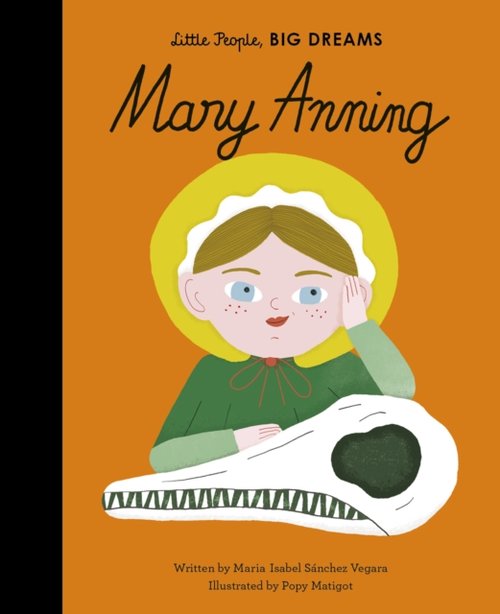
There is a current boom in picture books about famous people from the past, tapping into national curriculum topics for Key Stage 1 such as ‘the first aeroplane flight’ and ‘lives of significant individuals’ ranging from Mary Anning to Alan Turing. Those topics ensure book sales to schools.  


But why not use historical settings for stories, as background, with no link to a great historical character or event? 

            Surely nobody thinks that a picture book story setting from the past would be off-putting to young children for whom everything is new? We rightly offer young children stories set in geographical places and in cultures very different from their own. They also happily accept characters who are peas and carrots and robots and cacti! Children are naturally ready to imagine and play. And they happily enjoy the very few picture books which do have a setting which we can see is from a past time. 


I wonder, did publishers in 1981 feel doubtful about Janet and Alan Ahlberg’s ‘Peepo!’ being set amid World War Two family life, a bombed building and air-raid warden visible? If they did, they needn’t have worried. Many, perhaps most, small children enjoy that book for its ‘peepo’ game, with the baby and adult family members they can relate to. Some might look at picture detail, ask questions, and have an interesting discussion about the differences in that home from their own with the adult who reads the book to them. But all children exposed to the book, will, I suspect, have absorbed a feel for that time and place. When they come to learning about the Second World War, and life on the Home Front, something of it will already be within their existing knowledge, thanks to ‘Peepo!’. 

But, earnest educational value aside, life is simply richer and more interesting the more we know of it. So, let’s enjoy the diversity of story setting that the past offers us, and offer it to young children too! 

            Why aren’t there more picture book stories with historical settings? Is it for fear of ‘getting it wrong’? With prehistory, so little is known that there’s a freedom to use a sort of generic visual shorthand for how things looked in Stone Age times; people in fur knickers, waving spears at woolly mammoths. There are quite a number of picture book stories set in prehistorical times. 


But for historical times about which we know more, there will always be those ready to point out mistakes, just as they do for historical films. I’ve been an ‘extra’ when the ITV murder mystery ‘Grantchester’ series has been filmed in my home village, and, yes, they hung prop tights rather than stockings on a washing line set in the 1950s. Wrong! But the tights were background, and not pertinent to the story. If we mind too much about accuracy, we restrict ourselves for the sake of academic safety. That’s a waste. Children think in bigger ways than that. 

Children love ‘long ago’, and illustrators and publishers are confident when using a ‘long ago’ setting that is clearly fictional, so can’t be ‘wrong’. Fairy tales, and the many newly created picture book stories featuring knights and princes and princesses, tend to be set in vaguely ‘long ago’ times of long dresses and carriages and page boys. It’s the same unspecified ‘long ago’ sort of setting that pantomime sets and costumes go for. But let’s use the picture book opportunity to introduce children to more realistic other times. 

David Roberts shows children lush 1930s Art Deco wonders in his version of Cinderella (written by Lynn Roberts Maloney). 


I think there’s an opportunity here for more beautiful and interesting extra visual riches to be brought into some picture book fiction. I wonder if any publishers and illustrators agree?!

Monday, 9 September 2019

Making It Personal: Harvesting Picture Books From Real Experiences by Clare Helen Welsh


We all know that finding an original picture book idea is tough. Extremely tough. But one way of being unique, is to make your writing personal. There is only one you, after all!

Twenty authors could all write stories about bears, but what would make yours different from everyone else’s is what you bring; your experience, your style, what you notice, know and believe to be important about bears. No-one can replicate you and that’s what will help your text stand out to publishers.

So how do we cultivate our ‘You-ness’ ?  - a term I first heard author, Catherine Johnson, use at the SCBWIBI Conference in Winchester - and how do we turn it into picture book gold?

Try writing down all the experiences, people, memories, interactions that are important to you. Choose one and consider:
-                     Is it interesting to others?
-                     Is it helpful to others?
-                     Is it (or can it be) told from a child’s perspective?

This last point is particularly important. You will need to craft your emotion into something accessible for the age group you are writing for. Remember that just because something resonates with us as adults, doesn’t necessarily mean it will touch or entertain a child in the same way. Emotion is hugely important in picture books, but your text still needs excitement and tension to make children want to come back to it again and again.

It’s perhaps helpful to expand your mindset when working in this way. Your final text might not actually be the whole of the thing you experienced. Once you have taken the nub of the idea/memory/emotion and sculpted it into something children will enjoy, it might only be a snippet of your original experience; a phrase, a character or an idea that you can use as a springboard for something else.

As an example, my most recent picture book, The Tide (illustrated by Ashling Lindsey and published by Little Tiger), started life as a phrase that my children kept repeating whilst on a day trip to the beach; ‘The tide is coming in! The tide is coming in!’ I wrote whilst they played. It was very special to sit back and watch them. It was also the first time they learned about tides.


On the beach at Perran Sands, Cornwall (April 2015)


Ronnie Spry, who lived with dementia, with two of her grandchildren.

Six months later, this memory had very much stayed with me, and so I used it as inspiration for a book about dementia, told from a child’s point of view. There were already some very good books for children on the subject. I know because my children’s Grandma lived with dementia towards the end of her life. Their Grandma wasn’t with us on our beach trip. No-one even mentioned or talked about dementia on that day. In fact, the final text doesn’t bear much resemblance to our trip at all. But the emotion is there. And a few little details that make the text feel fully-rounded; my children did play in the rock pools. They did build forts and castles and they did laugh in and shower in the salty spray. Their song, ‘The tide is coming in! The tide is coming in!’ also features, as a refrain in the book. Using the tide as a metaphor for memories that come and go, was unique and original to me. It was my way in to a subject written about many times before.


                                              (c) Ashling Lindsay (2019)


                                                (c) Ashling Lindsay (2019)

Perhaps you also like working this way? It would be great to find out if you do.
If not, perhaps give it a try …and let us know if you find picture book gold!

Clare is a children's writer and primary school teacher from Devon. She writes fiction and non-fiction picture book texts - sometimes funny and sometimes lyrical. Her first book was published in 2015, and she currently has books in development with Little Tiger Press, Quarto, Andersen, Nosy Crow and MacMillan. You can find out more about her at her website 
www.clarehelenwelsh.com or on Twitter @ClareHelenWelsh .