
In recent
years there’s been a trend for converting house attics into proper rooms. What had held dust and rats, water tanks and
junk, have become studies, en-suite bedrooms, artist’s studios, and more. Well, I think it is time to do the same thing
for picture books. There is a similarly
lovely big expanse of room that is often under-used in picture books, and
that’s the endpapers. We’re missing an
opportunity if we don’t use them.
Endpapers
are exactly that; the paper at the end of each book, joining cover to
content. That’s their job. Most endpapers are left as bare white paper, and useful for old-fashioned
library Return Due Date stickers to be stuck to, but that’s about all. I’ve noticed how often it is the blank endpapers of
library picture books which get scribbled on by small children. Are they trying to tell us something? “Use this space!” And some picture books do.

Korky Paul
cleverly hands-over the endpaper artwork to children. These pictures of Winnie the Witch and cat
Wilbur with dinosaurs are by Park Jung-Eum and Park Ji-Eun, aged seven. They are wonderfully bold, dramatic and fun
pictures which must give children a pleasing can-do feeling in knowing that
people of their own age can have good work published.

Jo Empson
uses the endpapers in Rabbityness to give a kind of rabbit wallpaper of
different rabbit poses; very attractive, and an appetiser for the
story to come.
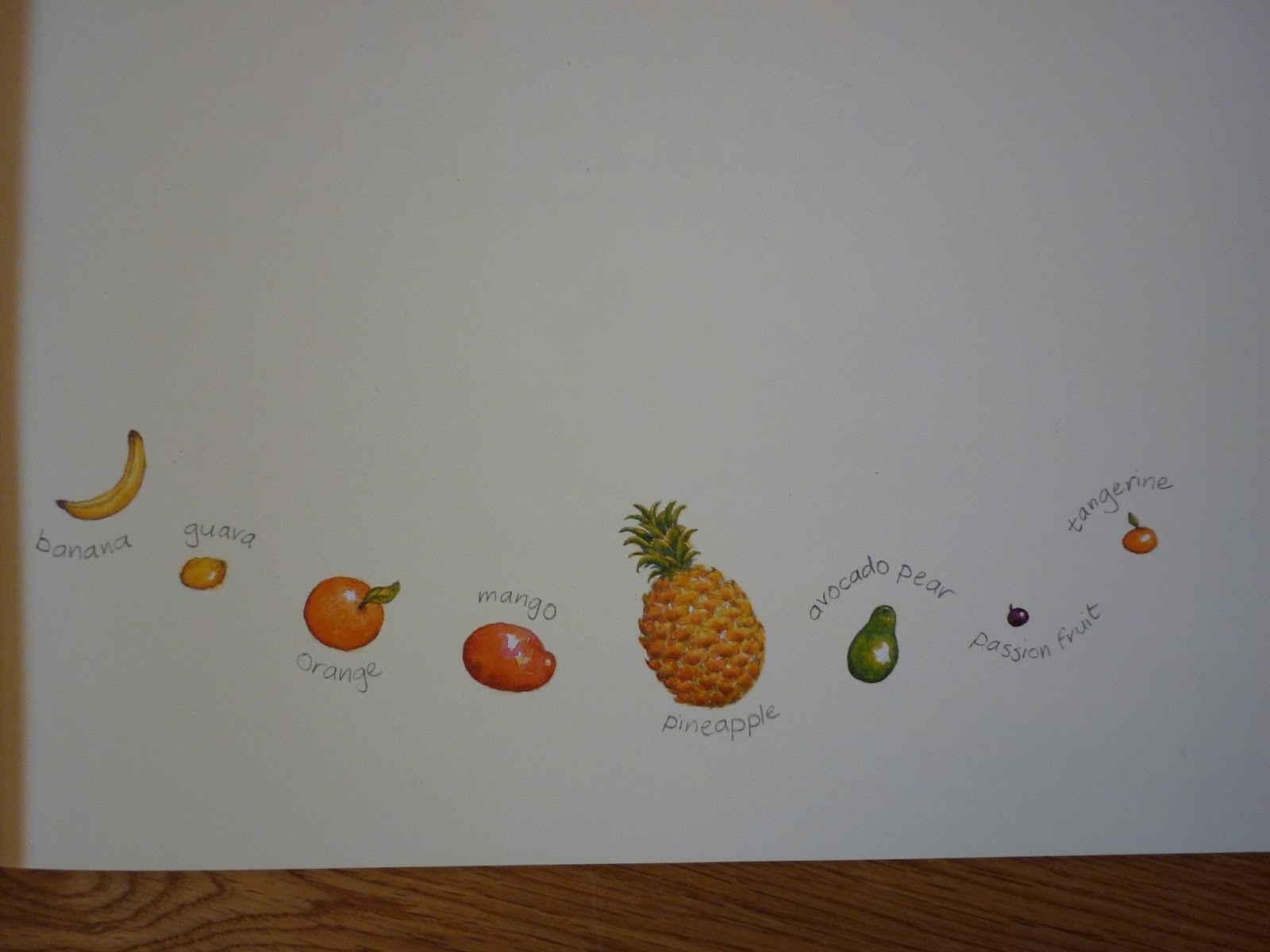
Eileen
Browne uses the endpapers for Handa’s Surprise to show and name fruits at one
end of the book, and wild animals at the other end, adding interesting lessons to what is already one of the best picture book stories ever.

My You
Choose and Just Imagine books have illustrations crammed with images but have
little text. I was a child who found
reading hard, and was always relieved to find a book that didn’t demand much
reading. But there are children who
relish new words to read. So we’ve used the
endpapers to list hundreds of words, offering a kind of treasure hunt game for
those who like reading the words (they all name things to be found in the
pictures), but placed in the book so that they are not a necessary part of the
book experience if reading words isn’t something you enjoy.


Helen
Oxenbury’s beautiful pictures on the
endpapers of Farmer Duck are glorious.
Nothing ‘childish’ about them, and yet I’m sure that children sit and
absorb and lot from them, both for their beauty and for what they reflect from
the story. At the start we see the farm
landscape in winter; bleak and harsh. By
the end of the book that same scene has blossomed into warm colourful summer.
I’ve just
asked my editor if a new book that is (hopefully!) on its way to publication
might have a board game on its endpapers.
There are so
many way in which endpapers might add to picture books. They might add information relevant to a story, for example with
a map of where the story takes us, or non-fiction information relevant to the fictional
tale. They might add a game or an activity
to complement a story. How about a
recipe or a quiz, instructions on how to make a paper aeroplane, or black and
white pictures to be photocopied or traced for colouring in? Or simply add decoration to make a book more
beautiful.
When books are fighting for sales against so many other attractions, an extra ‘room’ in a book might just make it a winner. What other examples of extending stories into the endpapers have you found, or can you think of?
