Showing posts with label literacy. Show all posts

Monday, 3 December 2018

The Habit of Libraries Matters • Natascha Biebow


I have been thinking about libraries.


Libraries are of course buildings that house stacks of books, periodicals, newspapers, computers – they are places that house INFORMATION in all its modern guises. If you’re lucky, they also have kind and knowledgeable librarians, who will give you advice and order books for you. They might also be really, good listeners!

 
From A Library Book For Bear by Bonnie Becker - such a friendly librarian!

My relationship with libraries was habit-forming from the outset. I can still remember the books I chose and read from our lower school library. In its reading corner, it had a huge, spectacular colourful papier-mâché elephant that gazed down kindly over our small selves. You could sit underneath it and chat or read. It was a friendly welcoming presence and a really good listener. 

The Elephant in the EARJ library
This was the place you could go and browse the open stacks to find the next treasure to read, do research for your school work, and where you could meet your friends at break or lunchtime. It felt like home because it had books and I loved books like friends.


In those pre-computer, pre-barcode days, remember how your library books each had a card that got stamped in and out with an inkpad? It seems incredibly old-fashioned now compared to the cool automated systems available now!


In high school, I often hung out at the library during lunch break and the librarian frequently had to tell me off for sneaking bites of my sandwich (“No eating in the library!") or laughing too loudly with my friends.


At university and in my early days working as a children’s book editor, the library was essential for inspiration, research and fact-checking. I was lucky enough to visit the British Library in its old reading room in the British Museum and pore over the stacks at the London Library. 
The magnificent old British Library Reading Room in Bloomsbury
Now, you can do a lot of this research from your desktop, but still, archives have to be housed somewhere, in a building, in a library. Recently for my book THE CRAYON MAN, I found it priceless to be able to research remotely using sources such as the online Library of Congress.


When I became a parent, our local library became the weekly destination for the sing and rhyme session. I re-learned all those nursery rhymes I’d forgotten, key for developing early literacy, and a looked forward to the respite of seeing other parents and toddlers.

 
 Rhyme time at the library

Now my son is older, going to the library has become a habit we can share – a regular trip to explore its shelves yields a pile of books to explore. We have a golden ticket!

We have nothing to lose. It’s free (well, paid for by our council tax), and if the book is not the right fit, we can exchange it for another. In my life, libraries are first and foremost a place that has a truly priceless treasure – books I didn’t know I even needed to read!


Libraries are one of the oldest institutions of our society, but in many places in Britain, they are in trouble. 
Placards protesting against library closure
As funding is cut, many councils are either closing libraries or local volunteers are being drafted in to run them. In the case of the council where I live, the library is now run by a charitable social enterprise. The library is actually quite good still and we're incredibly lucky to have it within walking distance.


I went on a hunt to see if I could find some statistics about library usage among children. According to the data compiled by the DCMS Taking Part 2014/15 Annual Child Report in 2015, and reported by The Reading Agency:


• 68% of 5-10 year olds and 74% 11-15 year olds visited the library in the last year.

• 14% of 5-10 year olds and 29% of 11-15 year olds visited the library in the last week

• 35% of adults visited a public library in the last 12 months


It was also found that “libraries play a key role in providing books for children”.

 
From Luna Loves Library Day by Joseph Coelho

Interestingly, research by the Arts Council also showed evidence of “library users having higher life satisfaction, happiness and sense of purpose in life”. Library usage therefore goes beyond books and reading, but also impacts on mental health, social inclusion, community and increased well-being.


Reading books holds the key to our future, to creating imaginative solution-driven children, developing all-important empathy, and creating a happier, more equitable, diverse and peaceful world. And libraries, after all contain books – and books are friends!
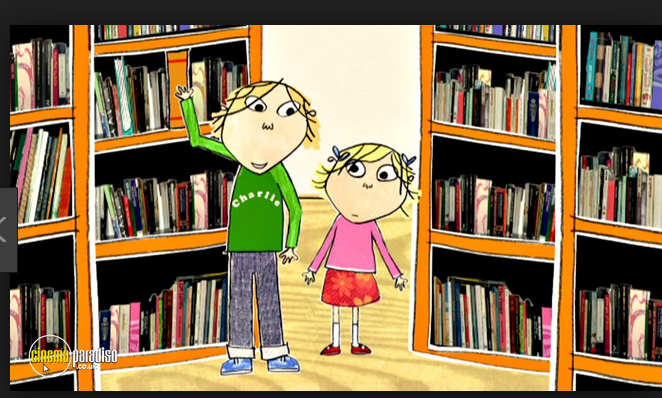
 
Charlie and Lola in the library by Lauren Child

Want to know more?

The Reading Agency Library Facts Impact report here

You can read a very good argument for libraries and why reading matters by Chris Riddell and Neil Gaiman here and in pictures


How have libraries shaped you?
 ________________________________________________________________

Natascha Biebow,
MBE, Author, Editor and Mentor
 
Natascha is the author of The Crayon Man: The True Story of the Invention of Crayola Crayons, illustrated by Steven Salerno, Elephants Never Forget and Is This My Nose?, editor of numerous award-winning children’s books, and Co-Regional Advisor (Co-Chair) of SCBWI British Isles. She received an MBE for her services to children's book writers and illustrators. She runs Blue Elephant Storyshaping, an editing, coaching and mentoring service aimed at empowering writers and illustrators to fine-tune their work pre-submission. Find her at www.nataschabiebow.com
  

Monday, 30 May 2016

Creation or Promotion? Is there time for both? by Abie Longstaff

I've been really busy with work recently. But not with writing; with events.

I love doing author events: school visits, literary festivals and bookshop readings. It gives me a buzz to meet children, hear their ideas, share stories and help them with their creative writing. But it takes its toll. It’s exhausting. There's the panic of
Will my train be on time?
Will the school’s technology be compatible with mine?
Will anyone come to the bookshop?
(see Michelle Robinson’s excellent list of other things to panic about - here)

In day-long school events I might run up to six sessions for Reception to Y6. So when I finally make it home I tend to crumple on the sofa for the rest of the evening.

There’s been a lot of talk about author events in the book world recently, including a fantastic post on author fees by Nicola Morgan, and an article in the Guardian on the budgeting pressures faced by literature festivals.

Pay is an important issue. Events are hard work and we should be compensated fairly for our time. But some events don’t pay (eg bookshop events); while others pay but not quite enough to reflect the work you put in (lit fests). Then there’s the wider question of promotion in general – hours spent (unpaid) on social media, blog posts, press articles.

As authors, how do we balance promotion and creation? How much time should we spend selling the product rather than making it?

Some authors see promotion as very much part of their role. I know a writer who does lots of free events, puts her own money and time into marketing her books and works incredibly hard on promotion. I know another writer who hates promotion – she devotes all her time to writing and, for her, the best way to sell books is simply to write more (and better) books.

There are a growing number of lit fests across the country, umpteen bookshops keen to have an author visit and oodles of book blogs to post on. A writer could spend the entire year doing shows, bookshop readings, articles and guest blogs - but every day spent doing promotion is one fewer in which we could be writing.

How do we know if the time we spend promoting is worth it? And what does ‘worth it’ even mean? There’s the financial angle: selling books, promoting your brand. There’s the enjoyment angle: connecting with children, seeing the impact of your book on the world. There’s also a doing-good factor: maybe you’ll help a child learn to love books, or help a library stay open.

A very wise person, author Liz Kessler, devised a clever 'is it worth it?' formula (her post about it is here). She’s listed the upsides and downsides of events, and devised a scoring system to weigh the pluses against the minuses.
You score the following (each has a different maximum value):
Sales (S) – out of 10
Payment (P) – out of 5
Word of mouth W) – out of 3
Time (T) – out of 10
Cost (C) – out of 3
Enjoyment (E)– out of 3
Good cause (G), ie where it’s for charity – out of 3

Then her formula goes:
(S + P + W) must be greater or equal to (T + C – E – G)

I like Liz’s formula and I often use it when considering doing an event. But of course, it’s just a guide and you have to factor in your personal preferences - for example, because I love doing events I allow myself to score the enjoyment out of a higher number than 3. And I might consider the good cause to be particularly worthy, thus worthy of being allotted more than 3 points. Also - sometimes the value of the event isn’t apparent until after it’s over. A few weeks after one of my lower-selling events I got a letter from a little girl saying how much she loved the book she had bought that day. That alone made it worthwhile.

But the scoring system is a useful guideline and I’ve never come up with a better one.

What about you?
How much of your time do you want to devote to promotion?

How do you decide which events, paid or unpaid, to give time to?


Saturday, 24 August 2013

The Wonder of Picture Books by Abie Longstaff


We all know the snuggly, cosy effect of picture books. They are designed to be shared and bonded over; adult and child leaning in together in a moment of comfort and joy.

But, as well as these snuggly qualities, did you know that picture books can promote language development, literacy and social skills? 

‘Dialogic book reading’ is a style of shared reading where the parent interacts with the child, talking about the illustrations and asking questions about the story. This kind of activity encourages the child to think beyond the story, to relate the pictures to their everyday life and to make sense of their world.

So, as parents and carers, how should we read to our children? 

  • Research suggests we should encourage the child to participate in the reading process by asking questions, even at a young age.  
From Bye Bye Baby by Janet and Allan Ahlberg
  •  Ask questions about physical things: What do you see? Where is the baby? What toys does he have?    
 
From Thumbelina by Hans Christian Anderson, Kaj Beckman and M.R. James

  •  Ask about feelings to help the child express themself: The girl looks sad, why is she sad? Are the fish going to help her?
  • Let the child ask you questions too.
  • Feed back to the child; praising them when they notice something in the story. Don’t forget the illustrations in this respect. If a child is decoding a story simply from the pictures, praise this as much as when the child reads a word in the text. 


From Princess Smartypants, by Babette Cole
  • Adapt the reading style to the child’s growing linguistic abilities. For older children picture books can be used to discuss more complicated issues: Why doesn't Princess Smartypants want to get married? Do you like this ending? Can you imagine another giant pet for her?
 
From Where the Wild Things are, by Maurice Sendak
  •   Move beyond the text and relate the story to the child’s life: Would you like a boat like that? You like costumes too! 
 
 
From Possum Magic, by Mem Fox
  •  Talk about culture: What kind of animals are these? Can you think of any other Australian animals? Would you like to live in Australia?
  
Recent research has found that even picture books with very few words can encourage language development in two-year olds. A study by Manchester University revealed that when parents share very simple books with their child, the language the parent uses contains more complex constructions than everyday speech. This helps the child learn a wider vocabulary, grammar and even enhances their maths, as one of the key predictors in children’s mathematical skill is early language experience.


But, as Monty Python would ask; other than vocab, grammar, maths, sharing, expressing emotion, cultural values, and bonding, what have picture books ever done for us? Well, if that list wasn’t enough… 

...A study found those children who are read a picture book before having blood taken feel less pain.

More information
For tips on dialogic reading, see http://www.readingrockets.org/article/400/

For information on language development and picture books, see
http://www.manchester.ac.uk/aboutus/news/display/?id=10495

For more on pain management and picture books, see
A Prospective Randomised Control Study: Reduction of Children's Pain Expectation Using a Picture Book during Blood Withdrawal Zieger B. et al (2013) Klin Padiatr; 225(03): 110-114