Showing posts with label children's picture books. Show all posts

Monday, 1 January 2024

A New Year Brings New Challenges by Chitra Soundar


 The Cambridge dictionary defines a challenge as:

something that is difficult and that tests someone's ability or determination.

And this is true. We face many challenges in our lives that tests our ability to overcome them and even tests our determination. When we give up, regardless of our abilities, we fail. 

As a new writer all those years ago, I had the determination to write picture books. More than raw talent. I’m not one of those writers who writes a perfect word in a perfect sentence making up a perfect picture book in the first setting. (Does this mythical writer exist? If so, I don’t want to meet them). 

I had determination because I loved picture books. I wanted to write them. I read hundreds of picture books and wrote hundreds of really bad stories. Perhaps I didn’t have the ability right away. But lucky for us writers, ability can be developed over a period of time, if only you had the determination to stick with it. 

I learned by reading, writing, getting feedback from course leaders and peer groups. I never gave up. I just kept writing and writing and writing and through all this I was submitting too. If one idea grabbed my interest so much that I couldn’t shake it off, I held on to that idea. I wrote it and rewrote it in different forms and shapes. I modelled my text like an artist would model their paintings of great masters. 

Until one day I got an acceptance. Not in the writing of it – but for the idea. And the editor, showed me how to cut my words, kill my darlings, and spruce up the word salad (take your pick of metaphors, I’ve got loads where this comes from) with an example of one spread. 

It was my story and it was all there in my 1000 word essay. But she cut through all of that extra verbiage and created the first spread in 10 words. I’m a quick learner. Over the weekend I converted my 1000 words picture book novel into a 100-words PB manuscript. That was my first picture book and it did well. That story had stuck with me for years. I got some amazing rejections – a very famous editor from a big publishing house in the US sent me a 2-page rejection letter (if you must know, I’ve still got it). And my faith in that story paid off. 

Illustrated by Priya Kuriyan and published by Tulika Books, India.

But the lesson from that story is – don’t give up. Get better at your craft by putting in the work. Malcolm Gladwell’s famous 10000 hours of slog. 


I’m still working at my craft, my ability to write picture books.  I’ve published 20 picture books since – in India, UK and the US and they have been translated, shortlisted and even won prizes. But I’m still determined to make my craft better. I still work on every text for months and years, share it with my peer group, keep at the ones that tug at my heart and wake me up at night. 

If writing picture books was easy, and it didn’t need determination and improving my ability, then I wouldn’t be doing it still. I would have gotten bored and gone to something else. If I hadn’t had the success I had about 6 years into my struggle, I’m not sure how much longer I would have stuck at it. Perhaps all my life, perhaps not after a decade…

But this is where the ability part comes in. Sheer determination is not enough. You have to listen and be open to new ideas, feedback, improving your craft. You have to brace yourself and share it with your peer group, send it out knowing it will be rejected, enter competitions (good ones!) and read, read, read. Compare your text with the masters and analyse why you can’t do what they do. 

If you're not sure why you feel you're getting rejected after many years of work, also be aware the market is changing, what's being published is changing every day, and the readers are changing. The world is a different place every day and the kids of today need different books for today's world. You have to adapt with it and when your craft is solid, it will have the ability to flex and help you adapt. 

So how do you improve without paying thousands for a course or even finding a critique group. Self-help will always be the first step towards improvement. Here is one of my analysis / improvement tips. It's in two parts - so try both one after the other. Don't skip the steps. 

Writing Exercise 1

Step 1: Take a really good PB you love. Choose one that’s in the genre / tone / cultural context that you’d like to write in. Make sure it's critically acclaimed and not just one of your nostalgic ones. Find critically acclaimed picture books from places like Book Trust recommendations, Guardian children's round-ups, CLPE's recommended list, reputed magazines that cover books like Books for Keeps and reputed award lists like the Yoto Carnegie, IBC and Jhalak prize. 

Step 2: Read this PB a few times. 

Step 3: Copy it out word for word (by hand or type it up – doesn’t matter). 

Step 4: This is the important step.  Now put it away and tell the same story that you just typed up in your own words. Don’t judge it yet. Just tell the same story in your original words. Put it away.

Step 5: Come back the next day and compare what you typed up with what you wrote. What is the difference? What exactly did they do that you couldn’t replicate? 

List the differences and analyse if 

(a) It’s a craft thing. Was it the sentence structure or word choice?

(b) Is it a writer’s voice – what goes into it? Why is their text more appealing.

(c) Is it their unique way of looking at the world – are their metaphors and analogies and word choices different? 

Is it one of the above or some of the above or all of the above? That’s one of the craft / ability areas you need to develop in yourself. 

But how do you do that? Here is Writing Exercise 2. This must follow the above. No shortcuts on the path to glory. 

1. Pick a topic that is adjacent or similar to the PB you copied.

2. Go through your analysis – what was missing last time. Read and remember and be conscious of your shortcomings.

3. Now write the new story in your own words – keeping in mind the things you need to improve. 

4. Put it away for a couple of days.

5. Read it again after a few days and compare it to the master! 

6. Compare it with your rewrite of the master in Exercise 1.

7. Analyse the following:

a. Are you making the same mistake?

b. Have you improved on the things you said you were lacking?

c. Is this text better than the one you wrote in Exercise 1

Repeat these two exercises with a few different acclaimed PBs you love. See if your craft is improving. See if you are finding your own style even though you’re emulating the best.

Hang on, don't run away to read and write yet. I've one more thing to add. 

So now back to the Challenge! It’s a new year and a time to surge forward with determination. Last year this time, I set a challenge to the readers of PB Denners. Read it here.

There are not that many books about “being patient” for young picture book readers. Perhaps you can learn the art of patience by writing a story about it? That’s your new year’s challenge from Picture Book Den!


Be honest, how many of you actually did it? Did you submit it? Did you get it published, tell us about it. If you didn’t do it, why not? But I’m patient. You can have a go this year if you want.

Right, but that’s not the challenge I want to set you this year. My challenge is simply 

do Exercise 1 and Exercise 2 for at least 4 books this year. That means by end of the year you will have at least 4 manuscripts that you can work on! 

C’mon! You can do it! You have the ability to improve your ability and the determination to overcome your own procrastination! 


Happy New Year to you all and hope that peace returns to Earth and picture books bring joy in times of strife and hardships.


Monday, 31 July 2023

Accidental Route into Making Picture Books by Nadia Shireen

 Nadia Shireen is an award-winning author and illustrator of picture books and chapter books. We asked Nadia about how she started out and her advice for those who are starting out now. Enjoy!


My route into becoming a picture book maker was offbeat and almost accidental. After a few years of working in magazine publishing, I started to take evening classes in illustration. This was mainly because I was constantly doodling over the sheets of paper I was supposed to be editing (distracting for all concerned.) 

Anyway, these evening classes led to me eventually undertaking a part time MA in children’s book illustration at Anglia Ruskin University in 2008. I was, to be blunt, a bit of an oddball on the course. Trying to juggle a career as a freelance journalist with no formal art training meant that I found it a bit of a struggle, and I got heroically behind with the coursework. A career in picture books wasn’t something I was even contemplating at this point.

But the course was invaluable in so many ways. For a start, thanks to the tutelage of experts and practitioners (such as Martin Salisbury, John Lawrence, Pam Smy and James Mayhew) I learnt to love picture books and appreciate how word and image can collide to create magic.

However, there were also the dreaded regular group crits, when everyone would take it in turn to nervously share their works-in-progress to the rest of the group. You could expect to: 

1) Receive tentative feedback from friendly peers    

2) Receive constructive feedback from informed tutors

3) Try not to cry

And someone would always, always cry. The many caring, generous and encouraging compliments seemed to bounce off the surface of our brains like hail on a tin roof. The criticisms? Now those guys would burrow into our souls, destined to stay there forever. 

To make things even more complicated, the next month we would maybe get a different kind of constructive feedback from a different tutor, which sometimes totally contradict the previous critique. This cause a bit of a tailspin. Whose feedback should you believe? Whose opinion could you trust?

Though it didn’t feel like it at the time, we were learning an invaluable lesson. As a picture book maker, you soon realise that the best projects are a collaborative effort. With a bit of luck, the team you are working with share the same end goal – to make the best book possible. I work closely with fantastic editors and art directors, who add immense value to every book I make.


This means that you need to learn to park your ego at the door and take critique on board. It also means you need to develop and trust your own judgement. Because inevitably down the line, people will not agree. There may be a difference of opinion over a sentence, or a page layout, or the colour of a bear’s nose. 

Now, to further expose myself as a bit of a twerp, my knee-jerk reaction to any proposed editorial or art change might be “No way! These are MY perfect words and MY beautiful pictures and nobody else is going to change them! So there.”

This is not a helpful reaction.

A wiser reaction might be to ask oneself why does something need to change… and is this particular solution the best one? If you’re able to really easily articulate exactly why something needs to be the way it is, then you’re probably right. It’s all about being able to explain the reasons behind that gut instinct. 


Yes this can sometimes be tricky, but it is a skill that can be developed and honed. And really, it’s about learning to cut through the noise of many opinions and trust your own judgement.

If, on the other hand, you can’t really drum up much of a reason as to why a particular sentence/drawing/bear nose cannot be changed, it may be a sign that you need to loosen your grip and allow things to evolve with the guidance of smart people who want to help. 

I’ve definitely felt sad about losing drawings or plot beats that I was really attached to. But pretty much every time I have done so, taking on board someone else’s feedback has resulted in a much better book. 

Everyone’s experience of making a picture book is different, of course. But in mine, any success I have had is shared with the editors and art directors I have collaborated with. 

So my advice would be to try not to be scared or discouraged by thoughtful critique. Instead try to embrace it, gently grapple with it where necessary, and high-five your ego for waiting politely outside. 


Nadia Shireen is a picture book author and illustrator. Her books include Good Little Wolf, The Bumblebear, Billy and the Beast, Barbara Throws a Wobbler and most recently, Geoffrey Gets the Jitters. 

She also writes and illustrates the Grimwood series for older children. 

Find out more at https://www.nadiashireen.org/ and follow her on Twitter (or X as some people call it now) and Instagram here.


Monday, 17 April 2023

The Flip of a Coin – Lynne Garner

In my last post I shared how I'd collaborated with a specialist proof-reader/editor to hone some of my picture book stories. And that I planned to create a list of agents and publishers to contact. I’ve managed to create that list but not taken the next step. Which was to send my stories out to those on the list. My plan didn’t quite go as planned. I became a little, well a lot, side tracked by working on another two projects. 


Project one:
In January 2022, I wanted to learn how to turn my short stories in scripts. I was lucky enough to find a wonderful mentor. With his support I’ve rewritten one of my Moon Meadow Farm stories as a short film script. My mentor suggested I should hone my new skills and repeat the process. So, I chose one of my Brer Rabbit stories and have rewritten it in script format. This script is now in its first draft and resting.
  
Whilst it’s resting, I’ve been working on my other project. 


Project two:

During the pandemic I treated myself to a guitar like instrument called a Merlin M4. In my teens and early 20’s I used to play, badly, the classical guitar. But I haven’t played an instrument since. Once out of the box I quickly realised I had a steep learning curve ahead of me. It was during this learning curve an idea formed for a non-fiction book.
 
An hour or so before writing the first draft of this blog I completed my final draft of my music related book. I’ve found a proof-reader/editor and a beta reader and plan to send my draft to them and return to… well I’m not sure what to return to. I want to find new homes for my picture books. I also want to get my second script to the point where I feel confident enough to send it to my mentor.
 
Which one to do?
 
Decision made!
 
I’m going to let fate decide and flip a coin. Heads it’ll be my picture books. Tails it will be my script. 
 
I’ll let you know in my next blog which it was. 


Monday, 10 October 2022

Getting Hands Dirty - Exploring Textures by Diane Ewen


For this week on my turn to post, I invited Diane Ewen, a rising star in children's books to talk about her creative process and how she plays with her art. Read on and have a peek into her process as Diane explains how she goes about illustrating her picture books. 

Chitra Soundar

Monday, 25 July 2022

An Interview with John Condon - Lynne Garner

I can't remember how this happened but these things do and I no longer ask why. I recently virtually met picture book writer John Condon. Now, I'm always interested in how other writers work. So, I started asking questions and this was the result of my unintended interview.

Me: Inspiration - how and when does inspiration strike you? 

John:  Gosh! Inspiration can, and has, struck at any and every moment you can imagine. I’ve come up with ideas watching TV, reading news articles, scrolling through various social media feeds, listening to music, and whilst having conversations. I’ve also come up with ideas whilst drifting off to sleep, waking up from sleep, and even DURING sleep. I’ve gotten quite good at spotting an idea, so even whilst sleeping, my unconscious mind will switch on once an idea reveals itself and I’ll wake up!

So, my top tip for all new writers is to keep a notebook and pencil, or a (charged) phone on their person, or close to hand, at ALL times. So you never lose that initial idea.

Me: How do you know when an idea will make a good picture book?

John:  It’s tricky to know which ideas will make the best picture books, but it’s usually the simplest and clearest ones. I often generate ideas that my editors tell me should be chapter books. I’m still reluctant to write one of those, so I’ve often squished a chapter book idea into a picture book format, only for it to be rejected. Understandably!

Me: I sketch out ideas on paper. How do you plan your books?

John: I’ve developed my process over the years, and I think I’ve gotten it to a place where it works for me now. In the past I’d get an idea, rush to the end (in my head) and then straight away start writing a draft, with my only intention being to get from the A to the Z that I’d already generated. Often this approach would result in a protracted journey with a frustrating conclusion. Now, I don’t rush to first draft. Instead, I generate ideas and add to them over time. I let them gestate and ruminate and slowly build them in the form of an outline. 


Once I have a page or so of information (I write in MS Word) I revaluate the idea. If it feels simple but exciting, familiar but surprising, I start to split the outline into spreads. I’ll be doing this with a few ideas at the same time. Never falling in love with any of them until one demands my attention. If all my eggs aren’t in one basket, I’ll be less inclined to make the mistake of wanting it to work and committing to it too early. If the outline breaks down across spreads seamlessly, the imagery invades my daydreams and the characters start to come alive and talk to me, that’s when I pause everything else and commit to this idea.


At that point, the process becomes a collaborative one. I ask my wonderful crit group for their thoughts, because they’re all talented storytellers, and they’ll beat it into even better shape. I’ll then carry on developing it at pace... unless they’ve told me it’s another chapter book idea.


Me: I've been asked to make a variety of changes to my picture books. What types of changes have you been asked to make?


John: For my book The Wondrous Dinosaurium, the publisher had concerns about the title and they asked me to come up with alternatives. I thought I’d nailed it with one of them (and it was used as a placeholder for a while) but we ultimately went back to the original one. Looking back, I wish we’d gone with the simpler title as people often stumble over or misremember the chosen one. 


The Wonderous Dinosaurium

For my latest book The Best Bear Tracker the publisher had the story for a year. I then received a call saying the ending wasn't working. They were very good about it and agreed for me to have a go at some alternatives. I provided them with around five or six. Thankfully they loved one of them and that’s the one you see in the published version. The previous ending was soooo different. I much prefer this one though.


The Best Bear Tracker


Me: I've worked on stories for months even years. What’s the longest you’ve worked on a story?

The Pirates are Coming
John: I sold the ideas for The Pirates Are Coming, during the Christmas of 2015 but it didn't get published until Feb 2020. I had moments of self-doubt along the way, and bombarded my poor editor with lots of versions, including one or two with an astonishing amount of alliteration. Thankfully she rejected those. She is a wonderful and patient editor and really helped me hone the story.


Me: Are you working on ideas now?


John:
I’m always working on new ideas. As they say, ‘watch this space.’


Me: Thanks John for sharing your journey. And I've made note to get myself a crit group. 

Monday, 11 July 2022

A story with a gentle voice by Yijing Li

This week, we invite debut picture book author-illustrator to talk to us about how the books she read as a child have influenced her and the type of stories she wants to tell.

Over to you, Yijing

Monday, 24 January 2022

Ask yourself a question: Why would I buy this book? By Moira Butterfield

It’s daunting, isn’t it, looking at all the picture books out there. How is it possible to get any success in such a crowded market? Well, it’s true that it IS very crowded. There’s no getting away from it. So how are you going to catch the attention of publishers and the public, assuming that you aren’t already a celebrity? 


I think the best way is to plough your own furrow with a really strong idea that you feel passionate about. Only then will you create something that people will want to buy and use with their children. It’s a good exercise to rigorously examine your concept from the point of view of an agent, editor and buyer. 


Ask yourself – How does your idea stand out from everything else already on the shelves? Why would a member of the public want to buy it, out of all the others on sale? 


Will it stand out as a strong concept? Take a look at Amazon and have a stroll around the bookshops to spot your type of book. Is your concept already out there big-time? Now it’s true you might do quite a generic concept really well – say a sentimental ‘I love you to the Moon and back’ type of book  - but the chances are it could end up looking like a lot of other books in the same vein and it might sink into the bookshop background unless you’re a big name. 


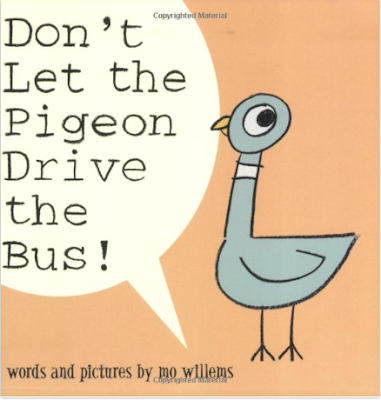
This book really stands out as unusual and looks a lot of fun. It was super-successful. 

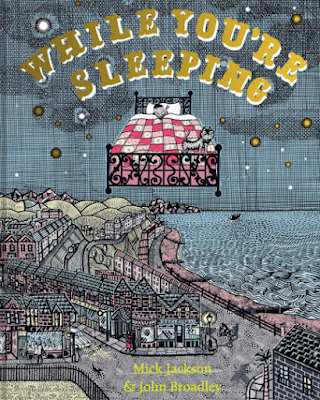
This concept is clear at first glance. It's great for bedtime. 


 Is it going to appeal to enough people? Say you want to write a book that has a strong didactic message. I’d be very careful how you did that because most parents want a safe ride and a fun read when they pick up a book, which is why they would buy trustworthy Julia Donaldson over something that looks as if it might be browbeating. You’re going to need to think about how to make your message appeal to your audience, not put them off.  


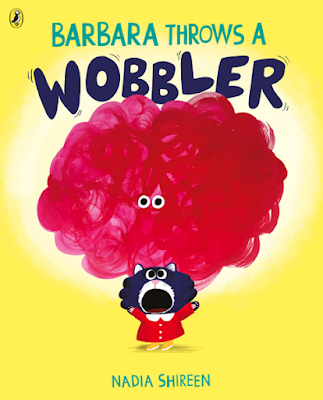
This is a great example of a 'message' topic done well. It's about telling a child to control their bad behaviour but it's handled in a really fun way that stands out. It definitely doesn't look preachy. 


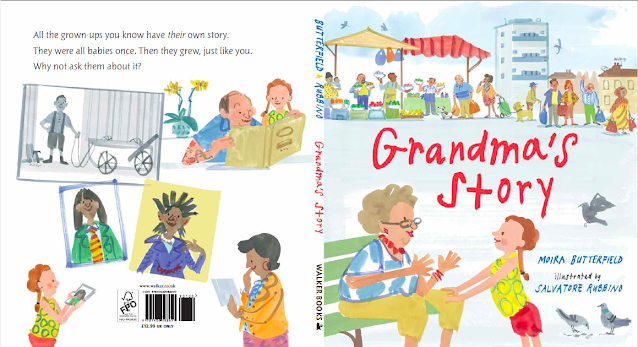
 Will people think: “This book is going to be usable by me and my kids over and over again so I’ll buy it!” BLOG KLAXON: At this point I’m going to use one of my upcoming books as an example, I hope, of a thought-through concept. It’s Grandma’s Story – illustrated by Salvatore Rubbino and published by Walker on May 5th. 


The cover 

The first spread 


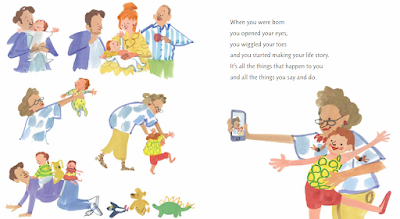
This idea came from hanging out with my great-niece alongside my elderly parents. What unbelievably different childhoods they all had! Yet by the time my great-niece would be old enough to think about asking them questions would they still be around? I’d never asked my own grandparents anything about their early lives and regretted it. Added to that my great-niece would soon go to school, where she would immediately do ‘history’. How would she even know what that was? I set about creating a picture book that would connect kids to the grown-ups around them in a practical way that would really work. The artist and I have both put some of our own family history backgrounds into the book, which I hope gives it integrity. 


So I knew this was a concept that people would really be able to benefit from. It thought it would  appeal to a lot of people and I could see there wasn't another book like it. My agent and publisher agreed and so it is about to make it onto the shelves, where I hope the public will also notice it and agree. 


 Is your concept strong enough to persuade an agent/editor to sign up your book? You should resolve that before you approach them – marshalling your reasons so you can be as confident as you can be. 


Oh, and you’ll need to write it, obviously... Good luck! 


Moira Butterfield


moira@moiraworld.co.uk
www.moirabutterfield.co.uk
twitter @moiraworld 
instagram @moirabutterfieldauthor


Monday, 3 January 2022

Welcome to 2022 by Chitra Soundar

 Welcome to 2022. We here at Picture Book Den hope you all had a wonderful Christmas even if it wasn’t as fabulous as it should have been before the pandemic hit us.

As autumn recedes and winter sets in, many communities and families in the world come together to celebrate. And most celebrations include visiting family, doing traditional rituals together and family meals. 

CC license

While these celebrations are moments of joy, days filled with good food, old stories and making new traditions, often we also get upset or angry or hurt. Families know us well, they love us a lot and therefore can hurt us a lot too. 

"Bangladeshi children wearing sari at Pohela Boishakh celebration (02)" / CC-BY-SA-4.0

Children experience heightened emotions during such gatherings. Lots of excitement with extended families, presents, more treats. But also such gatherings involve sharing their bedrooms or toys or doing things with others even if they don’t feel like it.

As a child, I’ve experienced both the highs of celebrations especially during Diwali – with fireworks and sweets and the lows of aunties telling me off or sharing my fireworks or following the lead of older cousins.

Can you spot me in the top right corner?

Extending these experiences to being a picture book writer, I’ve written about both these situations. In my picture book Shubh Diwali!, illustrated by Charlene Chua, we feature a family who is having fun during the celebrations. 


In my recent non-fiction picture book, We All Celebrate, illustrated by Jenny Bloomfield, I talk about families and loved ones across the world coming together to celebrate in many different ways. 


But as I said there is another side to all family gatherings. Things that annoy us, make us sad or angry or disappointed.  

In my new picture book Holi Hai!, illustrated by Darshika Varma, just released on 1st January 2022, I show the other side – what happens when emotions run over, tempers fly and nothing seems joyous.


Young children, especially at the picture book age, don’t have a lot of history behind them. They are discovering their emotions and their own temperament. And so, celebrations offer the perfect storm for not just joy but also tantrums, stubbornness and frustration. 

However, picture books not only offer a mirror of the behaviour – be it throwing a tantrum or being upset or even being hyper – they also offer a doorway into learning about how to deal with those emotions. 

But such doorways must not be didactic or cautionary.

The picture books must acknowledge that such emotions are normal and then offer tools to harness the negative emotion and turn into a positive force.

So, to show and not just tell, I have included a few examples here. The stories below demonstrate how to integrate a celebration with an emotion and offer a positive outlook for the young reader. 

Monday, 2 August 2021

How to Edit A Picture Book Without Cutting Trees by Chitra Soundar


A long time ago when I started writing picture books, I learnt about making dummies before I heard about storyboarding. Either way, both picture book dummies and storyboarding felt too "arty" for me, because I had no art skills. I can barely doodle, or use any craft supplies. Even today! Almost 10 years from when I started, most of my drawing skills are still basic.

But I'm from a software background and if you worked in the corporate world, you'd know that using a presentation software can make or break your career. I was well-versed in Microsoft Powerpoint even then and even more now and sometimes I stray into Keynote (on Macs) as well.

If you are like me and cannot draw and also find it extremely sad to print two lines on a sheet of paper to fold it in, to make picture book dummies, here is my guide to making them on a computer, definitely more eco-friendly.

Check if your PC has Microsoft PowerPoint. Your Mac will definitely have Keynote. You can also use Google Slides which is free.

A - Create a presentation of your story

Step 1: Start the presentation software and open a blank presentation.

Step 2: The first slide always comes up as a title slide. That’s what you need too. Enter the title of the book and the author name here. There is a huge positive boost to your self-confidence when you actually type in the title and your name as the author. {Protip: This works brilliantly in kids' workshops too}

Step 3: Insert a new slide and choose the simplest layout - a blank one.

Step 4: Repeat 11-14 times. UK picture book stories are usually told in 12 spreads. US publishers often allow up to 15 spreads.

{Protip: Have as many spreads as you want, that's the beauty of using the software. Then you can cut down, move text around to see how it lands. You can copy and save two versions - one with 12 spreads and one with 15 spreads}

{Pro Protip: If your story throughline is too thin or your idea doesn't have sufficient story weight, you won't be able to fill 12 spreads with "things that will happen." So creating 12 blank sides gives you an understanding of the work involved.}

Step 5:  Cut and paste text into each slide from your word document (if you've already typed it up) or from your notebook if you've already written it.

I usually write my first drafts on paper then transfer them into a document. And then if I can't get the story structure to work or unsure of something, I'll create a presentation and cut and paste to see how it all lays out.

{Protip: Don't start in the presentation software. Use it as an editing tool. Tell the story to yourself and then to the reader as many times as possible and then use this tool to help you plan the pacing and structure.}

So now you have a presentation, with a title slide and 12 slides after each representing a spread in your picture book.


[CAUTION! Save your presentation as often as you can!]


Step 6: View the story as a slideshow - click through it or set it on a timer. But watch it unfold.

{Protip: Use transitions that mimic page turns just for fun! }

So in the above six steps, you've created a different perspective into your picture book. It's another way similar to reading aloud.

B - Review your story

As you are clicking through your story, what should you be watching out for?

  1. You will see whether some part of the story is too slow and some of it is rushed, ie, pacing.
  2. This step will also reveal if your page-turns are working. Do you have a surprise before or after a page-turn? Is there enough anticipation before a reveal?
  3. You will see if one spread has more text while others have none. But this is sometimes deliberate while other times, it's a symptom of a pacing issue.
  4. How many clicks does it take to get to the actual story? How much scene setting are you doing?
  5. How quickly did the story end? Was there an Aaah! moment when the page turned?
  6. Now that all the 11-12 spreads have been clicked, can you think of a surprise ending at the last click? Can there be a joke, a twist, an image that will sum up the theme?
After the above things have been checked, you will have an idea of what changes you might have to do.

There are two options now:
a) Go back to your notebook, document and rewrite the story and come back to the presentation to do another edit.

b) Edit the story in the presentation and then of course you can export it later.

C - How to revise a story in your presentation software

How to figure out what to edit and how to edit it?

Descriptions: Often picture book writers put in descriptions that will not be needed when the illustrations are completed. Sometimes the descriptions are required to communicate plot and sometimes it's just a way to translate the story the writer sees in their head.

A good picture book is a marriage of text and pictures and hence it will help to see that working in your drafts as well.


<PROCRASTINATION ALERT!>

In every spread (slide) you see descriptions that are not required, a blue car, a big house etc, try and add images to the slide.

{Protip:You can cut and paste illustrations from google images and then read to see if you still need the words on the page. }

The story must still work without the adjectives and exposition. The story will finish its circuit in the reader's head. So only write those descriptions that you have to be specific about.

For example, if the car has to be red for plot purposes, then add red in the story. Otherwise just say car and let the reader imagine their own favourite colours. The illustrator can suggest their own visuals to help the reader too.

Setup: Do you need an elaborate setup for your story? Go through the presentation again and see how many clicks does it take to get to the "inciting" incident in the story? There is no right or wrong. There is no golden rule. The setup should be as long as necessary for the story.

So keep cycling through the presentation by hiding the exposition slide and see if the story still works. Doesn't work? Sure, unhide your slide. Do you realise you don't need it? Delete that slide (and the text from your story).

ORDER OF EVENTS:  As you click through the presentation, keep thinking if there is a causal effect of one slide to another. This happened and so this happened... If not, think about whether there should be. Again, there is no golden rule, there is no right or wrong. You just have to see if you need to connect the dots for the incidents and make them build upon each other.

Go to slide-sorter in your presentation and see the 30000 feet view.


Now move things around if you need to and if you can. Edit the transition sentences when you move around the slides / spreads.


PAGE-TURNS: 

Page-turns are cliff-hangers in picture book parlance. Young children (often 3-5 years of age), should want to turn the page and see what's on the next page. So often sentences are not fully finished in a spread, they reveal a surprise when you turn the page. See if there is enough anticipation in the text that motivates the reader to ask questions like

a) Who do you think?

b) What's going to happen?

c) What will it be?


Page-turns are also good devices to setup causal effect. This happened and so.... turn the page to see what happened next.

  {Protip: Hide some slides, edit the text, move around slides - see how the flow works each time by clicking through the entire presentation.}

PACING: 

Ideally by clicking through the slides you will be able to check for the following:


        1. How soon do I know who the protagonist is?
        2. How quickly will I find out what they want?
        3. How soon is something fun going to happen?
        4. How much build-up there is to the centre-spread where everything goes BOOM?
        5. How quickly did the ending come? Was it satisfactory or did I need a slow-down page for the young reader to take in what just happened?
        6. Is there a tag or a button at the end - ie, is there a funny twist or an extra aaah moment after I've turned the last spread?

{Protip:Count the slides and the clicks, move things around including text. Build the anticipation using page-turns and make sure the middle spread (say around 6/7th) has a big scene that the illustrator can have fun with. }

Monday, 24 May 2021

Making It Up As You Go Along by Paddy Donnelly

This week we invited guest author-illustrator Paddy Donnelly to talk to us about creating his new picture book The Vanishing Lake, published by Yeehoo Press.


I’m always fascinated to hear how other authors and illustrators’ put the pieces of their picture books together. There can be a variety of methods each person implements, and each process differs wildly. No matter how many interviews I listen to, or articles I read, every creator seems to follow a different path towards their goal. There is one thing they all have in common though. They made that process up, and are still making it up.

There’s no such thing as a perfect ‘process’ and no two picture book projects follow the exact same set of steps to completion. Writing and illustrating are quite unpredictable tasks - filled with floods of inspiration as well as creative droughts. Challenges appear, feedback can be surprising and you can most definitely find yourself painted into a corner. What’s important to remember is that everyone, no matter how successful they are, also experience all of these things on each project. It’s how you react to them that spurs you towards success.

When starting out in this industry, I would view people who were successful as those who’d ‘figured it out’. They’d discovered the magic formula for putting together a bestseller. However the longer I worked as an illustrator and author, the more I discovered the common truths that link everyone together. Everyone is full of doubts. Everyone has made many mistakes. Everyone has been surprised when something became a ‘hit’. And everyone has a dream story idea that nobody has picked up (yet!). It was reassuring to hear that successful authors and illustrators also took very rambling paths towards where they are today. Nobody in fact has really figured ‘it’ out. And there’s not really an ‘it’ to figure out. Realising this, and combining it with some advice from my old university lecturer - ‘Just say yes and figure it out later’, has definitely brought many enjoyable opportunities my way.

I first got into children’s publishing in 2018, and in the beginning I had no clue how all the different parts of the publishing machine worked, what publishers like to see in a portfolio, what an agent does or how to create an effective page turn. I tried to soak up as much knowledge as I could, and while there are many ‘guidelines’ to working in picture books, they are simply that - ‘guidelines’. All these ‘rules’ can be broken. There’s always a first time for everything. And you can absolutely change your way of working, or completely switch up your illustration style, or write in another genre. Nothing is set in stone.


My debut author illustrated picture book,
The Vanishing Lake, was published in April 2021 and was such an enjoyable experience. This is my eighth picture book to be published, but the first where I was gelling the two halves together.


The Vanishing Lake is about a little girl called Meara who visits her Grandad who lives by a mysterious lake which disappears and reappears for no apparent reason. She constantly asks her Grandad why it happens and each time he has a more extravagant and unbelievable reason for her. Meara doesn’t believe any of his stories about mermaids, giants or narwhals, but with a little imagination she may discover the ‘real’ reason.


The story is actually based on a real place, close to where I grew up in Ballycastle in Ireland. It’s a lake called Loughareema which actually does disappear and reappear every few days, depending on the weather!


Storytelling is a huge part of life in Ireland, so I was surrounded by myths and legends from a young age and I think that’s had a big influence on me and my work. Rough seas, rugged coastlines, islands and mountains are all things I absolutely love to illustrate. That definitely comes from growing up surrounded by stunning scenery. It’s something I’ve come to appreciate so much more after moving away.

When you grow up with a wonder like this on your doorstep, you definitely take it for granted, and I hadn’t really thought about it for years. I was brainstorming a few different story ideas and it somehow popped into my head one day. I thought the title itself was intriguing and then I set off to build a story around that. I thought the mystery of ‘why’ the lake would disappear and reappear could be interesting to drive the story, and then setting the character up to be unwilling to believe each reason, spurred me on to come up with crazier and crazier ones.


I created the little girl of Meara for kids to relate to, and then I needed a wiser character who could tell her these tales. A grandparent made the most sense here as there’s something special about the relationship between grandparent and grandchild. They’re at such different points in their lives, but there’s often a really direct connection that kids don’t have with their parents. And grandparents are often full of wild tales. Playing on that familiar situation of a child asking ‘why?’ something is the way it is, and a parent/ grandparent trying to give an explanation was something I thought both the reading parent and child could relate to.

Meara couldn’t live by the lake herself, otherwise she’d be like me and probably think it was quite normal for it to disappear and reappear. The setting had to be familiar and at the same time strange and mysterious, so that was another reason to make it a grandparent who lived by the lake.


As most picture books have a standard number of pages, I knew how much I had to work with. I laid out some super rough thumbnails, plotting in the main set pieces - introduction to the lake, having it disappear and reappear, a few spreads of Grandad’s wild tales and then a few resolution spreads.

Once I had that really rough outline, I made slightly more detailed roughs. Then I finally moved on to the words. I’d learned a little from my characters from the sketching process, so I could now start writing in their ‘voices’. For example, I knew the Grandad would be really casually telling these magical stories of giants and mermaids, brushing them off as completely normal. Of course mermaids pulled the plug out!


I wrote and rewrote, all the while keeping the visuals in mind. 

Trying not to show and tell, but have both the words and illustrations work together in harmony, as two halves of the same puzzle. 

As I wrote, that would lead me to new ideas for illustrations, and as I would work on the final illustrations, I would be tweaking the words. I bounced back and forth, back and forth all the way until the end.


This was very different to my previous book projects, where I was illustrating someone else’s story. Usually in that situation, the manuscript has already been through an editing process and comes to you fully formed. So you don’t really have an affect on the actual words as you add the illustrations. I don’t really want to mess with the author’s words either, and I find that process really fascinating too. You get a huge flood of images in your head as soon as you read through a really well-formed piece of writing, and the best manuscripts already get me sketching after the first read.

I wanted to have the natural world shine through in the artwork, using a lot of vibrant colour schemes. I would take a lot of inspiration from the Irish landscape, but also with a little bit of fantasy world built in. The mix between imaginary worlds and the real world is a key element in this story, however it’s very difficult to see where one begins and one ends. 

The lines are blurred, and I left plenty of space for the child reading it to decide what’s real and what’s not.

Maybe you’ll be able to pull some interesting insights out of how I worked on this picture book. Some things might work for you, some things totally won’t. Take bits and pieces from it, try it backwards, take a sledgehammer to it! Remember though, that this was my path for this one particular book, and I can already see that it’s not the same for my second author illustrated picture book. This next one is an entirely different kind of story and is presenting both new challenges and firsts for me as an author and illustrator. All really exciting though!

‘Process’ is, and should be, a constantly evolving thing as you grow as an author or illustrator. 

Take comfort in the fast that everyone else is making it up as they go too. Don’t be afraid to get messy in your process. Try out something wild, new and scary and see what happens!

What does your current ‘process’ look like? Do you visualise images first when you’re writing a story? Do the characters already have a voice and you feel like you’re just writing down what they say. Do you have no idea what your characters will look like until the illustrator sends the first artwork? Or if you both write and illustrate, how does one fit with the other? 

Watch trailer of the book here!


Watch Paddy's short interview here. 


Paddy Donnelly is an Irish illustrator and author of picture books, and also creates middle grade book covers. He wishes Pluto was still a planet. Follow him on Twitter @paddydonnelly and on Instagram at  @paddy