Showing posts with label Cadbury. Show all posts

Tuesday, 19 October 2021

The best defined single tip I’ve heard about writing narrative nonfiction: Candace Fleming and her VITAL IDEA by Juliet Clare Bell

We are all too aware of the many disadvantages and often grave difficulties faced in a long-term pandemic. Today I'd like highlight a positive thing for writers, particularly those who may not yet be published and who are really trying to hone their craft. With so much having been moved online, over here in the UK we have had the chance to attend lots of US webinars about the craft of picture books that we’d never normally get the chance to (as they’d have previously happened in person). Given that narrative nonfiction is so much bigger in the States than it is here (and that many UK writers write with US publishers in mind as a result), nonfiction webinars have been particularly useful.

 I’ve taught writing classes and been part of a writing panel on narrative nonfiction, and I’ve written three nonfiction books, all commissioned but for different markets:


Two Brothers and a Chocolate Factory: The Remarkable Story of Richard and George Cadbury (illustrated by Jess Mikhail, BVT; Junko Tabei: One Step at a Time (illustrated by Evelt Janais) and Do Bees Dance (illustrated by Adam Linley)


And I’ve written several blogposts for the picture book denabout narrative nonfiction. I’ve got loads of narrative nonfiction picture books which have been really useful for research and for comparison.


                                A small selection of my narrative nonfiction book collection

It’s something I’m really interested in, and especially so at the moment when I’m editing my latest narrative nonfiction picture book which I was thinking and researching about for a long time before I actually started writing it.

Well, there was. Many nonfiction writers might be familiar with this concept -and I’ve worked at doing this myself but I’ve never known it as well explained as Candace’s explanation. I can’t talk you through the whole webinar as it is hers -and anyone who’s interested in writing nonfiction, whether you’re already published in the genre or not, I’d highly recommend attending any sessions she does, but she’s blogged about this idea herself, so I can highlight the principle behind the general idea:


                                     Giant Squid by Candace Fleming and Eric Rohmann


Candace Fleming’s

VITAL IDEA

for nonfiction.


Candace breaks it down into your TOPIC and your VITAL IDEA


When you set out to write a nonfiction book, you usually have the general topic in mind, and often you will start your research around the topic without yet knowing the angle you’re going to take. For example, with our book Two Brothers and a Chocolate Factory: The Remarkable Story of Richard and George Cadbury (illustrated by Jess Mikhail)


 the broad topic was given to us. We were commissioned by Bournville Village Trust to write a children’s book on some aspect of the Cadbury family. That was all. So I set to work looking at the extraordinary archives attached to the factory in Bournville, UK, and at Birmingham Central Library, and I started reading books on the entire Cadbury family… There were many interesting stories to be told but after a good deal of research I found something that spoke to me more than all of the fascinating things I was reading. It was the story of Richard and George Cadbury and the creation of the chocolate factory and later, Bournville Village. So that was the TOPIC.

The story itself was fascinating but what really hooked me was looking into the personal archives and reading about why they wanted to do what they did: Richard and George were keenly aware of their good fortune and worked tirelessly -in many ways- towards sharing their good fortune with others. And this was my VITAL IDEA.

When I wrote the book, I didn’t know about the term VITAL IDEA but it’s really interesting to look back over the book and identify what Candace talks about. Once you’ve chosen your vital idea -and there can only be ONE in a picture book, then the rest of your research can be honed. This VITAL IDEA will be the heart of your story, and information you have -however interesting- that does not speak to the vital idea does not belong in that story. It can feel very harsh (but hey, you can put it in the back matter). Anyone who’s done a lot of research for a book knows there are so many things that would engage your reader, but your job is telling the story of your VITAL IDEA. It’s why you can have so many picture books on the same topic and they are all so different.

And this is what I love about narrative nonfiction: the vital idea for the story is really personal to the author. As Candace states, you need to think (once you know enough about your topic)

what is it that I -rather than anyone else- have to say about this topic to the child reader?

This concept (without using the term vital idea) is really interestingly discussed throughout the book Narrative Nonfiction Writers Dig Deep -where authors tell the personal stories behind why they chose their topics and the particular angle of the story:


                                   Nonfiction Writers Dig Deep (edited by Melissa Stewart)

For me, when it came to the Cadbury story, I had grown up with the Quaker philosophy (my dad and his Irish family for generations had been Quakers) and although I’m not a Quaker, I went to Quaker Meeting regularly for a while as a child and have always liked a lot of their philosophy. Our local Amnesty International and CND groups where I grew up were dominated by Quakers -they were actively involved in trying to make the world a better place to live. And the more I read of George Cadbury’s writings on responsibility and society, the more I felt that their story was highly relevant to our current climate. I would find quotes from him, almost one hundred years old, that felt like they could have just been written. The Quaker philosophy was never going to take up a big part of the book (it was only referred to specifically in one sentence of the story) but I appreciated how it underpinned so much of what they felt and how they lived their lives. And we (Jess, the illustrator, and I) both lived within three or four miles of Bournville and the Cadbury factory. All these reasons came together to form the vital idea -the story that only I could tell in that particular way because of my engagement with the subject.


So there is only one vital idea and that has to be honoured throughout the story. And this will affect the mood and the language used. As Candace says, when you know your vital idea, you hone your language accordingly and this is what makes the language ‘soar’, which editors are always so keen to see.

Even though I’d pretty much applied this to the Cadbury book (and to the Junko Tabei book) without having used the terminology of vital idea, I applied it to my editing for my current book, which took a lot of research before I realised what I wanted at the heart of the story.


                                                    Lots of notes for my current manuscript

 I can’t write it about here as the book is not out yet (nor even yet sold) but articulating the vital idea to myself, writing it down and honing it until it was really precise, meant that I was able to edit more effectively and ruthlessly, even killing my darlings -things I really wanted to share with the reader but weren’t important enough to my vital idea (but all is not lost: I get to sneak them into the back matter!) And I’ve been able to adapt the language slightly to help bring out that vital idea…

For anyone who is interested, I’d recommend checking out the Writing Barn webinars and all the SCBWI online events. Some of the digital SCBWI events are free to SCBWI members but the regional ones (like Candace’s one) have a small fee.


Do you have any brilliant tips for nonfiction writing? Have you applied the vital idea principle to your manuscript? I’d love to hear any thoughts or suggestions in the comments below. Thank you.

Juliet Clare Bell (always called Clare) is a children’s author of more than thirty books -but who will always love learning new perspectives on writing and thinking from fellow authors. www.julietclarebell.com


Sunday, 23 March 2014

Turning Black and White into Colour: Creative Nonfiction Picture Books ... and Chocolate by Juliet Clare Bell

George Cadbury aged about 20 (c) Cadbury Archive.

I’ve fallen in love, and I’m having a whirlwind romance with [cue page turn]...

Creative nonfiction picture books.

Creative nonfiction picture books are simply picture books where the story happens to be true. Sounds really simple but it took me a while to work out that’s what I wanted to do...

I’d thought about writing non-fiction for younger children before. But the passion wasn’t there. I love picture books. I love the way the words and pictures are so much more together than they are separately. I love the drama that can be created in such a short space. I love the form and the constraints.

There was plenty of really interesting information in the nonfiction books I was looking at...

Save The Orangutan (c) Sarah Eason, Powerkids Press.

They all felt very educational –which isn’t a criticism at all. I love learning and I was enjoying reading them but they didn't make me want to write them (like good picture books do). So I shelved the idea of writing nonfiction until something that really grabbed me turned up. Then one day ... [cue page turn]

Something that really grabbed me turned up.

An illustrator friend, Jess Mikhail, and I were both approached by Bournville Village Trust, in Birmingham, UK. Would we consider writing and illustrating a picture book together about Bournville? This is where the Cadbury brothers built their famous chocolate factory in the late nineteenth century, followed by a model village, created for the benefit of the factory workers, wider community and society. The story is fascinating. It’s passionate, political, philosophical, ground-breaking with an extraordinary family at its heart. And of course, there’s chocolate. Lots of chocolate. Would we consider creating this picture book?

(That's meant to be an excited me, pretending to have to ponder on the question that actually has an obvious answer. Didn't quite turn out that way...)

[cue the page turn where everyone knows the answer and can shout it out loudly together:]

YES!

Unusually, because this has been commissioned by BVT rather than a traditional publisher, we get to choose the angle and approach for the book and the design. At first, I thought we’d go down the route of fun historical book with lots of interesting facts and a mix of illustration, photos, letters etc.. There are some really interesting and fun books like that that we looked at:

I've read Mandy Ross's Children's History of Birmingham over and over and it's great.
(c) Mandy Ross, Hometown World.

...and we've really enjoyed the Avoid... books.
Avoid Being a Second World War Evacuee by Simon Smith, David Salariya and David Antram, Bookhouse.

I originally thought that our book might end up somewhat similar in format to these books.

But without thinking too much more about the structure, or indeed trying to impose in advance which story I’d try and tell, I got on with the research...


...and what an exciting area to research.
(My walk up to the entrance, where the amazing archives are located.)

I immersed myself in the world of the Cadburys and chocolate.

I’ve had amazing access to the archives and I’ve interviewed some fascinating people in their eighties and nineties, who used to work in the factory and whose families worked there well before. I’ve toured the Bournville Village Estate

(Old photos of Bournville Village Trust. Copyright BVT)

and watched footage that’s over one hundred years old.


I’ve read letters and handwritten personal reminiscences about the 1880s

(c) Cadbury Archive
(c) Cadbury Archive
Recognise this signature and what it became? (c) Cadbury Archive

and I’ve got access to incredible photos...

But back to the structure –and creative nonfiction...

After a while of playing around with different ideas, Jess and I decided we’d like for it to be a real picture book, telling a real story. I got loads of nonfiction picture books out of the library. Some of them were full of fascinating facts and were really well written. But I didn’t find any beautiful ones that were telling a story. So I asked at the library if there were any they thought were really unusual, arresting, beautiful. The librarian came up with one that she felt was in a completely different league from the others. But we couldn’t find a copy anywhere. I kept asking what made it so special and she said, “you’ll know when you see it”. I reserved it but in the meantime, I couldn’t resist and I bought it, too.

Can We Save The Tiger? by Martin Jenkins and Vicky White is indeed a beautiful book, which unusually for a nonfiction book, was shortlisted for the Kate Greenaway Award in 2012.
(c) Martin Jenkins and Vicky White, Walker Books

But I couldn’t find any others –except one story we had at home that was first out in 1999:

This beautiful book, Stone Girl, Bone Girl is about Mary Anning, the girl who inspired the popular children's tongue-twister She Sells Sea Shells on the Sea Shore (c)Laurence Anholt and Sheila Moxley, Frances Lincoln Books).
(c) Laurence Anholt and Sheila Moxley (Frances Lincoln Books)

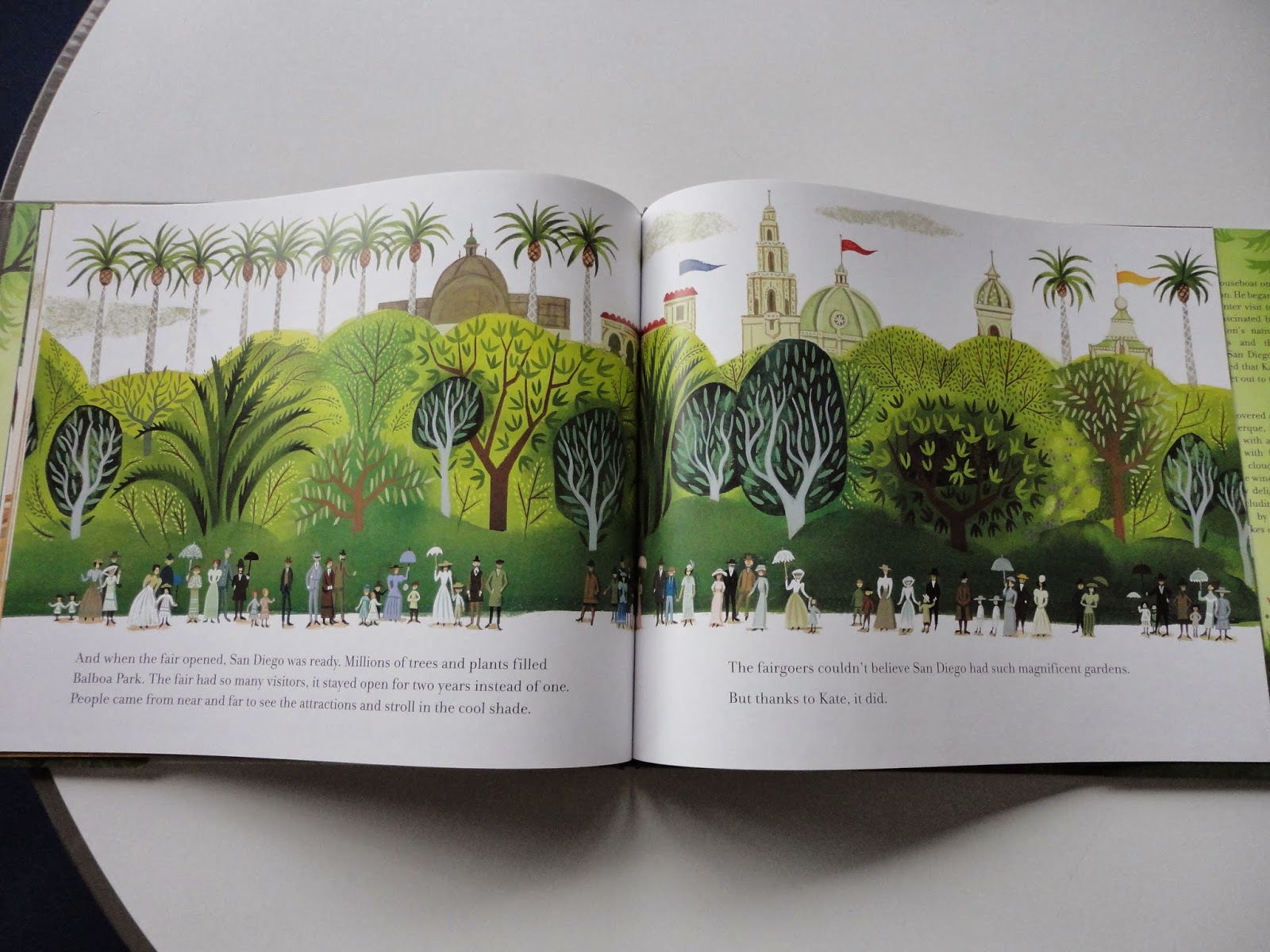
And then someone from my fantastic online critique group (most of whom are American) posted up about WOW Nonficpic, an online nonfiction picture book forum and about an online course that was coming up, run by nonfiction picture book author, Kristin Fulton, which some of us might be interested in. And I feel like I entered into a new world of creative nonfiction that is much more common in the US than here in the UK. There was lots of talk about different, beautiful creative nonfiction picture books and my wish-list grew and grew...

I decided to do the four-week online course, where I was introduced to yet more beautiful creative nonfiction picture books.

The beautiful, simple creative nonfiction picture book, Me...Jane about the childhood of Jane Goodall (c) Patrick McDonnell, Little, Brown.

(c) Patrick McDonnell, Little, Brown.

Balloons Over Broadway (c) Melissa Sweet, Houghton Mifflin

from Balloons Over Broadway (c) Melissa Sweet, Houghton Mifflin
Tree Lady by H Joseph Hopkins, Beach Lane Books.

Tree Lady by H Joseph Hopkins, Beach Lane Books.

A Splash of Red (c) Jen Bryant and Melissa Sweet, Knopf

From A Splash of Red (c) Jen Bryant and Melissa Sweet, Knopf

Henry's Freedom Box (c) Ellen Levine and Kadir Nelson, Scholastic Press

Locomotive (c) Brian Floca, Simon and Schuster.

I wanted to be immersed in a world of books that was new to me (and which there was little access to in the UK) and to be surrounded (virtually) by other people who were passionate about the form of creative nonfiction in the way that I’m so often surrounded by those writers who are passionate about picture books. The course was extremely good (I’d very seriously recommend it to anyone writing or interested in writing nonfiction picture books)–and timely for me. I’ve learned lots, and have now got hold of a pile of books that I can use for inspiration (about completely different subjects). I’d already fallen in love with the research and the story for our book, but now I’d fallen in love with the form of book, too.

About four months after I’d starting researching the book, I decided which story I wanted to tell (the history is so fascinating I could have told lots). I spent weeks working on a picture book structure and testing it out with other writers.


And I presented it to all the relevant people in Bournville earlier this week and it got the big thumbs up.

Creative nonfiction is very much like a fiction picture book. It’s about the story and the way you tell it; the use of page turns and the highs and lows. The expectation and surprise and like all good picture books, it needs to stand up to being read again and again. And the illustrations must be lovely, as with all good picture books.

The very beautiful The Journey Home by Fran Preston-Gannon, Pavilion Books. It's not quite creative nonfiction (it's a made up story about endangered species) but it's beautiful and inspirational.

(c) Fran Preston-Gannon, Pavilion Books.

I’m so excited.
First, by the story –of two innovative young Quaker brothers...
Richard Cadbury in later years (c) Cadbury Archive
George Cadbury as an older man (c) Cadbury Archive

who did something remarkable. The death of their beloved mother had left their father, John Cadbury,

John Cadbury (c) Cadbury Archive

a broken man and his cocoa factory and business was failing badly. With great integrity, humanity, sacrifice and an extraordinary vision, they took on the business, and turned it round to become incredibly successful throughout the world, whilst at the same time working to create much better working conditions,

Bournville, the 'factory in a garden' 1879 (c) Cadbury Archive

The girls' dining room (c) Cadbury Archive

living conditions

from this...
Birmingham slums (c) Cadbury Archive
to this...

(c) Cadbury Archive

circa 1905 (c) Cadbury Archive

Bournville Green (c) Cadbury Archive

Early cottages built for the new model village (1905) (c) Cadbury Archive

Early housing (c) Cadbury Archive

Almshouses for former factory workers, built by Richard Cadbury (c) Cadbury Archive


First Bournville cottages, 1880 (c) Cadbury Archive

and spiritual and physical conditions for many thousands of people.


Early shot of girls at the factory (c) Cadbury Archive

Bournville Friends Meeting House (c) Cadbury Archive

(c) Cadbury Archives

Friends Hall 1901 (c) Cadbury Archive

Girls' Physical Training Den, 1902 (c) Cadbury Archive


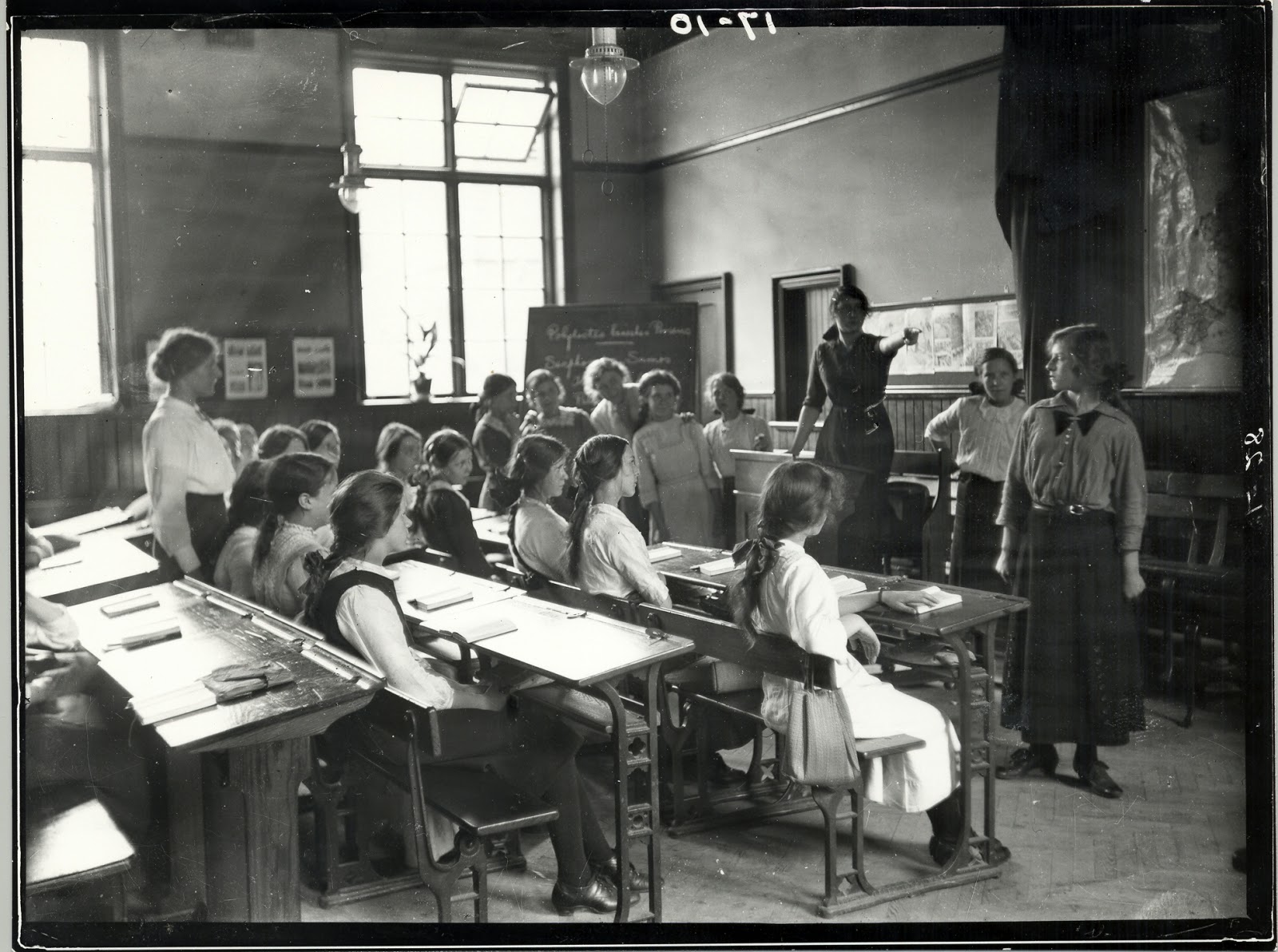
Camp school (or 'school on a barge') 1919 (c) Cadbury Archive


Day continuation school (c) Cadbury Archive

(c) Cadbury Archive

Girls' gymnastics, 1912 (c) Cadbury Archive

Swimming lessons, provided free during work time, 1910/1911 (c) Cadbury Archive

But I’m also really excited about having discovered creative nonfiction. I’ve got several other creative nonfiction books I’d really like to write after this one. I think that this love affair will go far...

I’ve spent so much of my time up at the factory archives, breathing in the sumptuous smell of chocolate as I get off the number 27 bus, I know I’m going to feel quite bereft when it’s over. It’s been like a dream job and I don’t want it to end.

But it’s time to get down to the actual writing now, bringing colour to the black and white, having made piles of notes over the past few months. The first really really rough draft will only take a couple of days to write as I know the story so well and I’ve got my structure sorted. Then I’ll spend the next couple of months playing with the language, fleshing it out and editing it.
OK, we're not quite (?!) there yet, but we will be... once I've finished the text and Jess has illustrated it...

As the wonderful David Almond said at a talk I went to last year:

“Make it lovely.”

And that’s what we plan to do.

What are your thoughts on creative nonfiction? Why are there so many more beautiful creative nonfiction picture books in the US than in the UK? Do UK publishers not feel there is a market for them? Are they there and I’m missing them? Or is there going to be the same explosion of these books in the UK in the coming years? I really hope so. Jess Mikhail and I are in an unusual position of being able to create what we most want to create, knowing that it will be produced and published (in conjunction with BVT), but it would be fantastic to see lots more on the shelves in schools, libraries and bookshops...

www.julietclarebell.com