Showing posts with label Klaus Flugge. Show all posts

Monday, 11 April 2022

A Farewell to the Picture Book Greats: David McKee - by Garry Parsons

 With the recent passing of David McKee it felt only right to pay a personal tribute to a remarkable picture book creator.


McKee's most famous story, Elmer, with his colourful iconic patchwork was first published in 1968 by Dobson Publishing and then re-released in 1989 by Andersen Press under the helm of Klaus Flugge and has since become a household name. McKee wrote and illustrated 29 Elmer books sparking a whole range of board books, toys and clothing.  
Flugge and McKee became firm friends. 'His was a singular voice and a shining light in children's books that highlighted inclusivity, diversity and parts of our world that are not always present in publishing for children.' 
McKee enjoyed drawing on letters to his friends and would often correspond with Flugge decorating the envelope as well. Flugge would pin these to the wall in his office at Andersen Press where other illustrators who were visiting would see them. Satoshi Kitamura, Tony Ross, Posy Simmons and Axel Scheffler, to name a few, began sending decorated letters and both Flugge and McKee's collections grew.


Satoshi Kitamura has compiled a collection of decorated envelopes which includes many of McKee's drawings to Flugge in "Efuto" published by Foil. 
Envelopes decorated in this way are known as 'efuto' in Japan which translates simply as 'picture envelope'
 
Working with King Rollo Films, McKee co-created iconic animated programmes for the BBC including Mr Benn, about the eponymous explorer who through a magic costume shop went on a series of fantastical adventures.

' I wanted Mr Benn to be Mr Everybody. Bowler hats were more common in the early 1970s. There was a respectability to them, plus Charlie Chaplin and Laurel and Hardy are favourites of mine. Mr Benn went off on adventures according to whatever costume he tried on. I was heavily influenced by fables, because of their apparent simplicity. I like stories with a moral, that have a reason for being there – I don’t like a character to wake up and realise it was all a dream. That’s why I introduced the souvenir that Mr Benn always takes back with him, to say that it really did happen.'


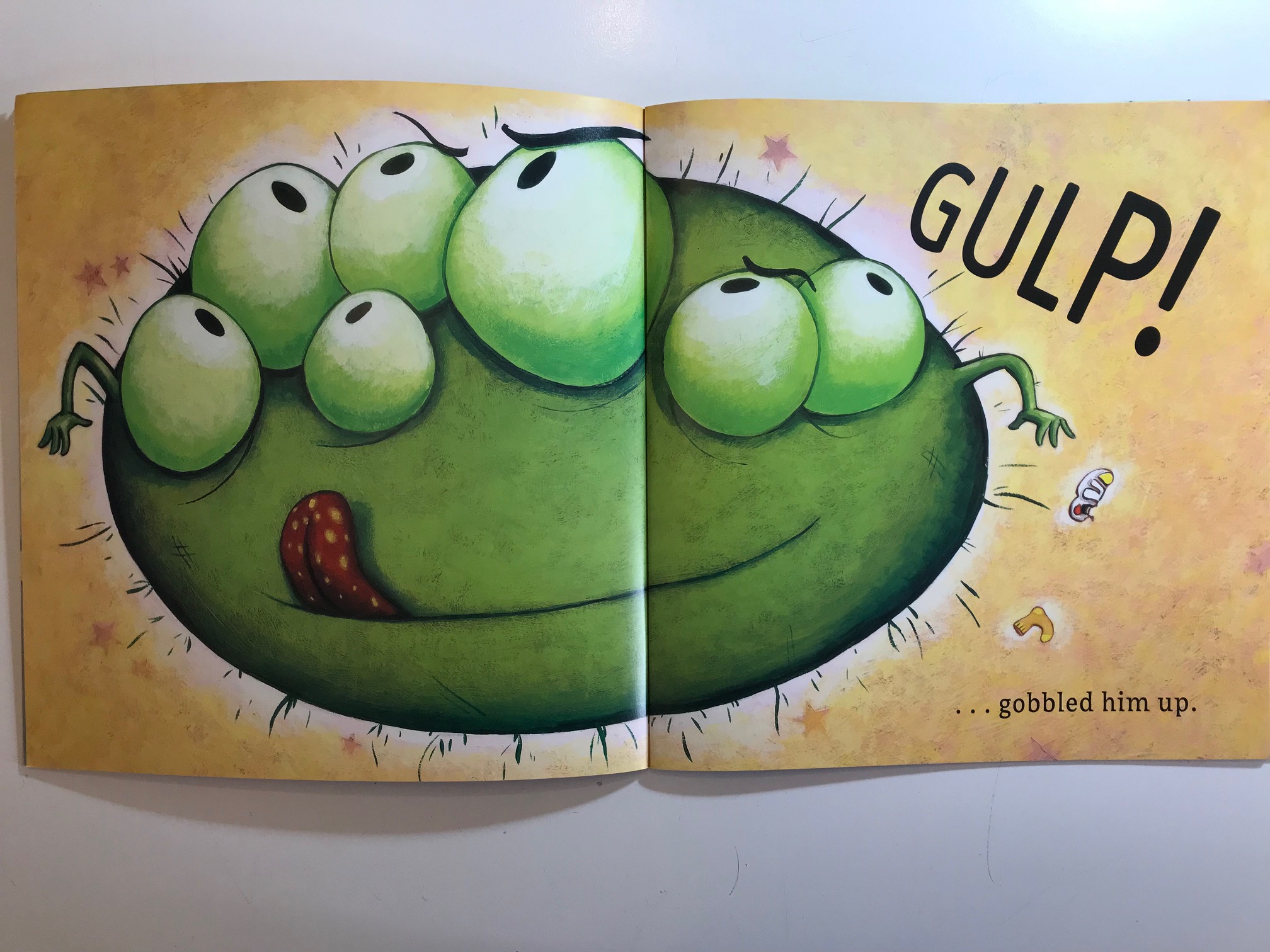
Not Now Bernard was first published in 1980 and has never been out of print. Controversial on it's first publication and banned by some libraries for being violent, Not Now Bernard has become a classic. I remember being shocked and thrilled reading this for first time. The illustration showing the monster holding up all that is left of Bernard was a dark delight and a symbol I included in my own illustration of a boy who is swallowed by his 'Green Eyed Monster' in G.E.M by Jane Clarke. All that remains is a shoe!


But the picture book that epitomises David McKee's flair and brilliance for me is Two Can Toucan.


Two Can Toucan was McKee's first picture book published in 1964 by Flugge whilst he worked at Abelard-Schuman. It was then re-illustrated and re-published in 1985 by Andersen Press.
Back in it's original form it was republished again to celebrate the 40th anniversary of Andersen Press. 

My copy is a little tired and worn but for good reason. Toucan's journey starts in the jungle with all the other creatures but heads to the town to seek his fortune. 

McKee's wonderful illustration of the jungle is a page I return to often.


In town he searches for a job he is good at and tries out a few empolyment opportunities. This comical scene of the dull office commute includes everyone wearing Mr Benn's characteristic bowler hat. 


He finally he discovers he is good at carrying things, cans of paint in particular.


I asked Picture Den members, Moira Butterfield and Pippa Goodhart for their insights and enjoyments of David McKee's work.
'I love the artwork and the child-friendly tone of David McKee. I recently worked on an Elmer book commentary for children with sight conditions, and that involved me looking very closely at the illustrations to describe their effect. The Elmer backgrounds are so rich and full of life. I’d say joyous. And his writing was absolutely pitched from a child’s point of view. No patronising. No trying to ram in some parental moral treatise. Just looking at life at the shoulder of a child.'   Moira Butterfield
When I had just started as a young bookseller in Heffers Children’s Bookshop in 1982, David McKee was the first famous author/illustrator I met. He launched his ‘I Hate My Teddy Bear’ picture book in the shop, and of course I bought a copy and he signed it.   Pippa GoodHart


'I worked with a friend in Heffers Children’s Bookshop who was lucky enough to get to keep all the originals of the shop's catalogue covers. Heffers were good at wining and dining people and asking for favours! 


The spirit of David McKee's work will, without doubt, live on to inspire and delight many more generations of children to come.
                                                             David McKee 1935 - 2022.
 
                                                                                  ***
 
Garry Parsons is an illustrator of children's books. His work can be seen here
Follow Garry on twitter and instagram @icandrawdinos


Friday, 18 May 2012

Do Picture Book Writers need Good Memories? by Malachy Doyle


At the age of 56 or 57 or whatever the heck I am these days, I might not remember where I put that damn cheque book, or car keys, or letter from the tax man. But the first ten years of my life? I remember every square foot of the house I grew up in. I remember how it felt, how it smelt, how it sounded. I remember those days with an incredible vividness, and it’s those memories, those emotions, those days of joy and discovery, that every picture book I ever write draws upon.

I’m lucky. The house I grew up in

is still there. (That's me on the bottom right by the way, aged about 6, by the garden gate.) It’s called Kiltermon, a big old house in the quiet little seaside town of Whitehead, at the mouth of Belfast Lough, where I still go regularly. The house isn’t in the family any more, but early in my writing career I put together a photographic collage of my childhood, on the wall above my desk, to help me connect with my 3/4/5/6 year old self.

After a visit in 1995, the year after I’d taken up this writing lark, I found myself writing a poem that drew on my earliest memory – sitting on my mother’s knee, after my father had left for work, and all six of my older brothers and sisters had headed off to school. Ah, the peace and quiet! Ah, the chance to have my lovely Mammy to myself at last!

It's quiet in the morning.

There's no one else around.

I lie in bed and listen...

Not a single sound.

It's cold out on the landing,

peeping round the doors.

My Mummy's smiling back at me.

My Daddy only snores.

I clamber up his tummy

and I wiggle down the bed.

We're a cosy snuggle sandwich.

I'm the jam and they're the bread...

I sent it to Walker Books, who said they liked it, ‘but it’s a second book’. I sent it to Transworld, who liked the language, the tone and the verse, but found ‘the storyline underdeveloped’. I rewrote it with a lost teddy, but they still weren’t convinced.

I sent it to the agent Celia Catchpole, who said she loved it and wanted to represent me! Result! It went off to a load more publishers then, but without success. (Celia did manage to sell twelve other stories of mine in the next ten months, though, so I was up and running, for sure.)

In late 1996, I went on a week-long Writing for Children course at Ty Newydd. The tutors were Valerie Bloom and Kevin Crossley-Holland. I showed Valerie Quiet in the Morning and she really liked it and suggested a number of amendments, which I gratefully incorporated.

By the following spring, though, Celia was telling me that the market for rhyming picture books wasn’t great, and that we seemed to have come to the end of the line with this particular idea.

In 1999, however, Simon and Schuster got hold of it. They came ever so close to giving me a contract, but again, it didn’t work out.

And so the story disappeared, resurfacing every few years for some spit and polish, but never being seriously considered for another push.

Then, in 2010, I pulled it out, gave it a complete overhaul, and wrote to my agent.

Dear Celia, another one that I think it's a real shame we never managed to sell is Quiet in the Morning… I know this one's had its run over the years, but we've had a fair bit of success, you and I, selling older ones...

The ending at this point was:

It’s cosy in the armchair,

now my teddy’s back again.

The morning rush is over.

My favourite time is when…


It’s quiet in the morning –

with no one else around.

Me and Mummy in the kitchen.

Not another sound.

Celia showed it to an editor from Dial US, who ‘loved the idea of a snuggle sandwich’ and thought it would make a great title. They felt the narrative voice ‘didn’t quite ring true,’ wanted more tension, and wanted the whole thing to come full circle at the end, ‘perhaps with Ted in a snuggle sandwich between baby and mum.’

Never one to ignore good advice, that’s what I did, changing it from first to third person and adding a new punch line in the American editor’s honour. So now the ending was:

It’s quiet in the morning,

now Teddy’s back again.

The morning rush is over.

Annie's favourite time is when...


There’s only her and Momma.

No more fuss and clutter.

Now THEY’RE the snuggle sandwich,

And TED's the peanut butter!

Much better, though I say it myself!

Dial didn’t take it, but Celia's like me - she doesn't give up easily. She made some text suggestions herself - she’s a brilliant editor – and agreed to give it one more go.

Me: It'd be absolutely delightful to sell this at last. I wrote it in 1995!

Celia: And everyone saw it in 1996-7! I still have my offer card with the list. However, I do think this version is much stronger and lots of new editors have arrived since then so I will take it with me to meetings here and do my best to sell it.

Penguin UK nearly took it. ‘A Snuggle Sandwich! That’s what I do with my son!’ said the editor, but couldn’t get it past her boss.

Then, two months later, a student I’d tutored on an Arvon course - I’d gone from poacher to gamekeeper by now - sold a story (one I'd helped her with) to Andersen Press, who'd published my first picture book, The Great Castle of Marshmangle, and later Hungry! Hungry! Hungry! I've a real soft spot for Andersen and for Klaus Flugge, their charismatic top dog - they only publish books they truly believe in; they're unusually speedy in terms of making decisions, drawing up contracts and, all importantly, paying; they're very good at selling foreign rights; they keep books in print for as long as they possibly can...

So, though I hadn't worked with them for some time, I wrote:

Dear Klaus, I hope you're keeping well. Anthea Simmons sent me a copy of her lovely debut Share!, with its fulsome dedication to me. It's a delightful book and I hope it does really well for both you and her. It made me think about you for a picture book idea of mine called Snuggle Sandwich, which I attach… It would be lovely to work with you again.

I sent it, along with a new story, not mentioning of course that they’d already turned down Snuggle Sandwich fourteen years before!

Klaus got back the next day: Dear Malachy, Thanks for sending us your two stories. I love the first and hope we can do something with it (perhaps making baby a bit older??) Kind regards, Klaus

He wanted The Snuggle Sandwich! RESULT! I said yes yes yes, and two days later got the delightful one-liner:

OK, Malachy, let's do another book together (if we can afford you!) K.

Some more very helpful text suggestions from their editor, Rona Selby, and then they asked if I’d any illustrators in mind. I suggested Gwen Millward, as I’d loved The Bog Baby, which she’d done with one of their authors, Jeanne Willis. Gwen said she’d be delighted to take it on, and hasn’t she done a wonderful job!


And so, in a couple of weeks time, The Snuggle Sandwich will be published. It’s been a long long road, with input from many many people, but hopefully it still feels as fresh as a first draft, only better. And as true as a three-year-old Malachy.

A three-year-old Malachy with a long long memory.