Showing posts with label Elmer. Show all posts

Monday, 11 April 2022

A Farewell to the Picture Book Greats: David McKee - by Garry Parsons

 With the recent passing of David McKee it felt only right to pay a personal tribute to a remarkable picture book creator.


McKee's most famous story, Elmer, with his colourful iconic patchwork was first published in 1968 by Dobson Publishing and then re-released in 1989 by Andersen Press under the helm of Klaus Flugge and has since become a household name. McKee wrote and illustrated 29 Elmer books sparking a whole range of board books, toys and clothing.  
Flugge and McKee became firm friends. 'His was a singular voice and a shining light in children's books that highlighted inclusivity, diversity and parts of our world that are not always present in publishing for children.' 
McKee enjoyed drawing on letters to his friends and would often correspond with Flugge decorating the envelope as well. Flugge would pin these to the wall in his office at Andersen Press where other illustrators who were visiting would see them. Satoshi Kitamura, Tony Ross, Posy Simmons and Axel Scheffler, to name a few, began sending decorated letters and both Flugge and McKee's collections grew.


Satoshi Kitamura has compiled a collection of decorated envelopes which includes many of McKee's drawings to Flugge in "Efuto" published by Foil. 
Envelopes decorated in this way are known as 'efuto' in Japan which translates simply as 'picture envelope'
 
Working with King Rollo Films, McKee co-created iconic animated programmes for the BBC including Mr Benn, about the eponymous explorer who through a magic costume shop went on a series of fantastical adventures.

' I wanted Mr Benn to be Mr Everybody. Bowler hats were more common in the early 1970s. There was a respectability to them, plus Charlie Chaplin and Laurel and Hardy are favourites of mine. Mr Benn went off on adventures according to whatever costume he tried on. I was heavily influenced by fables, because of their apparent simplicity. I like stories with a moral, that have a reason for being there – I don’t like a character to wake up and realise it was all a dream. That’s why I introduced the souvenir that Mr Benn always takes back with him, to say that it really did happen.'


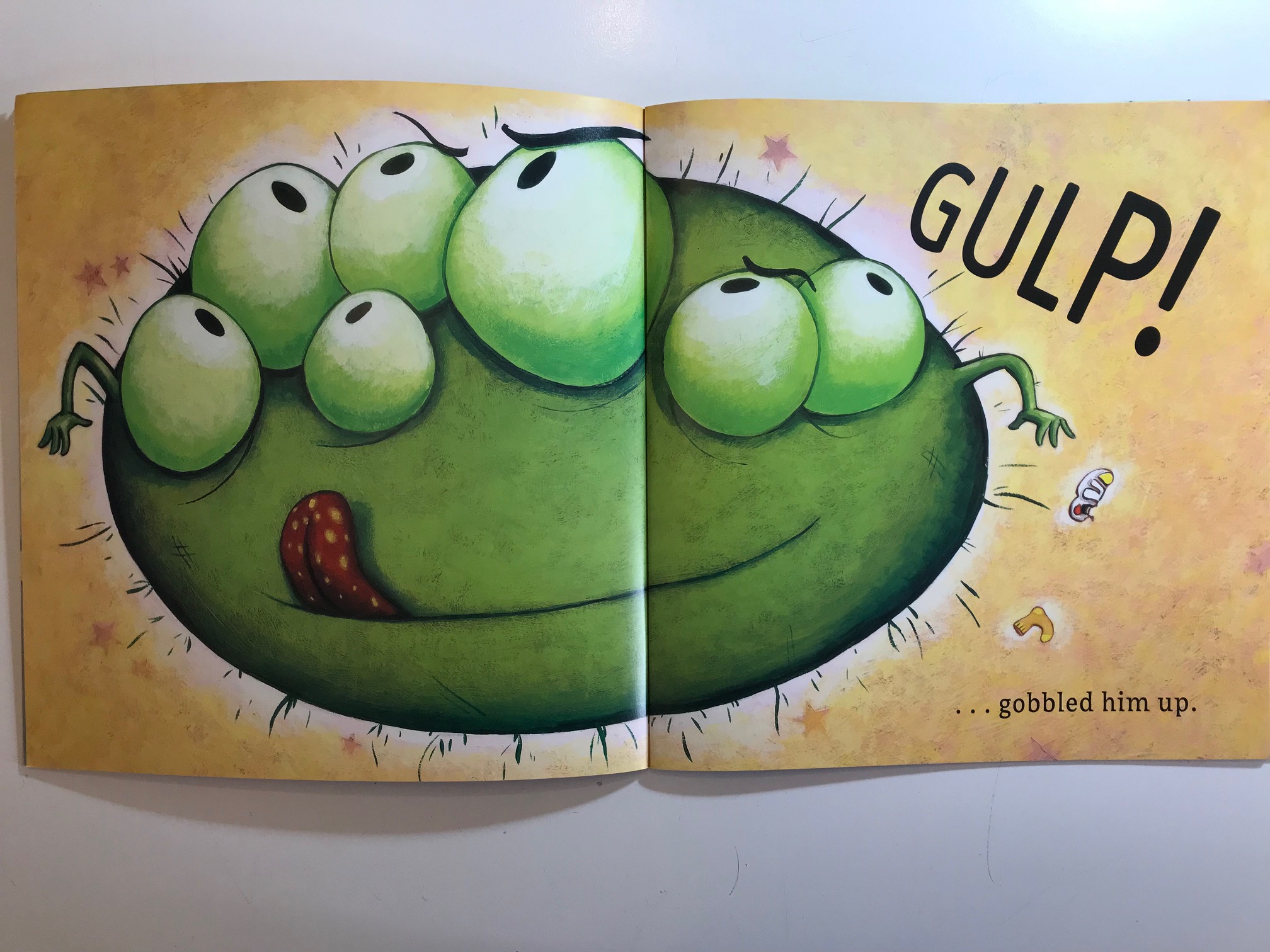
Not Now Bernard was first published in 1980 and has never been out of print. Controversial on it's first publication and banned by some libraries for being violent, Not Now Bernard has become a classic. I remember being shocked and thrilled reading this for first time. The illustration showing the monster holding up all that is left of Bernard was a dark delight and a symbol I included in my own illustration of a boy who is swallowed by his 'Green Eyed Monster' in G.E.M by Jane Clarke. All that remains is a shoe!


But the picture book that epitomises David McKee's flair and brilliance for me is Two Can Toucan.


Two Can Toucan was McKee's first picture book published in 1964 by Flugge whilst he worked at Abelard-Schuman. It was then re-illustrated and re-published in 1985 by Andersen Press.
Back in it's original form it was republished again to celebrate the 40th anniversary of Andersen Press. 

My copy is a little tired and worn but for good reason. Toucan's journey starts in the jungle with all the other creatures but heads to the town to seek his fortune. 

McKee's wonderful illustration of the jungle is a page I return to often.


In town he searches for a job he is good at and tries out a few empolyment opportunities. This comical scene of the dull office commute includes everyone wearing Mr Benn's characteristic bowler hat. 


He finally he discovers he is good at carrying things, cans of paint in particular.


I asked Picture Den members, Moira Butterfield and Pippa Goodhart for their insights and enjoyments of David McKee's work.
'I love the artwork and the child-friendly tone of David McKee. I recently worked on an Elmer book commentary for children with sight conditions, and that involved me looking very closely at the illustrations to describe their effect. The Elmer backgrounds are so rich and full of life. I’d say joyous. And his writing was absolutely pitched from a child’s point of view. No patronising. No trying to ram in some parental moral treatise. Just looking at life at the shoulder of a child.'   Moira Butterfield
When I had just started as a young bookseller in Heffers Children’s Bookshop in 1982, David McKee was the first famous author/illustrator I met. He launched his ‘I Hate My Teddy Bear’ picture book in the shop, and of course I bought a copy and he signed it.   Pippa GoodHart


'I worked with a friend in Heffers Children’s Bookshop who was lucky enough to get to keep all the originals of the shop's catalogue covers. Heffers were good at wining and dining people and asking for favours! 


The spirit of David McKee's work will, without doubt, live on to inspire and delight many more generations of children to come.
                                                             David McKee 1935 - 2022.
 
                                                                                  ***
 
Garry Parsons is an illustrator of children's books. His work can be seen here
Follow Garry on twitter and instagram @icandrawdinos


Monday, 19 November 2018

Some not very serious life lessons from picture books by Jane Clarke

Last week, Book Trust tweeted


So, inspired by this thread, and with tongue firmly in cheek, here are some life lessons from  a few of my favourite old picture books. I’ve confined myself to sausages, elephants and poultry - but feel free to add anything in the comments at the end :-)


1. If you strut about with your beak in the air, you’ll miss a lot of exciting stuff.


2. Never underestimate the power of compromise, especially when arbitrated by a duck.


3.  Fake wings may be cool, but they won’t enable you to fly.


4.  Be nice to demanding house guests and treat yourself to sausages, chips and ice cream at a cafe after they leave.


5.  It's wise to keep sausages handy in case you need them to determine which end of an Earth Hound has the fangs, and which end has the waggler.

 Dr Xargle's book of Earth Hounds by Jeanne Willis, illustrated by Tony Ross


6. Elephants are happiest when they don’t try to hide their true colours.


7. If there are four elephants in a bath, only three have fun.

Five Minutes Peace by Jill Murphy

8.   If you spend all day going rumpeta, rumpeta, rumpeta all down the road with an elephant, you will need to lie down at the end of it.

The Elephant and the Bad Baby by Elfrida Vipont and Raymond Briggs


There are huge philosophical truths to be extrapolated from picture books and I recognise (somewhat guiltily) that the subject deserves a much more serious post than this. In the meantime, though, I hope you’ll leave a comment to let us know more life lessons (from the silly to the profound) you’ve learned from picture books.


Jane's just finished writing the Dr KittyCat series and is currently working on a third picture book to be illustrated by Britta Teckentrup, and the fourth book in the Al's Awesome Science series illustrated by James Brown.

Saturday, 5 April 2014

Can You See Me Now? By Pippa Goodhart


Back in February, the wonderful Imagine! Festival for children ran in the Royal Festival Hall on London’s South Bank.  I was involved in a small way with the part of that festival run by the Inclusive Minds collective.  As the name implies, their session was all about making books and stories accessible to all sorts of children, and making sure that books for children include every sort of child and children from all sorts of backgrounds.  It was a wonderful day of sensory stories, signed poetry, a huge wall on which all could draw themselves (or anything they fancied), some serious adult debate, and a lot of story sharing, drawing, chatter and fun.  And it set me thinking.

 
It is, of course, important to include children of all races, from all sorts of cultural backgrounds, and those with disabilities, naturally within picture books; representing all of us without exclusion.  Nick Sharratt has managed to include a number of children with visual clues to particular conditions in our’ Just Imagine’ book’s busy pictures.

 
But the What About Me? event stated that, ‘the organisers believe that ALL children should be able to see themselves, their lives, their friends and their families represented in the stories and pictures they are given.’  But I wonder if there isn’t a danger that that idea might be taken too literally?  Does that mean that a boy with ginger hair who wears a hearing aid won’t see himself in a picture of a black haired girl wearing a hearing aid?  Do we really want to see ourselves exactly in books?  If so, books will have to be tailor-made for each reader … and I, for one, DON’T want to read about, or see, a story about a plump middle-aged woman with scruffy hair who writes stories for children!  I want other experiences, beyond my own real ones, when I read.  But I DO want to find emotional states in stories that I recognise and want to explore.  It’s at that gut feeling level that I find the point of contact between myself and a story. 
 

I think we’re in danger of forgetting the power of imagination in all this, and I’d suggest that picture books with animal characters are a great way to avoid all those visual mis-match problems whilst getting to the emotional heart of the matter. 

For some reason it’s easier to identify with a fictional character who looks totally unlike us than it is to identify with a character who is human, but different from us in age or sex or appearance or background.  So we all sympathise with lovely elephant Elmer’s insecurity in the happy story about him by David McKee in which patchwork Elmer attempts to blend in with the grey elephants.  A similar story about a child with, for example, a walking frame, who tried to get rid of the walking frame so as to look like the other children, would tend to be a very uncomfortable and unhappy read.  Elmer does a better job than a human character could in making us realise how it might be difficult to be different, and the need for others to consider and do something about that difficulty … in this case by having an Elmer Day once a year when all the elephants paint themselves fancy colours.    

 
There are picture books with animal characters which more obviously tackle a specific disability.  Jeanne Willis and Sarah Fox-Davies’ ‘Mole’s Sunrise’ is a very beautiful book in which blind Mole’s kind friends take him to ‘see’ the sun rise, and describe what they see so as to share that visual experience with Mole.    

Yes, we certainly do need children of all sorts included in picture books, but please don’t forget the richness of what is already out there in stories that on the surface are about animals, but at heart are all about human emotions and experiences.

Have you got other picture book examples you would recommend, featuring examples of anthropomorphic characters whose experiences might chime with disabled or marginalised children?