Showing posts with label Andersen Press. Show all posts

Monday, 11 April 2022

A Farewell to the Picture Book Greats: David McKee - by Garry Parsons

 With the recent passing of David McKee it felt only right to pay a personal tribute to a remarkable picture book creator.


McKee's most famous story, Elmer, with his colourful iconic patchwork was first published in 1968 by Dobson Publishing and then re-released in 1989 by Andersen Press under the helm of Klaus Flugge and has since become a household name. McKee wrote and illustrated 29 Elmer books sparking a whole range of board books, toys and clothing.  
Flugge and McKee became firm friends. 'His was a singular voice and a shining light in children's books that highlighted inclusivity, diversity and parts of our world that are not always present in publishing for children.' 
McKee enjoyed drawing on letters to his friends and would often correspond with Flugge decorating the envelope as well. Flugge would pin these to the wall in his office at Andersen Press where other illustrators who were visiting would see them. Satoshi Kitamura, Tony Ross, Posy Simmons and Axel Scheffler, to name a few, began sending decorated letters and both Flugge and McKee's collections grew.


Satoshi Kitamura has compiled a collection of decorated envelopes which includes many of McKee's drawings to Flugge in "Efuto" published by Foil. 
Envelopes decorated in this way are known as 'efuto' in Japan which translates simply as 'picture envelope'
 
Working with King Rollo Films, McKee co-created iconic animated programmes for the BBC including Mr Benn, about the eponymous explorer who through a magic costume shop went on a series of fantastical adventures.

' I wanted Mr Benn to be Mr Everybody. Bowler hats were more common in the early 1970s. There was a respectability to them, plus Charlie Chaplin and Laurel and Hardy are favourites of mine. Mr Benn went off on adventures according to whatever costume he tried on. I was heavily influenced by fables, because of their apparent simplicity. I like stories with a moral, that have a reason for being there – I don’t like a character to wake up and realise it was all a dream. That’s why I introduced the souvenir that Mr Benn always takes back with him, to say that it really did happen.'


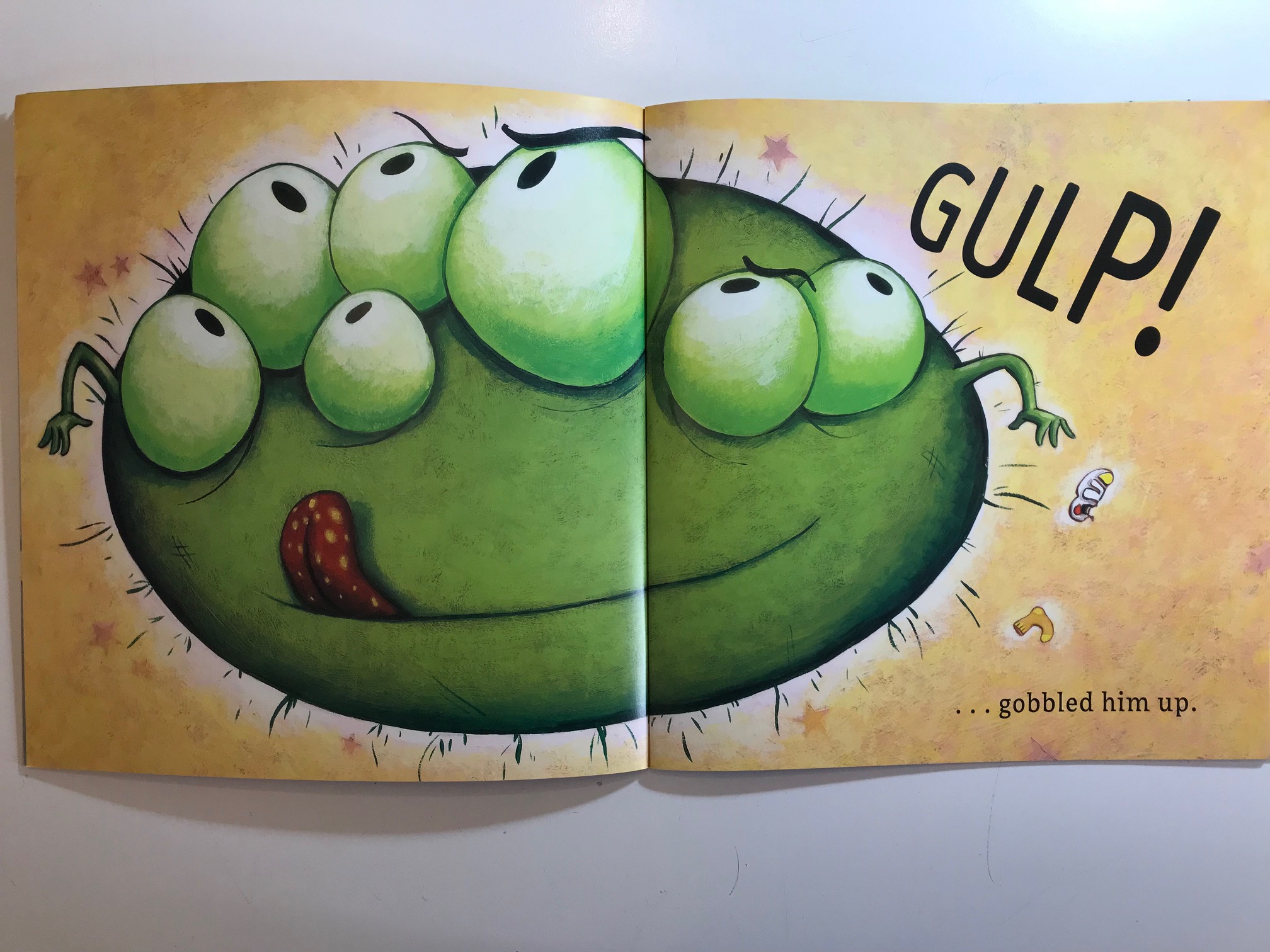
Not Now Bernard was first published in 1980 and has never been out of print. Controversial on it's first publication and banned by some libraries for being violent, Not Now Bernard has become a classic. I remember being shocked and thrilled reading this for first time. The illustration showing the monster holding up all that is left of Bernard was a dark delight and a symbol I included in my own illustration of a boy who is swallowed by his 'Green Eyed Monster' in G.E.M by Jane Clarke. All that remains is a shoe!


But the picture book that epitomises David McKee's flair and brilliance for me is Two Can Toucan.


Two Can Toucan was McKee's first picture book published in 1964 by Flugge whilst he worked at Abelard-Schuman. It was then re-illustrated and re-published in 1985 by Andersen Press.
Back in it's original form it was republished again to celebrate the 40th anniversary of Andersen Press. 

My copy is a little tired and worn but for good reason. Toucan's journey starts in the jungle with all the other creatures but heads to the town to seek his fortune. 

McKee's wonderful illustration of the jungle is a page I return to often.


In town he searches for a job he is good at and tries out a few empolyment opportunities. This comical scene of the dull office commute includes everyone wearing Mr Benn's characteristic bowler hat. 


He finally he discovers he is good at carrying things, cans of paint in particular.


I asked Picture Den members, Moira Butterfield and Pippa Goodhart for their insights and enjoyments of David McKee's work.
'I love the artwork and the child-friendly tone of David McKee. I recently worked on an Elmer book commentary for children with sight conditions, and that involved me looking very closely at the illustrations to describe their effect. The Elmer backgrounds are so rich and full of life. I’d say joyous. And his writing was absolutely pitched from a child’s point of view. No patronising. No trying to ram in some parental moral treatise. Just looking at life at the shoulder of a child.'   Moira Butterfield
When I had just started as a young bookseller in Heffers Children’s Bookshop in 1982, David McKee was the first famous author/illustrator I met. He launched his ‘I Hate My Teddy Bear’ picture book in the shop, and of course I bought a copy and he signed it.   Pippa GoodHart


'I worked with a friend in Heffers Children’s Bookshop who was lucky enough to get to keep all the originals of the shop's catalogue covers. Heffers were good at wining and dining people and asking for favours! 


The spirit of David McKee's work will, without doubt, live on to inspire and delight many more generations of children to come.
                                                             David McKee 1935 - 2022.
 
                                                                                  ***
 
Garry Parsons is an illustrator of children's books. His work can be seen here
Follow Garry on twitter and instagram @icandrawdinos


Sunday, 20 March 2022

CREATING STRONG PICTURE BOOK CHARACTERS

If I had to pin down some of my all-time favourite picture book characters, Burglar Bill (Janet and Allan Ahlberg) and the girl from Rebecca Patterson’s My Big Shouting Day would be up there.

I think what I’m drawn to is the darkness and danger in Burglar Bill. He's certainly interesting and someone I want to read more about. Plus, he has a fantastic refrain that I used to love joining in with as a child - ‘I’ll ‘av that!


In My Big Shouting Day it’s the authenticity of the character that appeals to me. She's so well cast and familiar that I feel like I know her (Perhaps I do!) This spread in particular is fantastic and full of humour. Again I love the voice ‘I CAN'T EAT THAT EGG!’


STRONG CHARACTERS


In more modern examples, I thought Yoyo from Emily Davison and Deborah Allwright’s Every Bunny is A Yoga Bunny was excellent – a fidgety, bouncy, can’t-sit-still-ever sort of bunny will be relatable to many young readers, making Yoyo's story easy to empathise with. 


And it’s impossible not to fall in love with Gertie, the littlest yak! (Lu Fraser, Kate Hindley.) She may be small but she has a big dream. It's the contrast between her tiny physical size and her ambition that make us root for her even more. Also, the weather and dangerous setting heighten the stakes, increasing the tension and how much we care.


Whilst the advice is usually to make your characters relatable, Catherine Emmett breaks the mould showing us how to make the reader care about unlikeable characters in her cautionary tale, The Pet, with David Tazzyman. In this story about spoilt Digby David who doesn't look after or respect his animals, we keep reading to see if the main character is going to learn his lesson... or not. (Perhaps he is a bit relatable too! Shhh!) 


LIke most of the books above, picture book creators are often advised to create child characters or characters that are child-like. But Catherine Emmett demonstrates that not all picture book main characters have to be children. In King of The Swamp, McDarkly is a grown-up monster character living alone in a swamp, but he has a clear plight that we can get behind and is very much likeable


ARE YOU A CHARACTER-DRIVEN OR PLOT-DRIVEN WRITER?


Whilst it depends on the story and the idea, on balance I consider myself more of a plot-driven writer than a character-driven one. I get swept away by funny starters, escalatory ideas for middles, devastating crisis points, climatic endings, or by theme, and then I choose the character to star in my story afterwards.


For that reason, I have to work a little harder to create strong characters. Here are three tips I’ve gathered since I started writing which might help you with your characterisation too. 


TIPS FOR DEVELOPING STRONG CHARACTERS


-     1. Quiz your characters: 

I knew in Sunshine at Bedtime I wanted the main character to be a human child. In the story, Miki’s external goal was to learn about the Sun and all the ways its light works. To develop her internal traits, it helped to imagine Miki in my mind’s eye and to ask her what questions she had and to find out how the extra sunlight was affecting her everyday life. It quickly became apparent there was NO WAY Miki was going to go to bed when it was still sunny, which became the opening of the book. Interviewing your character might throw up some interesting ideas to explore. 


-      2. Base them on someone you know or a celebrity :

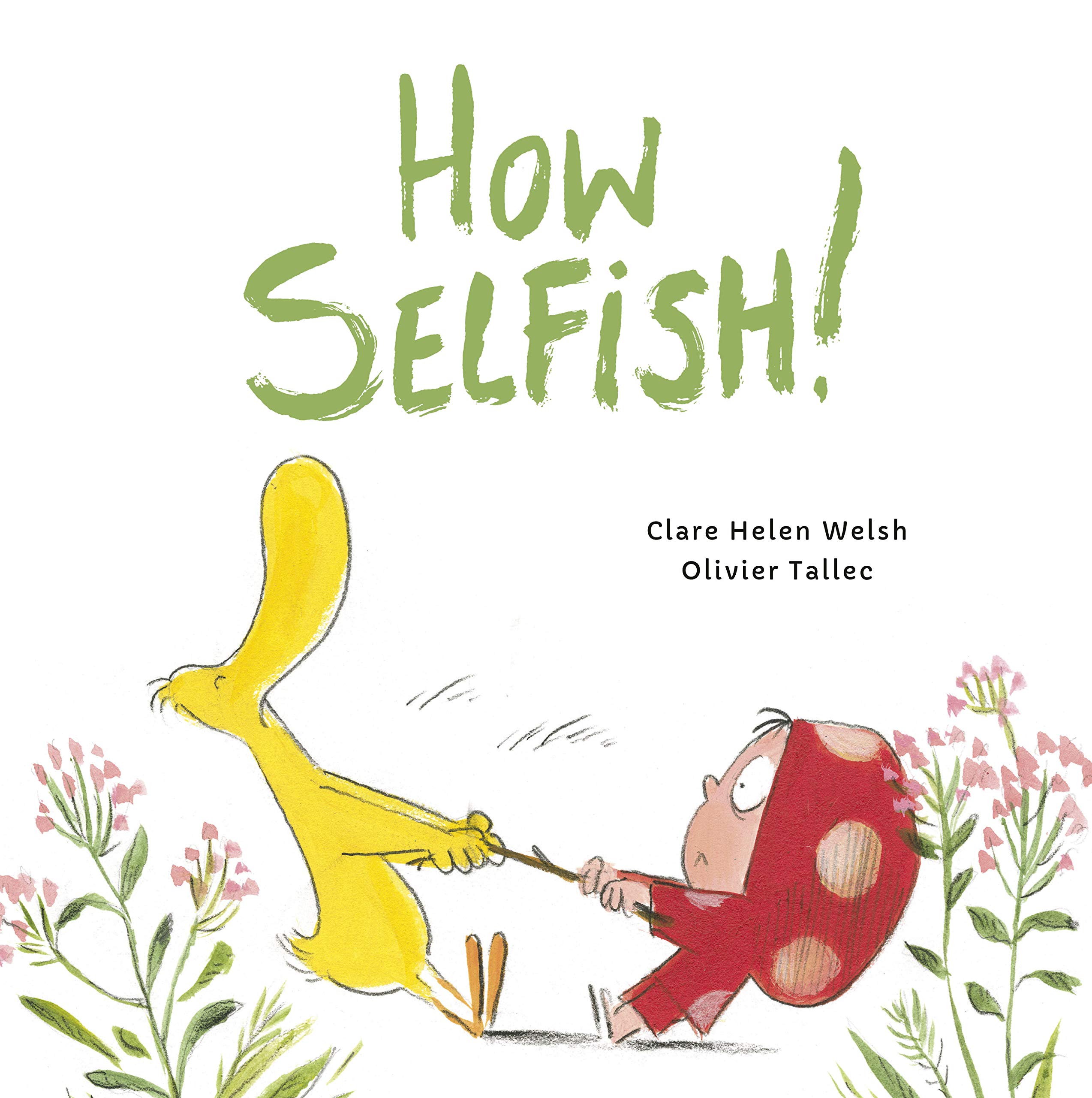
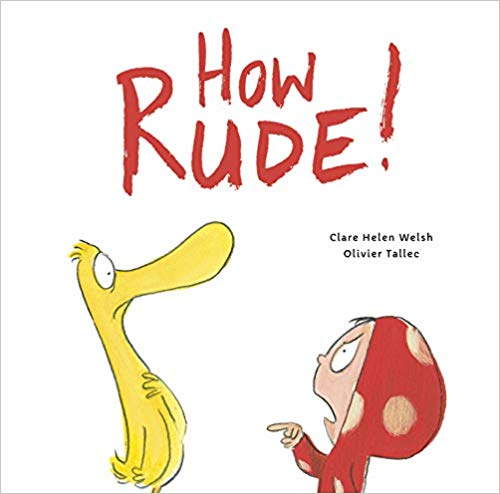
In the Dot and Duck series, I’ve very much taken inspiration from my life. How Rude came from imagining my children at their worst. How Selfish was inspired by my time in Early Years environments. The third adventure, How Messy, was more specifically inspired by my marriage! Not that one or other of us is Dot or Duck – we have our moments as both characters – but it helped to imagine incidents and real life examples and to plough those details and emotions into the story.  Can you base your character on someone you know, or know of? Even if just in part? It makes them easier to visualise and makes it easier to predict how they will react in certain situations. 


-      3. Take the theme of your texts and cast the character/s that will cause the most conflict

In the Lenny series, I chose the characters that would provide the most 'story'. Who were the smelliest, yuckiest, slimiest animals on the planet?! These were the creatures I knew Lenny needed to meet. The smellier, yuckier and slimier the animals, the higher the stakes for the character and the more potential there was for conflict and humour. Have you got the worst combination of character and conflict in your story? An uncoordinated giraffe that wants to dance? An owl who is afraid of the dark?


DO CHARACTERS ALWAYS NEED TO BE DISTINCTIVE?


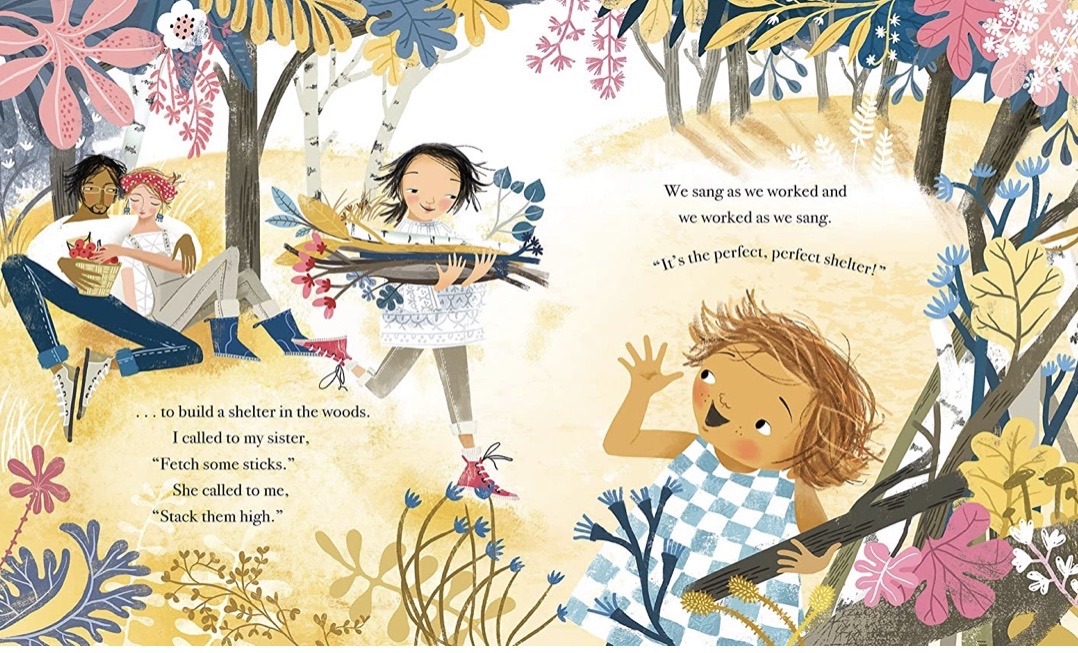
I think it’s also worth considering that sometimes it’s ok if your character is just a child. If your text deals with a big theme or has a hard hitting conflict, you might not need such an outwardly unique character. For example, in The Tide (Ashling Lindsay) and The Perfect Shelter (Asa Gilland), the main characters are just children – one who loves the beach and one who loves building dens. Written in first person they are intentionally quite generic, which I think works. There’s enough conflict going on in the world around them. One girl is learning to accept her grandparent's dementia and the other her sister's critical illness. The plot points and emotional themes are the hooks for the story,  not the uniqueness of the character.


Remember though, that even if you decide your human characters don’t need to be that distinctive, they still need to be clear. You could try cementing their personality in the early pages, with a line or two that tells us exactly all we need to know.


The good news is that where picture books are concerned, it’s not all about the words! Illustrations bring characters alive in a physical sense, of course, which for me is like meeting them for the first time! I don't ever imagine my characters in that much detail. But they also add to the characterisation in untold, magical ways. Like when Laura Barrett illustrated Scissorella and hid animals mentioned in the original fairy tale like lizards, mice and a cat adding to Lotte’s kind and caring persona. So if your characters feel a little flat, that might not be a bad thing - it could leave space for the perfect illustrator to breathe life into them and bring them into their own. 


WHAT ABOUT YOU?


I wonder if you have any top tips for creating clearinteresting, relatable, authentic, distinctive, like-able characters that we care about. Would you consider yourself a character-led writer or plot-led writer or both?!


Feel free to let us know in the comments below.


BIO: Clare is a children's writer from Devon. She writes fiction and non-fiction picture book texts - sometimes funny, sometimes lyrical and everything in between. Her first book was published in 2015, and she currently has books in development with Little Tiger Press, Quarto, Nosy Crow and MacMillan. Her next narrative non-fiction picture book, 'Sunshine at Bedtime,' comes out in just a few weeks with Storyhouse Publishing and has been illustrated by Sally Soweol Han. It's a magical but educational adventure explaining why the sun sets later in the summer. You can find out more about Clare at her website www.clarehelenwelsh.com or on Twitter @ClareHelenWelsh.

Monday, 9 August 2021

AN EXCITING TIME FOR NON-FICTION PICTURE BOOKS - plus COVER REVEAL!


One of the reasons I love picture books, is because there is such a fantastic range – from funny to heartfelt to educational and everything in between, there really is something to suit every kind of writer. This Picture Book Den post is going to focus on an exciting subgenre of picture books that feels particularly popular at the moment, with just as much variety – narrative non-fiction picture books. (Plus, there's an exciting cover reveal at the end!)


What is a Narrative Non-fiction picture book?

Just like any strictly fictional text, a narrative non-fiction picture book is a story first and foremost. There might be facts before the story (front matter), facts at the end of the story (back matter), facts throughout… but the primary focus is on engaging characters and a satisfying plot.

This is different from illustrated non-fiction in a picture book format, where text might be arranged by headings, subheading or chapters and can be read out of order.

Here are some of my current favourite examples of narrative non-fiction texts. As you can see, there’s a massive range in style, presentation and topic:


The Spacesuit (Alison Donald, Ariel Landy)

The Spacesuit is a narrative non-fiction picture book inspired by the seamstresses who made the spacesuit for US astronauts in the Apollo missions headed for the moon, based on the life of Ellie Foraker. It includes timelines, fact boxes and facts intertwined in the narrative. Alison is also the author of A Super Sticky Mistake – the story of how Harry Coover invented super glue – another great narrative non-fiction picture book (illustrated by Rhea Zhai).


Amara and the Bats (Emma Reynolds)

In this narrative non-fiction text, environmental activism gets a nocturnal twist! Amara and the Bats is Emma Reynold’s debut picture book as an author-illustrator. It’s the story of a little girl who loves bats and is sad when she moves to a new town and finds that bats no longer live there due to loss of habitat. She is inspired by real life youth climate activists to take action and rallies her friends to save the bats! There are bat facts weaved in throughout the story, and lots of fantastic practical steps to take action and help bats in the back, too.


They All Saw A Cat (Brendan Wenzel)

They All Saw a Cat explores what a cat might look like from the perspectives of various animals' points of view. It’s simple in delivery but powerful in concept. I’ve never seen anything like it! There is no front matter or back matter, but the illustrated way the animals perceive the cat is true to life and really makes you think.


The Amazing Scientist Series (Julia Finley Mosca, D. Reiley, Brendan Wenzel) I’m crossing my fingers that this series of books keeps expanding. The texts explore some of the world’s most amazing female scientists. In addition to the facts there’s a complete biography, colourful timeline and a personal note from the featured artist. These ones are in rhyme, too.


Poo! Is That You? / Wee? It Wasn’t Me! (Clare Helen Welsh, Nicola O’Byrne)

Here are two of my most recent narrative non-fiction texts. Lenny the Lemur is on holiday, first in the Amazon and next in Alaska, when he comes across an unfortunate problem that needs solving. He learns lots of interesting animal facts as he does. The third in this mini-series is slime-based and will be publishing in 2022.


Where did Narrative Non-fiction come from?

The recent rise in narrative non-fiction appears to have come from the US, where invention stories and biography picture books for 3-7yr olds are booming, but blending fact and fiction together in picture book format is not new.

Simon James’ books were a firm favourite in my classroom when I taught as an early years teacher, especially Sally and the Limpet. It’s the story of a little girl who gets a limpet stuck to her finger, and has a gentle message of caring for sea creatures intertwined into a funny and fantastical tale.  Dear Greenpeace, also by Simon James, sees the main character (and reader) learn about humpback whales all through letter format. Again, there’s a lovely mix of fact and humour.


I’m pretty certain narrative non-fiction wasn’t a ‘thing’ when these books were made, but the advantage of adding subtle educational layers to picture books has always been clear. It’s a real selling point for gatekeepers when a text has the potential to impact on young readers long after the last page has turned and when it can be used a springboard for future learning.


Tips for writing Narrative Non-fiction:

Research – Once you have identified your narrative non-fiction concept and suitable ‘way in’, next must come more detailed research. Whilst narrative non-fiction is a story first and foremost, the facts still need to be accurate. Use reliable, first-hand sources where possible, and try to back up each fact with at least three pieces of credible research. It might be possible to link with museums, organisations or contact family members.


Presentation of Facts –Decide whether your facts are going to be presented as fact boxes throughout, as front matter, back matter, an author’s note, whether they will be interwoven into the narrative or a mixture of these.

In my funny Lenny stories, Poo! Is that you? and Wee? It Wasn’t Me! the facts are incorporated into the character’s dialogue and reinforced with fun facts at the end.


In my lyrical non-fiction with Nosy Crow, the facts are interwoven into the narrator voice and consolidated with facts in the back matter. It publishes next month and is illustrated by none other than the winner of the Waterstones Children's Book Prize 2019, Jenny Lovlie. The story follows a young Arctic tern as she embarks on her annual migration to the Southern hemisphere in search of an endless summer. Children can learn about lots of other animals that also leave their homes for an warmer one. You can take a look inside here: Take a look inside Time to Move South for the Winter - Nosy Crow


In my re-imagining of Cinderella, inspired by the life and work of Lotte Reinger, the factual content is presented in an author note at the end of the book. (Cover reveal at the end of this post!)

In The Spacesuit by Alison Donald and Ariel Landy, the facts are intertwined with the plot but also presented as fact boxes throughout.


Narrative non-fiction picture texts to look out for:

There are some really exciting narrative non-fiction books on the horizon, some due for publication soon. Here’s a look at a couple!

Every Bunny is a Yoga Bunny is a funny, reassuring picture book story about yoga, mindfulness and finding calm, from debut author Emily Ann Davison and award-winning illustrator Deborah Allwright. Yo-Yo is a fidgety, bouncy, can’t-sit-still-EVER type of bunny. Even Grandpa’s yoga class won’t stop her wiggling and giggling! But when Yo-Yo finds herself lost in the deep, dark, shadowy forest, maybe Grandpa’s yoga will help her find the way home . . . With simple yoga step-by-step instruction in the narrative and some poses at the end to practise, children can stretch, breathe and feel calm with Yo-Yo.


And I hope it's ok to announce my real-life inspired story publishing this November with Andersen Press. Described as Cinderella meets paper-cutting, with a strong feminist twist,’  the story is based on the life and work of German film director Lotte Reiniger.

‘Lotte doesn’t believe in happy endings. She lives with her horrible, bossy sisters and her only friends are the exquisite cut-out paper puppets she makes by the light of the moon. But when an invitation to the Palace Spring Ball arrives on their doorstep, Lotte sees her chance to change her life for ever...

This is a Cinderella re-imagining with a difference where forceful individuality and talent create happy endings not fairy tale magic. Whilst the story is fictional, it was inspired by a real life individual and features an author note at the end. Laura Barrett, whose style is also inspired by Reiniger, is the very wonderful illustrator who has done the most fantastic job bringing the text to life - the artwork is so detailed and there are some wonderful surprises inside. Finally, here is her fantastic cover! 


Publishing 4th November 2021 - You can read and see more of Laura's beautiful artwork here Laura Barrett Illustration


If you didn’t love narrative non-fiction picture books before, I hope you do now! Just like in fiction, there’s a huge range; poetic, scientific, silly, serious – something for everyone! Narrative non-fiction texts can cover subjects such as biographies, inventions, events in history, animal adaptations, scientific phenomenon… anything you feel passionate about and that you think would entertain a child. Nothing is off limits if you can find the right age-appropriate angle.


Happy writing!


BIO: Clare is a children's writer from Devon. She writes fiction and non-fiction picture book texts - sometimes funny and sometimes lyrical. Her first book was published in 2015, and she currently has books in development with Little Tiger Press, Quarto, Andersen, Nosy Crow and MacMillan. Her next narrative non-fiction picture book, 'Time to Move South For Winter,' comes out in just a few weeks and has been illustrated by Jenny Lovlie. She also has her first book with Andersen, Scissorella, publishing in November, which is another life-inspired tale. It has been beautifully illustrated by Laura Barrett. You can find out more about Clare at her website www.clarehelenwelsh.com or on Twitter @ClareHelenWelsh.