Showing posts with label Maurice Sendak. Show all posts

Monday, 6 June 2022

The (Lost) Spark of Back-and-Forth Collaboration? • by Natascha Biebow


Once acquired by a publisher, picture books are made by collaboration – a whole team behind the scenes, including the illustrator, the author, the editor, designer and production team works closely together to share their expertise and to build upon the creator's initial ideas. Once made, picture books look seamless: all those collaborative discussions are evident in the polished book. Now, there will be people championing it in the publisher’s marketing, sales, rights and publicity departments.


Many hands collaborate to make a picture book that shines

Sometimes, a collaboration is established in a particularly inspired author illustrator pairing that will go on to endure and delight countless young readers.


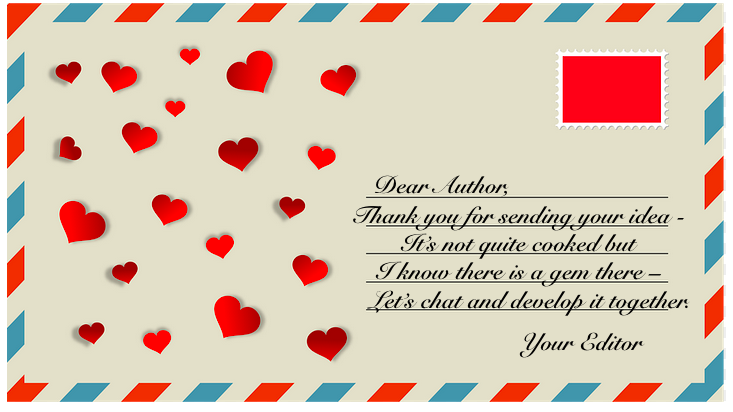
But what of the collaboration between the creative and the first point of contact – usually the editor at the publishing house? The kind that takes time and a special kind of eye to see the seed of something special and commercial and then time and effort to let it ‘cook’ till it shines. Is it a lost art?


In the US, recently several junior editors quit their roles citing being overworked and lack of proper recognition for their creative contributions to the business of making bestselling books. Increasingly we hear reports of submissions going unacknowledged in overflowing ‘slushpiles’ and overtasked editors. It stands to reason, then, that editors would want book proposals to arrive on their desks as polished projects that they can immediately envision in terms of potential. These they can effectively ‘run’ with as they pitch them in-house for acquisitions.


But what if . . .?


Editors once again had a bit of time and space to connect and collaborate back-and-forth, to nurture artists and authors at all levels of their career?


What if . . .?


Writers, editors, illustrators and art directors could meet in a kind of ‘writer’s room’ scenario like teams creating movie and TV series do?


What if . . . ?


Authors (and illustrators) with talent received encouragement and direction to work collaboratively with editors to help them take their ideas to the next level rather than just receiving no response or even an outright rejection to a project that has a seed of promise? Could it elicit a spark that later led to great works?


What if . . .  editors had more time and space . . .
to reach out, to nurture a spark,
to collaborate in a conversation . . .?


Writing letters may be a lost art, and emails are often at best short and business-oriented – everyone is so busy and short of time - but knowing that an editor is in your corner can mean the difference between being able to create the next big masterpiece or not.


Take for example the pivotal role legendary editor Ursula Nordstrom (1910–1988) played in bolstering Maurice Sendak at a key time in his early career, eventually leading him to believe in himself enough to go on to create the enduring classic Where the Wild Things Are.

When Sendak expressed his self-doubt in being able to stack up to the genius of Tolstoy and illustrate his work, Ursula wrote:


“Sure, Tolstoy and Melville have a lot of furniture in their books and they also know a lot of facts (“where the mouth of a river is”) but that isn’t the only sort of genius, you know that. You are more of a poet in your writing, at least right now. Yes, Tolstoy is wonderful (his publisher asked me for a quote) but you can express as much emotion and “cohesion and purpose” in some of your drawings as there is in War and Peace. I mean that. You write and draw from the inside out — which is why I said poet.


…

You are growing and getting better all the time. I hope it was good for you to write me the thoughts that came to you. It was very good for me to read what you wrote, and to think about your letter.

….

You may not be Tolstoy, but Tolstoy wasn’t Sendak, either. You have a vast and beautiful genius.” *


According to HarperCollins' website, 'Nordstrom had a simple philosophy regarding new authors. As one colleague said, “Anyone who called, anyone who got off the elevator, anyone who wrote in, could be seen and heard.” She always answered her own phone, and on hearing another ringing, would cry out, “Answer that! That might be the next Mark Twain.”'

Dear Genius The Letters of Ursula Nordstrom
Collected and Edited by Leonard S. Marcus


I wonder if some of our great children’s picture books would have even come to fruition and evolved in quite the same way without the space and support to experiment and collaborate with editors and art directors?


Having the


friendship and support of a

teacher and mentor and listener to

bolster creative confidence


sounds like a real gem in this day and age. That TRUST and FAITH! Hopefully it isn’t too elusive and the ways can be found to bring back that back-and-forth collaborative spirit in a new, and perhaps even better, guise? We can but dream . .  .


Thoughts on a postcard, please.

_____________________________________________________________________


* letter excerpted from Dear Genius: The Letters of Urusla Nordstrom, Collected and Edited by Leonard S Marcus


Ursula Nordstrom was the editor-in-chief of juvenile books at Harper & Row, who helped nurture many talented authors, such as Margaret Wise Brown, author of Goodnight Moon, EB White, author of Charlotte’s Web, Shel Silverstein, author of The Giving Tree, and Maurice Sendak, illustrator and author of Where the Wild Things Are.


_________________________________________________________________


Natascha Biebow, MBE, Author, Editor and Mentor

Natascha is the author of the award-winning The Crayon Man: The True Story of the Invention of Crayola Crayons, illustrated by Steven Salerno, winner of the Irma Black Award for Excellence in Children's Books, and selected as a best STEM Book 2020. Editor of numerous prize-winning books, she runs Blue Elephant Storyshaping, an editing, coaching and mentoring service aimed at empowering writers and illustrators to fine-tune their work pre-submission, and is the Editorial Director for Five Quills. Find out about her new picture book webinar courses! She is Co-Regional Advisor (Co-Chair) of SCBWI British Isles. Find her at www.nataschabiebow.com


Monday, 27 September 2021

Taming Wild Things; Where Sendak's Wild Things Came From, by Pippa Goodhart


For this post I am simply going to quote Maurice Sendak from his acceptance speech given to the American Library Association in St. Louis, Missouri, in 1964, in which he answers the question, ‘Where did you ever get such a crazy, scary idea for book’, referring to his, then recently published picture book, Where The Wild Things Are. 

Where The Wild Things Are is a simple book in terms of the word count and plot, but, my goodness it carries a rich heavy load of story, and it’s fascinating to glimpse where that emotional depth and insight comes from - 


‘During my early teens I spent hundreds of hours sitting at my window, sketching neighborhood children at play. I sketched and listened, and those notebooks became the fertile field of my work later on. There is not a book I have written or a picture I have drawn that does not, in some way, owe them its existence. Last fall, soon after finishing Where The Wild Things Are, I sat on the front porch of my parents’ house in Brooklyn and witnessed a scene that could have been a page from one of those early notebooks. I might have titled it ‘Arnold the Monster.’

            Arnold was a tubby, pleasant-faced little boy who could instantly turn himself into a howling, groaning, hunched horror – a composite of Frankenstein’s monster, the Werewolf, and Godzilla. His willing victims were four giggling little girls, whom he chased frantically around parked automobiles and up and down front steps. The girls would fee, hiccupping and shrieking, ‘Oh, help! Save me! The monster will eat me!’ And Arnold would lumber after them, rolling his eyes and bellowing. The noise was earsplitting, the proceedings were fascinating.

            At one point, carried away by his frenzy, Arnold broke an unwritten rule of such games. He actually caught one of his victims. She was furious. ‘You’re not supposed to catch me, dope,’ she said, and smacked Arnold. He meekly apologized, and a moment later this same little girl dashed away screaming the game song: ‘Oh, help! Save me!’ etc. The children became hot and mussed-looking. They had the glittery look of primitive creatures going through a ritual dance. 

            The game ended in a collapse of exhaustion. Arnold dragged himself away, and the girls went off with a look of sweet peace on their faces. A mysterious inner battle had been played out, and their minds and bodies were at rest, for the moment.

            I have watched children play many variations of this game. They are the necessary games children must conjure up to combat an awful fact of childhood: the fact of their vulnerability to fear, anger, hate, frustration – all the emotions that are an ordinary part of their lives and that they can perceive only as ungovernable and dangerous forces. To master these forces, children turn to fantasy: that imaged world where disturbing emotional situations are solved to their satisfaction. Through fantasy, Max, the hero of my book, discharges his anger against his mother, and returns to the real world sleepy, hungry, and at peace with himself. 


            Certainly we want to protect our children from new and painful experiences that are beyond their emotional comprehension and that intensify anxiety; and to a point we can prevent premature exposure to such experiences. That is obvious. But what is just as obvious – and what is too often overlooked – is the fact that from their earliest years children live on familiar terms with disrupting emotions, that fear and anxiety are an intrinsic part of their everyday lives, that they continually cope with frustration as best they can. And it is through fantasy that children achieve catharsis. It is the best means they have for taming Wild Things. 

            It is my involvement with this inescapable fact of childhood – the awful vulnerability of children and their struggle to make themselves King of All Wild Things – that gives my work whatever truth and passion it may have.’


            There is more, equally interesting, but, to read it you’ll need to get hold of a copy of Caldecott & Co. by Maurice Sendak.


Monday, 19 July 2021

The First Modern Picture Book Illustrator? By Pippa Goodhart

I’m going to quote Maurice Sendak, writing in 1978 (published in a handsome book called ‘Caldecott & Co. Notes on Books & Pictures’). Talking about Randolph Caldecott, the illustrator, he says, ...


            ‘Caldecott’s work heralds the beginning of the modern picture book. He devised an ingenious juxtaposition of picture and word, a counterpoint that never happened before. Words are left out – but the picture says it. Pictures are left out – but the word says it. In short, it is the invention of the picture book.’


            Sendak then talks (the essays in this book were often speeches) about the ‘honesty’ of Caldecott’s work. ... ‘Caldecott never tells half-truths about life, and his honest vision, expressed with such conviction is one that children recognize as true to their own lives.’ 


            So I went to my bookshelves to look again at my own tatty copy of a Caldecott book.


 It had been given as a present –


         Goodness! 1819 is over two hundred years ago, the year of the Peterloo Massacre, the year when John Keats wrote his ‘Ode To Autumn’, the …   Oh, that can’t be right! Randolph Caldecott wasn’t born until 1846, and was contemporary, and friends with, the pre-Raphaelite artists. Fred had clearly got the date back to front, and must have given that two shilling book in 1918, at the end of the First World War. A salutary lesson in how evidence-based ‘history’ can get it wrong!

            Never mind. Let’s look inside the book. What joy! The colour plates are beautiful, and it’s clear that bank clerk turned illustrator via night school classes Caldecott really was in the same artistic stream as his friends Millais and Rossetti – 


            But the real fun is in the little line drawings which add sub-plots and such relatable humanity that we see what Sendak calls the ‘honesty’ of the work. The emotions ring absolutely true, and that is exactly why they are funny. In ‘The Queen of Hearts’ we have a number of sub-plots, making the Queen herself about the least interesting character in the whole thing. A royal child longing for those tarts, and sneakily stealing something himself (the king’s sceptre) that goes unpunished, unlike the luckless knave who is beaten for his crime. And there’s the wonderful tell-tale cat –


But I’m sure it is the naughty knave himself who children must relate to most strongly. The absolute longing for those delicious tarts, solving the problem of where to hide them, then being called to do a job so having to hide them again, ...


... thinking he’s got away with his crime and will enjoy the tarts in due course, but that sneaky cat has made sure isn't true. We, the book audience, know what the knave doesn't, and soon the knave gets beaten ‘full sore’. At that point we see the children in the story’s sympathy for him, holding back the King of Hearts when he goes to thrash the knave. 


The knave has the agony of being laughed at for his crime, ...


... and seeing everybody else in court scoffing the jam tarts he had wanted. It’s all so, so relatable, even when done in such sketchy fashion! 


I'm going on a search for more Caldecott illustrations. I may be some time ....

Monday, 30 January 2017

The World of the Weird Versus The Weird in the World - Timothy Knapman

I don’t know about you, but I’ve never had much time for the kitchen sink.  By “kitchen sink”, I don’t mean the sink-shaped thing you find in a kitchen with taps, plughole and draining board attached.  I’m a writer, after all.  I drink tea.  Lots of tea.  From mugs.  Mugs that need – eventually – to be hosed down and scraped clean so they can contain yet more tea.

No, I mean naturalism, realism, whatever you want to call it: the attempt to create in art a faithful replica of the surface detail of real life - the sort of thing “kitchen sink” novelists and playwrights such as Alan Sillitoe, David Storey and John Osborne were doing in the 1950s.


John Osborne’s “kitchen sink” drama “Look Back In Anger” – though perhaps it’s better described as an “ironing board” drama

I admire the skill, of course - and the compassionate and campaigning impulses behind it - but a bit of me is always thinking: why should I go out to see a play about alcoholism, despair, poverty and unemployment? I can get all that at home. 

(I feel much the same about 3D movies.  Why should I pay extra for a 3D movie? I get 3D all the time! Life is in 3D! It’s 2D that’s the novelty! But I digress...)

As a child, I was always drawn to the strange, the funny, the macabre – in short, the weird.  I loved Doctor Who and Star Wars and Monty Python: aliens, robots and Terry Jones showing his bottom.  So when I started writing for children, of course, it was the fantastical, the odd, the bizarre, that I wanted to write about.

The anxiety of influence: Terry Jones’s bottom

And children are the perfect audience for fantasy because not only do they spend a lot of time in their own imaginative worlds, they are also untouched by the deadening effect of experience: the knowledge that things simply “aren’t like that”.  In a child – especially a child of picture book age – however much they might protest that some things “couldn’t happen”, there is a residual suspicion that, you know what, they just might.  The barrier between the real and the imaginary isn’t as clear, or as strong, as it is in grown-ups and so the potential to get lost in a created world is much greater.

It’s the haziness of that barrier that was the subject of my Mungo books.  In each one, Mungo is reading a different kind of story and then something goes wrong.  In Mungo and the Picture Book Pirates, for instance, he reads his favourite book so many times that the hero becomes exhausted from having to repeat his acts of derring-do so often and goes on holiday.  Without the hero to stop them, the book's villains start to take over the story, so Mungo has to jump into the book to save the day - and the book.

Mungo saves the day

But just because anything can happen in a picture book – anything a writer and illustrator can imagine, anyway – doesn’t mean that anything should.  I think total fantasy – fantasy that is completely unanchored in the details of lived experience – doesn’t work because it’s arbitrary.  There are no restrictions and it’s restrictions that create good art.  For fantasy to captivate the reader – especially if that reader is a young child – it needs to rub up against the solid fact of the real world in some way.  It’s that friction - between our world and the fantastical one - that strikes the spark of a really enjoyable story.

A writer has two ways of using fantasy.  She can either set her story wholly, or mostly, in a made-up environment – what I am calling The World of the Weird – or by she can introduce fantasy elements into familiar settings – what I am calling The Weird in the World. 

In general, The World of the Weird stories appeal more to children who are old enough clearly to delineate between the real and the fantastic, and who are therefore able to enjoy the detail of the imagination with which the stories are told.  Just think of the geekish glee with which fans of Harry Potter seize upon – and argue about – the minutiae of JK Rowling’s wizarding universe.  Part of the pleasure of her brilliant books comes from finding in them a place that has been so completely imagined by the writer that you can imaginatively occupy and explore it yourself. 

Hogwarts – a fantasy world full of imaginative detail

(It’s easier to do that sort of thing in books – where the writer has more space and time to lay out every detail of her world – than in, say, movies.  The reason why George Lucas’s Star Wars saga began in the middle – with “Episode Four” of a supposed six-part story – was so that he wouldn’t have to explain how everything in his “galaxy far, far away” worked.  Because movie-goers were coming in halfway through the story, Lucas reasoned, they would just have to pick things up as they went along.)

Tolkien and Lewis

The level of detail in the imagined world is important here.  Rowling spent years constructing hers, so did JRR Tolkien, whose Middle Earth exerts a similar fascination for its fans.  Compare that with Tolkien’s friend CS Lewis.  He jerry-built his Narnia books from pre-fabricated fantasy elements – Greek mythology, King Arthur, Christian allegory and the 1,001 Nights.  I don’t think is a coincidence that the Narnia books inspire far less immersive geekiness than the Middle Earth books – or that they are aimed at younger readers.

Because younger readers aren’t interested in fantasy worlds in the same way as more mature readers are: for one thing, they’re not old enough to enjoy the imaginative detail.  They want a story they can navigate without having to learn the rules of an alien world first.

“It went thataway!” The Kiss That Missed

Of course there are plenty of picture books that are set in imaginary places, but the picture book writer isn’t inventing an internally consistent other world that the reader can explore.  Instead, she is more often than not portraying our world dressed up in funny clothes.  Take David Melling’s wonderful The Kiss That Missed.  It may look like it’s set in a world of castles, knights and dragons, but we don’t need to know about any interesting or innovative “rules” this world might have because they’re not important.  This is a sweet, domestic tale, a clear metaphor for something that happens in our world, somewhere or other, every bedtime.  A busy father (in the story, the king) has been too preoccupied properly to say goodnight to his child (the prince).  His loving feelings (the runaway kiss) are true and powerful, but he has been too busy with other things to express them properly. 


The most common kind of World of the Weird picture book is the anthropomorphic animal story.  From Aesop to Mr Toad and on, animal stories aren’t about animals or their world; they’re about us.  One of my favourites, is Martin Waddell’s Farmer Duck, illustrated by Helen Oxenbury.  Not only is it about things that young children will instantly recognise – unfairness, and the need to put things right – it’s even a version of another animal story that is, itself, really about our world: George Orwell’s Animal Farm.  (Check out the last illustration, where the once put-upon duck is now in charge of the farm.  You’ll notice an imperious pointing of the wing: like the pigs in Orwell’s story, the duck is now the oppressor.)

 Meet the new boss, same as the old boss.

For all these reasons, I think fantasy works better in picture books if the stories are of the Weird in the World variety.  Like their World of the Weird counterparts, they can involve animals.  The most famous is probably Judith Kerr’s The Tiger Who Came To Tea.  But there’s a difference.  These are not always metaphorical stories.  Kerr herself has been very clear that the tiger – who consumes all the food and drink in a suburban home before disappearing, never to return – is not in any way a representation of Hitler, whose rise to power forced her to emigrate from her native Germany. The pleasure of her tale comes not from “decoding” it, from working out what she "really" means, but simply from its oddness.

The Tiger Who Wasn’t Hitler

Weird in the World
stories often use the juxtaposition of real and fantastic for comic ends.  Think of the elephant you can’t take on the bus in Patricia Cleveland-Peck’s book, illustrated by David Tazzyman.  Or Not Now Bernard, by David McKee – a funny, but very dark depiction of parental preoccupation in which a monster eats a neglected child and is unthinkingly pushed into taking his place by a mother and father who are too interested in other things to notice.

Monsters, children – what’s the difference when you're trying to read the paper?

Sometimes, picture book characters will pop in and out of fantasy worlds.  The most famous is Max, whose temper tantrum carries him “through night and day, and in and out of weeks, and almost over a year, to where the wild things are”.  But it’s the domestic details that bookend the story – the mischief of one kind and another at the beginning, the supper that’s still hot at the end – that makes his journey interesting.  By contrast, the arbitrary dream logic of Maurice Sendak’s subsequent In The Night Kitchen renders that story random and inconsequential.


Ten years ago, I wrote a book that was an attempt to mix a Weird in the World story with a World of the Weird one.  Guess What I Found in Dragon Wood was inspired by a picture the illustrator, Gwen Millward, had made.  It was a beautiful study of a boy and a dragon, playing together in the boy’s room.  The two were obviously friends but Gwen couldn’t find a story there.


My suggestion was that, instead of the dragon being in the boy’s world, the boy should be in the dragon’s – at least to start with.  So the book is told from the dragon’s point of view, and is all about his new discovery: a strange and magical creature called a “Benjamin”.  We’re in a weird world all right – the dragons eat worms and stinky fish, and go to school to learn how to sit on a volcano – but there’s something weirder still in that world: one of us.

Seeing the Benjamin through the dragon’s eyes, I hoped my young readers would understand (even if it was only without realising) how odd and fantastical – how weird - our world is.  And I hoped the story would help them enjoy the closely imagined fantasy that we call “real life”.

Tuesday, 30 July 2013

Promise: This blog is full of treats!


By Moira Butterfield (greedy from a very young age, as you will see)
A blog should be a little treat to read in one’s day, I feel. Picture books are like that, too. They are a special pleasurable treat in a quiet shared space somewhere in a toddler’s day.
Perhaps that’s why picture books are themselves often peppered with treats – I’m thinking of the yummy kind (this greedy blogger’s favourite kind, in fact). Winnie the Pooh has his honey, of course, and Judith Kerr’s tiger who comes to tea hoovers up a deliciously interesting retro-looking spread..,.Mmm, so would I. When I was small, storybook teddy bears invariably had picnics and toys more often than not ended up having scrumptious birthday parties involving cake.
The best and most exciting food treat for me as a small child would be to go a café, like the little girl in ‘The Tiger Who Came to Tea’ – and she got to go at nighttime, too! What luck for her that the tiger turned up and ate everything in the house. A trip to a café was a rare and exciting adventure for small me. I recall the feeling even now - A menu naming more dishes than I could imagine (what could ‘Welsh rarebit’ possibly be?). Sugar in tiny paper bags. Tomato sauce in a giant squashy plastic tomato. Oh joy!
What do today’s small children think of as treats, I wonder? Much the same things as I did, probably, albeit with a modern spin. A longed-for new toy, perhaps. Some small and beautiful natural object found on a walk and hidden in one’s pocket. An out-of-the-ordinary trip or a new delicious kind of food, eaten on holiday. Being tucked up in a warm freshly-made bed.
These are simple but powerful pleasures, and they still resonate with me.
Of course there are lots of great action-packed picture books with rollocking galloping stories, but the ones I love best are the ones deeply rooted in a small child’s world – a world where anything is possible (a tiger at the door perhaps) but there are also one or two of those wonderful treats that every child will recognise. In ‘Where the Wild Things Are’ Maurice Sendak put it perfectly with his classic ending:
“…his supper was waiting for him…and it was still hot.”
PS: Here is a treat just for you, and that's a promise. Cook this particularly pleasing flapjack, and eat it while it is still warm, preferably in some spot where you suspect teddies might very well have picnics when you are not looking.
200g (8oz) butter
150g (6oz) Golden Syrup – This is 6 tablespoons. Use a tablespoon warmed with hot water to make pouring easier.
150g (6oz) soft brown sugar
400g (16oz) rolled oats
A roughly 24cm (9.5”) square baking tray, greased – a swiss roll tin is ideal.
1.     Put the butter, syrup and sugar in a saucepan and stand over a low heat until melted.
2.     Stir in the oats, mixing well.
3.     Spread into the tin and bake in a moderate oven (180°C, 350°F, Gas Mark 4) for 25-30 minutes (keep an eye on it after after 20 mins so it doesn’t burn – my new fan oven seems to knock 5 minutes off the cooking time).
4.     Leave it in the tin to cool for 5 minutes. Then use a sharp knife to gently mark it into pieces.
5.     If you are feeling sensible, remove it from the tin when cool. If you impatiently remove it while it’s still warm, it will crumble…but it will be extra delicious! So I say treat yourself, and so does my picnicking teddy.


Tuck in, teddy, while they're still warm.