Showing posts with label inspiration. Show all posts

Monday, 1 August 2022

Spark Magic with the Creative Habit • By Natascha Biebow


Do you think of yourself as a creative person? Maybe you think you were a bit more creative when you were a child . . . why?


Is creativity innate?


Professor George Land devised a creativity test for NASA to help select innovative engineers and scientists. In a 1968 longitudinal study, he decided to test it on other people. He found that 5 year olds scored 98% on the creativity test, while 15 year olds scored 12%, and adults just 2%.


Land concluded that “non-creative behavior is learned.” (Source: George Land and Beth Jarman, Breaking Point and Beyond. San Francisco: HarperBusiness, 1993)


So, what happens as we get older?


Jean Piaget (1896–1980) Swiss psychologist known
for his work on child development


From the age of 12 and up, children enter what psychologist Jean Piaget termed the Formal Operational Stage of development. They become logical thinkers, able to make more rational decisions and understand abstract ideas. Young adults can see multiple solutions to problems and consider the world through a more scientific lens.


The problem with this kind of thinking for creative outcomes is it also leads to self-criticism – mistakes and less than perfect creations are often rejected.


Teens and Adults are often more self-critical and ask fewer questions about the world.
Creativity has been shown to decrease as people get older.


Adolescents also develop a leaning towards value judgment and adapting to social constraints – teens and adults are keen to stick with what they know works. Thus they favour more predictable ways of doing things, which might be more consistently successful, but are often less creative.


The traditional education system, designed during the Industrial Revolution over 200 years ago in order to turn out good workers who followed directions, reinforces this kind of thinking also.


The traditional school classroom values gaining knowledge
and following rules rather than creativity.


Ironically, however, creativity in all age groups is more important than ever now.


According to American psychologist Robert J. Sternberg, dean of the school of arts and sciences at Tufts University, “The world is changing at a far greater pace than it ever has before, and people need constantly to cope with new and unusual kinds of tasks and situations. Learning in this era must be life-long, and people constantly need to be thinking in new ways. The problems we confront, whether in our families, communities, or nations, are novel and difficult, and we need to think creatively and divergently to solve these problems. The technologies, social customs, and tools available to us in our lives are replaced almost as quickly as they are introduced. We need to think creatively to thrive, and, at times, even to survive.”


And we need people like children’s book writers and illustrators to be creative with stories that will inspire, support and uplift young readers.
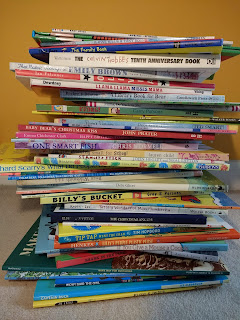
 

Books are key to firing up young readers' imaginations,
developing empathy, and fostering language and (visual) literacy.

But people who are in creative professions, such as us, might also be driven by constraints such as the need to make a living. 


Perhaps we feel we must make things that we know the market needs or that we think people will want to buy, as opposed to what we might make if we were given the freedom to just create from a more child-like place of ‘making something we love’.

However, any editor or agent when asked what they would like to take on for publication will inevitably recommend that people ‘write what they know’. This is because the true spark of creativity will shine through.


It creates MAGIC with readers . . .


. . . because it has been created from a place of passion and freedom; it is authentic. It connects with readers intimately. Sometimes, it also the most commercial also!


Arguably, if your raison d’etre is being an author or illustrator for a living, it can be useful to develop personal systems to stay creative, even as we age:


- MAKE CREATIVITY A HABIT:


Sternberg also advises: “Creative people routinely approach problems in novel ways. Creative people habitually:


·      look for ways to see problems that other people don’t look for

·      take risks that other people are afraid to take

·      have the courage to defy the crowd and to stand up for their own beliefs

·      believe in their own ability to be creative

·      seek to overcome obstacles and challenges to their views that other people give in to

·      and are willing to work hard to achieve creative solutions.”


In other words, creativity is a habit that we should practise. And, as with everything, practise leads to perfection.


- KALEIDESCOPE THINKING:


Finding random patterns and making connections often
sparks creative ideas, like the pieces in a kaleidescope.

Rosabeth Moss Kanter, Ernest L. Arbuckle Professor of Business Administration at Harvard Business School, suggests that:

Creativity is a lot like looking at the world through a kaleidoscope. You look at a set of elements, the same ones everyone else sees, but then reassemble those floating bits and pieces into an enticing new possibility.

According to Kanter, powered by your imagination, Kaleidoscope thinking can be encouraged by:

·      Regularly making trips to new places to cultivate new and different experiences, out of the normal routine

·      Engaging with critics and challengers – those who old a different world view, beliefs or make different assumptions

·      Looking at what’s new and changing

·      Reading widely

·      Going to conferences or learning things that are new and unfamiliar

·      Exchanging ideas with others

- BE CREATIVE IN OTHER AREAS (Other than Children’s Writing & Illustrating):


If you do things that are creative and also unrelated to your writing and illustration and these might spark something. For instance:


-       Invent something to solve someone else’s problem

-       Sew something

-       Make a puppet

-       Fingerpaint – make a mess!

-       Create a new recipe

-       Make a collage

-       Make a video diary of your pet, favourite object or family member

-       doodle

-       Build with Lego

-       Melt some crayons with a hairdryer


Melt some old crayons with a hairdryer and see what you can create!

-       Change up your daily routine – eat dessert first! Go a different route round the supermarket


- LET YOUR MIND WANDER and DAYDREAM:

When you MOVE: when you go for a walk, shower, do some gardening or similar, you free up your mind.
Studies show that this leads to creative problem solving, 


- PLAY:


When we allow for creative play like children, it creates opportunities for trying out new ideas, new ways of thinking and problem solving. We can allow ourselves to discover freely, without the censure of the voice that demands validation, financial compensation or approval.

We are just playing and saying ‘hey, look what I made!’ – for FUN.


Young children are not concerned about the end product and enjoy 'making' for fun.
It's the process that is creative and fun.


Importantly, we have to give ourselves permission to be creative:


Visionary educator Maria Montessori said, Imagination does not become great until human beings, given the courage and the strength, use it to create.”


Play is an important part of rearranging the kaleidescope bits to see new possibilities.


Allow and accept MISTAKES! 


In Beautiful Oops!, Barney Saltzberg explores the
amazing creative outcomes that can come as a result of a 'mistake'.


From Beautiful Oops! by Barney Saltzberg


- WORK WITH CONSTRAINTS:


Did you know that a bestselling Green Eggs and Ham was written as the result of a bet? When Random House founder Bennett Cerf bet one of his authors, Theo Geisel, that he couldn’t write an entertaining children’s book with just 50 different words, Dr. Seuss won that wager with Green Eggs and Ham, which has sold over 200 million copies.


Bestselling title Green Eggs and Ham by Dr. Seuss
was the result of a bet.

These limits stretch our problem-solving abilities and typically produce surprising results. That’s because your mind is forced into doing more divergent thinking.
 

        Albert Einstein said:

"Creativity is seeing what others see and thinking what no one else ever thought."


So, we have to TRUST that we can innovate – having this TRUST expands creativity.


Creativity, after all, BEGETS creativity!


Sculpture image of girl "Meisje met vogel, gedenkteken voor Maria Montessori" in Amsterdam by artist Gerarda Rueter
_________________________________________________________________


Natascha Biebow, MBE, Author, Editor and Mentor

Natascha is the author of the award-winning The Crayon Man: The True Story of the Invention of Crayola Crayons, illustrated by Steven Salerno, winner of the Irma Black Award for Excellence in Children's Books, and selected as a best STEM Book 2020. Editor of numerous prize-winning books, she runs Blue Elephant Storyshaping, an editing, coaching and mentoring service aimed at empowering writers and illustrators to fine-tune their work pre-submission, and is the Editorial Director for Five Quills. Find out about her new picture book webinar courses! She is Co-Regional Advisor (Co-Chair) of SCBWI British Isles. Find her at www.nataschabiebow.com


Monday, 10 February 2020

Three picture books that make you fizz with ideas - Jane Clarke

This time of year, I’m a frequent visitor to schools. I love to help enthuse and inspire the 4-11 year olds, and help them to come up with their own ideas for stories and poems. I often show them a picture book as a springboard.

Here are my top three picture books for making a class of kids (and me) fizz with ideas. If you don’t know them, take a look, I’m sure they will inspire you, too:

Tell me a Dragon by Jackie Morris (Frances Lincoln Children's Books)


A gorgeous, poetic book. What would your dragon be, and how would you look after it?


Even the hatching-egg end papers are inspirational


I hadn’t realised before I looked it up today that Pie Corbett has created some great teachers notes on using this book, so instead of blathering on about what I do, I will refer you to an expert:


Things that are the most in the world by Judi Barrett, illustrated by John Nickle (Atheneum Books for Young Readers)


This is crazy, silly, surreal - and lots of fun!


Get the youngest kids to try it with colours and the older ones with emotions/feelings (happiest, saddest, most grumpy/loving/jealous/angry etc). Try it yourself with different sorts of weather, atmosphere, settings, food, textures, movements. 

My non-fiction choice is

Uneversaurus by Professor Potts (David Fickling Books)


Discover a new dinosaur and bring it to life. Keep it ‘real’ or go silly by mixing dinosaurs with other creatures (like an Octo-saur or a Dog-o-don) emotions, (Happysaurus, Grumpysaurus etc) what they eat (e.g. Sausagesaurus, Book-o-saur). 


If you’re hoping to inspire the small person in your life - a special mention for the You Choose books by Picture Book Den’s very own Pippa Goodhart, illustrated by Nick Sharratt. They are packed with inspirational ideas for kids.  The only reason that the first You Choose is not in my top 3 is that it’s harder to share with a class, whereas all the others have  illustrations that are big, bold and easy-to-see-from-a-distance.


I’d love to hear about other books that make you fizz with ideas!


Jane’s thrilled to be able to let you know that she's just agreed a deal with Walker Books for her next picture book - and is delighted to have these 3 new editions of picture books out in Feb 2020: a paperback edition of Leap frog, illustrated by Btitta Teckentrup and board book editions of Neon Leon, also illustrated by Britta Teckentrup, and Old Macdonald's Things That Go, illustrated by Migy Blanco.


Monday, 6 November 2017

Scissor Happy! by Jane Clarke

Yesterday, I went into a charity shop and discovered a pile of old magazines. Yay!

They’re now on my coffee table and I can feel excitement bubbling up when I look at them.  I can’t wait to find a nice quiet moment (hopefully lots of nice quiet moments) to get my hands on them properly.  National Geographics, especially old ones, make me feel the same sense of discovery - as do Ranger Rick’s. 


So what’s in store for these old mags? Well, I’ll read them, of course, and I might scribble the odd word or two down in an ideas book, but that’s only the start of it. Look away now if you’re of a nervous disposition. Most of these magazines are going to get dismembered.


Pictures are very useful as triggers for children's creative writing when I visit schools, and they have often inspired me, too.


I put large clippings in a file, smaller cut-outs tend to get stuck in note books where I begin to collect ideas around them. Some may inspire almost immediately inspire stories or poems, but more often they stay there, sometimes for years, composting.
Ideas composting


Although I especially love wildlife magazines,  I’ll use any sort of magazine (including the free ones that drop through my letterbox) to cut out words and mess around with them, and sometimes I’ll discover a poem or be surprised by an interesting idea that might make a picture book story.


There’s something about having a physical magazine in my hand that I can cut up and mess about with that I find very inspiring. I'm sure I can't be the only one. Are you scissor happy, too?


This month, Jane’s over the moon to have signed a contract with Nosy Crow for a third and fourth neon picture book to be illustrated by the wonderfully talented Britta Teckentrup. The first, Neon Leon, is already in print, the second, Firefly Home will be published next year.


The science magazines will be very useful for Al's Awesome Science, a new series she's writing for Five Quills, illustrated by James Brown.


Monday, 24 July 2017

Now For Something A Little Different • Lynne Garner

I was recently asked to visit a school as part of their 'aspirations day' and talk about being an author. As I have close ties with the school I agreed. The day came and I was led to the second year room and sat in front of 20 or so year two children. After introducing myself and telling them about my typical writing day I asked if there were any questions. The first question I was asked was where do you get your ideas from? My response was anywhere and everywhere. Including:

  • Seeing random objects whilst I'm out walking
  • Sitting in a pub or similar, especially when I overhear an interesting conversation     
  • On the train, again overheard conversations are wonderful generators of ideas   
  • In the car as a passenger when I'm watching the world go by
  • Reading snippets in a newspaper, when I should be cleaning out hutches
My last example received a giggle or two. I admitted my last flash of inspiration was whilst sitting on the loo of a very quaint tea room. Among the many photographs was this one of a donkey, wearing a fab utility coat full of pockets and interesting items. I have a few ideas floating around but nothing concrete, yet.

I was then asked how random objects could generate a story. I replied things can spark different ideas based on our life experiences and our imagination. So here is the 'now for something a little different' part of this post.

Below I've inserted a few random objects I've photographed whilst out walking. I'm inviting you to give one of these objects a story, a life of it's own. Go on give it a go. I'd love to read what life you think these objects had prior to being lost or discarded in the grass.


If you've taken the time to write a few words thank you. I hope you enjoyed the process and fingers crossed it may even give you an idea for your next piece of writing.

Regards

Lynne

Now for a blatant plug:

NEW RELEASE
Hedgehog of Moon Meadow Farm

Monday, 11 April 2016

Inspiration any time and any where - Lynne Garner

As a writer and teacher I'm always looking for new ways to fuel my own writing and ways to inspire my students. So earlier this year I decided to discover what writing related apps were available. After some time researching apps for iPhones and Android I downloaded a dozen or so. After much 'playing' I whittled my favourites down to the following three apps.  

Story Lines
Screens from 'Story Lines' 
Designed by: Magostech
Free to download from the following:
Amazon click here
iTunes click here

I love using story cubes and regularly use them to exercise my 'writing muscle' and in class to help inspire my students. The physical cubes I use in class come in packs of nine giving you 54 images. However these nine dice have ten images each, therefore offering more combinations.

To use you simply shake your phone or tablet and the dice scatter. You can then drag them into some order and lock the image. The one small issue I've found is if you don't lock the screen sometimes the dice roll so you lose the image the dice landed on for that roll. I've only used the app as a 'guest' however if you sign up you can also use the 'write story' facility.

This is a great app to have on you when you're sitting in that waiting room or on the train and want to exercise your imagination. Also after using a few times in class it's a great one to introduce to your students.


Poetry Creator
Developer: Tiny Mobile Inc.
Free to download with in app purchases

This app is fun, easy to use and really pushes the creative process. Think fridge magnet or rip it poetry. When you open the app you are supplied with a number of words on a 'board' which provides you with the starting point for your poem. These words you simply drag into place to create your poem. If you struggle there is a pull out 'drawer' (found on the right hand side of the screen) which contains additional words that you can pull into play. You can increase the number of words by going into the 'mix-tionary' and  sliding the selectors.

 You can download additional dictionaries (shown as installed on the image on the left) from here or download eight dictionaries for a special price from the menu page.

Once you've written your poem you can upload to Facebook to show off your skills, email to yourself or save to the photo album on your device. Do remember if you don't do any of these before you press the double arrow button (second icon from the right along the bottom of the screen) you lose your poem.
 
Unfortunately this app is only available for download onto iPhone and iPad - click here if you want to download which means I won't be able to use in class but it's definitely one I'll be adding to my handouts.

Acrostic Poems
Developer: International Reading Association
Free to download from the following:


Definition of an acrostic poem (just in case it's not one you've come across before): Is a type of poem where the first, last or other letters in a line spell out a word or phrase. The most common is where the first letters of each line spell out the word or phrase. 


As with many of the apps I've downloaded over the last couple of months I did so because I wanted to use in my creative writing sessions. So far I've used this one in three sessions. Two were with year 4 and 5 kids whilst the third session was with a group of students who were 60 plus. All three sessions were (thankfully) a success. 

The first screen asks you to enter your name and then the theme/word you wish to use as the basis for your acrostic poem. When you pick your theme you're limited to 14 characters which includes any spaces and it doesn't include a spell checker, so take care as you type. Your next step is to brainstorm ten words that link with your theme.

Once you've completed this step simply start to create your poem using the words generated during your brainstorming session. When you've completed your poem, checked your spelling you can save it, share via email or print it off. If you forget to do any of these and click on 'new poem' you are told that the poem will be lost and you're given the chance to save your work.

Having seen students use this app in class it's another I'll be adding to my handouts when I update them next. It's also given me a few ideas for new stories which are now safely stored in OneNote.  

I hope you've found these reviews helpful and if you've used any writing related apps you've enjoyed using please do share below.

Lynne

Now for a blatant plug - don't say I didn't warn you:

My latest short story collection Coyote Tales Retold is available on Amazon in ebook format. Also available Meet The Tricksters a collection of 18 short stories featuring Anansi the Trickster Spider, Brer Rabbit and Coyote is available as a paper back and an ebook. 

I run the following online courses for Women On Writing:
How to write A children's book and get published
5 picture books in 5 weeks
How to write a hobby-based how to book