All good
things come in threes (and bad things, too). Why? It seems that three is the
smallest number needed to create a pattern; it makes stories more satisfying
and funnier. Plus everyone knows that stories must have three elements: a
beginning middle and end.
From early on,
children are preconditioned to expect this pattern:
The rhythm of
the day has three parts – morning, noon and night –
and three meals too – breakfast, lunch and tea.
The rhythm of
growing has three stages: baby, child and teen.
Most of the lullabies, songs and nursery rhymes told and sung from babyhood are built upon the rhythm of the magical number 3:
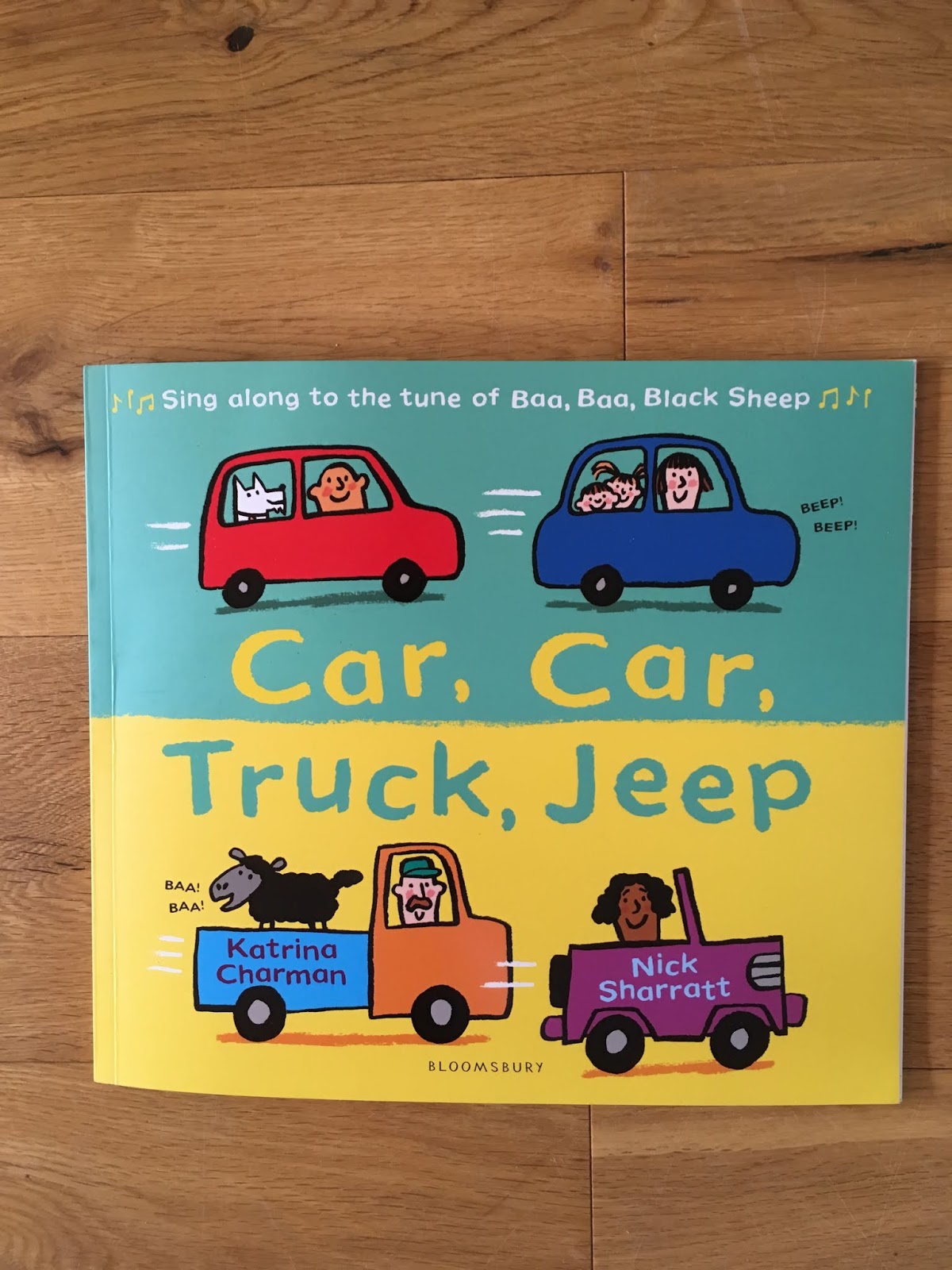
Baa, baa black sheep – three baa’s and then wool for the master, the
dame and little boy in the lane
Three little bears – with three sizes: big, middle-sized and small
 |
| © www.peoniesandpoppyseeds.com |
Three little
pigs, three billy goats gruff, and so on.
 |
| From Pat-a-Cake Nursery Rhymes by Annie Kubler |
Even in the
tiny story of the nursery rhyme, the rhythm of three sets up the pattern of
storytelling, in which the story is set up, there are three examples and then a
turning point/conclusion:
Set up the
story: Pat a cake, Pat a cake, baker's man
Bake me a cake as fast as you can;
Now, build up
the story with three elements:
- Pat it,
- and prick it
- and mark it with a ‘B’,
Give it an
outcome: And put it in the oven for baby and me.
When writing
picture books, it is often handy to keep in mind how using the rule of three
helps to deliver an exciting, page-turning plot and keep the narrative moving
swiftly forward.
1. Sometimes, the whole plot is built upon the rule of
three. For example, in Duck in a
Truck, when Duck’s truck gets stuck in the muck, Jez Alborough uses three instances
to resolve the main problem:
- Frog hops down to help.
- Sheep tries to push.
- Then Goat, passing by in his motor boat, comes
up with the clever plan that solves Duck’s problem:
 |
| From Duck In a Truck by Jez Alborough |
|
|
2. The rule of
three is also a great tool for advancing the plot.
Once the author has set-up the story and its central problem, it can help to build-up suspense and work towards a clear turning point in the plot.
For instance,
in That Rabbit Belongs to Emily Brown,
the Queen wants Emily Brown’s much-loved rabbit Stanley in exchange for a golden teddy bear. Feisty
Emily Brown tells the Chief Footman firmly that the rabbit is not for sale. So, the
Queen sends:
1. The Army
 |
| From That Rabbit Belongs to Emily Brown by Cressida Cowell and Neal Layton |
2. The Navy
 |
| From That Rabbit Belongs to Emily Brown by Cressida Cowell and Neal Layton |
3. The Air Force
 |
| From That Rabbit Belongs to Emily Brown by Cressida Cowell and Neal Layton |
Each time, they
try to exchange ‘Bunnywunny’ for an even greater number of outlandish gifts. And, with each spread, Emily Brown’s
consistent refusal builds until she is
“FED UP!”
Then something
must change in the pattern of the plot. So when the Queen has Stanley stolen, Emily Brown has no choice but to confront the Queen herself so she can tell her how to make the golden teddy as loveable as Stanley.
In another example, when Max is
crowned King of the Wild Things in Sendak’s classic, three wordless spreads
follow, adding drama and indicating the passage of time. These illustrate the wild things’ antics, building up to the turning
point when Max orders the them to stop and sends them to bed. Then, realizing
he’s lonely, he goes home to his supper and those who love him "best of all".
 |
| From Where the Wild Things Are by Maurice Sendak |
 |
| From Where the Wild Things Are by Maurice Sendak |
 |
| From Where the Wild Things Are by Maurice Sendak |
Often, three consecutive examples can also help to
advance a sub-section of the plot.
In the
classic, Harry the Dirty Dog, when Harry
comes home after having played by the railway, played tag with the other
dogs and slid down the coal chute (three things!), he is no longer a white dog. His family are sure that this can't be Harry, so he:
- “flip-flipped and flop-flipped”
- “rolled over and played dead”
- “danced and sang
 |
| From Harry the Dirty Dog by Gene Zion & Margaret Bloy Graham |
But, his family still don't recognize him . . . What follows
is a moment of pause, before the story picks up again and Harry remembers to
dig up the scrubbing brush he's hidden in the garden and ‘beg’ for a bath!
3. Sometimes,
the rule of threes is even used like a mini-plot
within the story, as in Olivia:
- Olivia admires modern art at the museum
She tries it herself at home . . .
 |
| From Olivia by Ian Falconer |
3. Then, “Time to think!“
Or as a way to introduce some information about the
characters (especially useful as an
illustrative device across a page or a spread).
As in Quentin
Blake’s Angelica Sprocket’s Pockets:
- “There’s a pocket for mice,”
- “and a pocket for cheese”
- “and a pocket for hankies in case
anyone feels that they’re going to sneeze”
 |
| From Angelica Sprocket's Pockets by Quentin Blake |
In Olivia, her morning routine includes three elements:
 |
| From Olivia by Ian Falconer |
- “In the morning, after she gets up and
moves the cat,”
- “and brushes her teeth and combs her
ears,”
- “and moves the cat”
4. Finally, the rule of three is a really useful way to give the writing a satisfying rhythm.
Here are just two examples:
In Jane
Clarke’s Knight School, Little Knight
and Little Dragon discover that school
is fun:
 |
| From Knight School by Jane Clarke & Jane Massey |
- “Little Knight and Little Dragon sang
funny songs.
- “painted fabulous pictures,”
- “and listened to fantastic stories.”
In Mo Willems’ Goldilocks and the Three Dinosaurs, by
virtue of it being a spoof of Goldilocks
and the Three Little Bears, practically the whole book follows the rule of three.
Here is an example of how Willems uses it at the climax of the story, giving the
page a great read-aloud rhythm:
“Just then a
loud plane flew by, which sounded pretty much like a trio of Dinosaurs yelling
- “NOW”
- or “CHARGE!”
- or the Norwegian expression for
“CHEWY-BONBON-TIME!"
 |
| From Goldilocks and the Three Bears by Mo Willems |
The rhythm of
three is everywhere in picture books! If you look for it, you will start to see
how it can work wonderfully to create predictable and unpredictable rhythms in
your work, too.
Natascha
Biebow
Author, Editor
and Mentor
BlueElephant Storyshaping is an editing, coaching and mentoring service aimed at empowering writers and
illustrators to fine-tune their work pre-submission. Natascha is also the
author of Elephants Never Forget and Is This My Nose?, editor
of numerous award-winning children’s books, and Regional Advisor (Chair) of
SCBWI British Isles. www.blueelephantstoryshaping.com