George Cadbury aged about 20 (c) Cadbury Archive.
I’ve fallen in love, and I’m having a whirlwind romance with [cue page turn]...
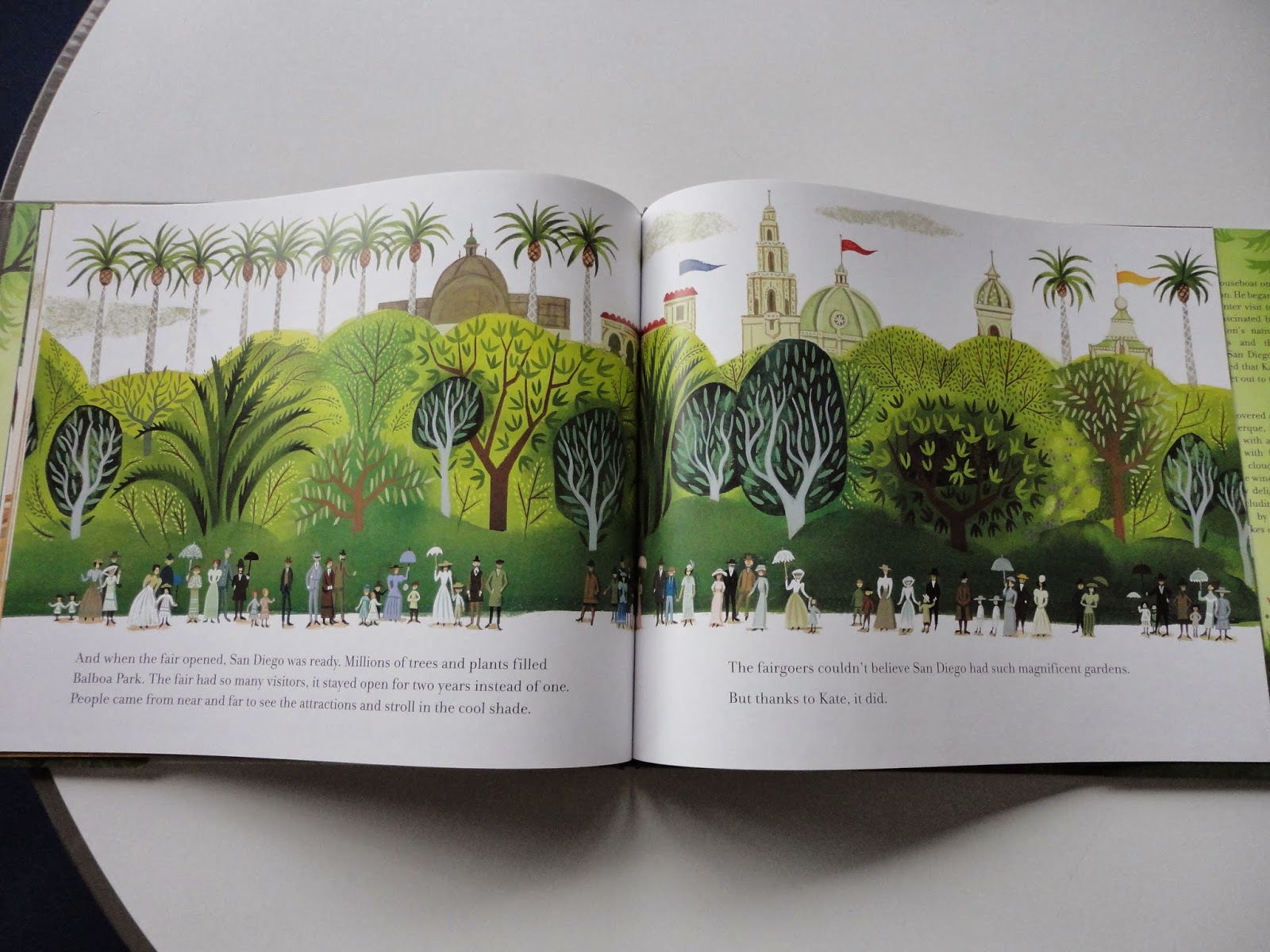
Creative nonfiction picture books.
Creative nonfiction picture books are simply picture books where the story happens to be true. Sounds really simple but it took me a while to work out that’s what I wanted to do...
I’d thought about writing non-fiction for younger children before. But the passion wasn’t there. I love picture books. I love the way the words and pictures are so much more together than they are separately. I love the drama that can be created in such a short space. I love the form and the constraints.
There was plenty of really interesting information in the nonfiction books I was looking at...
Save The Orangutan (c) Sarah Eason, Powerkids Press.
They all felt very educational –which isn’t a criticism at all. I love learning and I was enjoying reading them but they didn't make me want to write them (like good picture books do). So I shelved the idea of writing nonfiction until something that really grabbed me turned up. Then one day ... [cue page turn]
Something that really grabbed me turned up.
An illustrator friend, Jess Mikhail, and I were both approached by Bournville Village Trust, in Birmingham, UK. Would we consider writing and illustrating a picture book together about Bournville? This is where the Cadbury brothers built their famous chocolate factory in the late nineteenth century, followed by a model village, created for the benefit of the factory workers, wider community and society. The story is fascinating. It’s passionate, political, philosophical, ground-breaking with an extraordinary family at its heart. And of course, there’s chocolate. Lots of chocolate. Would we consider creating this picture book?
(That's meant to be an excited me, pretending to have to ponder on the question that actually has an obvious answer. Didn't quite turn out that way...)
[cue the page turn where everyone knows the answer and can shout it out loudly together:]
YES!
Unusually, because this has been commissioned by BVT rather than a traditional publisher, we get to choose the angle and approach for the book and the design. At first, I thought we’d go down the route of fun historical book with lots of interesting facts and a mix of illustration, photos, letters etc.. There are some really interesting and fun books like that that we looked at:
I've read Mandy Ross's Children's History of Birmingham over and over and it's great.
(c) Mandy Ross, Hometown World.
...and we've really enjoyed the Avoid... books.
Avoid Being a Second World War Evacuee by Simon Smith, David Salariya and David Antram, Bookhouse.
I originally thought that our book might end up somewhat similar in format to these books.
But without thinking too much more about the structure, or indeed trying to impose in advance which story I’d try and tell, I got on with the research...
...and what an exciting area to research.
(My walk up to the entrance, where the amazing archives are located.)
I immersed myself in the world of the Cadburys and chocolate.
I’ve had amazing access to the archives and I’ve interviewed some fascinating people in their eighties and nineties, who used to work in the factory and whose families worked there well before. I’ve toured the Bournville Village Estate
(Old photos of Bournville Village Trust. Copyright BVT)
and watched footage that’s over one hundred years old.
I’ve read letters and handwritten personal reminiscences about the 1880s
(c) Cadbury Archive
(c) Cadbury Archive
Recognise this signature and what it became? (c) Cadbury Archive
and I’ve got access to incredible photos...
But back to the structure –and creative nonfiction...
After a while of playing around with different ideas, Jess and I decided we’d like for it to be a real picture book, telling a real story. I got loads of nonfiction picture books out of the library. Some of them were full of fascinating facts and were really well written. But I didn’t find any beautiful ones that were telling a story. So I asked at the library if there were any they thought were really unusual, arresting, beautiful. The librarian came up with one that she felt was in a completely different league from the others. But we couldn’t find a copy anywhere. I kept asking what made it so special and she said, “you’ll know when you see it”. I reserved it but in the meantime, I couldn’t resist and I bought it, too.
Can We Save The Tiger? by Martin Jenkins and Vicky White is indeed a beautiful book, which unusually for a nonfiction book, was shortlisted for the Kate Greenaway Award in 2012.
(c) Martin Jenkins and Vicky White, Walker Books
But I couldn’t find any others –except one story we had at home that was first out in 1999:
This beautiful book, Stone Girl, Bone Girl is about Mary Anning, the girl who inspired the popular children's tongue-twister She Sells Sea Shells on the Sea Shore (c)Laurence Anholt and Sheila Moxley, Frances Lincoln Books).
(c) Laurence Anholt and Sheila Moxley (Frances Lincoln Books)
And then someone from my fantastic online critique group (most of whom are American) posted up about WOW Nonficpic, an online nonfiction picture book forum and about an online course that was coming up, run by nonfiction picture book author, Kristin Fulton, which some of us might be interested in. And I feel like I entered into a new world of creative nonfiction that is much more common in the US than here in the UK. There was lots of talk about different, beautiful creative nonfiction picture books and my wish-list grew and grew...
I decided to do the four-week online course, where I was introduced to yet more beautiful creative nonfiction picture books.
The beautiful, simple creative nonfiction picture book, Me...Jane about the childhood of Jane Goodall (c) Patrick McDonnell, Little, Brown.
(c) Patrick McDonnell, Little, Brown.
Balloons Over Broadway (c) Melissa Sweet, Houghton Mifflin
from Balloons Over Broadway (c) Melissa Sweet, Houghton Mifflin
Tree Lady by H Joseph Hopkins, Beach Lane Books.
A Splash of Red (c) Jen Bryant and Melissa Sweet, Knopf
From A Splash of Red (c) Jen Bryant and Melissa Sweet, Knopf
Henry's Freedom Box (c) Ellen Levine and Kadir Nelson, Scholastic Press
Locomotive (c) Brian Floca, Simon and Schuster.
I wanted to be immersed in a world of books that was new to me (and which there was little access to in the UK) and to be surrounded (virtually) by other people who were passionate about the form of creative nonfiction in the way that I’m so often surrounded by those writers who are passionate about picture books. The course was extremely good (I’d very seriously recommend it to anyone writing or interested in writing nonfiction picture books)–and timely for me. I’ve learned lots, and have now got hold of a pile of books that I can use for inspiration (about completely different subjects). I’d already fallen in love with the research and the story for our book, but now I’d fallen in love with the form of book, too.
About four months after I’d starting researching the book, I decided which story I wanted to tell (the history is so fascinating I could have told lots). I spent weeks working on a picture book structure and testing it out with other writers.
And I presented it to all the relevant people in Bournville earlier this week and it got the big thumbs up.
Creative nonfiction is very much like a fiction picture book. It’s about the story and the way you tell it; the use of page turns and the highs and lows. The expectation and surprise and like all good picture books, it needs to stand up to being read again and again. And the illustrations must be lovely, as with all good picture books.
The very beautiful The Journey Home by Fran Preston-Gannon, Pavilion Books. It's not quite creative nonfiction (it's a made up story about endangered species) but it's beautiful and inspirational.
(c) Fran Preston-Gannon, Pavilion Books.
I’m so excited.
First, by the story –of two innovative young Quaker brothers...
Richard Cadbury in later years (c) Cadbury Archive
George Cadbury as an older man (c) Cadbury Archive
who did something remarkable. The death of their beloved mother had left their father, John Cadbury,
John Cadbury (c) Cadbury Archive
a broken man and his cocoa factory and business was failing badly. With great integrity, humanity, sacrifice and an extraordinary vision, they took on the business, and turned it round to become incredibly successful throughout the world, whilst at the same time working to create much better working conditions,
Bournville, the 'factory in a garden' 1879 (c) Cadbury Archive
The girls' dining room (c) Cadbury Archive
living conditions
from this...
Birmingham slums (c) Cadbury Archive
to this...
(c) Cadbury Archive
circa 1905 (c) Cadbury Archive
Bournville Green (c) Cadbury Archive
Early cottages built for the new model village (1905) (c) Cadbury Archive
Early housing (c) Cadbury Archive
Almshouses for former factory workers, built by Richard Cadbury (c) Cadbury Archive
First Bournville cottages, 1880 (c) Cadbury Archive
and spiritual and physical conditions for many thousands of people.
Early shot of girls at the factory (c) Cadbury Archive
Bournville Friends Meeting House (c) Cadbury Archive
(c) Cadbury Archives
Friends Hall 1901 (c) Cadbury Archive
Girls' Physical Training Den, 1902 (c) Cadbury Archive
Camp school (or 'school on a barge') 1919 (c) Cadbury Archive
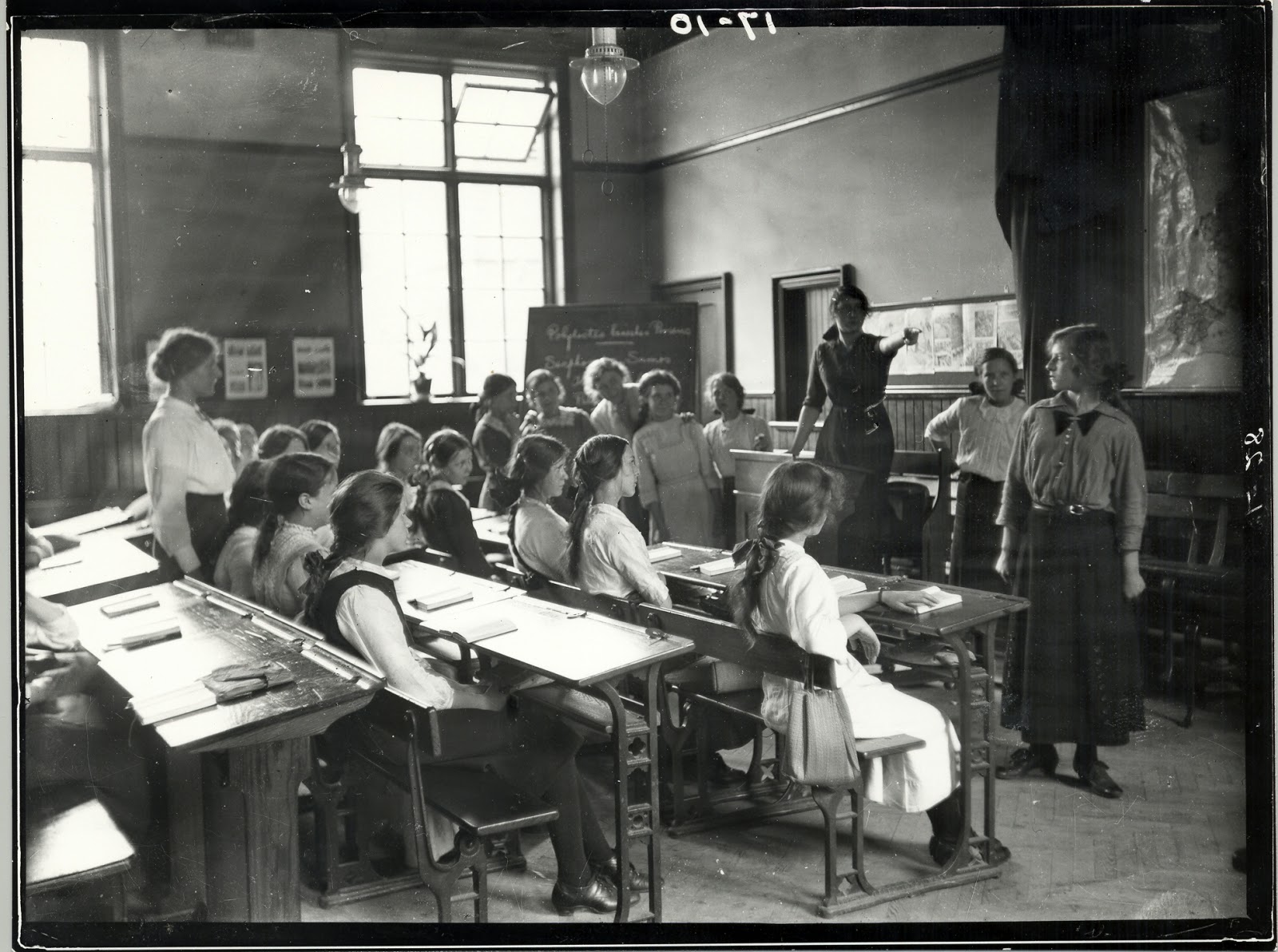
Day continuation school (c) Cadbury Archive
(c) Cadbury Archive
Girls' gymnastics, 1912 (c) Cadbury Archive
Swimming lessons, provided free during work time, 1910/1911 (c) Cadbury Archive
But I’m also really excited about having discovered creative nonfiction. I’ve got several other creative nonfiction books I’d really like to write after this one. I think that this love affair will go far...
I’ve spent so much of my time up at the factory archives, breathing in the sumptuous smell of chocolate as I get off the number 27 bus, I know I’m going to feel quite bereft when it’s over. It’s been like a dream job and I don’t want it to end.
But it’s time to get down to the actual writing now, bringing colour to the black and white, having made piles of notes over the past few months. The first really really rough draft will only take a couple of days to write as I know the story so well and I’ve got my structure sorted. Then I’ll spend the next couple of months playing with the language, fleshing it out and editing it.
OK, we're not quite (?!) there yet, but we will be... once I've finished the text and Jess has illustrated it...
As the wonderful David Almond said at a talk I went to last year:
“Make it lovely.”
And that’s what we plan to do.
What are your thoughts on creative nonfiction? Why are there so many more beautiful creative nonfiction picture books in the US than in the UK? Do UK publishers not feel there is a market for them? Are they there and I’m missing them? Or is there going to be the same explosion of these books in the UK in the coming years? I really hope so. Jess Mikhail and I are in an unusual position of being able to create what we most want to create, knowing that it will be produced and published (in conjunction with BVT), but it would be fantastic to see lots more on the shelves in schools, libraries and bookshops...
www.julietclarebell.com
Sunday, 23 March 2014
Turning Black and White into Colour: Creative Nonfiction Picture Books ... and Chocolate by Juliet Clare Bell
Sunday, 16 March 2014
Picture Book Apps - Creating Good Screen Time
Today's welcome guest is Helen Dineen, a picture book author and mum of two living on the south coast of England. Helen signed with the Anne Clark Literary Agency last year and is hoping that 2014 is the year her stories might find a publisher. She also reviews book apps for young children at http://capptivatedkids.wordpress.com. Find her on Twitter @aitcheldee and @capptivatedkids
I've been blogging about kids' apps for nearly two years
with my children (now aged 6 and 4) - as a parent rather than a writer. Back in
2011, I joined Twitter looking for publishers and authors to follow as I got
more serious about writing my own stories. One of the first I followed was Kate
Wilson, who was tweeting about Nosy Crow's very first app, The Three Little Pigs. As soon as I had an iPad I downloaded it and
was instantly hooked. The Three Little
Pigs showed me how good apps can be. Since then the explosion in story apps
leading to the creation of the Interactive Stories section on the App Store shows
there is a real market for them.
But books and apps are very different beasts. I couldn't find specific research on the use of book apps, so I conducted a very unscientific Twitter survey. 11 out of 12 replies counted book apps as screen time, and at least 9 out of 12 restricted their use with their children. One replied, " Nice way for kids to "read" on own, but we do limit all screen time... Always make time to read real books!" Only one did not distinguish between apps and books and added "I don't restrict time on them as we do anything to encourage reading."
With this in mind, I hope there will be increasing opportunities for picture book writers to write apps, while being confident that "real" books will not be abandoned by young children or their parents and carers any time soon.
What Apps Do Well
28% of 3-4 year olds use a tablet computer at home[i] . Picture books are particularly well suited to reading on tablets due to their relatively short length, highly illustrated nature, interactivity (e.g. lift the flap) and the ease of use of tablets for young children. There are a number of benefits for storytellers:
· Freedom from format constrictions such as number of pages and story structure. You can create a story with multiple pathways (Little Red Riding Hood, Sleepy Mole) or a circular life cycle story (Franklin Frog, Parker Penguin).
·
Have the reader change the story with their own suggestions
(Don't Let the Pigeon Run This App uses
the microphone for this).
·
Add atmosphere through narration, music and
sound effects.
·
Add interactivity which draws the reader into
the story e.g. solve a puzzle to
reach the next page (Bartleby's Buttons)
or show the reader reflected in a mirror using the iPad camera (Nosy Crow's Cinderella).
![]() |
| Little Red Riding Hood |
![]() |
| Sleepy Mole |
Apps Need Picture Book Authors!
I would love to see more established names producing original content with app developers (and I do think it is a shame Julia Donaldson could not be persuaded to take up the baton when Children's Laureate.) Original content produced specifically for the iPad is almost always better than transferring an existing picture book across. The interactivity can be developed alongside the story as one product rather than an add-on. Some aspects of existing books just don't work. To take one example, page turns often lose their impact when you have broken up the storytelling with interactivity. "And then he saw an ever so silly... [tap, tap, tap, make things move, after a few minutes turn the page] ...crocodile!" [wait, how did this sentence start again?]
I also think quality story apps can compete with games. Two parents responding to my Twitter survey said book apps count as "Good screen time". Another said " ...count them as screen time as they're often so interactive -to the point where [she] refers to them as games." Indeed the concern about apps replacing paper books is a distraction I think, from the wider issue of books losing out to TV, games and the internet as highlighted in BookTrust's latest reading habits survey. The more that reading can sneakily join up with gameplay in apps like Nosy Crow's Jack and the Beanstalk and Alph and Betty's Topsy-Turvy World, the better. I would also like to see more picture books connected to apps, providing extra content linking the two (see Moira's predictions in January).
I do think the opportunity is there to create more "good screen time." But I also think there are many ways in which picture books still have the edge.
| Alph and Betty's Topsy Turvy World |
Where Picture Books
Win
It is so easy to see a picture book on the shelf, pick it up and start reading! It is much easier to share a book at home, in preschool and with a class. If you spill juice on it, you've only lost one book. You can borrow piles of them from the library at a time for free. Let's face it, tablets are expensive and although many app developers provide video trailers so you can see what you are buying, you do still need to purchase every app you use. It's possible to gift an app, but not nearly as exciting for a small child with nothing to unwrap on their birthday.
When reading, the parent is better able to control the use of the book and pace of the story with a -book. Narration is the norm on apps - "When I use the iPad I don't read with them, I let them use it on read-to-me mode." This means the experience of reading a book is usually more shared with parents who spend time talking around the story more, doing all the silly voices, and getting involved in their children's world. You can touch and feel the pages, which can also be bigger - particularly good for large or detailed illustrations. You can't reproduce the impact of a huge, intricate double spread on an iPad!
And finally, using a book is easy. You turn the page, and read. When it comes to apps, there is no standard for activating page turns, turning narration on/off and so on. Every app is different, and children need to learn how they work. It isn't a big barrier for tech-savvy toddlers, but it is there.
The Future?
There are some great apps for this age group out there, and I hope more established picture book authors might get involved in writing original content and tapping in to the possibilities to merge storytelling and gameplay. But I don't believe technology will ever kill off picture books - books will wriggle up and make room for apps as they did for TV. In fact it may well be TV which loses out in the battle for children's attention. For this age group in particular it will be for parents to find the balance, and hopefully still choose to curl up with their child and a book or two.
Want to find out more? Here are three of my favourites -
And see this great blog post by Kate Wilson on writing children's
picture book apps.
Tuesday, 11 March 2014
Kids have the Best Ideas by Jane Clarke
I'm in the middle of three hectic weeks of World Book Day visits
to infant schools and nurseries. I love school visits - they keep me in touch
with the age groups I write for and fire me with enthusiasm. And young children have such wonderful ideas…
Teddies are sliding down rainbows to swim with sharks,
floating around on balloons
and a fairy teddy is living in the stars.
Creatures of all shapes and sizes are hatching out of eggs
and sometimes they make lovely pets
Gilbert (my great white shark) is starring in all sorts of new stories
Castles are being discovered - this one's made of wood and visted by cloud dragons
and this one's made of candy and populated with purple princess unicorns.
I'm having so much fun and I'm so impressed by the
children's imaginations. Thanks to all the schools who have invited me to visit
– and congratulations to all the young writers and illustrators out there!
Thursday, 6 March 2014
Tweeting Traditional Tales
![]() |
| One of the three Billy Goats |
I started to teach creative writing and writing picture books around three years ago. During that time I've experimented with different ways to encourage students to practice their writing skills. One of the methods I've successfully used is to encourage students to recreate old stories by using tweets. If you've never heard of Twitter (and tweets) the idea is to create a message using just 140 characters, including the spaces.
So rather than cover a topic I've decided to set a challenge for the visitors to The Picture Book Den.
Next time you have ten
minutes free choose a fairy tale and become one of the characters. Create a
series of tweets that tell that characters side of the story.
To demonstrate what I mean here is my retelling of 'The Three Billy Goats Gruff' from the
point of view of the troll. If you've never read the story then follow this link.
Woken
this morning by a small goat trying to cross my bridge without paying a toll
#angrytroll
This
morning caught a second goat trying to sneak across my bridge without paying
toll. Can't believe how rude goats can be. #angrytroll
Discovered
a third goat attempting to cross bridge without paying toll. He even head
butted me! #angrytroll
How do
these goats expect me to stay in business? No toll, no bridge, no way to cross
river to eat delicious grass! #angrytroll
Reluctant
sale of bridge, been in family for generations. License to charge toll. High
daily foot fall. #businessforsale
Note: Using a hash tag before a term allows other Twitter users to find your tweets
by using the same term.
I'm
hoping if you give this a go you can see how you can have fun with a well-known story, make it your
own and practice your craft. This process may not lead to a published book but
it does give you the opportunity to exercise your writing muscle in a fun way.
If anyone does give it a go please do share your results here.
Regards
Lynne
P.S. Follow me on Twitter and I promise to follow back @lynnegarner
P.P.S. The goat used to illustrate this piece is a free download (which I've rendered) from my website Anansi Spider Stories - if you have kids then please visit there are loads of free colouring pages you can download.
Saturday, 1 March 2014
Introducing... Michelle Robinson
Hello, I'm children's author Michelle Robinson. Thank you for welcoming me into the Picture Book Den! I've been reading the blog for a long time, so I feel very honoured to find myself ‘on the inside’. I thought my first post ought to be an introduction - after all, contrary to the belief of anyone who asks me what I do for a living, there’s absolutely no evidence that I am indeed ‘the next JK Rowling’, so you probably won’t have heard of me. Yet.
My first picture book came out in 2012, I’ve now got ten on the shelves, another ten in production, many more doing the rounds and a squillion duff ones cluttering up my desktop. Maybe I’m not the next JKR, but I'll happily settle for The First Me.FACTS: I love picture books and am woefully short on shelf space.
I used to be an advertising concept bod and copywriter. I wrote radio ads for a long time, so setting up ideas and resolving them quickly - as well as reading them aloud - set me up well for writing picture books.
I met fellow Picture Book Denner, Malachy Doyle on an Arvon course that he tutored some years ago. It was through his help and guidance that I found my agent and got published. Malachy will be on my Christmas list forever.
When writing, I try to choose the simplest words and use as few as possible. I chuck in the odd big word as I don’t believe in talking down to children. Books are a great place to learn new words. (As a child, I adored reading the dictionary. Still do.)
I got majorly into reading when I moved schools aged five, spotted a girl with her head in a Famous Five book and thought 'That looks fun'. She became my best friend and I spent all my pocket money on second hand Blytons.
I always dreamed of becoming a children’s author. My dad told me it didn’t matter that we weren’t rich; I could achieve anything I wanted if I worked hard enough. I believed him; I believed in myself. I worked hard and my dream came true. I can’t tell you how incredible that feels. Now I give my own children the same advice my dad gave me - and I have my very own books to back it up.
I have two children, Arthur (four) and Heidi (two). They take up most of my time, which is magic - but I do appreciate the two mornings a week when they're at nursery and I can write (and iron, vacuum, bake, eat all the baking, etc.).
I'm Patron Of Reading for my local first school. It's brilliant. I get to spend time with wonderful kids and introduce them to brilliant books they might not otherwise encounter.
My pet publishing hate is people being secretive about the road to publishing. There's always space on the shelves for more great books, and children deserve quality. I'm always happy to share any 'wisdom', hence my website features a regular-ish advice section called Pencil Tips.
I like cake a little bit too much.
Finally - violins at the ready - I'm writing this from a hospital bed. I'm currently getting hardcore drugs and custard free on the NHS, and attempting to write a first draft of a children's novel while I'm bed bound. It's not going terribly well. I blame the high temperature.
I'm really looking forward to contributing to the Den and getting to know you all a little better.
With warmest wishes (currently about 38°),
Michelle Robinson
For more on Michelle Robinson, including writing advice, colouring sheets and free audio games to accompany her picture books, visit her website.
Subscribe to:
Posts (Atom)


.jpg)