Showing posts with label picture book revision. Show all posts

Monday, 27 November 2023

Write Picture Books Like the PROs – Create a Rock-Solid PREMISE first! • by Natascha Biebow

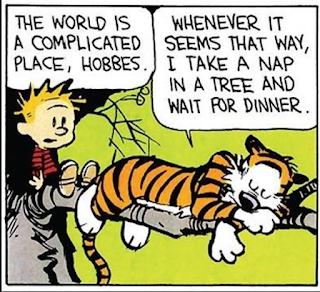
The art of writing a picture book is deceptively difficult. (It can be tempting to take a good long nap when you're stuck or in need of inspiration and fortitude when submitting . . .)


Summed up perfectly in this cartoon by Calvin and Hobbes by Bill Waterson


Here's why:

Most picture books start with an idea.

IDEA the initial inspiration for the story. The reason why the book is being written.

Yay! An idea is top-notch. Now, you can dive right in and write your picture book. You've made a good start, you might argue . But wait . . . there's a catch – picture books written in this way often lack both emotional resonance and cohesive narrative flow. 

This is because many ideas have been done as books before. This is also why you might be getting rejection letters that say your book 'feels too familiar' and 'doesn't stand out in the competitive marketplace'.

More experienced creators will write out an outline and figure out key elements in the PLOT.

PLOT – is just what happens in the story.

This is a great start too, however it still often leads to books that aren't compelling enough. Why? Because the author hasn't addressed a key factor - WHY should anyone care about this story?

Waiting to plot out the book until after you've figured out what makes the book tick can save you a lot of time!

So how do you develop that initial idea into something that will make editors, agents, and most importantly, young readers take notice?

You need a Rock-Solid Premise!


If you figure out your rock-solid premise first, you'll stay on course and not go walkabout as you figure out
how to fix your picture book that just isn't resonating or selling. As inspired by Calvin and Hobbes (by Bill Waterson),
artfully balancing their way to the other side of the stream. Don't make the mistake of falling in or getting lost in the woods!


PREMISE — The unique way YOU are going to develop that idea into a compelling, marketable picture book with resonance and impact.

This is a KEY step that many picture book creators miss when developing their idea. By taking the time to work out a solid premise, you can take your picture book to the next level by making it unique, memorable and powerful.

To give you an idea of how this can work, let's look at a bestselling picture book that is celebrating 20 years:

DON'T LET THE PIGEON DRIVE THE BUS by Mo Willems


Premise: a child-like pigeon wants to drive the bus, but the driver has left the reader with strict instructions to mind the bus and not let the pigeon drive it. The pigeon begs, wheedles and negotiates, trying all the tactics that young readers might recognize from when they are trying to get grown-ups to do what they want. The pigeon gets increasingly frustrated and angry, but the readers keep on telling him "NO!" 

From Don't Let the Pigeon Drive the Bus! by Mo Willems


When the driver returns and thanks them at the end of the story, the pigeon is sad, but still hopeful. Now, he's dreaming bigger with his sights set on driving . . . a truck!


From Don't Let the Pigeon Drive the Bus! by Mo Willems


In an interview on CBS Mornings, Mo Willems said, "I think of my audience, but I never think for my audience."

In the first book of his bestselling series, the author places the child firmly in the driver's seat. The interactive dialogue format itself encourages creativity and imagination. The book is something kids can play with. It is also a springboard for imagining new adventures for the pigeon character.

The reason this premise is so strong is that the role-reversal resonates with both children and adults alike. Willem's child-centred plot, character motivation and humour are seamlessly interwoven to create a very simple, but unique and compelling story that resonates. 


Crafting a strong PREMISE is a powerful (and often missed) pro skill. It is the core concept that gives your book a reason to exist. It's what takes an idea that many other writers may have had, and makes it uniquely yours. It takes craft and skill – and sometimes 'cooking time' – to develop a solid premise that will make your book stand out in the competitive marketplace. It's well worth spending some time to consider your premise before you start writing.


_________________________________________________________________


Natascha Biebow, MBE, Author, Editor and Mentor
 
Want to know more? Take a deep-dive and learn how to develop a rock-solid premise and how it can empower you to create the perfect hook for your pitch and query letter here.

Natascha is the author of the award-winning The Crayon Man: The True Story of the Invention of Crayola Crayons, illustrated by Steven Salerno, winner of the Irma Black Award for Excellence in Children's Books, and selected as a best STEM Book 2020. Editor of numerous prize-winning books, she runs Blue Elephant Storyshaping, an editing, coaching and mentoring service aimed at empowering writers and illustrators to fine-tune their work pre-submission, and is the Editorial Director for Five Quills. Find out about her new picture book webinar courses! She is Co-Regional Advisor (Co-Chair) of SCBWI British Isles. Find her at www.nataschabiebow.com


Monday, 10 July 2023

How to Trust and Allow Space for the Picture Book Illustrator • by Natascha Biebow

Trust

As a picture book writer, I often wish I had the talent of those author/ illustrators who can write and illustrate. They have a superpower in that they can mix and match the words and pictures, adding layers and making choices to balance out the story so it is just right.


But, if you’re ‘just’ a writer, you have to allow space for the illustrator and then sit back and wait for the layouts to unfold into a fully-formed picture book that is just right. It’s an exercise in trust and letting go. The results are often hugely gratifying, but it can be a scary process.


Will the illustrator capture the author’s vision?

What if they miss a key element or get it ‘wrong’?


The temptation can be to want to take control and to over-write or art-direct with illustration notes.


In traditional publishing, authors work with a skilled team – a designer and an editor, and sometimes also the publisher and art director – who are incredibly experienced and knowledgeable in the art of making picture books. They help to pull together all the elements to create a seamless picture book that will captivate young readers. A lot of time, careful thought and revision goes into this process, including choosing the right illustrator for each story.


What’s interesting is that often illustrators add whole new storylines in the pictures – Pippa Goodhart recently blogged about this in her ‘The Joy of Visual Sub-Plots’ post. These sub-plots are filled with lots of fabulous details to spot and mini-storylines to follow, making the book one to which young readers will return to again and again.


Something else spectacular often happens, though, when authors let go of their words and create space for illustrators:


Layers and Depth

Layers and depth!


The layers are created when illustrators springboard off the text to imagine the story on the page – the key plot turning points, the setting and the characters, complete with individual personalities. Illustrators deepen the themes by attributing to them a visual representation, making them accessible and relevant to young readers, who are often astute visual thinkers.


Interpreting Themes:


When You Are Brave by Pat Zietlow Miller and Eliza Wheeler

WHEN YOU ARE BRAVE: Pat Zietlow Miller and Eliza Wheeler is the story of being brave when you have to do things in life that you’re much rather not do. The author’s words for the opening:


“Some days, when everything around you seems scary,

you have to be brave.


“Brave as a bird that steps from its nest . . .

hoping to soar through the sky.


“Brave as a dog that wanders for miles . . .

searching for a well-known light.


“Brave as a caterpillar that builds a bed . . .

wondering where it will wake.


Because some days are full of things you’d rather not do.”


These phrases could have been illustrated in so many different ways. Eliza Wheeler depicts the situation as a girl’s family moving home


From When You Are Brave by Pat Zietlow Miller and Eliza Wheeler

From When You Are Brave by Pat Zietlow Miller and Eliza Wheeler


and creates a neat segue between the metaphorical, lyrical words by illustrating a physical bird, dog, and caterpillar as the girl’s precious stuffed toys. Thus, Eliza helps to make the abstract more concrete and relatable for young readers.


From When You Are Brave by Pat Zietlow Miller and Eliza Wheeler


In THE TRUTH ACCORDING TO ARTHUR by Tim Hopgood, David Tazzyman must depict what a completely abstract character (The Truth) looks like and give it a personality. 


The Truth According to Arthur by Tim Hopgood and David Tazzyman.

He deftly imagines the situations in which the boy bends, stretches, ignores and covers up The Truth.


The Truth According to Arthur by Tim Hopgood and David Tazzyman.

The Truth According to Arthur by Tim Hopgood and David Tazzyman.


In I AM NEFERTITI by Annemarie Anang, Natelle Quek also artfully captures an abstract element – music.


I Am Nefertiti by Annemarie Anang and Natelle Quek


Natelle shows how the band feels and sounds when it makes music that is discordant and harmonious, even adding different colours for each instrument.


 From I Am Nefertiti by Annemarie Anang and Natelle Quek

The main character, Nefertiti, is the drummer, who keeps the all-important beat in the band. But when her teacher shortens her name to ‘Nef’ because it’s easier to pronounce, something shrinks inside her – both literally and figuratively. In order to make this idea accessible to young readers, Natelle needed to show Nefertiti’s physical transformation as well as how it felt. To convey this, she positioned the main character tiny amongst the looming drums:


 From I Am Nefertiti by Annemarie Anang and Natelle Quek

Characters & Their Worlds :


I AM NEFERTITI is a story about identity and belonging; the multicultural, diverse cast of band members is intrinsic to the narrative. Working from the starting point of the author’s text (just the characters' names and their instruments), the illustrator and editorial and design team worked closely together to envision what each child should look like:


 From I Am Nefertiti by Annemarie Anang and Natelle Quek

In James Catchpole’s WHAT HAPPENED TO YOU?, Karen George also creates an authentic group of children, and sets them in the playground, cleverly juxtaposing the real with the imaginary using blocks of solid colour.


What Happened to You? by James Catchpole and Karen George


The main character, Joe, says, “And there are sharks down here, too.

They especially like to eat pirates.”


If you look closely at this scene, Karen George adds all the drama of different children’s reactions to the pretend play in their well-observed expressions and body language. This is intuited in the dialogue between Joe and the curious children, but not written explicitly into the text. It is more powerful this way.


From What Happened to You? by James Catchpole and Karen George
 

In LAST STOP ON MARKET STREET by Matt de la Peña and Christian Robinson, a boy sets out on a bus journey with his grandma.


Last Stop on Market Street by Matt de la Peña and Christian Robinson

Readers are introduced to the people they meet, among them, a blind man and guide dog, a musician, and a woman with butterflies in a jar. The illustrator has to decide: what kind of dog? What ages, ethnicities and backgrounds will the people be? What should they wear? How will young readers engage with the pictures. Will they see themselves and their backgrounds represented? And so much more!


Last Stop on Market Street by Matt de la Peña and Christian Robinson


Similarly, in MY DADDIES! by Gareth Peter, the illustrator, Garry Parsons, imagines what this family looks like and how they act and react in each scene. 


My Daddies! by Gareth Peter and Garry Parsons


The illustrator must imagine situations to best convey the layers and flesh out the accompanying words. For instance:


“They’re not the best at everything . . .


(one dad is not a particularly good artist)


but I don’t really care.”


(one dad is not a particularly good cook)


From My Daddies! by Gareth Peter and Garry Parsons


It’s almost as if the words are ‘coming true’.


Especially poignant, is the double-paged spread, where the child’s adoption story is lovingly imagined and portrayed from babyhood to new, two-dad family home.


From My Daddies! by Gareth Peter and Garry Parsons


The illustrator is essentially adding a 3-D version of the author’s words, envisioning the child’s adoption journey and the family’s home life, and making it feel real and relatable to every young reader.   


The Bad Seed by Jory John and Pete Oswald

In THE BAD SEED by Jory John, Pete Oswald envisions what a ‘bad’ seed might look like:


From The Bad Seed by Jory John and Pete Oswald

And what the seed might do when lying:


From The Bad Seed by Jory John and Pete Oswald


Or in which situation the seed might cut in line:


From The Bad Seed by Jory John and Pete Oswald
 

And what other bad things the seed might do:


From The Bad Seed by Jory John and Pete Oswald
 

And what the seed might do when turned nice:


From The Bad Seed by Jory John and Pete Oswald


In essence, Pete Oswald has envisioned the ‘bad’ seed’s entire world and background, and made important choices about how to convey the emotional journey of the main character as readers turn the pages. This isn’t written into the author’s words per se, but as a finished picture book, it is so much richer with the illustrator’s contributions.


Finally, sometimes, the layers and depth of the message emerge in the form of a visual punchline, such as in SUSAN LAUGHS by Jeanne Willis and Tony Ross. 


Susan Laughs by Jeanne Willis and Tony Ross

In this book, the space evoked by the words is filled with the pictures of Susan enjoying life just as any able-bodied child might. The detail in the pictures adds context about Susan's family, friends, and the activities she enjoys - for example "Susan flies" could have been interpreted in many different ways!


From Susan Laughs by Jeanne Willis and Tony Ross

The final page shows Susan is in her wheelchair, and together with the preceding images, a picture of the whole suddenly emerges – Susan as a child just like every other.


From Susan Laughs by Jeanne Willis and Tony Ross


Next time, you’re tempted to be wordy, to add too much description, or even to over-art-direct a book, have faith. Think: could the illustrator add those layers? Time to trust! 


Trust


It’s totally worth it, and you’ll end up with a richer book as a result.


_________________________________________________________________

Natascha Biebow, MBE, Author, Editor, Coach and Mentor

Natascha is the author of the award-winning The Crayon Man: The True Story of the Invention of Crayola Crayons, illustrated by Steven Salerno, winner of the Irma Black Award for Excellence in Children's Books, and selected as a best STEM Book 2020. Editor of numerous prize-winning books, she runs Blue Elephant Storyshaping, an editing, coaching and mentoring service aimed at empowering writers and illustrators to fine-tune their work pre-submission, and is the Editorial Director for Five Quills. Find out about her new picture book webinar courses! She is Co-Regional Advisor (Co-Chair) of SCBWI British Isles. Find her at www.nataschabiebow.com


Monday, 1 May 2023

Are There Any NEW Book Ideas Out There? • by Natascha Biebow

Are there really any NEW book ideas out there . . .? When you have a book idea, do you go online and search if anyone else has done it already?

For example, say you wanted to write a book on the topic of TREES. Here are just seven different ways 'in' to the topic that you might find:

Trees to Spot by Kirsteen Robson and Sam Smith

The Tree Lady: The True Story of How One Tree-Loving Woman
Changed a City Forever
by H. Joseph Hopkins and Jill McElmurry

Tree by Britta Teckentrup

Trees: A Lift-the-Flap Eco Book illus by Carmen Saldana

Little Tree by Loren Long

As an Oak Tree Grows by G Brian Karas

The Wisdom of Trees by Lita Judge


So, arguably, most of the time, the answer is yes – in some shape or form - someone will have already written a book on 'your' topic. Why?

People are often asking the same questions – we’re curious by nature.

Everything reminds us of something . . .

It can be dispiriting, sometimes, to find yourself almost halted by this kind of obstacle before you’ve even really started.


But  . . .


Here’s a glimmer of hope: most ideas HAVE already been done, but they haven’t already been done by YOU.


So, how can you figure out your fresh, new take on an idea, your uniquely YOU story?


Writing coaches and industry professionals will often say:


“Write from the heart.”


“Write what you know.”


“Share what you’re driven to share.”


Yes, if you do this, your writing will come from you and your experience.


But the key here is to find a connection with readers that feels fresh and new. How?


You have to find a way to make your idea resonate with readers in a uniquely YOU way.  


How?


You have to make them say a-ha! or ahhhh!!! or aw! or WOW!  


To understand this, we have to delve into where any ‘new’ ideas come from.


Humans are driven to be creative and innovate. It gives us a boost. But . . .


“There is no such thing as a new idea. It is impossible. We simply take a lot of old ideas and put them into a sort of mental kaleidoscope. We give them a turn and they make new and curious combinations. We keep on turning and making new combinations indefinitely; but they are the same old pieces of colored glass that have been in use through all the ages.” ― Mark Twain, Mark Twain's Own Autobiography: The Chapters from the North American Review

Our ideas are in all kinds of combinations, in a 'mental kaleidescope' 

So how do we make ‘new and curious combinations’ that are amazing and feel fresh and new? How do we create something that feels AUTHENTIC?


GENERATING NEW IDEAS:


To create new ideas, we often start with what’s come before, then question the defaults in order to innovate. In an article for the Smithsonian Magazine, this is summed up perfectly:

“Across the spectrum of human activities, prior art propels the creative process . . .

Before 1908, building a new car was laborious. Each vehicle was custom built, with different parts assembled in different places and then painstakingly brought together. But Henry Ford came up with a critical innovation: he streamlined the entire process, putting the manufacture and assembly under one roof. Wood, ore, and coal were loaded in at one end of the factory, and Model Ts were driven out the other. His assembly line changed the way the cars were built . . .  Ford later said, “I invented nothing new. I simply assembled into a car the discoveries of other men behind whom were centuries of work.” 


So, authors must Start with the BUILDING BLOCKS of our world and our lives and seek out the new. We must be curious. This is why we must look around us – really LOOK.


We must do RESEARCH: listen to people around us, read lots of books, watch movies and documentaries, view art, search for problems that need solving in new ways, get involved in pursuits that are unrelated to writing for creative inspiration. Spend time with our young audiences.


We must ASK QUESTIONS: our writer ears must be attuned and open to possibilities. We must look for adventure and explore.   


Then, we must CHANGE THINGS UP, push the BOUNDARIES of our everyday and knowledge, and look for NEW ANGLES on existing solutions and ideas beyond what we already know.

We must make creativity a habit!


BE PROLIFEROUS


In his book Originals: How Non-Conformists Move the World, Adam Grant suggests creatives should generate a lot of ideas to find the original. 


Originals: How Non-Conformists
Changed the World
by Adam Grant


Surprisingly, he shares that William Shakespeare wrote his famous plays MacBeth, Othello and King Lear at the same time as quite a few ‘un-exceptional’ plays. Similarly, Mozart and Beethoven composed more than 600 pieces in their lifetimes, and only a handful were masterpieces. Picasso painted thousands of paintings and Edison registered over 1000 patents, but each are remembered and revered for a handful of achievements.

Grant also says that most people make the mistake of generating only a handful of ideas and ‘then obsess about refining them to perfection.’ Sound familiar?

So, to create new, innovative ideas, we must push ourselves to generate more of them and think big.


FINDING THE EXTRAORDINARY IDEA


So, now you have a pile of ideas . . . but here’s another problem – how can you figure out which ideas are the ones to pursue? Grant says that as creatives we are too close to our work to evaluate it successfully, which is why we are either often too positive about something (we love what we’ve just made!), or unable to see its faults. The solution? To ask fellow creators because they are “open to seeing the potential in unusual possibilities” and they often don’t have a stake in the outcome of our ideas in the way we do.


So, find a reliable critique group partner or, if you’re lucky enough to have one, listen to your editor, agent or art director – they know what they’re talking about!


REMEMBER! IT TAKES TIME to percolate
to have the thought in the back of our minds long enough to come up with creative and unique idea.


Let's take another evergreen picture book topic (New babies in the family!) and look at some examples of how different creators have approached it and innovated to create a ‘new’ book idea that felt fresh and new and connected with readers:


There's a House Inside My Mummy
by Giles Andrae and Vanessa Caban
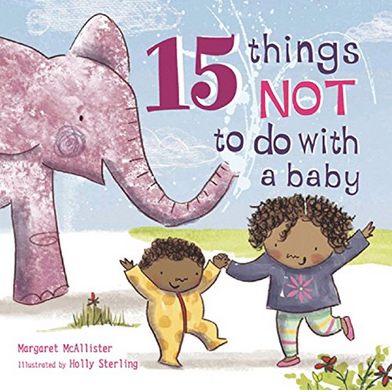
15 Things NOT to Do with a Baby
by Margaret McAllister and Holly Sherling

The Baby's Catalogue by Janet and Allan Ahlberg

Waiting for Baby by Rachel Fuller

The NEW Small Person by Lauren Child

Wolfie the Bunny by Ame Dyckman and Zachariah OHora

There's Going To Be a Baby by John Burningham and Helen Oxenbury

How to Be a Baby by Me The Big Sister by Sally Lloyd-Jones and Sue Heap

Mr Bear's New Baby by Debi Gliori

Mummy Laid and Egg by Babette Cole

On the Night You Were Born by Nancy Tillman

Mommy, Mama and Me by Lesléa Newman and Carol Thompson

Tell Me Again About the Night I Was Born by Jamie Lee Curtis and Laura Cornell


So many ways 'in'! You can change up the target age group, fiction vs. non-fiction, flip the point of view, turn the voice on its head, innovate the structure and so much more!

Even if you don’t come up with a brand new idea, by adding your unique take on it, you could add a new perspective or spin that might feel new and connect with young readers. And THAT is valuable!


_________________________________________________________________

Natascha Biebow, MBE, Author, Editor and Mentor

Natascha is the author of the award-winning The Crayon Man: The True Story of the Invention of Crayola Crayons, illustrated by Steven Salerno, winner of the Irma Black Award for Excellence in Children's Books, and selected as a best STEM Book 2020. Editor of numerous prize-winning books, she runs Blue Elephant Storyshaping, an editing, coaching and mentoring service aimed at empowering writers and illustrators to fine-tune their work pre-submission, and is the Editorial Director for Five Quills. Find out about her new picture book webinar courses! She is Co-Regional Advisor (Co-Chair) of SCBWI British Isles. Find her at www.nataschabiebow.com