Showing posts with label premise. Show all posts

Monday, 27 November 2023

Write Picture Books Like the PROs – Create a Rock-Solid PREMISE first! • by Natascha Biebow

The art of writing a picture book is deceptively difficult. (It can be tempting to take a good long nap when you're stuck or in need of inspiration and fortitude when submitting . . .)
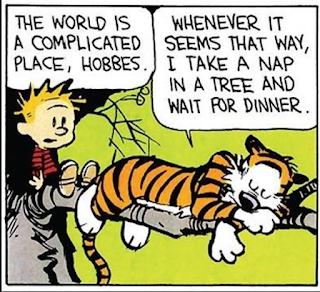

Summed up perfectly in this cartoon by Calvin and Hobbes by Bill Waterson


Here's why:

Most picture books start with an idea.

IDEA the initial inspiration for the story. The reason why the book is being written.

Yay! An idea is top-notch. Now, you can dive right in and write your picture book. You've made a good start, you might argue . But wait . . . there's a catch – picture books written in this way often lack both emotional resonance and cohesive narrative flow. 

This is because many ideas have been done as books before. This is also why you might be getting rejection letters that say your book 'feels too familiar' and 'doesn't stand out in the competitive marketplace'.

More experienced creators will write out an outline and figure out key elements in the PLOT.

PLOT – is just what happens in the story.

This is a great start too, however it still often leads to books that aren't compelling enough. Why? Because the author hasn't addressed a key factor - WHY should anyone care about this story?

Waiting to plot out the book until after you've figured out what makes the book tick can save you a lot of time!

So how do you develop that initial idea into something that will make editors, agents, and most importantly, young readers take notice?

You need a Rock-Solid Premise!


If you figure out your rock-solid premise first, you'll stay on course and not go walkabout as you figure out
how to fix your picture book that just isn't resonating or selling. As inspired by Calvin and Hobbes (by Bill Waterson),
artfully balancing their way to the other side of the stream. Don't make the mistake of falling in or getting lost in the woods!


PREMISE — The unique way YOU are going to develop that idea into a compelling, marketable picture book with resonance and impact.

This is a KEY step that many picture book creators miss when developing their idea. By taking the time to work out a solid premise, you can take your picture book to the next level by making it unique, memorable and powerful.

To give you an idea of how this can work, let's look at a bestselling picture book that is celebrating 20 years:

DON'T LET THE PIGEON DRIVE THE BUS by Mo Willems


Premise: a child-like pigeon wants to drive the bus, but the driver has left the reader with strict instructions to mind the bus and not let the pigeon drive it. The pigeon begs, wheedles and negotiates, trying all the tactics that young readers might recognize from when they are trying to get grown-ups to do what they want. The pigeon gets increasingly frustrated and angry, but the readers keep on telling him "NO!" 

From Don't Let the Pigeon Drive the Bus! by Mo Willems


When the driver returns and thanks them at the end of the story, the pigeon is sad, but still hopeful. Now, he's dreaming bigger with his sights set on driving . . . a truck!


From Don't Let the Pigeon Drive the Bus! by Mo Willems


In an interview on CBS Mornings, Mo Willems said, "I think of my audience, but I never think for my audience."

In the first book of his bestselling series, the author places the child firmly in the driver's seat. The interactive dialogue format itself encourages creativity and imagination. The book is something kids can play with. It is also a springboard for imagining new adventures for the pigeon character.

The reason this premise is so strong is that the role-reversal resonates with both children and adults alike. Willem's child-centred plot, character motivation and humour are seamlessly interwoven to create a very simple, but unique and compelling story that resonates. 


Crafting a strong PREMISE is a powerful (and often missed) pro skill. It is the core concept that gives your book a reason to exist. It's what takes an idea that many other writers may have had, and makes it uniquely yours. It takes craft and skill – and sometimes 'cooking time' – to develop a solid premise that will make your book stand out in the competitive marketplace. It's well worth spending some time to consider your premise before you start writing.


_________________________________________________________________


Natascha Biebow, MBE, Author, Editor and Mentor
 
Want to know more? Take a deep-dive and learn how to develop a rock-solid premise and how it can empower you to create the perfect hook for your pitch and query letter here.

Natascha is the author of the award-winning The Crayon Man: The True Story of the Invention of Crayola Crayons, illustrated by Steven Salerno, winner of the Irma Black Award for Excellence in Children's Books, and selected as a best STEM Book 2020. Editor of numerous prize-winning books, she runs Blue Elephant Storyshaping, an editing, coaching and mentoring service aimed at empowering writers and illustrators to fine-tune their work pre-submission, and is the Editorial Director for Five Quills. Find out about her new picture book webinar courses! She is Co-Regional Advisor (Co-Chair) of SCBWI British Isles. Find her at www.nataschabiebow.com


Thursday, 6 November 2014

Plot Twists that Zing! - by Natascha Biebow


So you’ve written a picture book and it’s got a beginning, middle and an end, but it doesn’t yet zing . . .  You’re still left asking, "So what?"

What can you do?


Lately, I’ve been noticing that the picture books that tickle my fancy are those that have something extra – a twist.


Remember I blogged about creating a breakout premise? Well, if you can surprise the reader and add some humour or unpredictability to your premise, you are definitely on your way towards creating a premise that is extraordinary.


Children love extraordinary flights of the imagination. They relish the unpredictable!
Here are some ways to add a twist to your book:


1. Give your premise a twist:


If you can turn the predictable on its head, you are headed for a premise that equals a distinctive USP (unique selling point). Editors, sales people, booksellers, librarians, children and all kinds of readers just love that!


Aliens that love underpants . . .

Aliens Love Underpants by Freedman & Cort


Pirates that are . . .

Captain Flinn and the Pirate Dinosaurs by Andreae & Ayto


                                                                                         . . . dinosaurs!


from Captain Flinn and the Pirate Dinosaurs by Andreae & Ayto

2. Give your characters a twist:


The Gruffalo really does exist . . .
from The Gruffalo by Donaldson & Sheffler

. . .  plus the tiny mouse is cleverer and braver even than this fierce-looking beastie!

The Gruffalo by Donaldson & Sheffler


This is Goldilocks’ story . . .

Goldilocks and the Three Dinosaurs by Mo Willems

. . . but no bears live here!

from Goldilocks and the Three Dinosaurs by Mo Willems

This crocodile . . .

I Really Want to Eat a Child by Donnio and De Monfreid

. . . needs to eat bananas to get big and strong after all – not a child!

from I Really Want to Eat a Child by Donnio and De Monfreid

3. Give your plot a twist:


Two families plan to swap houses for their holiday . . .


Pirate House Swap by Longstaff & Chambers
But one is not quite what they expected . . .

Pirate House Swap by Longstaff & Chambers

Grandma mustn’t find out about the lion . . .

How to Hide a Lion from Grandma by Helen Stephens


 . . . but she has a secret too – she's hiding a bear in her bedroom!


from How to Hide a Lion from Grandma by Helen Stephens
4. Give your ending a twist:


Daisy doesn’t like peas!

Eat Your Peas by Gray & Sharratt


But she will only eat her peas if her mum eats her Brussels. 
And Mum doesn't like Brussels . . .  
from Eat Your Peas by Gray & Sharratt
But they both like pudding!

from Eat Your Peas by Gray & Sharratt
 The mammoth actually belongs to the boy . . .

A Mammoth in the Fridge by Escoffier & Maudet


. . . and he's not the only animal in the boy's bedroom!

from A Mammoth in the Fridge by Escoffier & Maudet
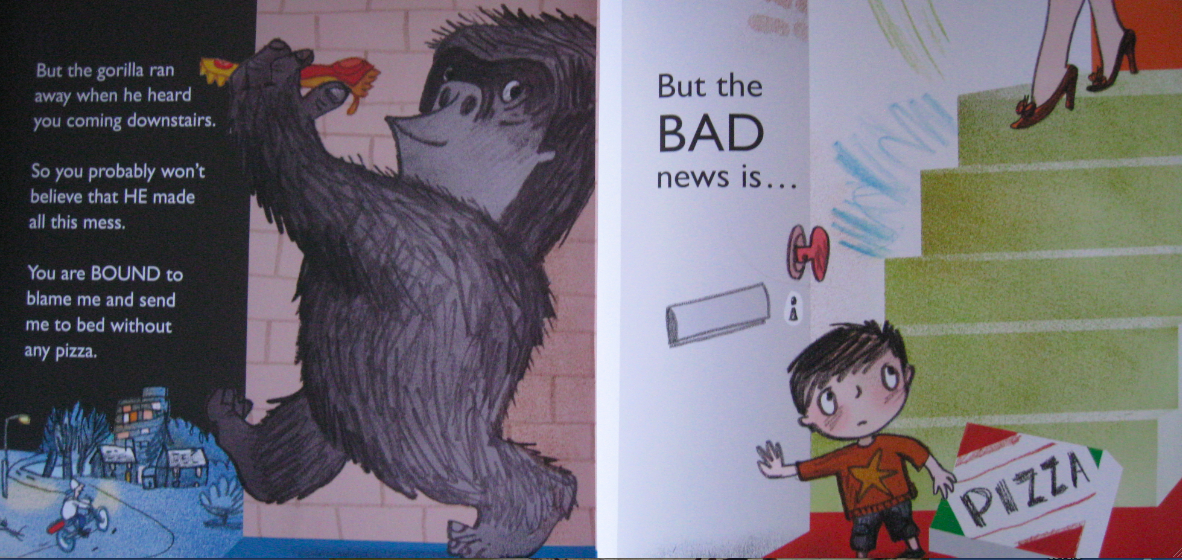
 A gorilla has come to visit . . .

Ding Dong Gorilla! by Robinson & Lord

. . . but not only did he make the mess – he left with the last of the pizza!

from Ding Dong Gorilla! by Robinson & Lord
Billy warned Dad that there were all kinds of sea creatures in his birthday bucket . . .

Billy's Bucket by Gray & Parsons
. . . but Dad borrowed it to clean the car anyway . . .
from Billy's Bucket by Gray & Parsons

What others can you think of?


Give it a twist and it will zing!
_________________________________________________

Natascha Biebow
Author, Editor and Mentor

Blue Elephant Storyshaping is an editing, coaching and mentoring service aimed at empowering writers and illustrators to fine-tune their work pre-submission. Check out my NEW small group coaching courses!

Natascha is also the author of Elephants Never Forget and Is This My Nose?, editor of numerous award-winning children’s books, and Regional Advisor (Chair) of SCBWI British Isles.  www.blueelephantstoryshaping.com


Friday, 12 September 2014

How to Write a Breakout Premise by Natascha Biebow


First, think about all the books that you really, really love. WHY do you really, really love them?

If you really, really love a book, you want everyone to read it. You tell everyone about it, right? WHY?

One of my current favourite picture books is:


Every time I read it, I laugh and laugh! The bears are replaced by dinosaurs who make delicious chocolate pudding instead of porridge; there are three HUGE chairs, and the dinosaurs are out to trick Goldilocks into becoming a delicious chocolate-filled-little-girl-bonbon for supper.

Just look at the endsheets! 

from Goldilocks and the Three Dinosaurs by Mo Willems

One can imagine Mo sitting at his desk thinking about the story premise, ticking off the options until he settled on just the right mix of elements. 

An SCBWI interview asked him: "Were there hundreds and hundreds of these that you came up with and by a process of winnowing you picked the craziest 122? How do you judge what's funnier than what? Are you putting yourself in readers' shoes or are you choosing what YOU think is funniest and confident we'll agree?"

"I write as much as I can, then take the unfunny stuff out," replied Willems.


It's the process of working out a breakout premise.

Because really, really amazing book

1. Hold you captive in a world – you wish you could spend time hanging out with those characters, living in their world. It is just so convincing, compelling, filled with unforgettable details, yet uncluttered in the simplicity of its language. And if it's funny or sad or joyous to boot, you've got a real winner!


2. Have characters you wish you could invite home for a cup of tea. They are funny and interesting and you have a strong affinity with them; or perhaps they are the kind of person you wish you could be. 

Here's another character that I really, really like: 

from Doctor Hoof by Diana Kimpton and Garry Parsons

Doctor Hoof (illustrated by Garry Parsons) really wants to help others, but he's new in town. He has to revise his expectations about what sorts of animals he can help, but when he does try, it makes him feel great inside. Plus he makes lots of new friends with animals he would perhaps not have met otherwise. 

I once asked the author, Diana Kimpton, where she got the idea:


"With Doctor Hoof, it was the name that came first. My grandson couldn’t pronounce Doctor Who properly and used to ask if we could watch Doctor Hoof. When I told my agent, she suggested that would be a good name for a picture book character and a horse with a stethoscope and a stetson immediately sprung to mind. All I had to do then was think of a story!!! 

I decided early on that it would be good if he had just moved somewhere new, but the story didn't come together until inspiration struck in the middle of the night and I woke my husband to declare "He lives in a one horse town." After that, everything slipped into place quite easily."

I love the final spread in the book - the world of this party has such a joyous, friendship-filled feel to it.

from Doctor Hoof by Diana Kimpton and Garry Parsons
But breakout worlds and characters aren't enough. A third element is essential:

3. The plot is fizzy, bubbly and compelling! The storyteller explores a topic that resonates with the reader, that is thought-provoking or dramatic – in an original way. 

Importantly, something big is at stake! 


You really care about what the author is saying and what is going to happen to those characters and their world. The story is the storyteller’s vehicle for making the reader understand something meaningful.

The dinosaurs stand to lose their delicious chocolate-filled-little-girl-bonbon for supper (well, they do because not all stories end happily ever-after!) . . . 


from Goldilocks and the Three Dinosaurs by Mo Willems
and Doctor Hoof nearly ends up friendless and unappreciated for his talent of helping others . . .


from Doctor Hoof by Diana Kimpton and Garry Parsons


When you read a book you really, really love, you are never thinking, "So what?” and, “Why should I care?” You don’t look up until you reach the end of the book. When you get there, you think, “Wow!” The words and the pictures are seamless.


You don't want to just write any book that readers will skim and soon forget. You want to write and publish those books that readers will really, really love. HOW?

To write a breakout book, we must like the characters and we must know them intimately. We must know what motivates them. Importantly, the character must care about what is going to happen in the story otherwise we won’t care!

A breakout picture book must therefore have:


Sometimes, the first premise we think of is the strongest. But sometimes, it needs ‘baking’. Then what do you do?

You can build it up by:


Observe. Look at the competition (then forget about it). 
Write from the heart, from your gut.

And then ask ‘so what?’ again.  


Natascha Biebow
Author, Editor and Mentor

Blue Elephant Storyshaping is an editing, coaching and mentoring service aimed at empowering writers and illustrators to fine-tune their work pre-submission.  Find out more about how to create a fantastic PREMISE in my webinar course!

Natascha is also the author of Elephants Never Forget and Is This My Nose?, editor of numerous award-winning children’s books, and Regional Advisor (Chair) of SCBWI British Isles.  www.blueelephantstoryshaping.com