It’s that time of year again: for some, it’s an opportunity to grow interesting facial hair
Nice
for several hundred of us, it’s the annual British Isles SCBWI Conference, with Malorie Blackman and Catherine Rayner for starters...
and for many hundred of us picture book writers throughout the world, it’s
PiBoIdMo 13! Yay!
November has turned into a month I get childishly excited about. And Tara Lazar’s PiBoIdMo (where you have to come up with 30 ideas for picture books in 30 days) has a whole lot to do with it. Since it’s all about inspiration and good habits for being creative, I’m going to talk about inspiration here. And where better to start than with my favourite illustrator (author and illustrator of my favourite adult book –Words and Pictures, and illustrator of one of my very favourite picture books, How Tom Beat Captain Najork and His Hired Sportsmen), whom I met/saw for the first time last night (a long held ambition of mine)? It's the one and only...
QUENTIN BLAKE
Photos taken by fellow groupie, Dave Gray.
In the presence of great greatness...
The lecture was brilliant. He talked about the illustrations he’s been doing ‘beyond the page’ in the last ten years or so, on buildings, art gallery and many different hospital walls and on buses for education projects (his book Beyond the Page, is beautiful and is always on my desk for inspiration...).
An illustrated book bus in Ghana.
So how does this fit with PiBoIdMo?
Well this year, I want to try specific ways of coming up with my picture book ideas as well as just writing down ideas that come to me in the course of a day.
So where do you go looking for ideas?
...from pictures
Not surprisingly, I’ve been thinking about pictures today. In bed this morning, one of my children, apropo of nothing, started talking about how the Paul Klee picture on the wall made her think about a story, which she proceeded to tell me.
This prompted my youngest to imagine a story coming from the other picture in our room...
Picture from the cover of One Hundred Years of Solitude
So one place I’m looking for ideas this month is in pictures –wherever I can find them. On walls, waiting to be hung in our new office, from notecards, in Quentin Blake and Shaun Tan books, the children’s (as always)....
...from books
This year, I’m going to practise what I preach. I teach writing picture books and it’s been too long since I’ve gone through my favourite picture books and tried to capture the essence of what it is I really love about them. Often, there's really interesting use of metaphor, as in Not Now, Bernard, by David McKee. I'd really like to play around with this more for this year's PiBoIdMo ideas... Quentin Blake talked about this in the lecture, using the example of The Story of the Dancing Frog, and how he was using a metaphor for bereavement but that he could just have easily had the main character learning to play the cello instead.
I love the idea that as an illustrator you can choose the metaphors you use in picture books partly based on your desire to draw that particular thing (he didn’t say that specifically in this example but he’s talked about it in other books before). As an author who doesn’t illustrate or know who the illustrator for my stories are going to be until after I've written them, it’s a slightly different game but I’m going to look at themes I’d like to explore and come up with visually different metaphors and see whether that leads to fresh story ideas.
... exercises I do in school visits with children
I’m going to...
make up silly stories on the hoof the same way I get children to do collectively in school assemblies and see if any germs of ideas for something more substantial come (I’m the character in their story. Someone in the audience chooses what I am –it can be anything at all; someone else chooses a name; then what I most want to do in the world –or beyond- that day; what’s getting in my way, etc.. Because it’s all done quickly by different people, no one thinks about it much or feels self-conscious);
...play the name game that inspired Don’t Panic, Annika! where you come up with characteristics of a character based on their name, using rhyme or alliteration. And when you’ve got those characteristics you work out what needs to change by the end of the story in order to make it satisfying/funny etc.;
...play the What If? game I play in the classroom where we look around at the room, or the playground and turn ordinary objects or scenes into something quite extraordinary by saying: this may look like an ordinary whiteboard/wall display/teacher, but what if... (and similarly with objects taken from a bag).
And I’ll be reading Tara Lazar’s blog daily and follow the exercises that the guest bloggers suggest.
Basically, I’m going to allow myself to play for a month.
Do more creative pursuits that aren’t writing
This month, I’m trying out a local close-part harmony group. I joined a choir for one concert about twenty years ago but before that I’d not sung collectively since being in school, and although I love singing with the children, and in the shower, I’ve not done anything since. Again, inspired by Quentin Blake, as a non-drawer, I’m going to do five minutes of drawing each day throughout November just for the fun of it. And I’m attending the first in a series of traditional arts storytelling workshops, run by local storyteller, Graham Langley . And, since the death of my mother earlier this year, who was a prolific reader, and whose inscription is in many of the books that I have, I’ve started reading novels again in a way that I haven’t for almost twenty years. I do actually feel as if something has reawakened in me (so thanks, Mum, for that).
Different writing environments. Writing alongside others...
If you’re a member of SCBWI and PiBoIdMo etc., writing really isn’t the lonely occupation many think of it as. There’s such a huge, welcoming community out there. But a lot of it is online and this year, I’m arranging to do more writing alongside others. It started with a writing retreat last year where a fellow picture book author, Rebecca Colby, and I booked a cottage for a week and just wrote, usually in our own beds during the day, and then in the evenings, sitting together at the dining room table. We were joined for a couple of days by another children’s author (Addy Farmer), and it was an incredible week.
Whilst it’s extremely hard to get away for a week, I was really keen to try and replicate something of that communal environment, so from this month, once a month, our local SCBWI is going to host a free day-long write-in in the fantastic new Library of Birmingham...
where anyone can come along and write/sketch for the day together on their separate projects.
The children's section of the library, where all artwork, including the prints on the beanbags, is by Laura-Kate Chapman, who illustrated our last picture book, The Kite Princess!
I’ve also recently moved into an office over the road from our house, with another children’s author and fellow SCBWI-er, Leila Rasheed, which is brilliant. It’s freed up loads of space in our respective houses and has provided us with a fantastic working space. And from January, we’ll be running fortnightly day-long write-ins in one of the large meeting rooms there where writers and illustrators can come and write/illustrate for the day.
As always, November is going to be a busy month (especially in the run-up to the conference where I organise the mass Friday night critique with seventy-plus critiquers) and this year I’m also writing a commissioned book for which I’m doing loads of really interesting research/interviews at the moment, but that’s the joy of PiBoIdMo. It doesn’t actually have to take much time at all. You just need to do it every day and get yourself into good habits (and this year, I've actually bought index cards and a box to put them in, which is an exciting if unusually organised step to have taken). To finish with the wonderful Quentin Blake again...
“I don’t wait for inspiration. I’m not, in fact, quite sure what inspiration is, but I’m sure that if it is going to turn up, my having started work is the precondition of its arrival,” (Words and Pictures, p100).
Inspiration enough.
Happy November.
Do you have any PiBoIdMo tips or hints? Please leave them in the comments section below -and have a fruitful month.
Juliet Clare Bell is currently researching for a picture book based around the Cadbury chocolate factory and Bournville in Birmingham, which so far has been extremely interesting and very tasty...
Sunday, 3 November 2013
Quentin Blake, Picture Book Ideas Month (PiBoIdMo) and interesting facial hair. That’s right: it’s the inspiring month of November, by Juliet Clare Bell
Monday, 28 October 2013
Writing picture books for 'reluctant readers' by Linda Strachan
Following from Jonathan Allen's recent post on illustrating picture books for educational /school publishers and we also had Penny Dolan's great Guest post in August where she talked about her 'early readers' in Ideas and Inspiration or when is a picture book not a picture book I thought it might be an idea to take a look at a different side of writing picture books for the educational market.
I started my writing career writing books for children who are sometimes called 'reluctant readers'. Those children who find learning to read more difficult than others, for a whole range of different reasons.
My very first published books were a series of 8 books for educational publishers Ginn (now part of Pearson Education) who asked me to write one level of a series called ZOOM for children who were around 8-9 years old, but who had a reading age of 5-6 years.

There were to be 6 levels in the series ,each level was written by a different author and about different characters. Levels were labelled Sets A to F, and I was to write for set D.
The children would progress gradually through all 8 books on one level, following the characters and their adventures. Within each level the books got progressively more challenging so that by the time the child had got to the end of the 8 books they would be ready to move up to the set above and meet new characters and stories that would again be slightly more challenging.
My lovely editor for the series was Frances Ridley, and she guided me, a complete novice, through the process. I learned a lot from writing these books and it was a great way to discover how many different ways you can say the same thing, in fewer words and still keep the excitement of the story going.
I was given a lot of information about how many pages each book should have, approx number of words on each page etc. etc. but after reading these through I knew that the most important thing was to get two characters the reader would care about.
It was more important than ever that the stories would engage the reader because when you find the actual task of reading the words on the page difficult, you need good a reason to read on, and to turn the page.
My books were about a boy called Tom and a strange alien girl called Zoola.
Zoola is really just a lump of green goo, but she can turn into anything she sees, which provides all sorts of possibilities for adventures.
Tom finds Zoola when he brings an old box out of a dark cupboard in an old house and ignores the instructions on the box....
So... he takes it out into the sunshine and it begins to wobble so he drops it and out oozes green slime. The green slime then turns into a girl. (there is a cartoon of a girl on the wall behind Tom)
This is Zoola
In Zoola and the Ghost they visit a spooky castle and make a startling discovery, the ghost is not quite what it seems. They also visit a funfair and go on a plane, because Tom wins a holiday as a prize for foiling a burglary and catching the burglar, Zoola's help of course!
The illustrations, by Julian Mosedale, are really bright and colourful.
The text is short and snappy, with very short sentences, lots of repetition and the story layout carefully orchestrated so that you want to turn the page to find out what happens next.
The stories were also designed to lead from one to another as Zoola learns about Tom's world and how some green things are not good to eat (like pond slime and caterpillars) but green apples are fine, as long as you don't steal them from a fruit stall.
The prize trip Tom wins is a holiday in the USA so off the go on a plane. As always with Zoola there are several mishaps on board but she does get things right, saving them all in the end. This book is followed by the holiday story Zoola is kidnapped.
When they visit a dinosaur theme park on holiday Zoola is kidnapped by Shorty and Lofty.
I wanted to try something a bit different with this book. So this is a bit of a departure because I wanted it to be a puzzle book. As well as the story-line there are pages where the reader has to guess or spot things in the pictures.
Making sure that it is always moving the story forward, these puzzle pages added a bit of a challenge in different ways, sometimes in reading in others observations and sometimes counting.
Together Zoola and Tom got into all kinds of trouble but in the end things always turned out okay!
I loved writing these stories and the great letters and comments I got about them from teachers parents and young readers themselves. They taught me a lot about writing in general and it is applicable to writing a short story or a novel, just as much as a picture book.
-characters we can care about
-keeping the reader desperate to turn the page and find out what happens next
-finding the right word in the right place
-editing to make it as good as it can be.
The Zoola and Tom series was also on an audio cassette. The books were originally published in 1997 but now, sadly, they are all out of print.
Linda Strachan is the award winning author of over 60 books for all ages, from picture books to YA novels, and writing handbook Writing For Children
Website www.lindastrachan.comBlog BOOKWORDS
I started my writing career writing books for children who are sometimes called 'reluctant readers'. Those children who find learning to read more difficult than others, for a whole range of different reasons.
My very first published books were a series of 8 books for educational publishers Ginn (now part of Pearson Education) who asked me to write one level of a series called ZOOM for children who were around 8-9 years old, but who had a reading age of 5-6 years.

There were to be 6 levels in the series ,each level was written by a different author and about different characters. Levels were labelled Sets A to F, and I was to write for set D.
The children would progress gradually through all 8 books on one level, following the characters and their adventures. Within each level the books got progressively more challenging so that by the time the child had got to the end of the 8 books they would be ready to move up to the set above and meet new characters and stories that would again be slightly more challenging.
My lovely editor for the series was Frances Ridley, and she guided me, a complete novice, through the process. I learned a lot from writing these books and it was a great way to discover how many different ways you can say the same thing, in fewer words and still keep the excitement of the story going.
I was given a lot of information about how many pages each book should have, approx number of words on each page etc. etc. but after reading these through I knew that the most important thing was to get two characters the reader would care about.
It was more important than ever that the stories would engage the reader because when you find the actual task of reading the words on the page difficult, you need good a reason to read on, and to turn the page.
![]() |
| From ZOOLA |
Zoola is really just a lump of green goo, but she can turn into anything she sees, which provides all sorts of possibilities for adventures.
Tom finds Zoola when he brings an old box out of a dark cupboard in an old house and ignores the instructions on the box....
So... he takes it out into the sunshine and it begins to wobble so he drops it and out oozes green slime. The green slime then turns into a girl. (there is a cartoon of a girl on the wall behind Tom)
This is Zoola
In Zoola and the Ghost they visit a spooky castle and make a startling discovery, the ghost is not quite what it seems. They also visit a funfair and go on a plane, because Tom wins a holiday as a prize for foiling a burglary and catching the burglar, Zoola's help of course!
![]() |
| From ZOOLA AND THE BURGLAR |
The text is short and snappy, with very short sentences, lots of repetition and the story layout carefully orchestrated so that you want to turn the page to find out what happens next.
The stories were also designed to lead from one to another as Zoola learns about Tom's world and how some green things are not good to eat (like pond slime and caterpillars) but green apples are fine, as long as you don't steal them from a fruit stall.
The prize trip Tom wins is a holiday in the USA so off the go on a plane. As always with Zoola there are several mishaps on board but she does get things right, saving them all in the end. This book is followed by the holiday story Zoola is kidnapped.
When they visit a dinosaur theme park on holiday Zoola is kidnapped by Shorty and Lofty.
I wanted to try something a bit different with this book. So this is a bit of a departure because I wanted it to be a puzzle book. As well as the story-line there are pages where the reader has to guess or spot things in the pictures.
Making sure that it is always moving the story forward, these puzzle pages added a bit of a challenge in different ways, sometimes in reading in others observations and sometimes counting.
![]() |
| From ZOOLA IS KIDNAPPED |
Together Zoola and Tom got into all kinds of trouble but in the end things always turned out okay!
![]() |
| Zoom Set D Zoola and Tom |
-characters we can care about
-keeping the reader desperate to turn the page and find out what happens next
-finding the right word in the right place
-editing to make it as good as it can be.
The Zoola and Tom series was also on an audio cassette. The books were originally published in 1997 but now, sadly, they are all out of print.
Linda Strachan is the award winning author of over 60 books for all ages, from picture books to YA novels, and writing handbook Writing For Children
Website www.lindastrachan.comBlog BOOKWORDS
Wednesday, 23 October 2013
Author/Ilustrator Events by Abie Longstaff
I don't often get to meet up with my illustrator, Lauren Beard. She lives in Manchester, I live in London; and the process of making a book together is often more separated than people imagine.
But I love seeing her when I can. We have the same sense of humour (so important when working together) and we both love the fairy tale world of Kittie Lacey that we've created.
So, when we were asked to do some events together at Seven Stories in Newcastle, we jumped at the chance.
We've never done an event as a twosome for The Fairytale Hairdresser before so we really wanted to get it right and plan something that would include both text and illustration.
We decided to travel up to Newcastle together so I picked up Lauren in Sheffield at a ridiculously early hour and we had a great time in the car plotting and planning the events as well as talking through the next Fairytale Hairdresser books.
The story-telling space at Seven Stories is truly wonderful! It's up in the attic and there are books hanging from the ceiling as well as an enormous wooden chair to sit in. I loved reading the stories and seeing how much the children liked the books.
Lauren and I wanted to mix up the story and illustration and to pull out themes from the book to illustrate and discuss with the children. One of the themes we chose was emotion. In The Fairytale Hairdresser and Sleeping Beauty, the seven fairies are at first upset, then worried, then cross then happy. We asked the children to make the faces to reflect each feeling and Lauren drew the emotions in cartoon style.
We did some crazy hairstyles
and at the end I showed my writing books and Lauren showed her wonderful sketchbooks, and together we told the children how we make a Fairytale Hairdresser story.
It was so good to do an event with someone else. Occasionally events can feel a bit lonely and it was fantastic to have Lauren there! I also think it added so much for the children to meet both creators of the book and learn about both sides of the process.
I think they had a good time - afterwards there was certainly a long signing queue...
But I love seeing her when I can. We have the same sense of humour (so important when working together) and we both love the fairy tale world of Kittie Lacey that we've created.
So, when we were asked to do some events together at Seven Stories in Newcastle, we jumped at the chance.
We've never done an event as a twosome for The Fairytale Hairdresser before so we really wanted to get it right and plan something that would include both text and illustration.
We decided to travel up to Newcastle together so I picked up Lauren in Sheffield at a ridiculously early hour and we had a great time in the car plotting and planning the events as well as talking through the next Fairytale Hairdresser books.
The story-telling space at Seven Stories is truly wonderful! It's up in the attic and there are books hanging from the ceiling as well as an enormous wooden chair to sit in. I loved reading the stories and seeing how much the children liked the books.
Lauren and I wanted to mix up the story and illustration and to pull out themes from the book to illustrate and discuss with the children. One of the themes we chose was emotion. In The Fairytale Hairdresser and Sleeping Beauty, the seven fairies are at first upset, then worried, then cross then happy. We asked the children to make the faces to reflect each feeling and Lauren drew the emotions in cartoon style.
We did some crazy hairstyles
and at the end I showed my writing books and Lauren showed her wonderful sketchbooks, and together we told the children how we make a Fairytale Hairdresser story.
It was so good to do an event with someone else. Occasionally events can feel a bit lonely and it was fantastic to have Lauren there! I also think it added so much for the children to meet both creators of the book and learn about both sides of the process.
I think they had a good time - afterwards there was certainly a long signing queue...
Friday, 18 October 2013
On being told what to draw. . . by Jonathan Allen
![]() |
| From 'Fish and Chips' - a book by Julia Donaldson for Oxford Reading Tree |
I have, in my career, done a reasonable amount of illustration work for educational publishers, and found it enjoyable, and a good way of keeping the wolf from the door in the 'inbetween books' times that I assume most writers and illustrators go through.
Although ostensibly it is doing the same job as illustrating a picture book for a non-educational publisher, if that's the generic term ;-) there is a completely different relationship between artist and editor.
For a non-educational project, you get given the text, with the pagination pretty much sorted out, and are, by and large, left to work it into rough visual form. You can have input into the position of the text, and can make a case for changing the layout from the original guidelines should the visual dynamics be shown to demand it. So you are a key part of the creative process and your skill and experience is made full use of.
An educational book project isn't like that. The layout is as good as set in stone, and you usually get very detailed instructions about what should be in each picture and where, down to what seem sometimes to be pedantic levels. As someone who has made a living out of being original and creative, this prescribed approach was a bit of a shock the first time I encountered it ;-)
This isn't really a moan about me, the poor artistic type yearning to be free but being strangled by the pedantic demands of educational publishers, it really isn't. I actually enjoy switching off my creative side for a while and just doing a bit of 'Doing'. I know I can do it well, and I guess I am happy to trade my artistic skill for the money (especially what they pay these days, say no more!), but not my ingenuity. That's extra ;-)
Which leads me to my main question, which is, "How did this artist/publisher relationship come about?" It does seem overtly and anxiously controlling, and to me, a bit odd. I detect a distinct lack of faith in what illustrators are capable of doing. I smell committees. . . and hear the wheels of corporate decision making grinding. Maybe they are right, maybe illustrators come up with total garbage when not reigned in. . . I dunno, but right or wrong, it has evolved into 'the way things are done' in the educational sector and I am curious as to why. And why the non-educational sector is so different in it's mindset when, as I mentioned before, it seems to me that they are producing, by and large, the same thing.
Do writers have these sort of issues? I imagine writing for a very particular age group must have strict 'do's and 'dont's'. . .
Sunday, 13 October 2013
What's The Magic of Wordless Picture Books? by Pippa Goodhart
I love the
lyrical text of a picture book such as Malachy’s ‘Dancing Tiger’. I love the pow zap language action of comic
strip stories. I love the expressive
font usage of particular words in Lauren Child’s ‘That Pesky Rat’. I love the use of pictures as if they were words
in Polly Dunbar’s ‘Penguin’. But I also
love picture books with no words in them at all. In fact I have an ambition to be the author
of a book with no words in it at all. I
want to dream-up visual story or stories that will be realised by somebody else
– an artist – and I want my picture ideas to be enough without words.
Why? Because pictures on their own leave the
audience to do the work of noticing all there is to notice; the job of joining
the visual story dots to create the story that is probably more truly their own
personal version of the book story than is the case when there are words to
guide you.
Many modern
reading schemes now begin with simple wordless picture books in order to give
children the experience of ‘reading’ a story in a way that all can access,
without the skills for decoding text being necessary. They get children into the habit of reading
story (as they will with text) from left to right, turning pages from beginning
to end.
But, more
excitingly than that, wordless books make children use their story
imaginations, and gives them the chance to express those stories in their own
words. And this isn’t just true for
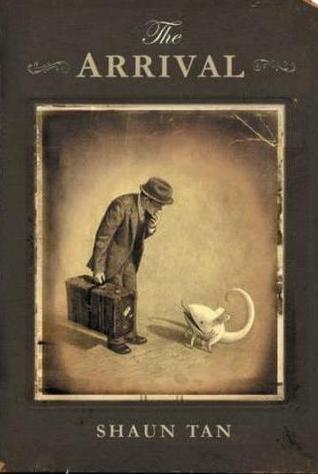
small children, of course. Shaun Tan’s ‘Arrival’
is a wordless picture book that stretches adult imagination in the most
brilliant ways.

These books become story
creating experiences that hand story power to the audience. Instead of listening to an adult reading out
prescribed words, any words (if any are even needed) come from you. That’s exciting, and involves an
author/illustrator who dares to trust their audience to handle the story
themselves.
What are my
favourite wordless picture books?
Beatrix
Rodriquez wonderful stories about a ‘Fox and Hen’ are exciting, funny, moving
and memorable.
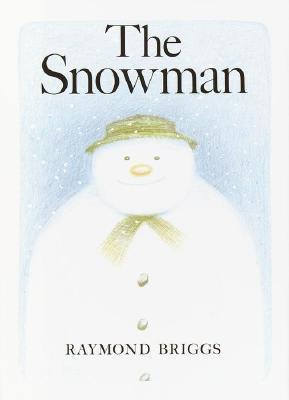
Raymond
Briggs’ ‘Snowman’, shown in wordless cartoon, has of course become a classic,
although many versions of the story now have words added, which seems a shame.

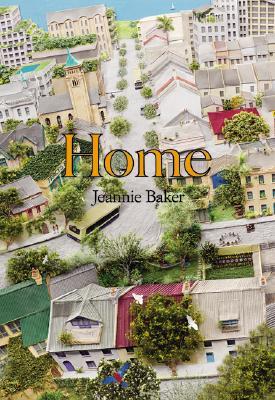
Jeannie
Baker’s ‘Home’ is most moving and challenging ‘Home’ and other titles are
important books for a wide age range.

Quentin
Blake’s ‘Clown’ is another moving tale.

Come to
think of it, all these examples are of quite challenging stories. Perhaps wordlessness is a way to cope with
what might be uncomfortable if it were to be articulated? What do you think?
Tuesday, 8 October 2013
Go on, try an experiment with your picture book writing, by Paeony Lewis
If your story just isn't working, you could screw it up and fling it in the bin. We all have ideas that need to be abandoned. We also have ideas that don’t appear to work, but we’re not ready to give up. There’s something there, but what? Maybe it needs more than the sort of revision that merely moves words around? Maybe it needs you to slip on your white coat and start experimenting?
Sometimes experiments fail, sometimes they succeed. I prefer to concentrate on the successes and conveniently forgotten the failures. And don't forget, the great thing about picture books is that they’re short, so if your experiment fails, you won’t be engulfed in an explosion of thousands of random words.
A Small Experiment: Change the Point of View
Often it’s easier for a young child to understand a story in the third person (he, she). Therefore I began writing my first Florence and Arnold story in the third person. Hmm… Florence’s personality was there, but I wanted more of her feisty determination to shine through. So I experimented and wrote the story in the first person (I), and her attitude burst out of the page. That was the Florence I wanted, but something still wasn’t quite right.
| Florence and Arnold in No More Yawning, illus by Brita Granstrom |
Here they are again in
No More Biscuits,
illus by Brita Granstrom
|
Another Small Experiment: Change the Tense
For my next experiment I changed from the past tense to the present tense. Ah ha! Now I felt the sense of immediacy I’d been fumbling for in an exuberant young girl, like Florence. Using the first person, present tense, seemed to reflect Florence’s character. Florence’s voice could be clearly heard and a publisher (Chicken House) took two stories (No More Biscuits and No More Yawning).
![]() |
| New US edition (Tiger Tales), 2013 by Paeony Lewis, Illus Penny Ives |
A Fundmental Experiment: Change Direction
My story, I’ll Always Love You, was also an experiment, although it was written in the traditional third person and past tense. The experimentation for this story came earlier and was far more basic.
When I first started writing I wrote quirky tales that appealed to my ‘individual’ sense of humour (imagine a dragon on a motorbike in the wild west?). I’d had lots of positive comments, but no contract. So I took another look at the picture books on the shelves in bookshops. Many were cute cuddly tales that oozed emotion and love. They felt a little twee, but hey, I decided to experiment with my ideas and writing.
On a long car journey I asked myself what mattered most to very young children. I thought of my own children and I recalled that my little son, strapped into the car seat behind me, sometimes worried that I wouldn’t love him any more if he was naughty. Of course I would, and I was sad that he’d think otherwise. The words, “Will you still love me?” haunted me for the rest of the car journey. That was the inspiration for I’ll Always Love You (Little Tiger Press). By experimenting I discovered that adding emotional depth to a story can make it resonate.
A Scary Experiment: Start Again
My story, I’ll Always Love You, was also an experiment, although it was written in the traditional third person and past tense. The experimentation for this story came earlier and was far more basic.
When I first started writing I wrote quirky tales that appealed to my ‘individual’ sense of humour (imagine a dragon on a motorbike in the wild west?). I’d had lots of positive comments, but no contract. So I took another look at the picture books on the shelves in bookshops. Many were cute cuddly tales that oozed emotion and love. They felt a little twee, but hey, I decided to experiment with my ideas and writing.
On a long car journey I asked myself what mattered most to very young children. I thought of my own children and I recalled that my little son, strapped into the car seat behind me, sometimes worried that I wouldn’t love him any more if he was naughty. Of course I would, and I was sad that he’d think otherwise. The words, “Will you still love me?” haunted me for the rest of the car journey. That was the inspiration for I’ll Always Love You (Little Tiger Press). By experimenting I discovered that adding emotional depth to a story can make it resonate.
A Scary Experiment: Start Again
| Will my chickens inspire me? |
Right now I’m experimenting with chickens and shoes (perhaps I’m reverting to my quirky ways). I sent the original story to my agent and heard a big fat nothing. So I put it aside. Then a year later I decided I didn’t want to give up on this story. However, hearing a big fat nothing made me suspect it needed more than just revision, so I’m experimenting by not even taking a peek at the original story. I’m starting again, from scratch. Plus as I’ve been attending poetry classes for a year, I may use a poetic form. It might work. It might not. It’s an experiment, so it doesn’t matter!
So go on, be brave, experiment with your writing. And if you've tried a writing experiment that failed or succeeded, do tell…
Thursday, 3 October 2013
To Rhyme or Not To Rhyme? by Natascha Biebow
A recent submission to Blue Elephant Storyshaping has got me thinking again about rhyme . . .People frequently ask: is it OK for a picture book to be written in rhyme? Editors usually shudder and say that unless you are really good at writing rhyme, you should give it a miss. One of the main reasons is that rhyme is difficult to translate. In a market that is increasingly feeling the pinch and where publishers need to build up a print-run of co-editions in various languages to make publishing a new book financially viable, rhyme can be an instant turn-off.
Another reason is that many rhyming texts submitted are poorly-written with rhymes inserted for convenience rather than to further the story. Plus if the rhythm is off, it’s a huge turn-off and your manuscript goes straight to the rejection pile.
Books in prose by far outnumber those written in rhyme, including many award-winners. So, what makes a rhyming book one that children ask for again and again?

The answer is simple: these are the books where the story comes first.
Anyone can rhyme ‘mouse’ with ‘house’ . . .
But do you have a gift for writing in rhyme or are you in the shallow end of the literary pool with arm bands?
How not to do it:
Sometimes, the tendency is to add a rhyme to round out the stanza. The author opts for a word that is not the most obvious choice, which can lead to the use of unlikely phrases, concepts or vocabulary. As a result, the narrative isn’t coherent. A good test is to ask yourself, “If I were telling this story to a pre-schooler, would I tell it in this way and/or use these words/terms?”
In this example:
“For my birthday, she gave me the best gift ever,
a beautiful fan, made from a feather.”
In picture books, it is important to try to keep the imagery and words child-centred. The gift of a fan is probably not the most obvious one for a small child. Would the author have chosen a ‘fan’ made from a ‘feather’ if it weren’t for trying to find something to rhyme with ‘ever’?
The key to writing an un-put-downable picture book in rhyme is that even if you were to translate the words into another language or prose, you would still choose those same words to tell your story. If you choose a word simply because it rhymes in English, then when it is translated, the book falls apart:
“Milly Molly skipped out of her house
Said hello to a mouse
Who was nibbling some cheese
And jingle jangling its keys.”
The association of the mouse with cheese is logical in English, but ‘keys’ and ‘cheese’, though they rhyme, are completely random objects that would be depicted in the picture, yet not really be very logical in Spanish, for instance.
Forced rhymes will ruin a story.
“Lola shares a room with her brother, Zain,
All their toys and their toy train”
This author has used a rhyme in the first stanza to set up the story, but chose ‘toy train’ to rhyme with the name ‘Zain’. The problem is . . . there is no mention later in the story of the toy train!
The following verse comes at a dramatic point in the plot, where two boys are pretending to be caught up in a storm:
“I wonder what it’s like at sea, caught up in a gale,
Swirling winds and crashing waves as you try to sail?”
If the book were narrated in prose, the voice would shout something like, “Look out, the boat is about to crash!” Would the author have chosen the word ‘gale’ if she weren’t trying to rhyme with ‘sail’? Because the author is trying to make a rhyme, the voice comes across as distant and a bit too self-aware for a pre-schooler.
Remember, though short, in a picture book, each word needs to be intentional! The rhymes in these examples do not further the story.
“But . . .” you say, “rhyme is so delightful to read aloud and makes learning to read so much easier for pre-literate children.”
Yes, it’s heaps of fun – when it’s done right!
How the successful have done it:
Though Julia Donaldson admits that she chose the name ‘Gruffalo’ for its rhyme, the important thing to note about the book is that it tells a gripping, original story. The rhythm of the tale is constructed beautifully in classic picture book style.
A repetitive, cumulative opening phrase:
“A mouse took a stroll through the deep dark wood.
A fox saw the mouse and the mouse looked good.”
Building up suspense:
Each time, the Gruffalo’s characteristics are slightly different and scarier.
Rounded off by a catchy refrain:
“A gruffalo? What’s a gruffalo?”
“A gruffalo! Why, didn’t you know?”
![]() |
| from The Gruffalo by Julia Donaldson and Axel Scheffler |
This pattern continues with the mouse meeting an owl and a snake.
The author follows the classic picture book ‘rule of 3’s’ in which three things happen before the turning point.
Importantly, the ending is so very satisfying after the excitement of the narrative.
Another series written in rhyme that I just love, is the Duck series by Jez Alborough. This author is a master of using clever rhyme to further the story. Pre-schoolers also love Duck and his friends’ adventures because they are so funny!
In Duck in a Truck, Duck’s truck breaks down and he needs some help getting it out of the muck. The story follows a classic plot:
First, the protagonist gets into a tricky situation . . .
“This is the Duck driving home in a truck.
This is the track which is taking him back.
This is the rock struck by the truck
and this is the muck
where the truck becomes stuck.”
. . . things get worse (the truck remains stuck despite Sheep and Frog trying to help push it out).
Then Goat arrives . . .
“This is the happy sleepy Goat
relaxing in his motorboat”
(Arguably, the ‘motorboat’ is a random choice to rhyme with ‘goat’ but, importantly, it works to advance the plot since Goat’s rope is what helps pull the truck out of the muck. In future stories, the Goat’s motorboat is central to the narrative.) Plus this memorable turn of phrase stays with you after multiple readings.
There is a clear turning point . . .
![]() |
| from Duck in a Truck by Jez Alborough |
Ha, ha! The helpers are now stuck in the muck, an irony that won’t be lost on pre-school audiences!
Recently, I came across Stanley’s Stick by John Hegley and Neal Layton. Whilst not totally written in rhyme, this book is a poem that tells the story of a boy’s journey to the seaside with his special stick. The short text has a wonderful rhythm to it, driven by the alliteration of the word ‘stick’ and ‘st’ sounds:
“So here is Stanley standing on the station,
taking his stick for a short stay
at the side of the sea with his mum and dad.”
“Stanley hurls his stick into the wide tide.
Gosh.
What a tiny splosh for something that has been so big in Stanley’s days.”
“Soon he stumbles upon a stick alone upon the shore.
It is quite different from the stick he had before.
It is wonky."
The stick is an unusual saxophone.
Stanley thinks of home and begins to blurt a tune for Bertie.”
![]() |
| from Stanley’s Stick by John Hegley and Neal Layton |
It’s another way to think about telling a story using rhyme.
So, there we have three examples of how it can work. Sure, you can learn the mechanics of writing in rhyme, but will you produce a must-have book? The market is flooded with rhyming picture books that are just ‘OK’. They sell and they are read, but are they memorable? Do they have a compelling and strong story that pre-schoolers beg for again and again? Should you write in rhyme?
If you have the gift . . . yes!
Many thanks to our Guest Blogger, Natascha Biebow, Author, Editor and Mentor. You can find Natascha at www.blueelephantstoryshaping.com
Blue Elephant Storyshaping is a coaching service aimed at empowering writers and illustrators to fine-tune their work pre-submission. Natascha is also the author of Elephants Never Forget and Is This My Nose?, editor of numerous award-winning children’s books, and Regional Advisor (Chair) of SCBWI British Isles.
Saturday, 28 September 2013
Five Tips for Writing a Page Turner - Lynne Garner
We all want to write a book that is reviewed as a
page-turner. But how do you achieve this with a picture book? Well here are my five favourite tips:
One:
Make your reader fall in love with your character or at
least care for them, even if they don't like them. If they don't care what
happens then they'll not want to read to the end of the story.
Two:
End your page with a cliff-hanger. This is a device used
time and again in television programmes. The writers know when the advert
breaks are coming so they time cliff-hangers to happen just before a break.
This ensures viewers will return. If it works for them it'll work for you.
Three:
Don't complete your sentence but end with three dots then
finish the sentence on the next page. To increase the desire to turn the page
you could finish the page with such words as 'and...' 'then...' or 'but...'
Four:
Pose questions where the only way the reader can discover the answer is
to turn that page.
Five:
Ensure each page
moves the story forward. This could be answering a question, solving the cliff-hanger
set on the previous page or it could be setting up the next cliff-hanger.
Hopefully by using these tips your next story will be one an
editor will love and will want to publish.
If you have any of your own favourite page-turner tips please do share them here.
Lynne Garner
I also write for: Awfully Big Blog Adventure, Electric Authors, The Hedgehog Shed and Fuelled by Hot Chocolate.
I have three new distance learning courses commencing in November via Women On Writing:
Labels:
children's pictures,
children's writing,
kids books writing,
Lynne Garner,
picture book writing,
writing tips
Monday, 23 September 2013
The Dancing Tiger - from birth to rebirth, by Malachy Doyle
It’s 1996 - two years before I become a published
author. I’m trying to write a series of
animal poems. They’re not particularly
brilliant. I go for a ride on my
bike. I find myself singing a little
tune.
There’s a quiet
gentle tiger,
in the woods below
the hill…
I jump off the bike.
Climb over a gate into a field.
Write it down. A poem spills
out, like a dream.
In time, I get an agent.
Things start to happen. But not
with the animal poems, which have become a picture book idea called ‘Cards from
Uncle Joe’. Each poem is a postcard /
birthday card / Christmas card from Joe to his niece, with a little toy animal
attached. It's a nice concept, but never really clicks.
It’s 2003. I’m
having lunch with Simon and Schuster. I
read my editor some scripts. They’re
not quite working. I pull out my
Dancing Tiger poem. I get to the end, and there's silence. And then I notice the tears, pouring down her face.
We’re in business.
They take on a top American husband and wife team, Steve
Johnson and Lou Fancher, to illustrate it.
It’s quite, quite beautiful.
The Dancing Tiger sells to Viking Penguin in the US, to
Australia, Korea, Japan, Spain… Hits
shortlists in Ireland, Scotland and America… It gets amazing reviews.
People read things into it I’d never even thought of.
I’m invited to the Nestle Children’s Book Award. It wins Silver. Would’ve won Gold if some hotshot kid from Belfast (with a penguin in tow) hadn’t
appeared on the scene, all of a sudden…
The Dancing Tiger becomes a firm favourite. I bring a big cuddly one with me to all my readings. It’s the final thing I read, to settle
everyone down. Because it's a lullaby, really. A lullaby to love, and family, and imagination, and the power of story. Or so they tell me.
A child comes out and
dances with the tiger.
We skipped in
spring through bluebells,
in summer circled
slow.
We high-kicked in
the autumn leaves
and waltzed in
winter snow…
Then, in 2010, the emails start arriving. ‘I want / need / must have this book, but
can’t find it anywhere.’ That’s when I
realise it’s out of print. That I’ve
only two copies left. I’m bereft.
The emails keep coming, from all round the world. I reply that I’m as sorry as they are, but
the publisher has no plans to reprint.
It’s on Kindle, but…
I start forwarding them to Simon and Schuster. One a month, sometimes one a week. I tell my editor that I know books go
out of print – that's the business we're in – but this one… this one is special.
The way people feel about it is special.
Eventually, to my astonishment, they give in. ‘I've good news for you,
Malachy,' they tell me. 'We’re doing a small reprint.’
It's September 2013, and my tiger is back from the long dark night. It’s only a thousand copies, but it means the world to me.
He was lost but now he's found and, for another wee while at least, we’re
dancing again.
Never give up on your dreams!
You can hear me reading it, on World Book Day a few years ago, to a group of children in the offices of the Guardian newspaper, on http://blogs.guardian.co.uk/culturevulture/archives/wbd3.mp3
Subscribe to:
Posts (Atom)