Showing posts with label series. Show all posts

Monday, 1 March 2021

How To Grow A Picture Book Series, by Pippa Goodhart

One part of my work is critiquing picture book texts on behalf of the Jericho Writers agency, and very often people send a series of picture book texts, or a single picture book text together with proposals to develop a whole series.


What I’ve tended to tell those writers has been based on my own experience, that picture book series depend on creating an exceptionally strong stand alone picture book which sells so well that the publisher asks for, or agrees to, further books. My You Choose books, illustrated by Nick Sharratt, began with a single book, with the second one agreed to only once that book had sold well over a number of years.


I now have a bit of a series developing from a different book. Fair Shares, illustrated by Anna Doherty and published by Tiny Owl came out in 2019. It quickly proved popular with teachers and librarians, and so Tiny Owl asked for another book from us, and now Best Test will be published in April. I have an idea for a third book, but wait to see if that is going to be wanted!


So I wondered if my experience of series growing from single book success was shared by my co-denners. Here are their interesting answers -  


Natascha Biebow, (an experienced picture book editor as well as writer):


All the series that I've ever edited or seen do well on the market started with a single title - e.g. DAISY, Kes Gray's OI series, YOU CHOOSE as you say, THE DINOSAUR THAT POOPED..., HARRY AND THE BUCKETFUL OF DINOSAURS. The only exception I can think of is PRINCESS POPPY- in this case the author had already self-published and built a brand and so RH bought in the character rights and kicked off with a planned series.


Chitra Soundar


a) When my first Falgu book came out (illustrated by Kanika Nair), I wasn’t well-known in India or known at all in the UK. But after they edited the first book, they offered me a second book right away.


b) After rights sold in Frankfurt for Book 1, Book 3 and 4 was commissioned together. (‘Frankfurt’ refers to the annual International Book Fair at which co-editions are sold)


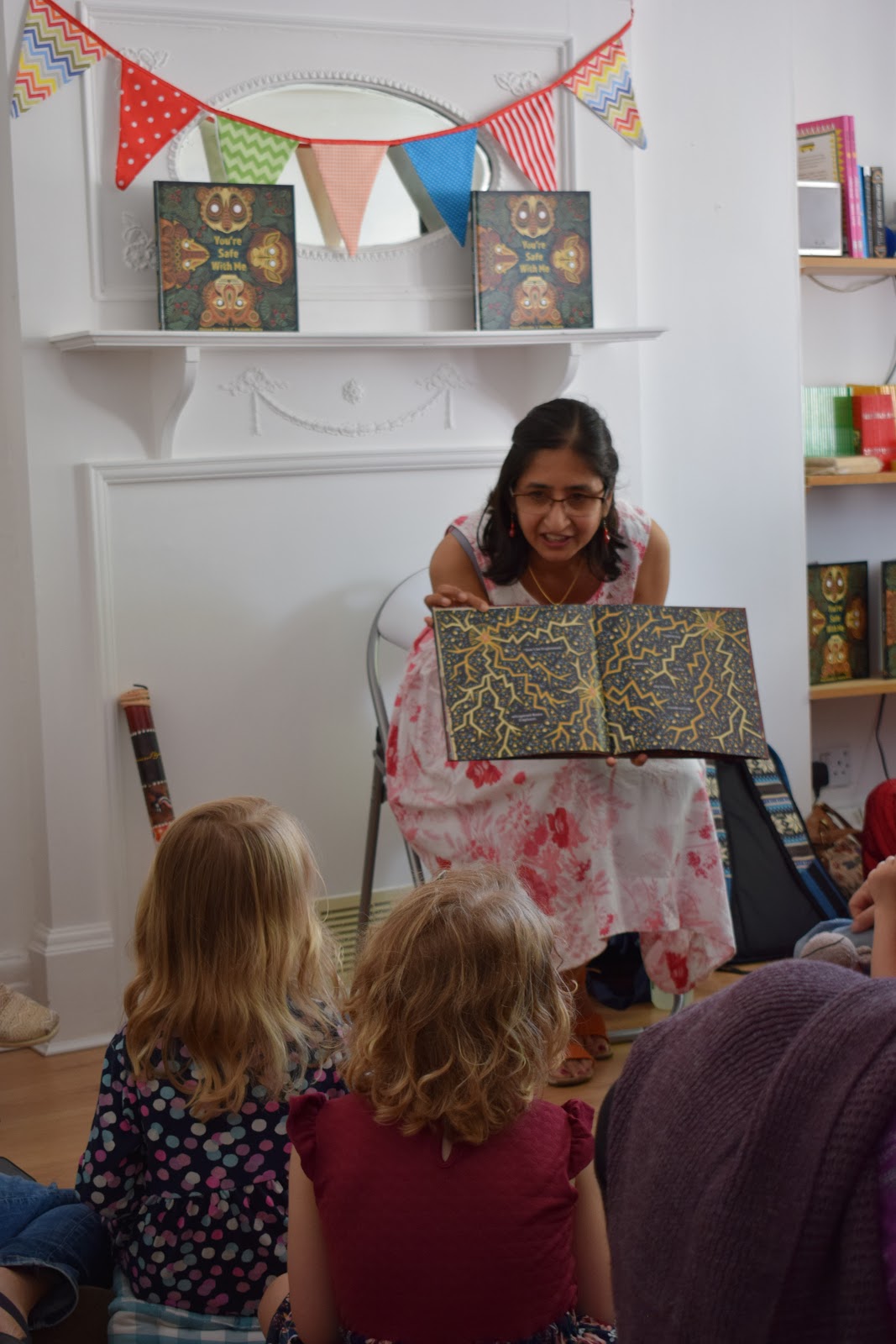
With respect to the massively popular You’re Safe With Me series (illustrated by Poonam Mistry), the first book was on unsolicited submission which was then rejected and then solicited back. Even before it came out, when US Junior Library Guild agreed to stock them, the publisher commissioned a second. And then commissioned a third soon after. 


None of those were automatic series - but one thing I’d say is as a writer I always put character first and when I’m writing, I’m always thinking of other scenarios for the characters. Even when not commissioned as a series, I create potential for it from the first book and then depending on my relationship with my publisher, ask if I can show them another story in the series. I do this for chapter books as well and it has worked well. 


Every time I have an idea, I evaluate if that idea will work for any of my existing characters and if so, I’d see if I should write it and show it to my publisher or ask them first and write it. 


Jane Clarke


Interesting topic because unless you are an author illustrator, picture book series depend on keeping both the writer and the illustrator on board.


I've experienced it both ways - eg I wrote Gilbert the Great as a one-off, and it slowly (over the next 5 years) became a 3 book 'series' because the first book was popular. They only commissioned the third book when the second also sold well. The illustrations by Charles Fuge were a huge attraction and at that time, Charlie was so busy it was hard to fit the third book into his schedule.


Same experience with Knight Time but it only got as far as book 2 (Knight School) - I wrote more texts but the decision was made to stop at 2. I cheekily pitched my most recent text (A Small Person's Guide to Grandmas, to be published 2022) as a potential series, I'm contracted for the first title only - but I guess it doesn't hurt for them to know that there's the potential for more :-)


On the other hand, I was contracted from the outset by Nosy Crow to do 4 picture books with Britta Teckentrup ( the unifying characteristic being the use of neon colours rather than a character, and I'm sure the 4 book contract was because they wanted the incredibly popular and busy Britta to schedule time for these books). Titles are Neon Leon, Firefly Home, Leap Frog and the upcoming Tiptoe Tiger.


I was also contracted from the outset to do 3 x picture books featuring the character Sky Private Eye - but that series was the concept of the publisher Five Quills.


Garry Parsons


My experience of working on a series has been that they have developed after the first book has  reached a certain level of popularity and then increased one book at a time. Having a tie-in title publishing a year later helps ignite new interest in the first and so on until you gradually acquire new readers who hopefully will enjoy all the books. My most popular sequence of books being The Dinosaur That Pooped series. Initially a one book contract for the first title, The Dinosaur that Pooped Christmas has now grown into 6. 


The Dinosaur That Pooped series written by Tom Fletcher & Dougie Pointer


The other series of picture books I worked on was with author Peter Bently - The Tooth Fairy is a funny series of 3 rhyming story books which also started with a Christmas title, The Tooth Fairy's Christmas followed by The Tooth Fairy’s Royal Visit to coincide with a royal birth and finally, Happy Easter Tooth Fairy! for the spring. Similarly, this series, published by Hachette, developed one contract at a time. So it seems to me that a series grows on the strength of one book at a time but the potential for a series can be very worth while as well as fun to have the opportunity to take a character through different stories.


Monday, 18 November 2019

How 'I am a Tiger' became a series- guest post by Karl Newson

This week, I am delighted to welcome to the Picture Book Den the wonderful and incredibly talented Karl Newson- picture book author and illustrator extraordinaire!

How 'I Am a Tiger' became a Series

I didn’t set out to write a series. And Macmillan (my publisher) didn’t ask for one. Luckily for me, it happened accidentally…

I Am a Tiger was written in the summer of 2016 (which seems like an age ago now!) during a head-scratching session in which I thought ‘Why isn’t there a character who declares confidently that it IS what it clearly is NOT?’ A simple idea that grew legs and whiskers and then took over.
I knew the ‘IS what it ISN’T’ comparison had to be something ridiculous - something small being something big or vice versa - and a mouse was the obvious choice for the small side of the story. I thought the text would be best delivered in dialogue, to show off mouse’s confidence (she is in charge here, there’s no narrator required to tell her story), and once mouse’s voice showed itself, the story pretty much wrote itself: I knew we’d need some opposition to mouse’s claims and that she should shake off their protests with seemingly easy but unexpected explanations; I knew at some point she would have to face the very thing she says she IS and that the two characters side by side would be a powerful image and text combination that would create a tense moment, perfect for being smashed with humour – with mouse’s witty retorts and clever thinking; and I knew that it would be wrong to just leave it as that, with all being exactly as mouse had said it was… it would be a rather flat ending wouldn’t it? There had to be a twist! It was right in front of my nose... the twist was a complete spin on the very words mouse had repeated the whole way through the story. Really, it was just one thought leading into another that took no more than 4 pages of my notebook and an afternoon’s scribbling. Really-Really, though, mouse wrote it all for me and it probably took years of thunks to think it up.


The ‘big’ side of the story was initially going to be a bear, but because I already had two bear picture book stories in the making, my agent (Jodie Hodges) suggested we use a tiger instead. It gave the book that extra bit of GRRR! it needed.


When Macmillan offered to publish it, I was absolutely delighted! When they said Ross Collins would be illustrating it I let out a big excited ‘EEK’! And when I first visited my publisher and editor,

Penny, and the books designer, Kerrie, I knew this book was going to be something special. Together with Ross, they, and the whole team at Macmillan, took that little mouse and made it shine. And it was around this time that I discovered Mouse wasn’t done with me yet… 

A simple idea fell into my notebook about rhyming ‘roar’ with ‘dinosaur’. It’s a well-worn and obvious rhyme, I know, but I went with it to see where it took me. It had all the right whatnots for a picture book and it had a fun title, but I slowly began to realise I knew this character’s voice already… it was way too close to the feel of I Am a Tiger. I was annoyed at myself, at first, for wasting a good idea on something that I couldn’t use (I couldn’t pitch a story similar to one I already had under contract, of course), but it felt too good to scrap, so I went with it... I let the main character BE the mouse it wanted to be and then I scribbled it all out again, in her voice. And it worked. But I was stuck. I had a story that I hadn’t intended to write and that could only ever be sent to one publisher. And to make it worse I was brand new to them and my only contracted book was still in the early stages itself… they hadn’t asked for a sequel at all. I Am a Tiger wasn’t due out for months yet so I couldn’t even use hopeful sales figures as a cheeky ‘Would you like to do a sequel?’ incentive. It was either I send it as an uninvited pitch or I leave it in my head for a while and maybe bring it out again once Tiger was out and getting feedback. I was worried it wasn’t author etiquette to send emails about sequels so soon into a contract. But I couldn’t help thinking that if I sat on it and then discovered at some point that a sequel might well be an option, then I’d have lost all that time (and possibly the buzz for it too). So I had a biscuit and sent it to Penny at Macmillan with a note saying ‘I know you haven’t asked for this and I feel really cheeky in putting it in front of you but it just sort of happened and I don’t know what else to do with it’.

To my utter relief Penny liked the idea for the story, and to my surprise I was offered a new two book contract with the intension to write a third mouse story. I snapped it up, of course! (I was the crocodile, that day).

Mouse was now free. She had officially taken over. And her next idea was to make that accidental sequel I had just written into the third book in the series, and write another one to join the two together to make a linear threesome. So we did.

Having never before written a series I had no idea of the rules I had already put into place inside the text of the first story… rules that would now have to be applied to all three stories! This, in a good way, gave each one a structure that I could follow. But I definitely felt the pressure to make each one be better than the last. It had to have the same feel, but be a little bit different – a little bit more extreme, maybe, in mouse’s mousey-ness, and be funnier, too. I’m not allowed to give too much away because only I Am a Tiger is published as of the time I’m writing this, but I’ll try to go into a bit more detail on how the next books came to be…

First, book three, the original sequel (a line that makes it clear this is being written by Mouse!). In book one (I Am a Tiger), Mouse simply shrugs off the other animals with silly but simple points and carries on regardless, before dealing with the tiger in a similar fashion and then declaring them all to be something they didn’t know they are – a distraction for a get-away. In book two, this had to happen too, but in a bigger and better way. It needed an edge. (Just to confuse things, remember book two eventually became book three, so I’m talking about a story that’s not been announced yet anywhere). The main hook this story had was in its title. And so it became an action filled book. A guide, of sorts. An interactive read-along. But now this was to be book three and I didn’t have long to write a new sequel to fill the gap as the slot for Ross to begin the artwork was fast approaching. I had book ends, of a sort. Each true to mouse, but still being different to each other. The third story I would write –the second to be published – had to sit comfortably in between the two, without treading on eithers toes, and without out-shining them, but had to be a gradual step up from I Am a Tiger and a lead into the third story. This one did prove quite difficult, even for mouse.

The first story was a show of confidence. The third was an all-singing all-dancing interactive read, the second then - it seemed to me - had to be half way there. A bit of singing, maybe.  And the idea for it came from a t-shirt I’d made for an event I was doing at Latitude. My shirt combined two of my stories – A Bear is a Bear (except when he’s not) (illustrated by Anuska Allepuz) and Here Comes the Sun (illustrated by Migy Blanco) both published by Nosy Crow. It combined the two main characters in those stories, an owl and a bear, in a simple play on words: ‘GROWL LIKE AN OWL’ (the site team at Latitude found it to be quite a weird thing to have on a t-shirt (I’d written it on in a sharpie) and they heckled me about it on my way in and out!). It was worth it though, as those words became the basis for story I needed.


I followed the same train of thought I had when writing I Am a Tiger, letting the mouse take it for a walk, it soon became apparent that this wasn’t the start point, but more of a middle, so I ended up writing to the end first, then going back to the start to finish it off. It was a tricky one to get right! I sent it off to Macmillan and kept all my whiskers crossed, and Phew! it was accepted. Together we worked on making it as strong as we could (that’s Penny, Ross and Becky, the designer for this book and me), and I hope it will be a pleasing follow up to I Am a Tiger.

Its title is I Am NOT an Elephant (a spin on the theme of book one) and it publishes on 6th February 2020. I can’t wait!

Book three in the series publishes in October 2020 (Ross is working on the final artwork for it now, and, having had a peek, I can say it’s even better looking than the first two stories. What he does with characters is amazing! The guy is a genius.

I got incredibly lucky with these three stories, in finding the mouse character, having an agent who knew how to make it stronger, having a superb team behind me at Macmillan and of course being teamed up with Ross Collins. I am a little mouse in their shadows. A little mouse who is currently waiting to hear about Mouse’s next big idea… whiskers crossed!

Big thanks to Picture Book Den for allowing me to squeak on for all this time. And to everyone who has bought I Am a Tiger or any of my stories – thank you for your support!

Best whiskers!

Karl Newson

Monday, 25 March 2019

Behind the Scenes of a Picture Book Character by Chitra Soundar


A typical conversation I have with teachers at schools:

Teacher: How do you choose an illustrator?
Me: I don’t. Publishers choose.
Teacher: Do you get to tell them how to illustrate?
Me: Nope!

Most often, especially when a writer is starting out, they don’t get to choose an illustrator or give stage directions or write illustrator notes into manuscripts. At least that has been my experience on the 20 picture books I’ve published so far and with the next few coming out soon.

I recently was part of a twitter conversation where some people said their stories appear as words in their mind. But for me it’s scenes, visuals, characters who appear and talk. When I write, I visualise the story in my head. 

So when I get to see my story fully illustrated, it will be nowhere near what I’ve imagined for the following reasons:

a)    The illustrator has a different mind. Their experiences have created a vision in their minds. 

b)    A picture book has inputs from many experts. The words of the story is the north star, but those words can still be interpreted differently by the editor, the designer and the illustrator.

c)    It is a multi-creative process. When a story has been written, it then transforms into pictures in an independent creative process and that varies from illustrator to illustrator, just like no two writers will write the same story in the same way.

More recently I’ve been more interested in thinking about how characters are formed. When I wrote the first story for Farmer Falgu, I didn’t have a specific farmer in mind. From the name, it might have been obvious to an Indian reader that he might be north Indian (as there is a river called Falgu in the north) and in the south, the names are more Dravidian and we don’t have the consonant F in our languages. 


But Kanika Nair who illustrated the first book and the series of 4 titles, had grown up in Rajasthan. So she brought her life experience to the story and made him a farmer from Rajasthan. This was not in my text and something I had not imagined. Read her interview here.

She said, "Farmer Falgu Series has been one of my favourites. While reading the script for illustrating I felt an interesting connection between the story and my hometown. Thus, decided to set the story in Rajasthan, a state in northern India that is rich in historical significance and famous for its vibrant colourful culture."

The first two stories for this farmer were already written and now he had a specific personality as created by the illustrator.  What does that mean to me as a writer then? 

For the third and the fourth book, I decided to embrace this aspect of Farmer Falgu a bit more. So when I was thinking of a plot line for Book 3 (read about how to write a series here), I decided to bring the cultural aspects of Rajasthan into the story – and hence he goes kite flying. Read more about how this story came about here.


Does this happen to all writers and characters? Does the illustrator bring out a different aspect of the character that the writer hadn’t visualised? I went hunting to find out about some famous characters and their creators.


Here is an interview by Julia Donaldson and Axel Scheffler on creating the Gruffalo and the animals in the forest. Read how Julia had a different colourful image in her mind and when Axel finally settled on how Gruffalo looked, she was happy with it. And then came of course other stories for Gruffalo and Gruffalo’s child and they all had to follow Axel’s portrayal of the forest and the animals.

Another famous collaborator is Quentin Blake and he too talks about how his pictures came to be to bring life to Roald Dahl’s words. 

In an interview published here in the Guardian, this is what Quentin Blake says – 

"What was so wonderful to me was that so many of Roald's stories were fantastical, unrealistic, so I was free to do what I wanted. I could let my style develop. Think of The Twits or the BFG - they don't really take place in a realistic world. They come from my head."

In another interview for the BBC Quentin Blake recalls visiting Dahl and Sophie and redrawing the illustrations for BFG after that. 

And that’s a rare thing indeed because after 20 picture books, I’ve had dinner with only two of my illustrators and I haven’t even met most of them.

Whether Blake’s illustrations then in turn influenced Roald Dahl or not when he wrote the next story, I don’t know. But as children and adults who read these books, the characters like Matilda, BFG and the Twits are visualised in our heads are from Blake’s illustrations. Aren't they?

Do you write picture books? What are your experiences working with an illustrator? Share below in comments. Are you an illustrator? How do you go about making up a character from someone else's words?

Chitra Soundar is an Indian-born British writer, storyteller and internationally published author of children’s books, based in London, England. Chitra writes picture books, poetry and fiction for children and often visits schools, festivals and libraries to run writing workshops and tell stories. Find out more at www.chitrasoundar.com. 

Follow her on Twitter @csoundar.

Monday, 25 June 2018

Writing an accidental Picture Book Series • Chitra Soundar


I didn’t start out to write a series of picture books. But now I realise I’ve one successful series and another one edging in that direction.
 
I’ve always been a fan of series fiction – whether as chapter books or as picture books. When I fall in love with a character, be it Elmer or Lulu, I love to read other stories about them. I want to see them do different things.

 But as a writer, I always knew that a series is something you can plan for, but actually getting to publish one, is not up to me. So even though I never intended to write one, I stumbled on to a series.

The Farmer Falgu series originated in India and is now available worldwide in many languages. And this is how it started.

I wrote a story about silence and the joyfulness of noise set in an Indian farmer’s life. I wanted the story to have musical elements and I wanted my farmer full of positivity. I didn’t have an idea that I was creating a friend for myself.

After I submitted the story and it was accepted, I happened to realise another one of my story ideas will fit this character. So I asked the publisher if they would accept another story for the same character. Now this was even before an illustrator was chosen for the first. While the first one focussed on sound, the second one was all about food.

It was a gamble but the editor said yes and to my delight both Farmer Falgu Goes on a Trip and Farmer Falgu Goes to the Market is available in many different languages – from French to German to Japanese and American English.

The success of the first two books both in India and abroad, triggered a commission of two more stories. And a series was born.

But the thing about series is, especially one that has become popular is, there’s more at stake. I wrote so many different stories for the same character, trying to find the third and the fourth I was commissioned.

But the 3rd and 4th book would not have been possible if I wasn’t doing extensive research on both Farmer Falgu and India in particular looking for stories.

Farmer Falgu was completely a product of imagination and a series of accidental events. So after I created the character, I did a lot of research on his back story. I had chosen a name that happened to have historical significance. And that was a happy accident. The illustrator had set him in Rajasthan and that was another happy accident for me (although she would have made a conscious choice).

So I researched the background of the state, created resources and activities for kids. This led to my researching the kite festival, which then turned into an idea for Book 4.

Researching India and having a discussion with the publisher gave me another idea – the Kumbh Mela – the biggest festival on earth. I loved that it had all the elements I love in a story and in life – rivers, trains, food, elephants and a Farmer Falgu who couldn’t catch a break. Or did he?

So as I wrote Book 3 and 4, I learned some key things about writing an unplanned, accidental series.

a)    The character now has a life of his own. And therefore the story has to fit this life.
As the illustrator Kanika Nair made him a Rajasthani farmer, the new stories needed to fit his new life in Rajasthan and what happened there.

b)    The throughline – the first two stories had unconsciously created a personality, a theme and an ethos for my character. He was a glass-half-full guy and therefore any new story needed to fit his ethos.

c)     The Economics: Three or four books of the same character, the same author-illustrator duo is an investment for a small independent publisher from India. They had to be really sure that the 3rd book and the 4th book would work. So there was a lot more scrutiny, review and discussion before these stories were even written.

d)    The expectations: These stories showcased India in a small way and with the first two books having sold in many foreign territories, a need to show some wonderful events or places in India within Farmer Falgu’s life was tempting. We zoomed back from his farm out into a bigger world for Book 3 and 4.

e)    Series guidelines: These weren’t written down – but there was a sense of how long the book would be, the pattern, the setting and the title. The first two titles had “Farmer Falgu Goes…”. So I had to make him go somewhere in each story.

As a writer, suddenly I had to work within a framework. Sometimes it felt as if the story didn’t come first, the series guidelines did. But then pushing the story to the forefront and making the character centre-stage helped me plot Book 3 and Book 4.


Available in the UK soon through Red Robin Books


As much as there is a pre-defined framework when you work on a series, there are benefits too. If parents and teachers like one of the books in the series, they’re more likely to buy the others. The characters turn into friends. I have Farmer Falgu talking to me at odd times when he sees something through my eyes. But also as a writer I start seeing the world through his eyes.


Available in the UK soon through Red Robin Books


And now I’m standing on the edge of another series. Fingers crossed!

You’re Safe With Me (illustrated by Poonam Mistry) was met with so much love even before it was published that the publisher, Lantana Publishing, commissioned a companion story, You’re Snug with Me. Although it is not the same characters in the second book, a pattern has emerged. Whether there’s a third book, only time will tell.


Chitra Soundar is an Indian-born British writer of picture books and junior fiction. When she's not writing stories, she can be seen telling them to both children and grown-ups across libraries, festivals and schools in the UK and worldwide. Find out more at www.chitrasoundar.com or follow her on Twitter at @csoundar.